Your cart is currently empty!
Tasmania Travel Guide: Australia’s Wild Island of Mountains, Coastlines & Quiet Luxury
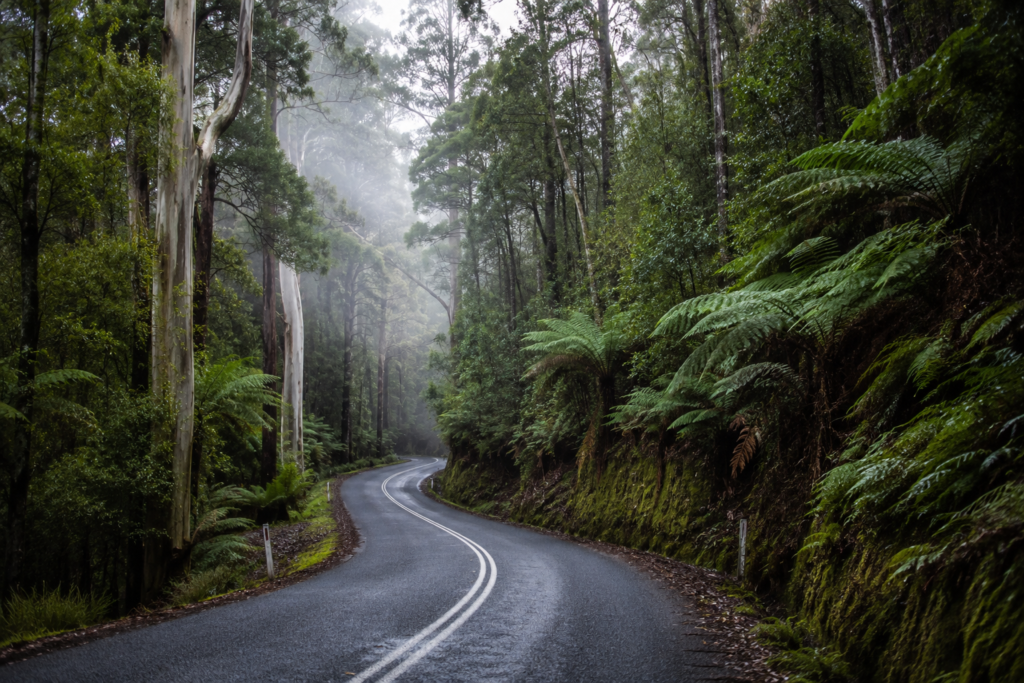
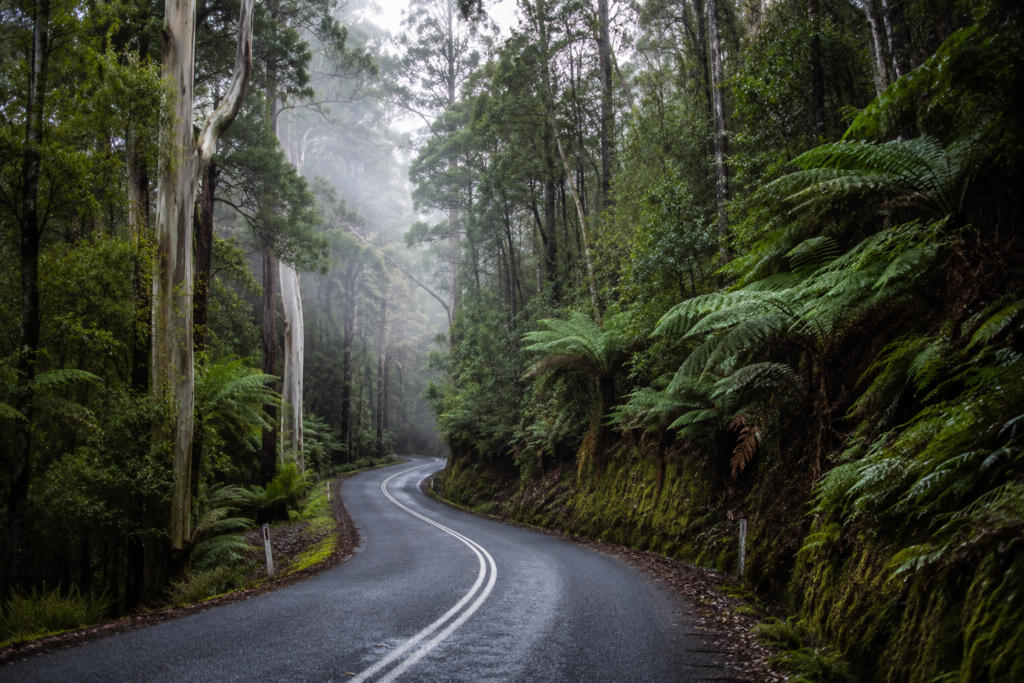
Tasmania feels completely different from mainland Australia almost immediately. The air feels colder and cleaner, the roads quieter, and the landscapes far more untouched. It’s a destination where rugged wilderness exists alongside small creative towns, award-winning restaurants, and some of the most dramatic coastal scenery in the country. Unlike Sydney or Melbourne, Tasmania doesn’t rely on fast-paced tourism or major city attractions. Instead, it rewards slower travel. Long drives through mist-covered forests, empty beaches, mountain lakes, and tiny towns become just as memorable as the major landmarks themselves. Tasmania is the kind of place where you stop constantly—not because you planned to, but because another incredible view appears around every corner.
One of the reasons Tasmania has become increasingly popular among travellers is because it offers something many destinations no longer do: space and quietness. You can spend hours driving without seeing heavy traffic, walk through national parks without crowds, and stay in lodges where the loudest sound at night is wind moving through the trees. The island combines adventure, luxury, wildlife, incredible food, and raw natural beauty in a way that feels authentic rather than overdeveloped. This guide focuses on experiencing Tasmania properly—from Hobart and Bruny Island to Freycinet National Park, Cradle Mountain, and the Bay of Fires—while also covering exact hotels, restaurants, scenic drives, and practical travel advice.
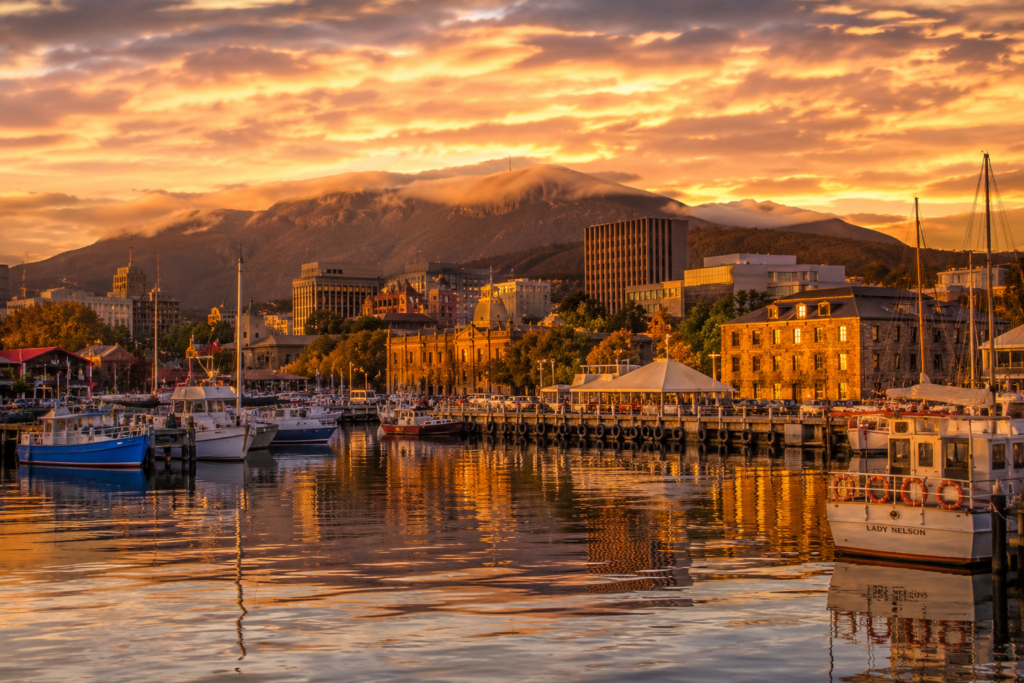
Hobart is where most Tasmania trips begin, and it immediately sets the tone for the rest of the island. Sitting beneath Mount Wellington beside the River Derwent, Hobart combines historic sandstone architecture with one of Australia’s strongest food and arts scenes. The city feels compact, creative, and atmospheric, especially during colder months when fog settles around the mountain and waterfront restaurants glow warmly at night. Salamanca Place is one of the best areas to explore first. The old sandstone warehouses lining the street have been transformed into cafés, galleries, boutiques, bars, and restaurants while still maintaining their original colonial character. On Saturdays, Salamanca Market becomes one of Australia’s best local markets, filled with Tasmanian produce, handmade goods, fresh pastries, coffee, whisky, and artisan products.
Battery Point is another essential part of Hobart to walk through slowly. Narrow streets lined with cottages and colonial-era homes create one of the most charming neighbourhoods in Australia. The area feels peaceful and timeless, particularly in the early morning or evening when fewer people are around. Mount Wellington, known locally as kunanyi, towers above the city and completely changes atmosphere depending on the weather. On clear days, the summit offers panoramic views across Hobart, the surrounding coastline, and distant mountain ranges. During winter, snow often covers the mountain while the city below remains relatively mild, creating a dramatic contrast that makes Hobart feel unlike anywhere else in Australia.
MONA, the Museum of Old and New Art, has become Tasmania’s most famous attraction for good reason. The museum combines underground architecture, controversial exhibitions, dramatic riverfront surroundings, and immersive experiences into something that feels unlike any other museum in Australia. Even people who aren’t usually interested in art often end up enjoying MONA because of the atmosphere and creativity of the entire experience. Taking the MONA ferry along the Derwent River is also part of the appeal. Arriving by water makes the museum feel more isolated and cinematic.
Hobart’s restaurant scene is exceptional considering the city’s size, largely because Tasmania’s produce is among the best in Australia. Seafood, cool-climate wines, beef, dairy, and fresh produce all thrive in Tasmania’s environment. Frank Restaurant remains one of Hobart’s most popular dining spots, combining Tasmanian ingredients with South American flavours in a warm, energetic setting near the waterfront. Landscape Restaurant & Grill inside the IXL complex focuses heavily on local meats and produce in a more refined atmosphere. For seafood, Mures Upper Deck serves fresh Tasmanian oysters, scallops, and fish while overlooking the harbour. Dier Makr is widely regarded as one of Tasmania’s best fine-dining restaurants and is known for creative seasonal tasting menus that constantly evolve depending on local ingredients.
When it comes to accommodation, Hobart offers everything from boutique luxury to cosy heritage hotels. MACq 01 Hotel combines premium waterfront accommodation with storytelling focused on Tasmanian history and culture. The Tasman, part of Marriott’s Luxury Collection, blends heritage architecture with modern luxury in the heart of the city. For something smaller and more intimate, Islington Hotel offers boutique luxury inside a beautifully restored mansion surrounded by gardens and antique furnishings.
After Hobart, many travellers head toward Bruny Island, located south of the city and accessible via ferry. Despite being so close to Hobart, the island feels remote and untouched. The drive through Bruny Island constantly changes between dense forest, farmland, cliffs, beaches, and coastal viewpoints. One of the island’s most photographed locations is The Neck Lookout, where a narrow strip of land connects North and South Bruny. The elevated boardwalk provides panoramic views across both coastlines and is especially beautiful at sunrise and sunset.
Bruny Island is also one of Tasmania’s best food destinations. Get Shucked Oyster Farm serves incredibly fresh oysters directly overlooking the water, while Bruny Island Cheese Co. produces excellent cheeses and woodfired bread inside a rustic farm setting. Bruny Island Premium Wines combines wine tasting with excellent lunches in a peaceful vineyard environment surrounded by forest. Adventure Bay is one of the best areas to stay overnight, especially for travellers wanting a quieter experience surrounded by coastline and bushland. Wildlife is common throughout the island, with wallabies, echidnas, and birdlife appearing frequently around roadsides and walking trails.
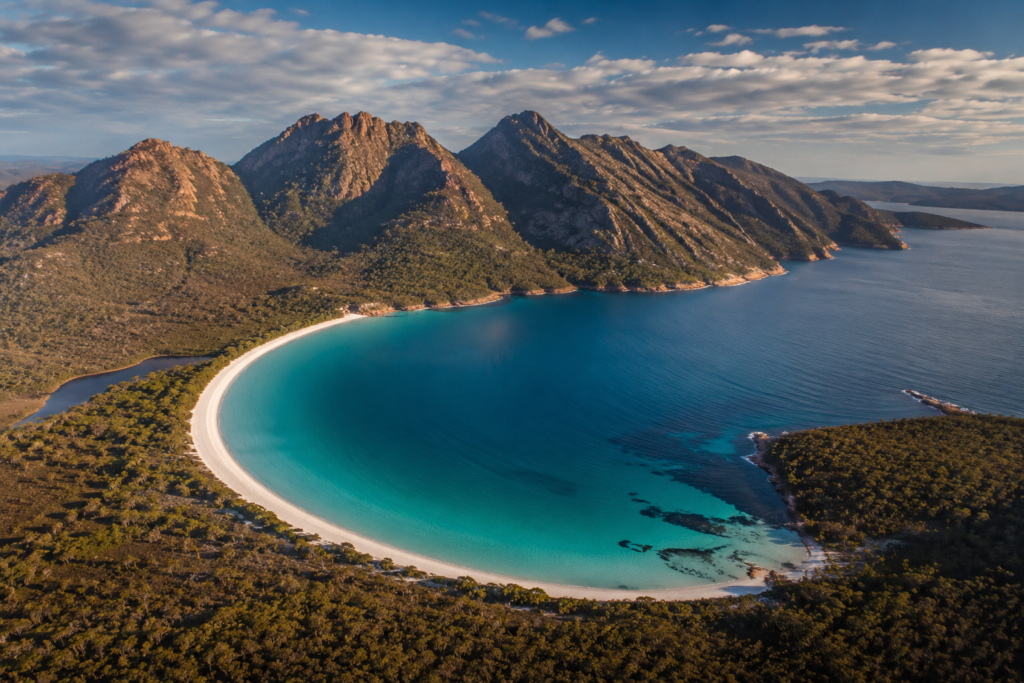
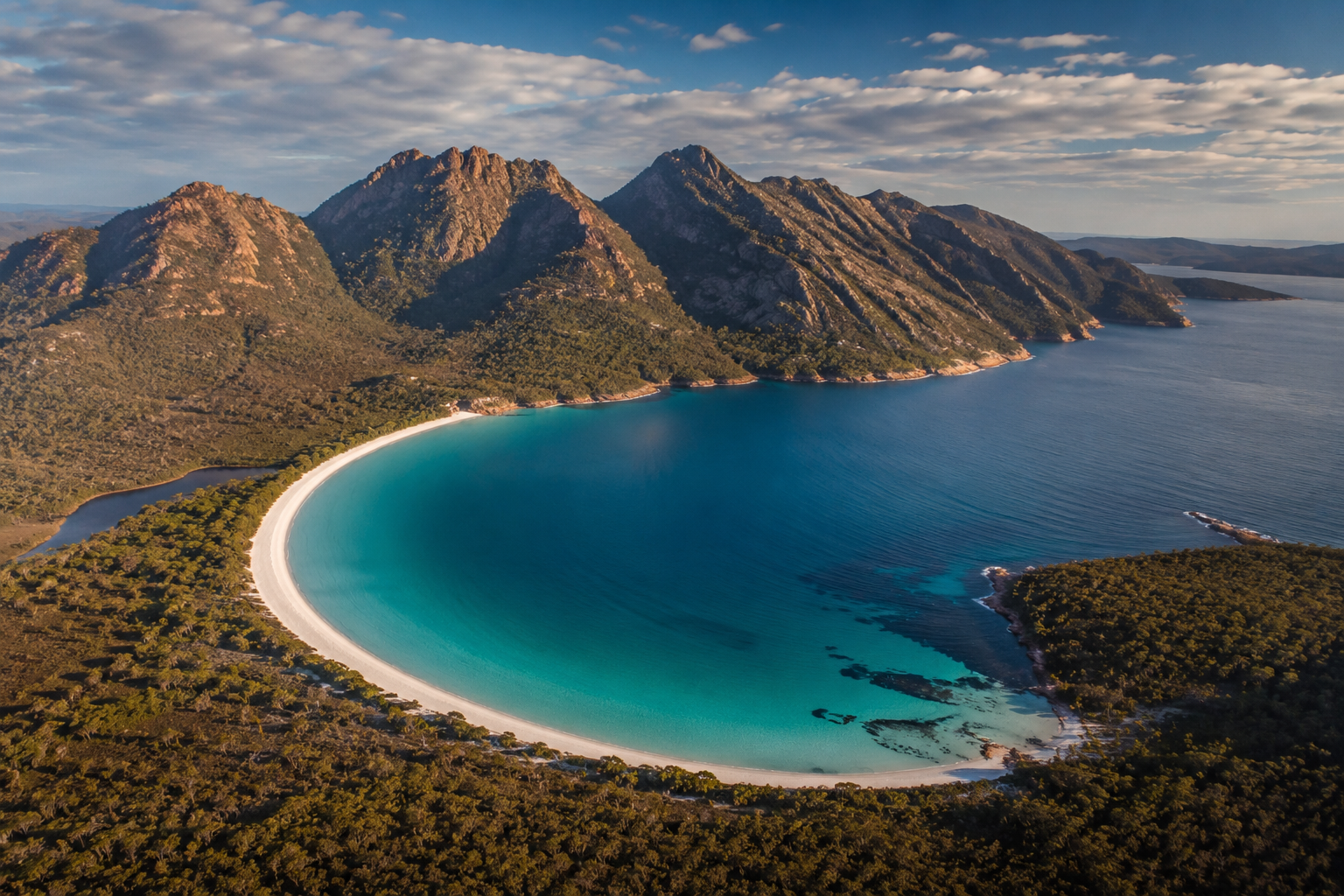
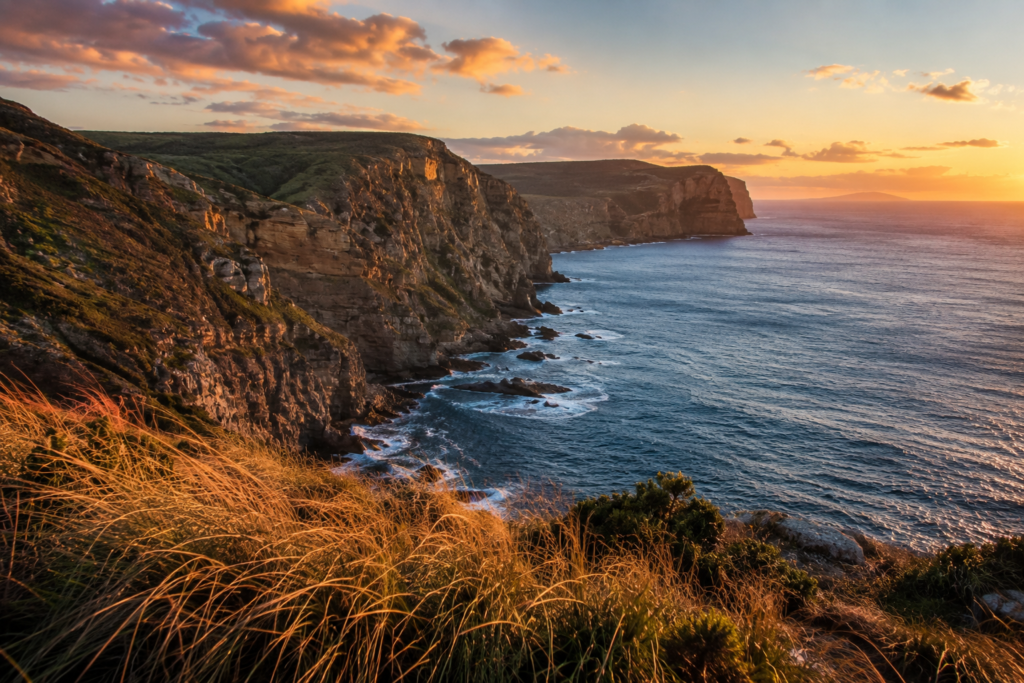
Tasmania’s east coast is home to some of the most beautiful beaches and coastal scenery in Australia. Freycinet National Park is one of Tasmania’s signature destinations and absolutely deserves several days rather than a quick stop. Wineglass Bay is the park’s most famous location, known for its perfect crescent-shaped white sand beach surrounded by granite mountains and turquoise water. The Wineglass Bay Lookout walk is relatively short and accessible, though continuing down to the beach itself offers a much more rewarding experience. The contrast between white sand, crystal-clear water, and orange granite peaks creates one of the most iconic landscapes in Australia.
Freycinet National Park feels especially peaceful early in the morning when mist drifts through the mountains and the beaches remain almost empty. Honeymoon Bay is another quieter but equally beautiful location nearby, especially during sunrise or sunset when the water becomes completely still and reflective. Kayaking, hiking, swimming, and wildlife spotting are all popular activities throughout the region.
Saffire Freycinet is widely considered one of Australia’s best luxury lodges. Overlooking the Hazards mountain range and coastline, the property combines architecture, food, service, and scenery exceptionally well. For something more affordable but still excellent, Freycinet Lodge places visitors directly inside the national park surrounded by native bushland and wildlife.
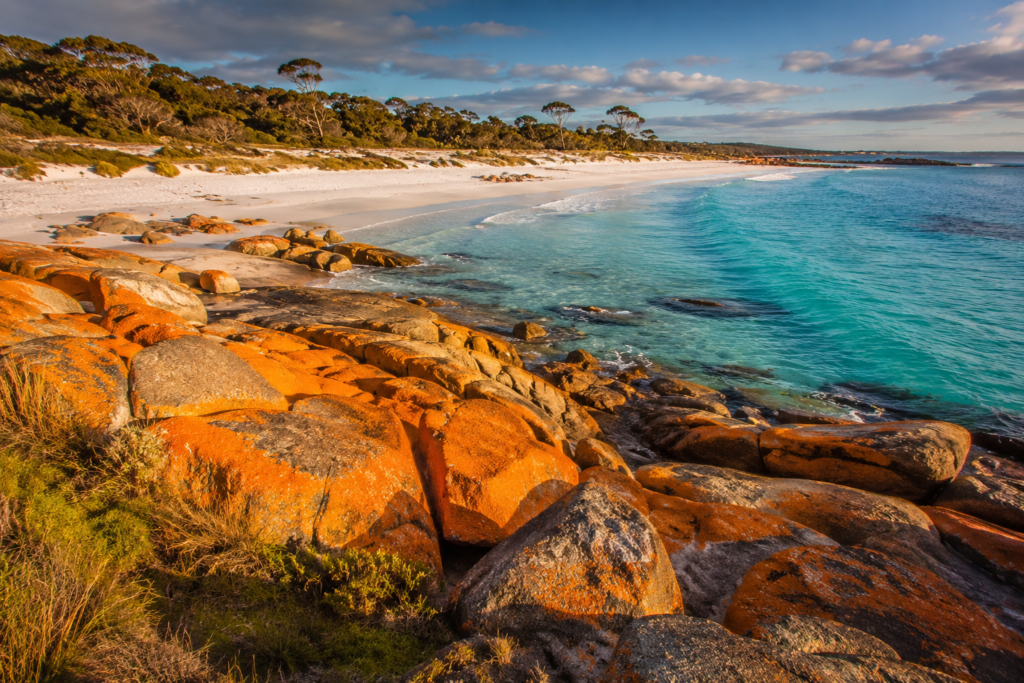
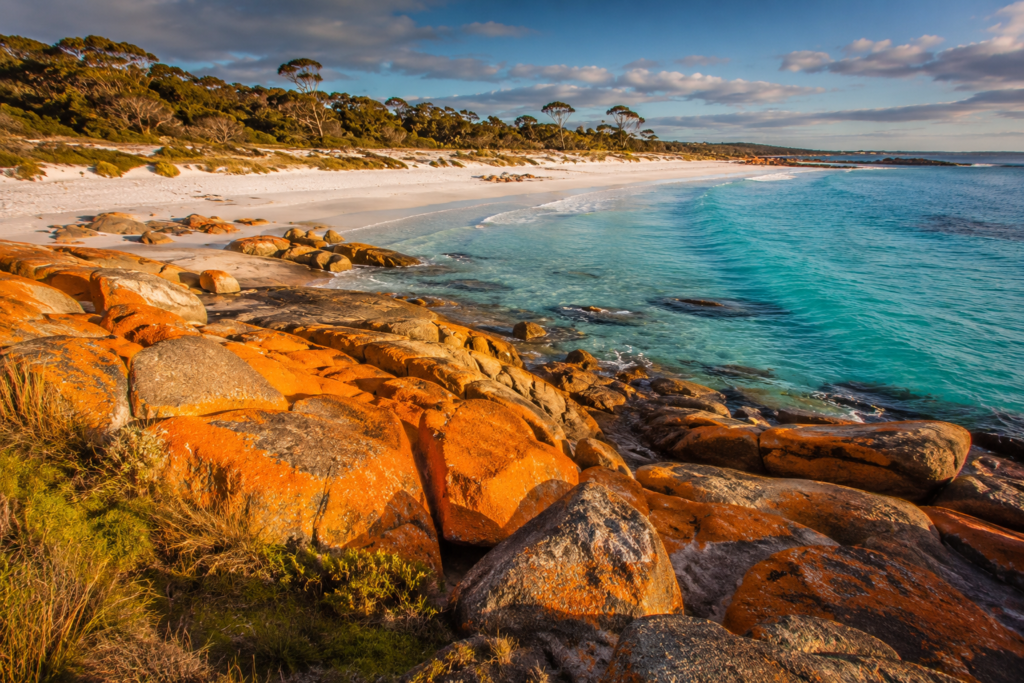
The drive north toward the Bay of Fires is one of Australia’s most underrated coastal road trips. The Bay of Fires is famous for its white beaches, bright turquoise water, and orange lichen-covered granite rocks. The colours genuinely appear surreal in good lighting conditions. Unlike many coastal destinations, much of this region still feels undeveloped and wild. Beaches often feel empty even during peak season.
Binalong Bay acts as the main access point and is one of the best places to stay nearby. The area is ideal for travellers wanting a quieter coastal experience focused on beaches, photography, and relaxation rather than nightlife or major tourism infrastructure. Tasmania’s cooler climate also makes the east coast excellent for wineries. Devil’s Corner Cellar Door combines wine tasting with sweeping ocean views and modern architecture, while nearby The Lobster Shack serves fresh seafood in a casual waterfront setting.
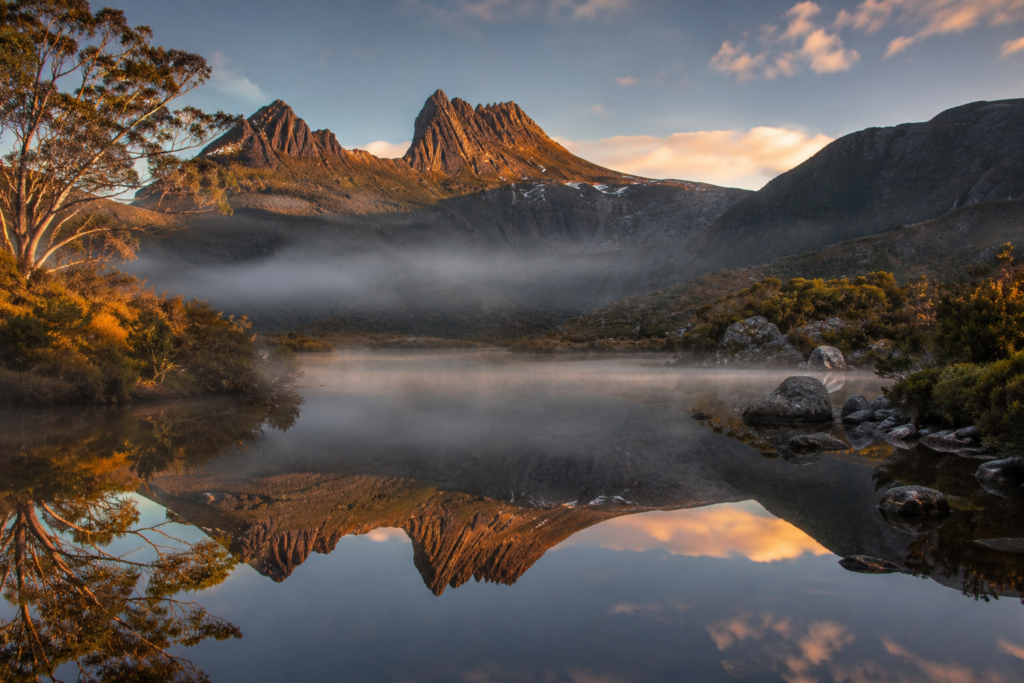
Further inland, Tasmania’s wilderness becomes even more dramatic. Cradle Mountain-Lake St Clair National Park is one of Australia’s most iconic alpine environments. Jagged peaks, glacial lakes, button grass plains, and dense rainforest create landscapes that feel more like New Zealand or parts of Europe than mainland Australia. Dove Lake Circuit is one of the best walks in Tasmania because it remains accessible while still offering extraordinary scenery. Early mornings are particularly beautiful when mist drifts across the lake beneath Cradle Mountain.
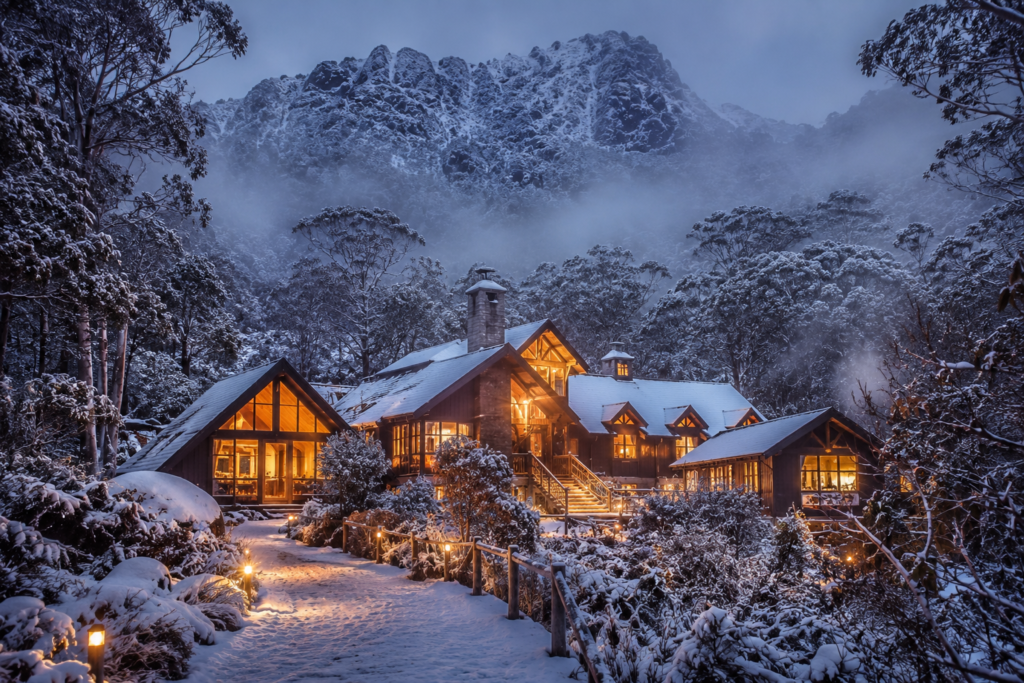
Wildlife becomes much more noticeable throughout this region. Wombats, wallabies, echidnas, and Tasmanian pademelons frequently appear around walking trails and lodges, particularly during dawn and dusk. Peppers Cradle Mountain Lodge is one of the best places to stay here. The cabins surrounded by forest create an incredibly cosy atmosphere, especially during colder months when fireplaces are lit and fog settles through the trees. Staying overnight in the national park completely changes the experience because the environment feels far more atmospheric once day visitors leave.
Tasmania’s weather changes quickly, especially in alpine areas, so packing properly matters even during summer. A reliable backpack like the Bagsmart 40L Carry-On Travel Backpack is ideal for Tasmania road trips because it keeps layers, camera gear, hiking essentials, and travel items organised without becoming bulky during frequent stops. Portable charging also becomes surprisingly important throughout Tasmania because long drives, photography, and navigation quickly drain batteries, particularly in remote regions. Something like the Anker 10,000mAh 22.5W Power Bank becomes genuinely useful throughout the trip.
Tasmania is also one of Australia’s best destinations for photography and content creation. Sunrise fog, mountain reflections, wildlife encounters, coastal scenery, and constantly changing weather create endless opportunities for capturing cinematic landscapes. Carrying a lightweight tripod like the Ulanzi MT-44 Extendable Vlog Tripod makes photographing sunrise, waterfalls, and low-light scenes significantly easier without adding excessive weight. Since Tasmania’s climate shifts constantly, layering clothing becomes more practical than overpacking. Using Amazon Basics Packing Cubes helps keep clothing organised during multi-stop road trips where travellers frequently move between hotels and lodges.
Long drives are unavoidable when exploring Tasmania properly, and some roads can feel isolated for hours at a time. Noise-cancelling headphones like the Sony WH-1000XM5 Noise Cancelling Headphones make flights, ferry rides, and downtime much more comfortable, particularly during long travel days between regions.
Launceston, Tasmania’s second-largest city, is often overlooked compared to Hobart but deserves far more attention. Cataract Gorge sits only minutes from the city centre and feels completely unexpected—a dramatic natural gorge with walking trails, cliffs, gardens, and swimming areas directly beside the city. Launceston is also one of Tasmania’s strongest food regions due to its proximity to farms, wineries, and produce suppliers. Stillwater Restaurant remains one of the city’s standout dining experiences, located inside a restored flour mill overlooking the river. Black Cow Bistro is another favourite known for Tasmanian beef and relaxed fine dining.
The Tamar Valley wine region begins just outside the city and contains numerous wineries surrounded by rolling countryside and river views. Pinot noir and sparkling wines are particularly strong throughout this region thanks to Tasmania’s cool climate.
For travellers wanting even more remote experiences, Tasmania’s west coast offers some of the wildest scenery in Australia. Strahan acts as the gateway to Macquarie Harbour and the Gordon River, where river cruises move through ancient rainforest and mirror-like waterways that feel almost untouched by modern development. Nearby Queenstown has a dramatically different appearance due to historic mining activity, with barren hills creating an almost lunar landscape.
Tasmania also has some of the best scenic drives in Australia. The road between Hobart and Freycinet combines vineyards, beaches, forests, and small coastal towns, while the Tarkine Drive in the northwest moves through one of the world’s largest remaining temperate rainforests.
Food becomes a major part of Tasmania travel because local produce is consistently exceptional. Beyond restaurants, roadside farm gates, bakeries, whisky distilleries, and small cafés often become unexpected highlights. Tasmania is particularly famous for whisky production, with Sullivan’s Cove becoming internationally recognised. Lark Distillery in Hobart is another excellent place to experience Tasmanian whisky culture.
The best time to visit Tasmania depends heavily on what kind of experience you want. Summer offers the best hiking weather and longest daylight hours, but it’s also the busiest season. Autumn is arguably Tasmania’s most underrated time to visit because cooler temperatures combine with beautiful changing foliage, particularly around inland regions. Winter transforms Cradle Mountain and alpine areas into atmospheric snow-covered landscapes, while spring brings wildflowers and fewer crowds.
Driving remains the best way to explore Tasmania properly. Public transport exists between major towns but doesn’t provide enough flexibility for national parks, coastal viewpoints, or remote regions. The biggest mistake travellers make in Tasmania is trying to rush through it too quickly. Distances on maps often appear short, but winding roads and constant scenic stops make travel slower than expected.
Tasmania works best when you leave room for unplanned moments: stopping at roadside bakeries, watching fog roll through forests, seeing wombats beside walking tracks, or discovering empty beaches with nobody else around. That slower pace is exactly what makes the island feel so different from mainland Australia.
Tasmania isn’t loud or overwhelming. It doesn’t constantly try to entertain you. Instead, it creates an atmosphere where landscapes, weather, food, and quietness become the experience itself. And for many travellers, that’s exactly why it becomes one of the most memorable places in Australia.
Leave a Reply