Your cart is currently empty!
Great Ocean Road & Melbourne Travel Guide: Australia’s Most Scenic Coastal Journey
The Great Ocean Road is one of those places that feels cinematic from the moment the drive begins. Winding along Victoria’s rugged southern coastline, the route combines dramatic ocean cliffs, rainforest, surf towns, wildlife, waterfalls, and some of Australia’s most famous landscapes into one unforgettable road trip. But what makes the experience so memorable isn’t only the scenery—it’s the atmosphere that surrounds the journey. Small seaside cafés, misty mornings beside the ocean, long coastal drives at sunset, and quiet forest walks create a slower, more immersive style of travel that feels completely different from Australia’s major cities.
Most travellers begin the experience in Melbourne, and that’s part of what makes this road trip so effective. Melbourne itself is one of Australia’s most creative and liveable cities, known for hidden laneway cafés, rooftop bars, art galleries, live music, and an exceptional food scene. Spending several days in Melbourne before heading toward the coast creates the perfect contrast between urban energy and natural landscapes.
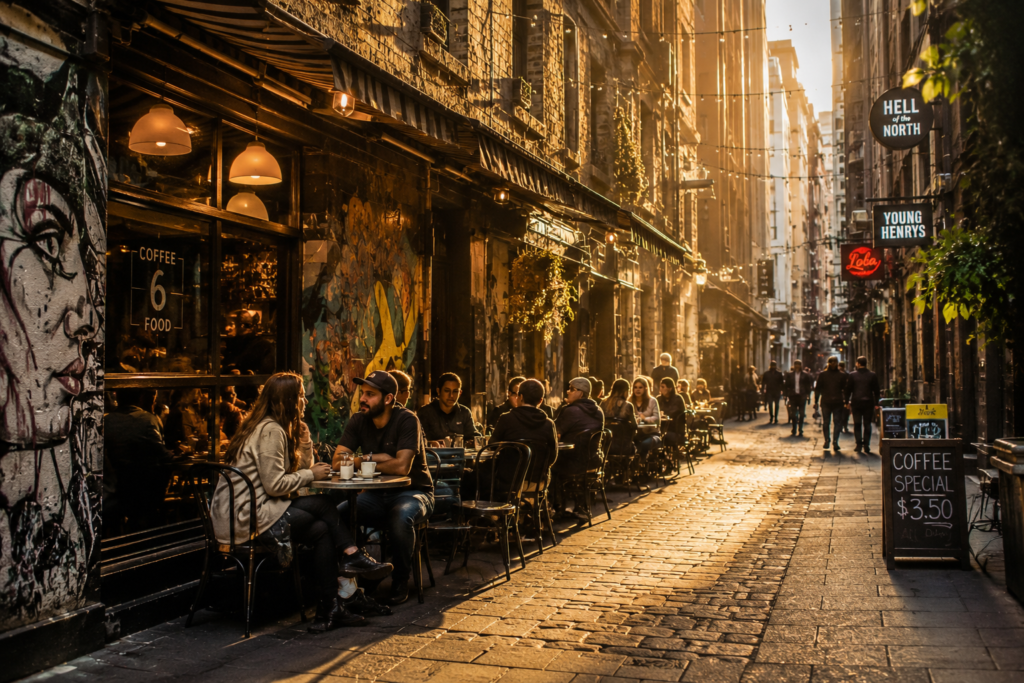
Melbourne’s CBD is surprisingly walkable and layered with character. Streets that initially appear ordinary often reveal hidden cafés, bookstores, wine bars, and restaurants tucked inside narrow laneways. Hosier Lane remains one of the city’s most famous spots for street art, while Degraves Street has become iconic for coffee culture and European-style café atmosphere. Unlike Sydney, Melbourne doesn’t rely on major landmarks as much as atmosphere. The city rewards wandering slowly rather than rushing between attractions.
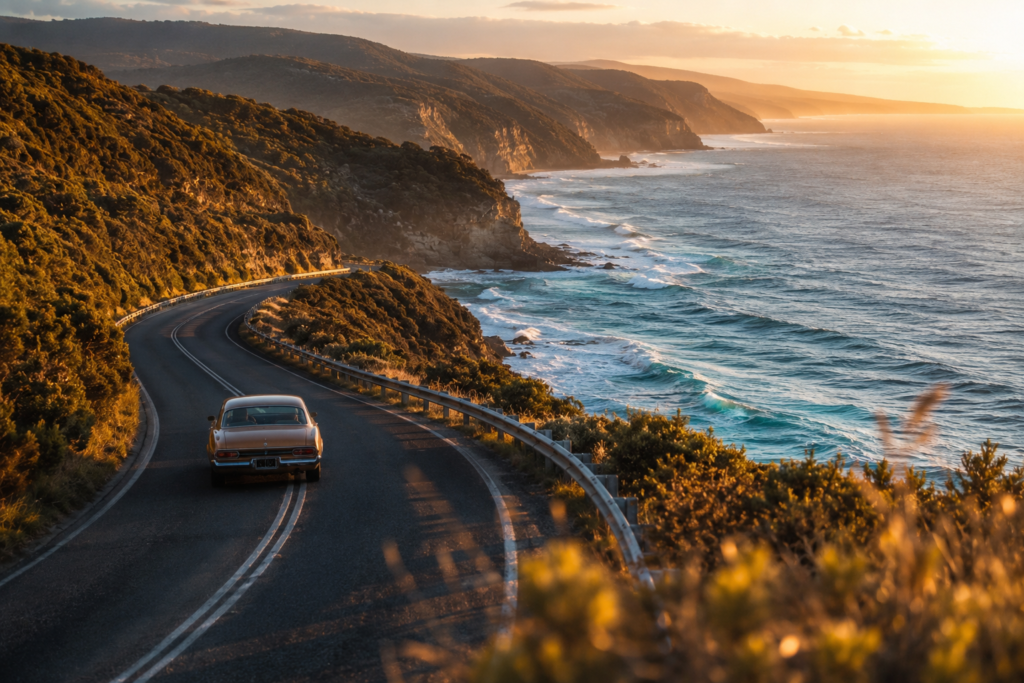
For coffee, Melbourne is considered one of the best cities in the world. Patrica Coffee Brewers is a favourite among locals for simple but exceptional coffee, while Higher Ground combines industrial architecture with premium brunch dishes in a dramatic converted warehouse space. Industry Beans in Fitzroy remains another standout café, especially for travellers interested in Melbourne’s specialty coffee culture.
Melbourne’s restaurant scene is equally impressive. Chin Chin remains one of the city’s most popular restaurants for modern Southeast Asian food and energetic atmosphere. Gimlet at Cavendish House offers refined dining inside one of Melbourne’s most beautiful interiors, while Tipo 00 is widely considered one of Australia’s best pasta restaurants. Queen Victoria Market is another essential experience, particularly for fresh produce, pastries, local cheeses, and multicultural food stalls.
Accommodation in Melbourne ranges from boutique laneway hotels to luxury international brands. The Langham Melbourne remains one of the city’s most elegant luxury hotels with views over the Yarra River, while QT Melbourne combines modern design with a more creative, stylish atmosphere. For boutique accommodation, The Cullen in Prahran offers art-inspired suites close to cafés and nightlife.
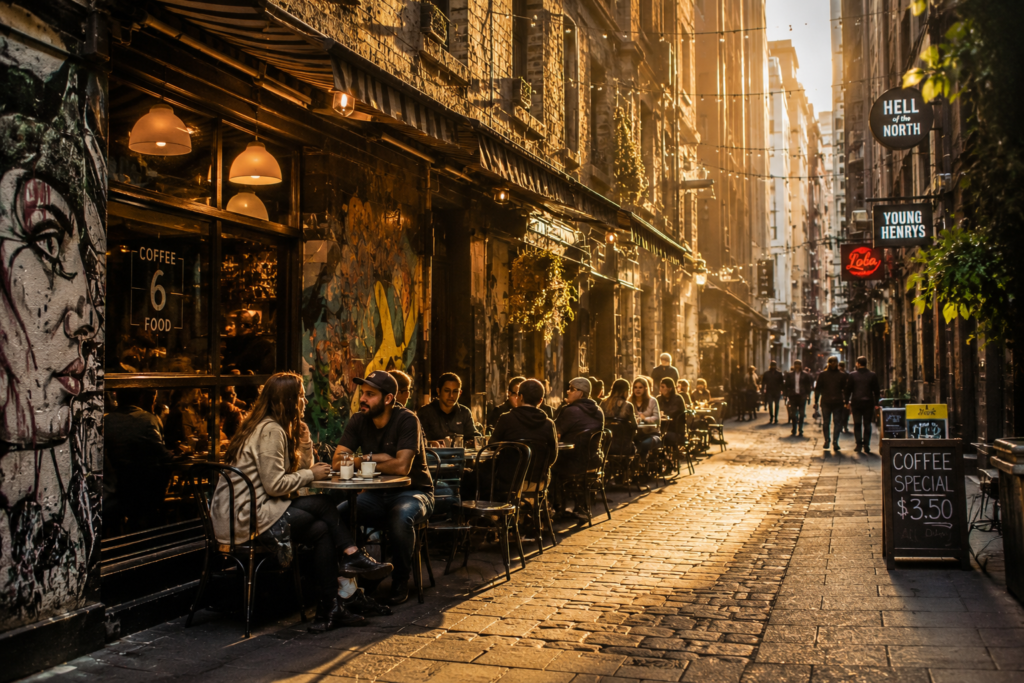
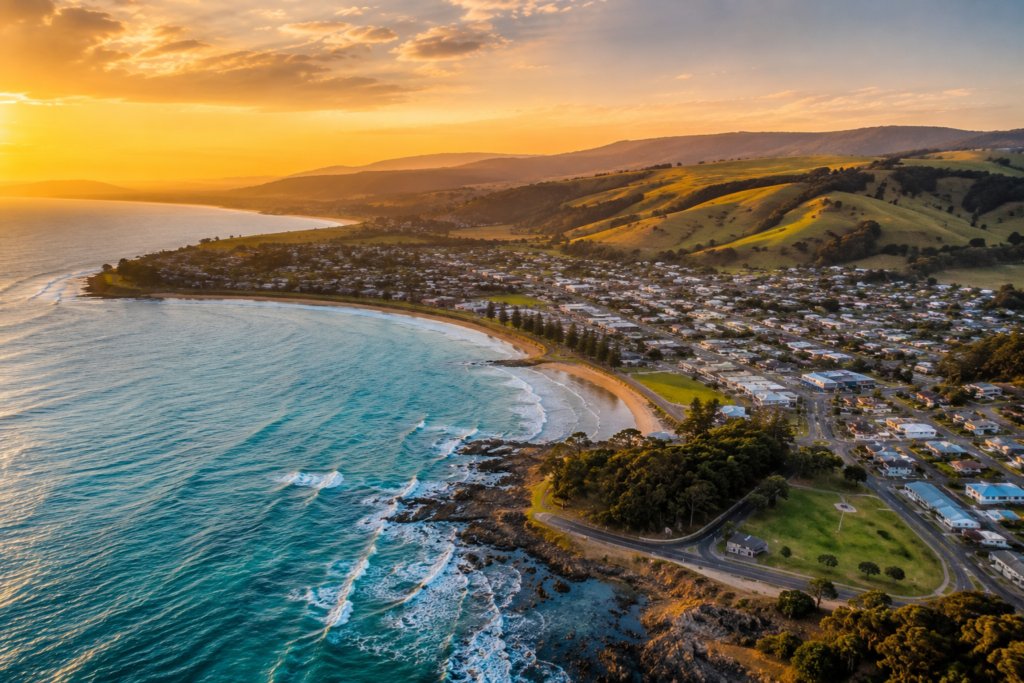
Before beginning the Great Ocean Road itself, many travellers stop at Torquay, officially the starting point of the drive and one of Australia’s most iconic surf towns. Torquay has a relaxed atmosphere built around beaches, surfing culture, and coastal cafés. Bells Beach, located nearby, is one of the world’s most famous surf breaks and hosts international surfing competitions each year. Even for non-surfers, standing above the cliffs watching massive waves crash against the coastline feels dramatic and uniquely Australian.
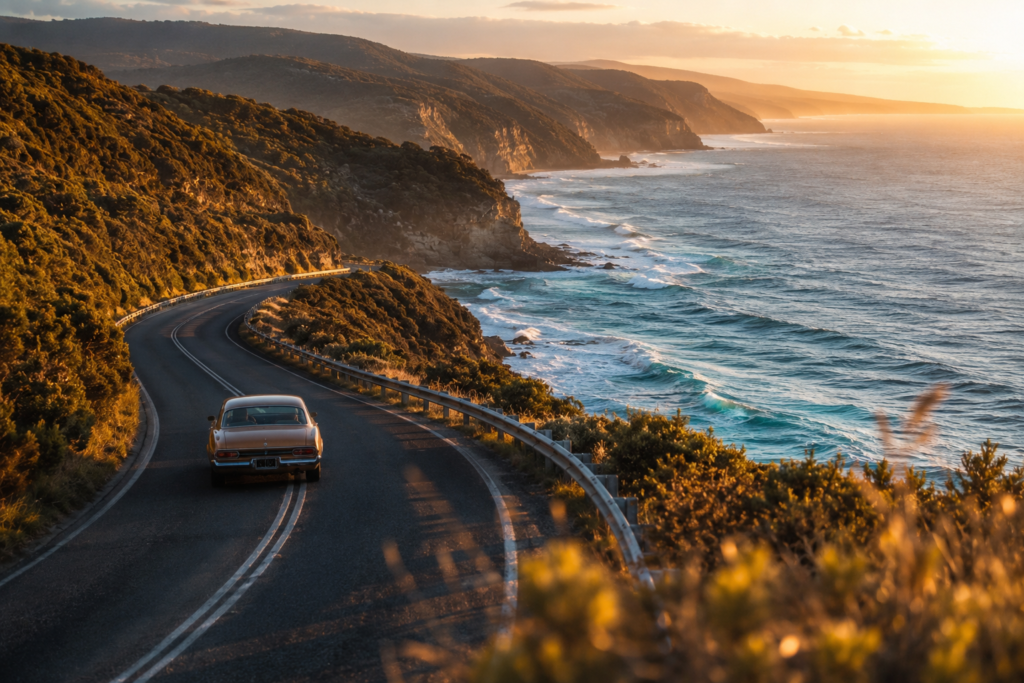
As the drive continues southwest, the scenery becomes increasingly spectacular. One of the best things about the Great Ocean Road is that the journey itself constantly feels rewarding. Nearly every section of road reveals new ocean views, cliffs, forests, or beaches worth stopping for. Unlike many road trips where destinations matter more than the drive, the Great Ocean Road is entirely about the experience between locations.
Lorne is one of the most popular coastal towns along the route and works well as an overnight stop. Surrounded by ocean on one side and rainforest on the other, it combines relaxed beach-town energy with excellent food and accommodation. Teddy’s Lookout offers one of the region’s most famous viewpoints, particularly at sunrise or sunset when the coastline glows gold beneath the cliffs.
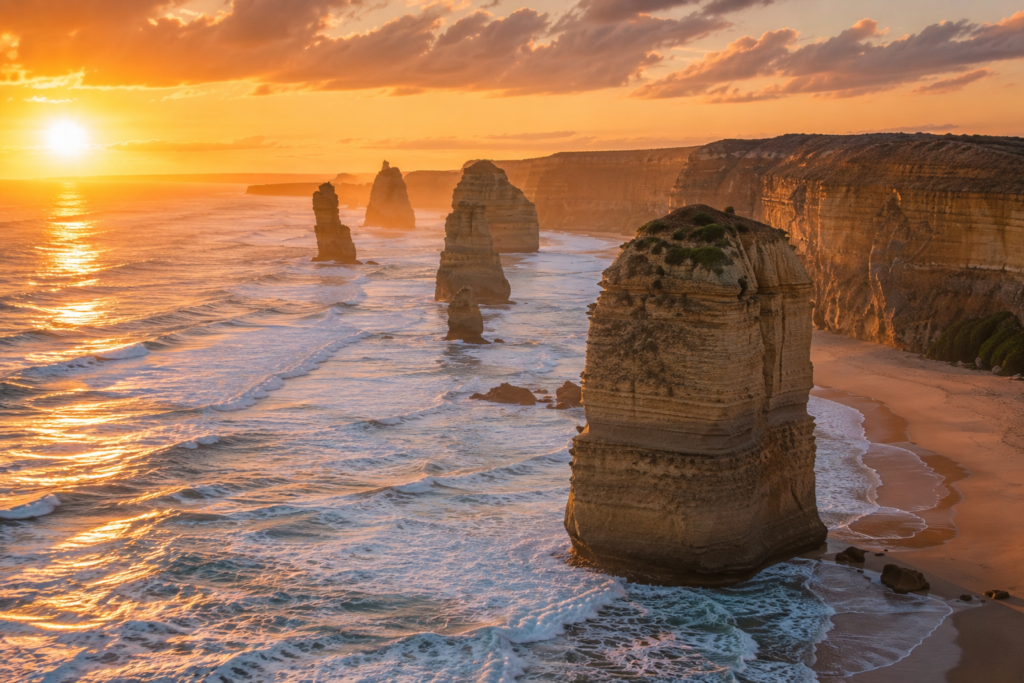
Lorne’s café scene has grown significantly in recent years. Moons Espresso Bar is known for strong coffee and relaxed atmosphere, while Ipsos Restaurant delivers elevated dining focused on local produce and Mediterranean flavours. Cumberland Lorne Resort offers luxury accommodation close to both the beach and town centre, while the historic Mantra Lorne provides a more classic coastal hotel experience.
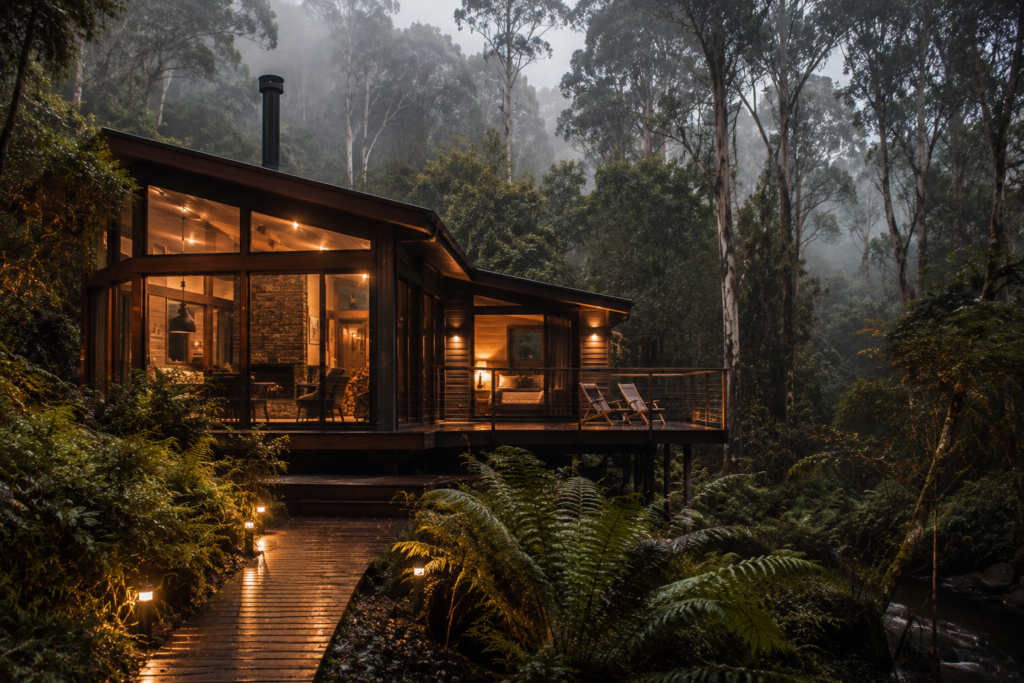
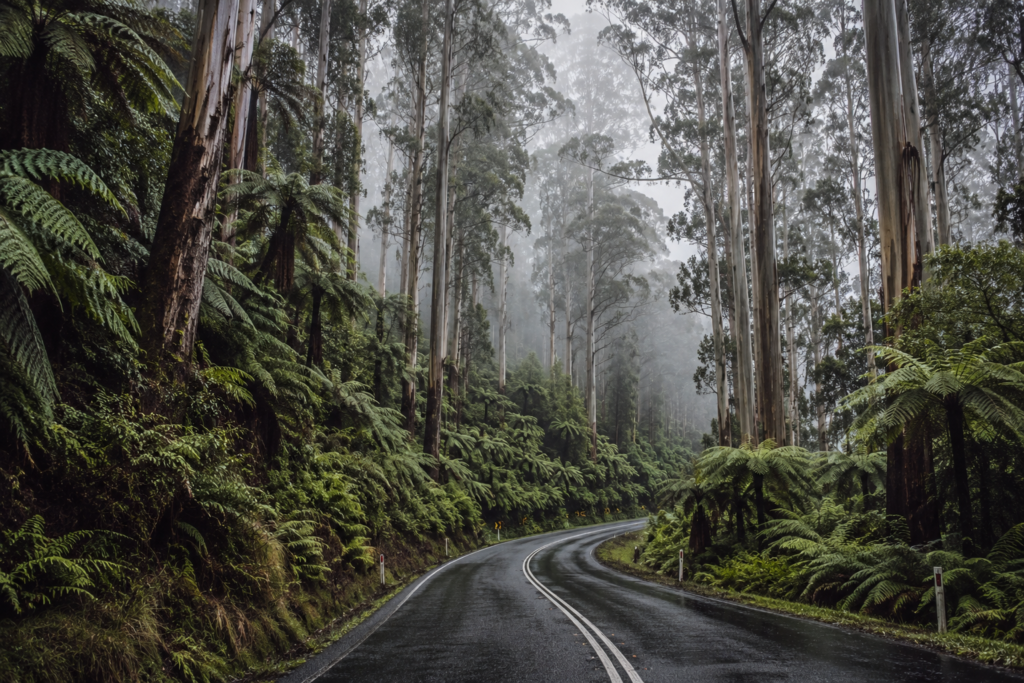
The rainforest sections surrounding Lorne feel completely different from the open coastline. Great Otway National Park contains towering eucalyptus forests, fern gullies, waterfalls, and walking trails that often feel ancient and untouched. Erskine Falls is one of the most accessible waterfalls in the region, while Hopetoun Falls offers a more dramatic rainforest atmosphere surrounded by dense greenery and mist.
Apollo Bay is another essential stop further along the route and often becomes a favourite among travellers because of its slower pace. Fishing boats, beaches, rolling green hills, and oceanfront cafés create a peaceful atmosphere that encourages staying longer than planned. Fresh seafood becomes a major highlight here, particularly local scallops, mussels, and fish.
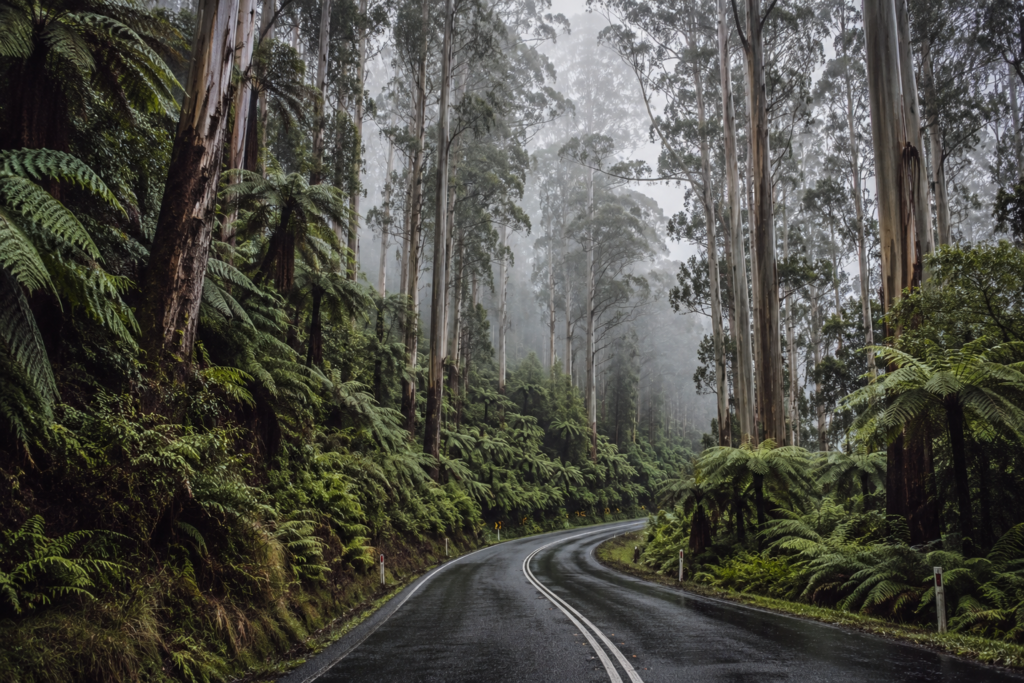
Chris’s Beacon Point Restaurant just outside Apollo Bay is widely regarded as one of the best dining experiences on the Great Ocean Road. Sitting high above the coastline, the restaurant combines panoramic ocean views with exceptional Mediterranean-inspired cuisine focused on local ingredients.
Road trips along the Great Ocean Road work best when travellers pack efficiently and prioritise comfort during long driving days. A reliable backpack like the Bagsmart 40L Carry-On Travel Backpack becomes extremely useful for keeping clothing, camera gear, chargers, and travel essentials organised while frequently moving between hotels and coastal towns.
Portable charging is also surprisingly important throughout the drive, especially for photography, navigation, and content creation. Something like the Anker 10,000mAh 22.5W Power Bank becomes genuinely useful during long days exploring lookouts, beaches, and hiking trails without consistent access to power outlets.
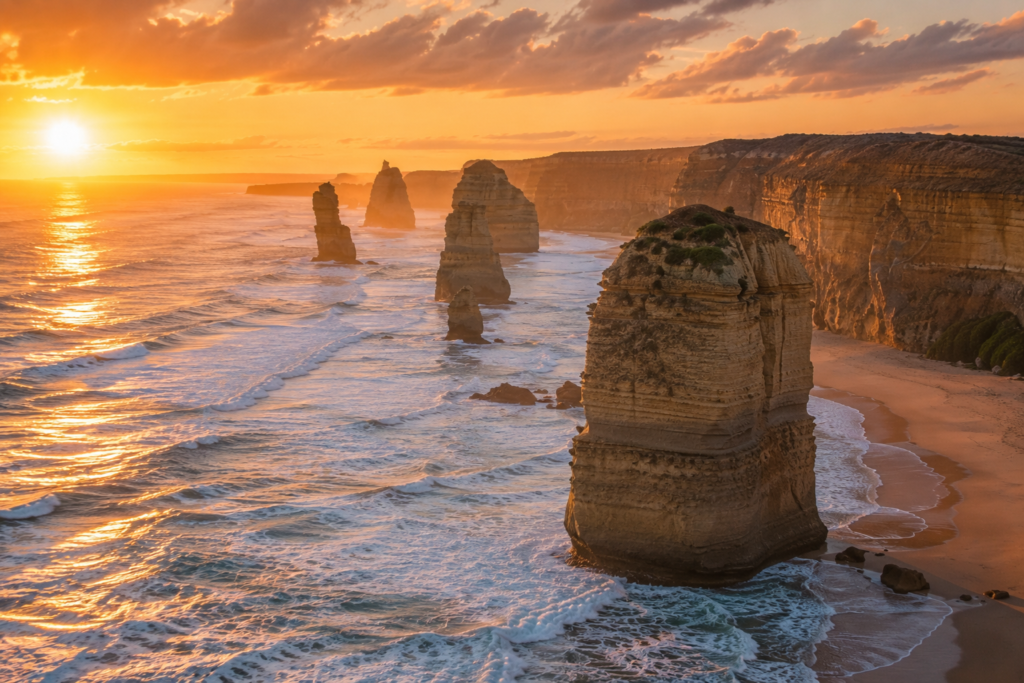
The Twelve Apostles are undoubtedly the most famous attraction along the Great Ocean Road and one of Australia’s most photographed landscapes. These massive limestone stacks rising from the Southern Ocean feel even more dramatic in person than they appear in photographs. Sunrise and sunset are easily the best times to visit because softer light transforms the cliffs and ocean into deep gold and orange tones.
Nearby Loch Ard Gorge is equally impressive and often less crowded. Towering cliffs surround a sheltered beach while the story of the Loch Ard shipwreck adds historical depth to the landscape. The entire coastline in this section feels wild and powerful, shaped constantly by wind and ocean erosion.
Photography becomes a huge part of the Great Ocean Road experience because nearly every stop feels cinematic. Carrying a lightweight tripod like the Ulanzi MT-44 Extendable Vlog Tripod helps significantly when photographing sunrise, long exposures of waves, or low-light coastal scenes.

Port Campbell is one of the best places to stay near the Twelve Apostles. The small town provides easy access to the major coastal landmarks while maintaining a relaxed atmosphere away from larger tourist centres. Waves Café Bar and Restaurant offers excellent seafood and ocean views, while nearby accommodation options like Anchors Port Campbell combine luxury with secluded coastal scenery.
Beyond the coastline, Victoria’s wildlife experiences add another layer to the trip. Kennett River is famous for wild koalas resting high in eucalyptus trees directly beside the road. Seeing kangaroos grazing near beaches at sunset also becomes surprisingly common throughout parts of the route.
Further inland, the Otway region contains some of Australia’s most atmospheric forests. California Redwoods near Beech Forest create a completely unexpected landscape where towering imported trees form cinematic walking paths surrounded by fog and filtered sunlight.
Because weather along the southern coast changes constantly, layering clothing becomes far more practical than overpacking large suitcases. Using Amazon Basics Packing Cubes helps organise jackets, beachwear, hiking clothes, and camera accessories efficiently during multi-stop road trips.
Long flights and extended driving days are common for travellers exploring Australia properly, particularly international visitors. Noise-cancelling headphones like the Sony WH-1000XM5 Noise Cancelling Headphones make flights, airport transfers, and downtime significantly more comfortable, especially during long-haul travel.
Phillip Island is another iconic destination often combined with a Melbourne and Great Ocean Road itinerary. Known for its wildlife, rugged coastline, and famous Penguin Parade, the island provides a completely different coastal experience. Watching hundreds of little penguins emerge from the ocean at sunset and return across the beach is one of Australia’s most unique wildlife experiences.
The Nobbies coastline on Phillip Island also offers dramatic ocean scenery with boardwalks overlooking cliffs and seal colonies. Cape Woolamai provides excellent hiking trails with panoramic coastal views and fewer crowds compared to other major tourist areas.
Returning to Melbourne after the Great Ocean Road often makes travellers appreciate the city even more. Rooftop bars, wine bars, galleries, and cafés feel especially rewarding after days spent driving through forests and coastlines.
Melbourne’s nightlife remains one of Australia’s strongest. Rooftop Bar in the CBD combines skyline views with relaxed atmosphere, while Eau De Vie offers hidden speakeasy-style cocktails in a more intimate setting. Live music venues throughout Fitzroy, Collingwood, and Brunswick help give Melbourne its distinctive creative energy.
The best time to experience the Great Ocean Road is generally between late spring and early autumn, when weather tends to be milder and daylight lasts longer. Summer provides warmer beach conditions but also brings larger crowds. Autumn is often underrated because softer light, cooler temperatures, and quieter roads create a more atmospheric experience.
Winter along the Great Ocean Road can actually feel incredibly cinematic. Storm clouds rolling over the Southern Ocean, empty beaches, and mist-covered forests create dramatic scenery that photographers particularly appreciate.
Driving remains the best and most flexible way to experience the region properly. While guided tours exist, they rarely allow enough time to enjoy the smaller towns, cafés, beaches, and hidden lookouts that make the journey memorable. The Great Ocean Road works best when travellers move slowly and leave room for unexpected stops.
What ultimately makes the Great Ocean Road special is that it combines multiple experiences into one journey. It’s not only about beaches or cities or forests—it’s the contrast between them all. One moment you’re drinking coffee in a creative Melbourne laneway café, and the next you’re standing alone beside enormous ocean cliffs while waves crash below.
That constant shift between urban culture, wildlife, rainforest, surf towns, luxury accommodation, and rugged coastline is what gives the journey its unique atmosphere. It feels cinematic, peaceful, adventurous, and nostalgic all at once.
And for many travellers, it becomes not only one of the best road trips in Australia, but one of the most memorable travel experiences anywhere in the world.
Leave a Reply