Your cart is currently empty!
Emerald Creek Falls Travel Guide: The Complete Guide to Mareeba’s Hidden Paradise
Discover One of Tropical North Queensland’s Most Beautiful Waterfalls
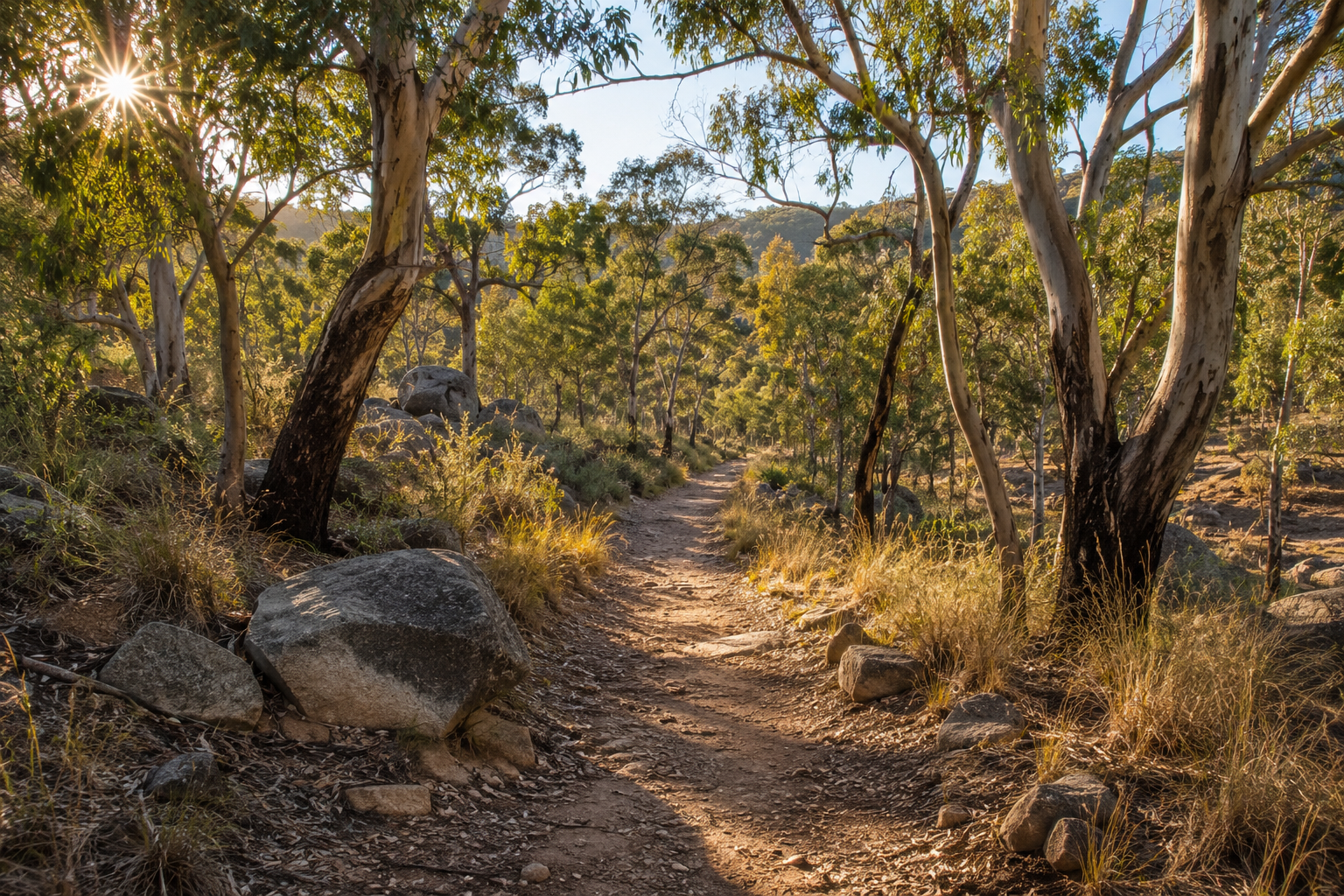
When most travellers think about Tropical North Queensland, iconic destinations like the Great Barrier Reef, Daintree Rainforest, and Kuranda usually come to mind. While these world-famous attractions certainly deserve their reputation, some of the region’s most rewarding experiences are found well away from the crowds. Tucked away within the rugged granite country west of Cairns lies Emerald Creek Falls, one of Queensland’s most spectacular yet surprisingly underappreciated waterfalls. Located within the Emerald Creek section of Dinden National Park, just outside Mareeba, this breathtaking destination combines crystal-clear swimming holes, towering granite boulders, scenic bushwalking, abundant wildlife, and some of the most photogenic landscapes in the Atherton Tablelands.
Unlike many waterfalls hidden deep within tropical rainforest, Emerald Creek Falls offers something entirely different. The surrounding landscape is characterised by open eucalyptus woodland, ancient granite outcrops, native grasslands, and wide open skies. During the dry season, golden grasses contrast beautifully with smooth grey granite boulders and the vibrant turquoise pools that give Emerald Creek its name. During the wet season, the waterfall transforms dramatically as powerful torrents of water thunder over the granite escarpment, creating an entirely different experience. This remarkable seasonal contrast means no two visits ever feel quite the same.
One of the reasons Emerald Creek Falls remains so special is that it has largely escaped the heavy tourism seen at many other Queensland waterfalls. While locals from Mareeba, Cairns and the Atherton Tablelands have enjoyed the area for generations, many interstate and international visitors still overlook it completely. That means you can often spend hours exploring the creek, swimming beneath the falls or photographing the landscape without encountering large crowds. Even during school holidays, the area generally feels peaceful compared to many of Australia’s better-known natural attractions.
The drive itself forms part of the adventure. Leaving the tropical coastline behind, the road climbs through Kuranda before emerging onto the drier landscapes of the Atherton Tablelands. As you descend toward Mareeba, the scenery changes noticeably. Dense rainforest gradually gives way to open woodland, termite mounds begin appearing beside the road, and granite hills dominate the horizon. The climate also becomes warmer and drier, with Mareeba enjoying over 300 sunny days each year. This transition between rainforest and savanna creates one of Australia’s most unique ecological regions and helps explain why Emerald Creek Falls feels so different from other waterfalls near Cairns.
For photographers, Emerald Creek Falls offers almost endless opportunities. Sunrise bathes the granite formations in soft golden light while long shadows stretch across the creek. During the middle of the day, crystal-clear pools reveal every submerged rock beneath vibrant blue water. Late afternoon provides warm directional light that enhances the colours of the surrounding woodland, while after heavy rain the waterfall becomes a powerful spectacle of white water crashing through the granite gorge. Every season reveals another side of this remarkable location.
Whether you’re planning a relaxing day swimming in natural pools, an adventurous hike across granite slabs, a wildlife photography trip, or simply looking to discover one of Far North Queensland’s hidden gems, Emerald Creek Falls deserves a place on every itinerary.
Where Is Emerald Creek Falls?
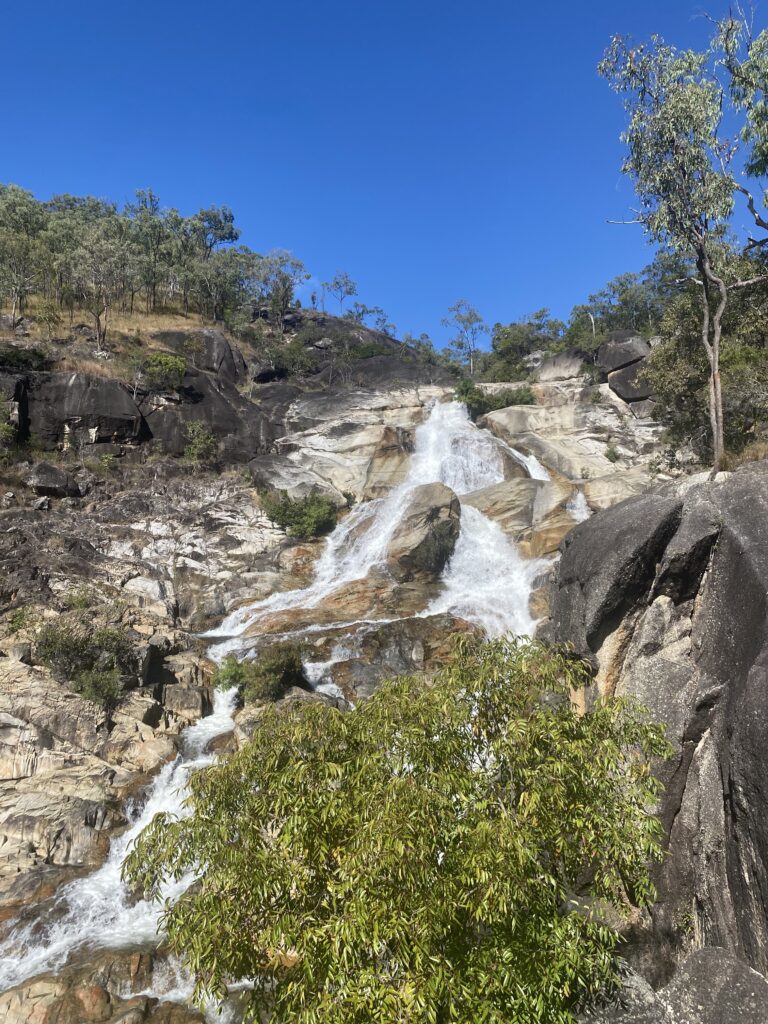
Emerald Creek Falls is located approximately 20 kilometres south of Mareeba and around 65 kilometres west of Cairns in Tropical North Queensland. The falls lie within Dinden National Park, a protected area managed by the Queensland Parks and Wildlife Service. Despite being less than ninety minutes from Cairns, the landscape feels completely different from the humid coastline. Visitors are instead greeted by rolling granite hills, scattered eucalyptus forests and open woodlands that are home to an impressive variety of native wildlife.
One of the great advantages of Emerald Creek Falls is its accessibility. Unlike some waterfalls that require four-wheel-drive vehicles or lengthy hikes, the falls can be reached using a conventional two-wheel-drive vehicle for most of the year. The final section follows a sealed road leading to a well-maintained car park equipped with picnic facilities, toilets and information boards. From there, a relatively easy walking track leads visitors to the creek and waterfall.
The drive from Cairns takes approximately one hour and fifteen minutes depending on traffic. Travelling via the Kennedy Highway through Kuranda provides spectacular views across the coastal rainforest before reaching the drier tablelands around Mareeba. Many visitors choose to combine Emerald Creek Falls with other nearby attractions such as Granite Gorge Nature Park, Davies Creek, Lake Tinaroo or the wineries surrounding Mareeba.
Those staying in Mareeba can reach the falls in around twenty minutes, making them an excellent morning or afternoon destination. The proximity also makes Emerald Creek Falls popular among local families looking for a refreshing swim during North Queensland’s warmer months.
Why Emerald Creek Falls Is Different From Other Waterfalls
Many of Queensland’s famous waterfalls are surrounded by dense rainforest. Josephine Falls, Millaa Millaa Falls, Crystal Cascades and Behana Gorge all offer beautiful tropical settings, but Emerald Creek Falls stands apart because of its distinctive granite landscape. Rather than being enclosed by towering rainforest trees, the falls flow through enormous granite boulders that have weathered over millions of years into smooth domes, shelves and natural swimming pools.
These granite formations create an almost sculptural landscape unlike anywhere else in the Cairns region. The creek twists through polished rock platforms before dropping over the main waterfall into large pools below. Smaller cascades continue downstream, creating numerous places to swim, relax or simply enjoy the sound of flowing water.
The surrounding open woodland also allows significantly more sunlight to reach the creek than many rainforest waterfalls. This enhances the brilliant colours of the water, producing striking turquoise and emerald tones under clear skies. Combined with the golden grasses and silver-grey granite, the scenery has a distinctly Australian character that differs dramatically from the lush rainforest environments found elsewhere in Tropical North Queensland.
Because the terrain is relatively open, visitors can explore much larger sections of the creek than at many waterfalls. Natural rock platforms provide comfortable places to sit, picnic or photograph the surrounding landscape without feeling confined to a single viewing platform.
Best Time to Visit Emerald Creek Falls
Although Emerald Creek Falls can be visited throughout much of the year, each season offers a unique experience.
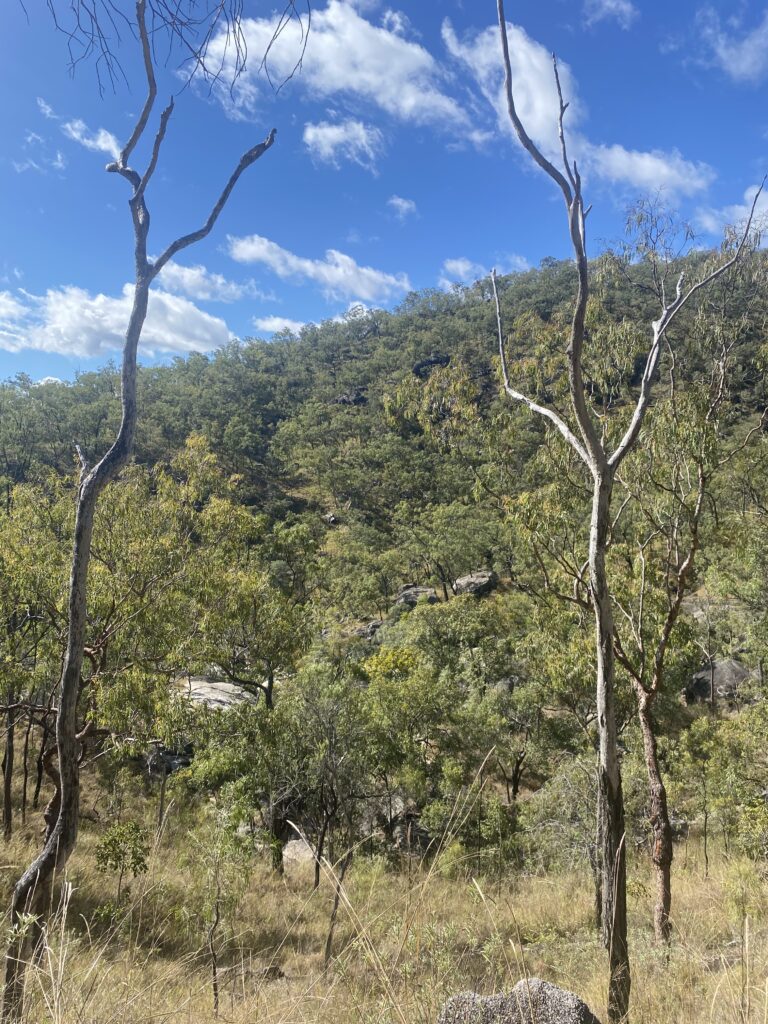
During the dry season, typically from May until October, the weather is warm, humidity is low and water clarity reaches its peak. This period provides the best swimming conditions, with calm pools perfect for relaxing after the short walk from the car park. The reduced rainfall also makes the granite rocks less slippery and easier to explore. Blue skies dominate most days, making this the ideal season for landscape photography.
The shoulder months of April and November often provide an excellent balance between water flow and comfortable weather. Some seasonal rains maintain healthy creek levels while temperatures remain pleasant enough for swimming and hiking.
The wet season, generally from December through March, transforms Emerald Creek Falls into an entirely different destination. Heavy monsoonal rainfall dramatically increases water volume, creating an impressive waterfall cascading over the granite cliffs. While swimming is often unsafe during periods of high flow, photographers are rewarded with dramatic scenery and lush green vegetation that flourishes following seasonal rains.
Visitors should always check local weather conditions before travelling during the wet season. Flash flooding can occur rapidly after heavy rainfall, and creek crossings should never be attempted when water levels are rising.
For photographers seeking the best lighting, early morning remains the standout choice. Soft sunlight illuminates the granite formations while avoiding the harsh midday shadows common during North Queensland summers. Late afternoon also provides beautiful golden light as the sun begins dropping behind the surrounding hills.
Walking to the Falls
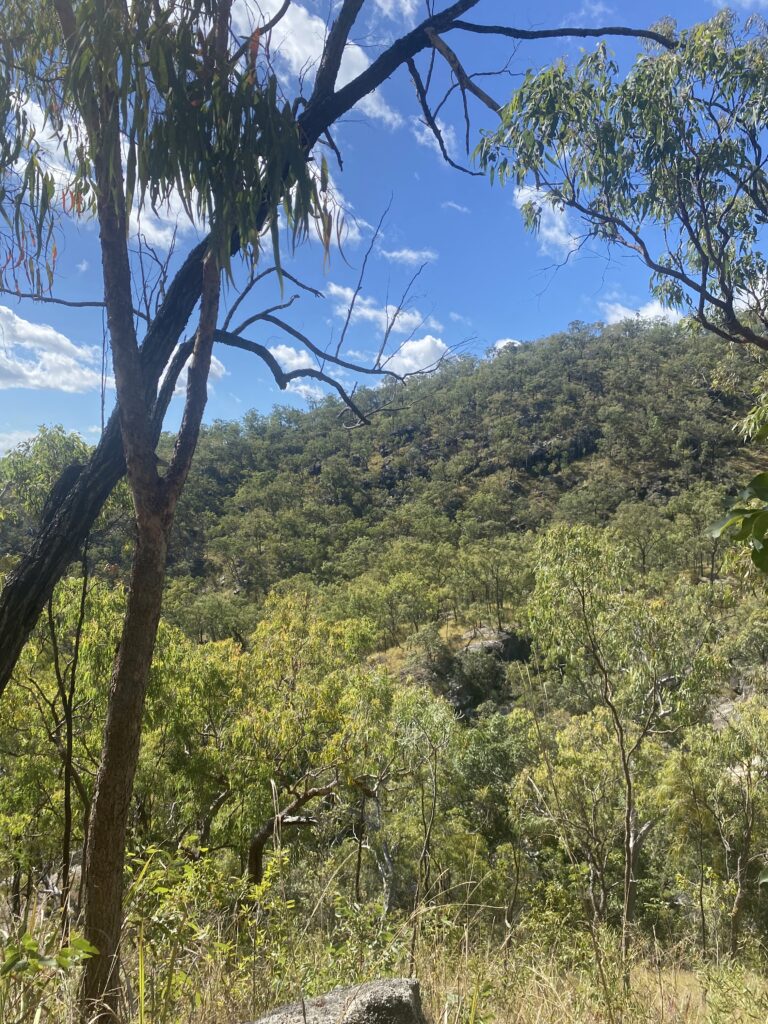
One of Emerald Creek Falls’ greatest strengths is that visitors of almost all fitness levels can enjoy the experience. From the main car park, a well-defined walking track gradually descends toward the creek through open woodland. The walk is relatively short, taking most visitors between fifteen and twenty minutes at a relaxed pace.
Along the track, interpretive signs introduce visitors to the local environment and explain some of the unique plant and animal species found within Dinden National Park. Towering bloodwoods, ghost gums, paperbarks and wattles provide intermittent shade while native grasses sway beneath the eucalyptus canopy.
The sound of flowing water gradually becomes louder as the trail approaches Emerald Creek. Eventually the trees open to reveal expansive granite slabs leading toward the falls. Many first-time visitors are surprised by the scale of the granite landscape, which stretches across a wide section of the valley and creates numerous interconnected pools and cascades.
The final approach involves walking carefully across natural rock surfaces. While generally straightforward during dry conditions, appropriate footwear is strongly recommended since smooth granite can become slippery when wet.
Swimming at Emerald Creek Falls
Swimming remains one of the biggest reasons people visit Emerald Creek Falls, particularly during the cooler months of the dry season. The creek forms numerous natural pools of varying depths, allowing visitors to choose between shallow areas suitable for paddling and deeper sections ideal for swimming.
The main pool beneath the waterfall provides a spectacular setting, with cool clear water surrounded by towering granite walls. Smaller pools downstream offer quieter alternatives for those seeking a more peaceful experience away from the main waterfall.
Water temperatures remain refreshing throughout much of the year without becoming uncomfortably cold. During the dry season, many visitors spend several hours moving between different pools, relaxing on sun-warmed granite slabs and enjoying picnics beside the creek.
While swimming conditions are generally excellent during periods of low flow, visitors should always assess conditions carefully. Following heavy rainfall, strong currents and submerged hazards may develop quickly. Granite rocks can also become extremely slippery, making caution essential when entering or exiting the water.
Wildlife Around Emerald Creek Falls
One of the greatest pleasures of visiting Emerald Creek Falls is the opportunity to experience Far North Queensland’s remarkable wildlife in its natural habitat. Unlike the dense rainforests closer to the coast, the open eucalyptus woodlands surrounding Emerald Creek support an entirely different range of species, many of which are uniquely adapted to Australia’s tropical savanna environments.
Early mornings often begin with the calls of kookaburras echoing across the valley while rainbow bee-eaters dart gracefully through the air catching insects in flight. Red-winged parrots, pale-headed rosellas, black cockatoos, dollarbirds and sacred kingfishers are frequently observed along the creek corridor, particularly during the dry season when birds concentrate around permanent water sources.
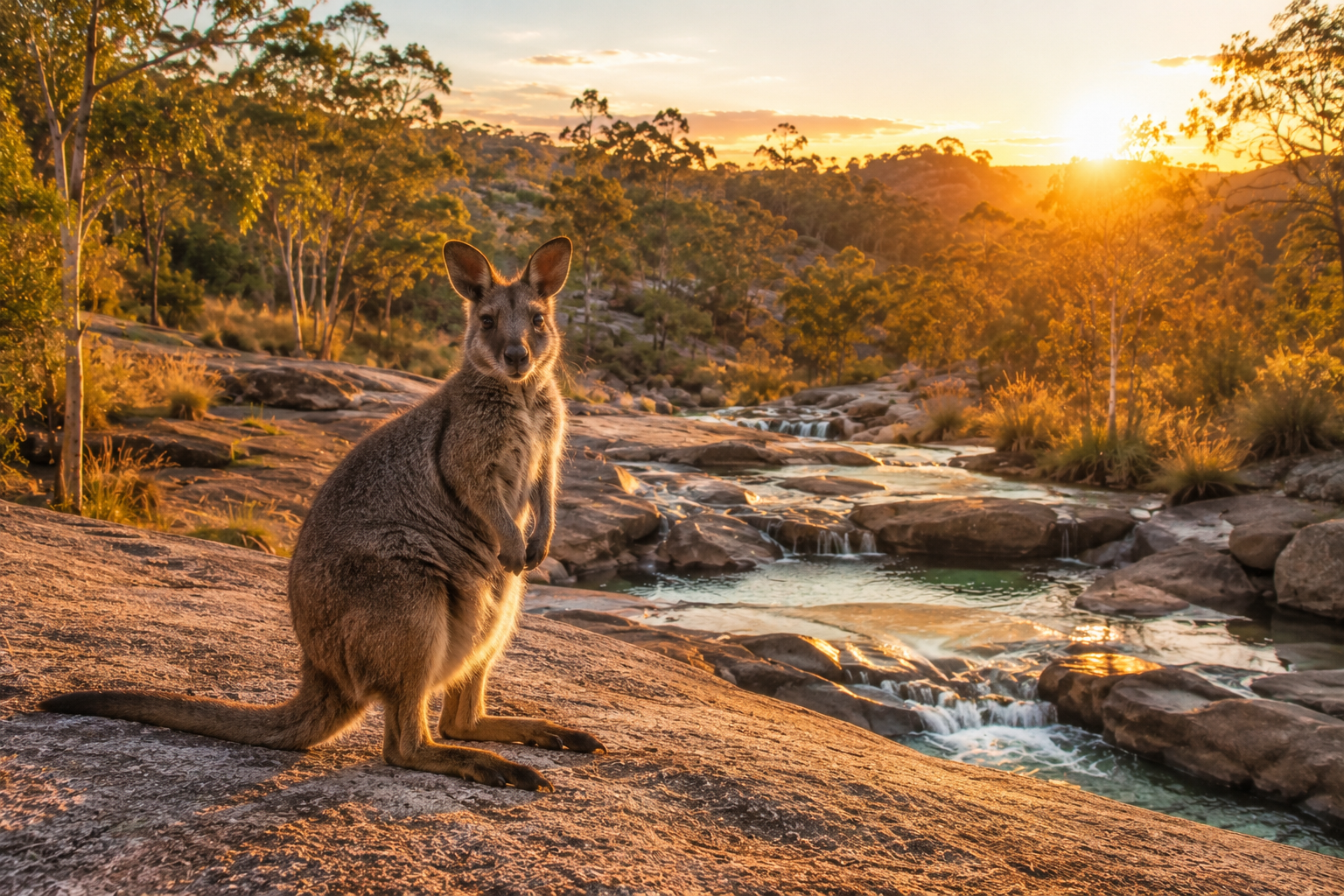
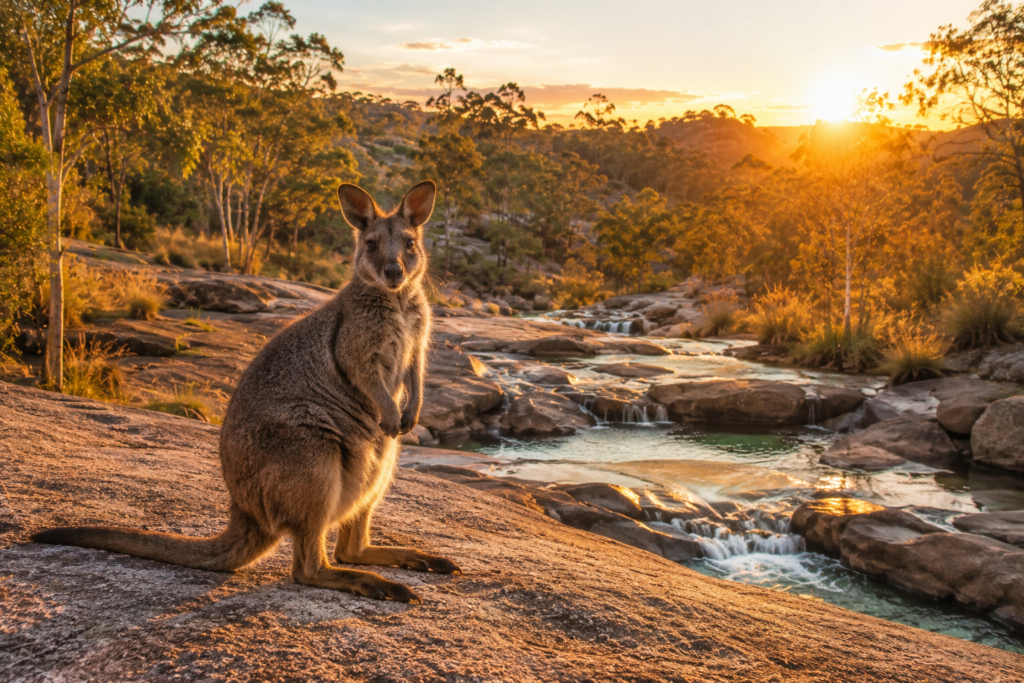
Mammals are equally impressive. Agile wallabies are commonly seen grazing among the grasses near dawn and dusk, while rock wallabies occasionally shelter among the granite boulders. The surrounding woodland also provides habitat for northern quolls, although these elusive carnivorous marsupials are rarely encountered due to their primarily nocturnal behaviour. Echidnas, brush-tailed possums and various native rodents also inhabit the area, contributing to the rich biodiversity of Dinden National Park.
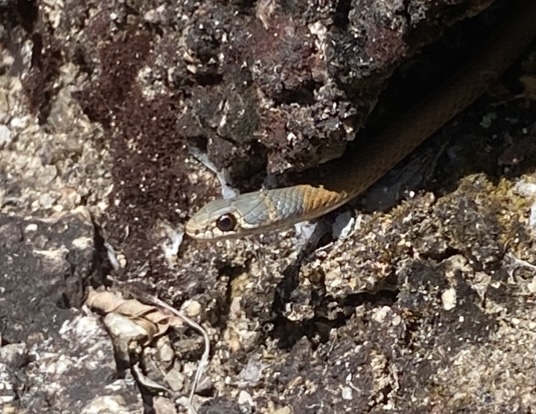
Reptiles are another highlight. Lace monitors patrol the granite outcrops searching for food, while eastern water dragons bask beside the pools before disappearing into the water when disturbed. Numerous skinks, geckos and harmless snakes also form part of this healthy woodland ecosystem.
For wildlife photographers, patience is often rewarded. Simply sitting quietly beside the creek for an hour can reveal an astonishing diversity of birds and animals going about their daily lives.
Exploring Beyond the Main Falls
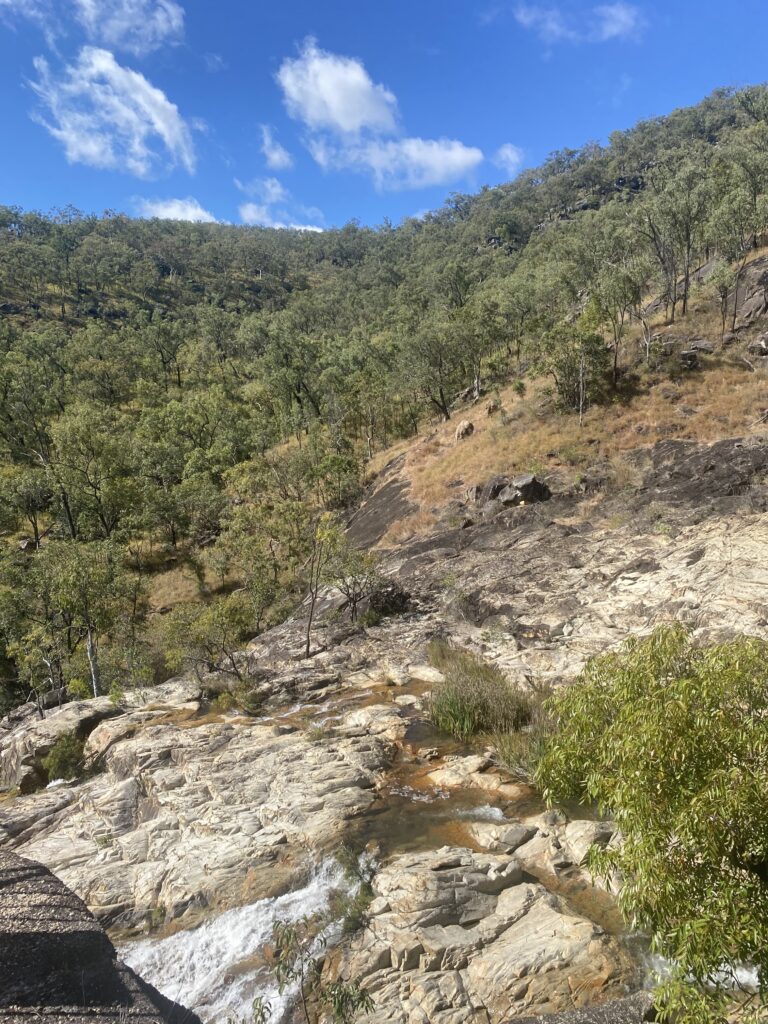
While the main waterfall is undoubtedly the centrepiece of Emerald Creek Falls, many visitors discover that the surrounding creek system is equally rewarding. Upstream and downstream from the main cascade, Emerald Creek winds its way through enormous granite slabs that have been sculpted by millions of years of flowing water. These polished rock formations create countless small waterfalls, tranquil rock pools, miniature rapids, and shallow swimming holes that invite exploration.
One of the joys of spending a full day at Emerald Creek Falls is simply wandering along the granite creek bed. Every bend reveals another picturesque scene. Smooth granite shelves provide ideal places to sit with your feet in the cool water, while deeper pools offer opportunities for another swim before continuing your exploration. Because the creek meanders through such a wide granite valley, visitors rarely feel confined to one location. Instead, the entire landscape becomes something to discover at your own pace.
Photographers are particularly rewarded by these quieter sections of the creek. Reflections of eucalyptus trees shimmer across still pools, while water flowing gently over granite creates beautiful long-exposure photography opportunities. During the dry season, the exceptionally clear water often reveals submerged boulders and sandy creek beds beneath brilliant shades of emerald and turquoise.
Families with children often enjoy these calmer sections even more than the main waterfall. Smaller pools provide safe paddling areas during suitable conditions, while the expansive granite platforms offer plenty of space for picnics and relaxing between swims.
⸻
The Geology Behind Emerald Creek Falls
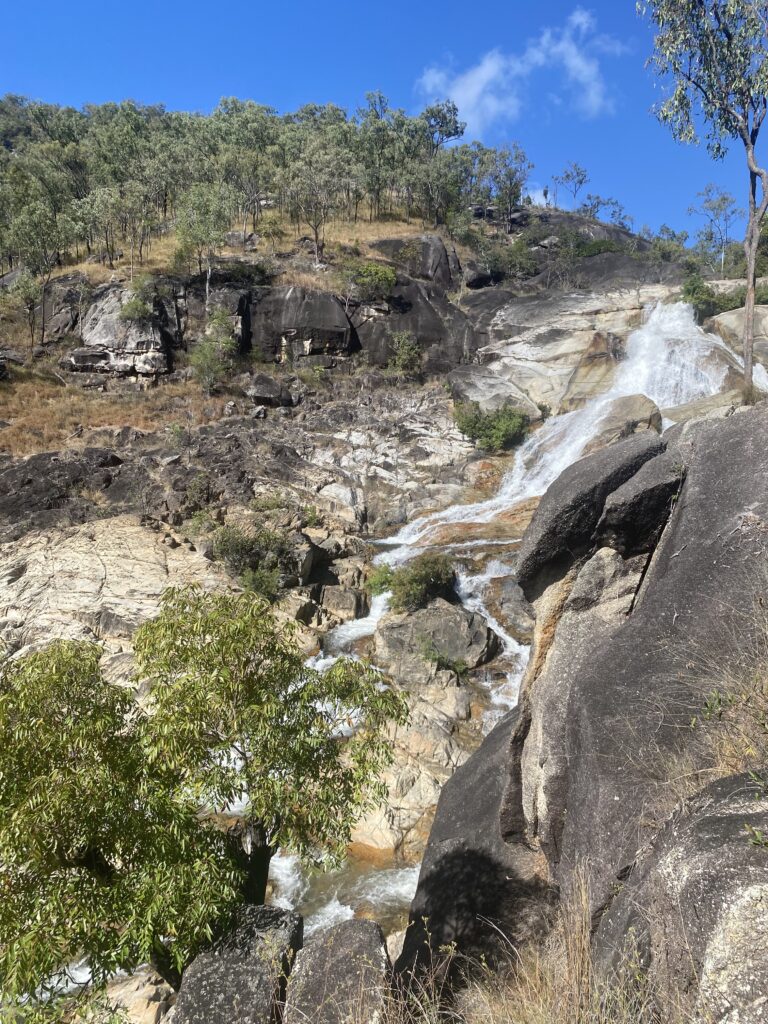
One of the reasons Emerald Creek Falls feels so different from other waterfalls near Cairns is its remarkable geological history. The massive granite boulders surrounding the creek were formed hundreds of millions of years ago when molten magma slowly cooled deep beneath the Earth’s surface. Over countless millennia, erosion gradually removed the overlying rock, exposing the enormous granite bodies visible today.
Unlike softer rock types that erode relatively quickly, granite is extremely resistant to weathering. However, even granite slowly changes over time. Daily heating and cooling cause the rock to expand and contract, while flowing water smooths rough surfaces into rounded formations. Small cracks gradually widen until entire sections break away, producing the enormous boulders scattered throughout Emerald Creek.
The creek itself continues shaping the landscape today. During the wet season, powerful floodwaters transport sand and smaller rocks downstream. These natural abrasives slowly polish the granite into the smooth surfaces visitors walk across today. Circular potholes carved into the rock provide evidence of this ongoing process, having formed where swirling stones repeatedly ground away at the granite over thousands of years.
The striking contrast between pale granite, deep blue skies, golden grasses and emerald water gives Emerald Creek Falls its distinctive visual appeal and makes it one of the most photogenic geological landscapes in Tropical North Queensland.
⸻
Photography Guide
For photographers, Emerald Creek Falls offers outstanding opportunities throughout the year. Whether you’re using a professional camera or simply a smartphone, the combination of dramatic granite formations, clear water and open woodland creates endless compositions.
Sunrise is widely considered the best time to visit. The first rays of sunlight illuminate the granite boulders with soft golden tones while long shadows add depth to the landscape. Wildlife activity is also at its highest during the early morning, increasing the chances of photographing birds and mammals.
Mid-morning provides ideal lighting for capturing the brilliant colours of the swimming holes. With the sun higher in the sky, light penetrates the crystal-clear water, revealing submerged rocks beneath stunning shades of blue and green.
Late afternoon creates another magical atmosphere. Warm sunlight strikes the western faces of the granite outcrops while the surrounding eucalyptus woodland glows with rich golden colours. This is also an excellent time for photographing people enjoying the creek, as softer light produces more flattering portraits.
Long-exposure photography is particularly rewarding at Emerald Creek Falls. Even during lower water levels, silky water flowing over polished granite creates beautiful compositions when photographed using neutral density filters or slower shutter speeds.
Autumn and winter generally provide the clearest skies, while the wet season offers dramatic clouds, lush vegetation and powerful waterfall flows that completely transform the landscape.
⸻
Wildlife and Birdwatching
Emerald Creek Falls sits within an incredibly diverse ecological region where tropical rainforest species overlap with those of Australia’s northern savannas. This transition zone supports an impressive variety of wildlife, making every visit different.
Birdwatchers often arrive before sunrise when activity reaches its peak. Rainbow bee-eaters perform spectacular aerial displays above the creek, while black-faced cuckoo-shrikes, apostlebirds, grey-crowned babblers and pale-headed rosellas forage through nearby woodland.
The towering eucalyptus trees provide nesting sites for sulphur-crested cockatoos, little corellas and red-tailed black cockatoos. During flowering seasons, lorikeets and honeyeaters gather in large numbers to feed on nectar-rich blossoms.
Butterflies are particularly abundant during the warmer months. Ulysses butterflies occasionally wander out from nearby rainforest, while numerous grass yellows, wanderers and swallowtails patrol the creek margins.
The pools themselves support freshwater turtles, aquatic insects and numerous native fish species. Dragonflies hover continuously above the water while frogs become especially active after rainfall.
Visitors should always remember that Emerald Creek Falls lies within an intact natural ecosystem. Observing wildlife quietly and maintaining respectful distances ensures animals remain undisturbed while allowing everyone to enjoy authentic wildlife encounters.
⸻
Nearby Attractions
One of Emerald Creek Falls’ greatest advantages is its proximity to numerous other attractions throughout Mareeba and the Atherton Tablelands. Combining several destinations creates an unforgettable day trip or weekend escape.
Granite Gorge Nature Park
Located only a short drive away, Granite Gorge Nature Park offers another remarkable granite landscape together with one of Far North Queensland’s most famous wildlife experiences. Visitors can hand-feed Mareeba Rock Wallabies, an endangered subspecies found only within this region. The park also features walking trails through spectacular granite formations that complement the scenery found at Emerald Creek Falls.
Davies Creek
Davies Creek provides another excellent swimming destination with expansive granite slabs, crystal-clear pools and beautiful picnic areas. During the dry season it becomes one of the region’s favourite family swimming locations, while adventurous visitors can continue into Davies Creek National Park via four-wheel-drive tracks.
Mareeba Wetlands
Completely different from Emerald Creek’s rocky landscape, the Mareeba Wetlands showcase northern Australia’s incredible birdlife. Guided boat cruises and walking trails provide opportunities to observe jabirus, brolgas, jacanas, kingfishers, sea eagles, whistling kites and hundreds of other bird species.
Lake Tinaroo
Approximately forty-five minutes away, Lake Tinaroo offers boating, kayaking, fishing, camping and lakeside walking trails. The enormous freshwater lake provides another relaxing contrast to Emerald Creek Falls and is particularly popular during weekends.
Coffee Plantations
Mareeba produces much of Australia’s coffee, making a visit to one of the local plantations highly worthwhile. Coffee Works Mareeba remains one of the region’s best-known attractions, allowing visitors to sample freshly roasted coffee while learning about Australia’s coffee industry.
⸻
Where to Eat
After spending hours exploring Emerald Creek Falls, many visitors head into Mareeba for lunch or dinner. The town has developed an excellent food scene reflecting its multicultural history and surrounding agricultural region.
Coffee Works Mareeba
Part café, part museum and part chocolate factory, Coffee Works has become an essential stop for visitors exploring the Tablelands. Alongside exceptional locally roasted coffee, visitors can sample handmade chocolates, desserts and light meals while browsing one of Australia’s largest coffee collections.
The Hungry Pug
A favourite among locals, The Hungry Pug serves generous breakfasts, gourmet burgers, fresh salads and excellent coffee. The relaxed atmosphere makes it ideal after a morning at Emerald Creek Falls.
Gateway Hotel
The Gateway Hotel offers classic Australian pub meals in a comfortable setting. Steaks, seafood, schnitzels and locally sourced produce feature prominently on the menu, making it popular with both visitors and locals.
Pete’s Place
Known for hearty breakfasts and friendly service, Pete’s Place provides an excellent option before beginning your day exploring Emerald Creek Falls.
⸻
Accommodation
Whether you’re visiting for one night or planning a longer exploration of the Atherton Tablelands, several accommodation options suit different budgets.
Mareeba Motor Inn
Conveniently located in Mareeba, this comfortable motel provides modern rooms, a swimming pool and easy access to Emerald Creek Falls.
Jackaroo Motel
A popular choice for travellers seeking affordable accommodation while remaining close to local restaurants and attractions.
NRMA Atherton Tablelands Holiday Park
Perfect for caravans, campers and families, this well-equipped holiday park provides an excellent base for exploring Emerald Creek Falls and the wider Tablelands.
Mount Mulligan Lodge
For those seeking luxury, Mount Mulligan Lodge delivers one of Australia’s most exclusive outback experiences. Although located further west, many visitors combine Emerald Creek Falls with several nights enjoying this remarkable all-inclusive wilderness retreat.
⸻
Planning the Perfect Day
One of the best ways to experience Emerald Creek Falls is by arriving early. Leaving Cairns shortly after sunrise allows visitors to reach the falls before temperatures rise and before most other day-trippers arrive.
Spend the morning exploring the creek, swimming beneath the waterfall and photographing the granite landscape while soft light fills the valley. Pack a picnic or enjoy lunch back in Mareeba before visiting Coffee Works or Granite Gorge Nature Park during the afternoon.
If time allows, finish the day watching sunset from one of the granite lookouts surrounding Mareeba before returning to Cairns under clear tropical skies.
⸻
What to Pack
Although Emerald Creek Falls requires only a relatively short walk, appropriate equipment makes the experience considerably more enjoyable.
A comfortable Osprey Daylite Plus Backpack provides ample space for water, snacks, towels and camera gear while remaining lightweight during the walk.
Supportive footwear such as the Merrell Moab 3 Hiking Shoes offers excellent grip on smooth granite surfaces and greater comfort while exploring the creek.
Photographers will appreciate the outstanding image quality of the Sony Alpha a6700 Mirrorless Camera, particularly during sunrise and sunset when the landscape is at its most spectacular.
North Queensland’s warm climate makes hydration essential, and a durable YETI Rambler Water Bottle keeps drinks cool throughout the day.
Finally, an Anker PowerCore 20000 Portable Charger ensures phones, cameras and GPS devices remain fully charged during extended days exploring the Tablelands.
Hidden Gems Around Emerald Creek Falls
While most visitors spend their time around the main waterfall, taking a little extra time to explore the surrounding landscape reveals why Emerald Creek Falls is so highly regarded by locals. The creek extends well beyond the main cascade, flowing through an intricate network of granite shelves, hidden pools and quiet bends that are rarely photographed.
Walking carefully along the creek reveals dozens of smaller waterfalls that appear after seasonal rainfall. During the dry season, these same areas become peaceful rock pools where dragonflies skim across the water and birds arrive throughout the day to drink. The enormous granite slabs create countless natural viewing platforms where visitors can sit in complete silence, listening only to flowing water and birdsong.
Many photographers deliberately move away from the main waterfall to capture these quieter scenes. Reflections of ghost gums in still pools, weathered granite textures, scattered river stones and native grasses all provide compositions that showcase the unique beauty of Far North Queensland without another person in sight.
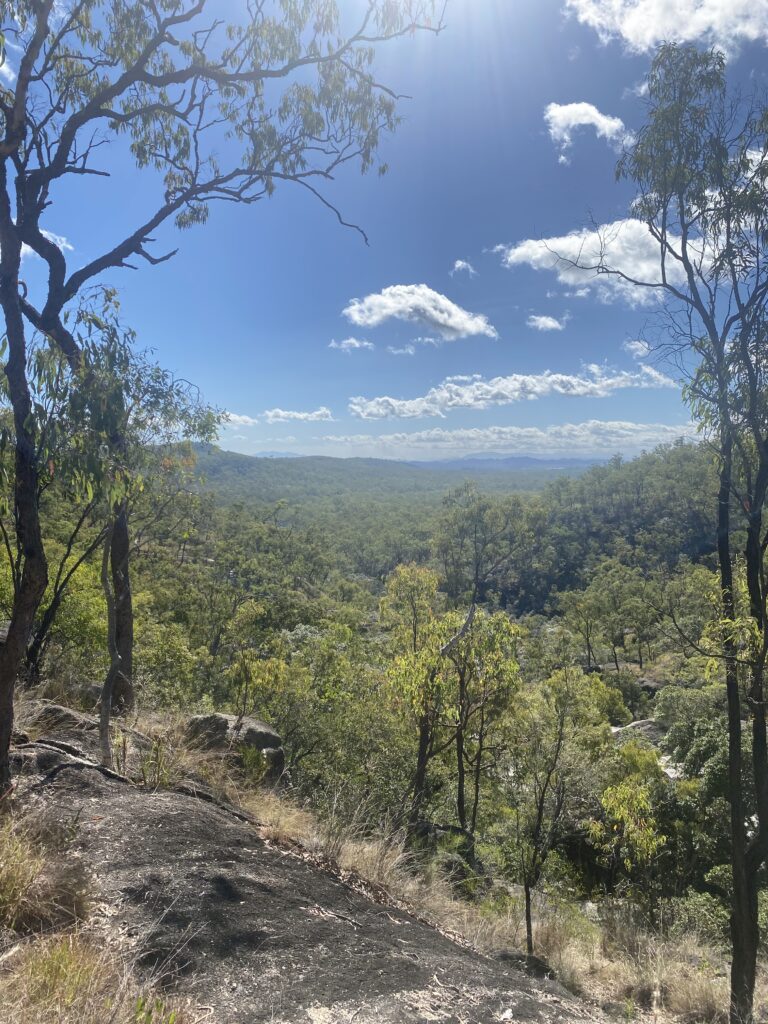
The surrounding hills are equally rewarding. Looking back toward Emerald Creek from elevated granite outcrops reveals sweeping views across Dinden National Park, where rolling eucalyptus woodland stretches towards Mareeba and the distant Atherton Tablelands. During the late afternoon, these landscapes glow with rich golden light that has earned Mareeba its reputation as one of Queensland’s sunniest destinations.
Seasonal Changes Throughout the Year
One of Emerald Creek Falls’ greatest strengths is that it never looks exactly the same twice. Every season brings a different character to the landscape, encouraging repeat visits throughout the year.
During the dry season, which generally extends from May through October, water levels become lower but exceptionally clear. The creek transforms into a series of brilliant emerald swimming holes connected by gentle cascades flowing across polished granite. Native grasses surrounding the creek turn golden, contrasting beautifully with the silver-grey rock formations and deep blue skies. Comfortable daytime temperatures and low humidity make this the most popular time for swimming, picnics and hiking.
Spring introduces warmer days while many native plants begin flowering. Wattles add bursts of yellow throughout the woodland, eucalyptus blossom attracts countless nectar-feeding birds, and butterflies become increasingly active around the creek.
With the arrival of the wet season, Emerald Creek undergoes an extraordinary transformation. Heavy tropical rainfall dramatically increases water flow, turning the normally peaceful creek into a powerful torrent that surges across the granite landscape. The waterfall itself becomes significantly larger, sending sheets of white water plunging into the gorge below. Vegetation responds rapidly, with fresh green growth covering hillsides that only weeks earlier were dry and golden.
Although swimming is often unsafe during periods of high flow, photographers frequently consider the wet season one of the most rewarding times to visit. Towering storm clouds, dramatic waterfalls and lush vegetation combine to create spectacular landscapes unlike anything seen during the dry months.
A Paradise for Nature Lovers
Emerald Creek Falls is more than simply a beautiful swimming destination—it forms part of a much larger protected ecosystem within Dinden National Park. This national park conserves important areas of tropical savanna woodland, granite escarpments, creek systems and wildlife habitat that support hundreds of native species.
The surrounding eucalyptus forests provide food and shelter for mammals including agile wallabies, echidnas, possums and northern quolls. The granite outcrops offer basking sites for reptiles while the permanent pools sustain aquatic life even during prolonged dry periods.
Bird diversity is particularly impressive. More than one hundred species have been recorded throughout the broader region, ranging from tiny fairy-wrens to impressive wedge-tailed eagles soaring above the granite hills. Rainbow bee-eaters frequently nest in sandy creek banks, while kingfishers patiently watch from overhanging branches waiting to catch small fish and aquatic insects.
Because Emerald Creek remains relatively undeveloped compared to many tourist destinations, wildlife encounters often feel remarkably authentic. Sitting quietly beside the creek for half an hour frequently reveals more than continuously walking through the landscape.
Responsible Travel
One reason Emerald Creek Falls has retained its natural beauty is that the majority of visitors respect the environment. Preserving this landscape ensures future generations can enjoy the same pristine experience.
Visitors should remain on established walking tracks wherever possible to minimise erosion and protect native vegetation. Although the granite slabs appear resilient, repeated trampling of surrounding plant communities can damage fragile ecosystems over time.
All rubbish should be removed from the park. Even biodegradable items such as fruit peels alter natural nutrient cycles and attract wildlife to human food sources.
Swimming should only occur in suitable conditions. Following heavy rainfall, water levels may rise quickly and hidden currents can develop beneath the surface. Visitors should never dive into unfamiliar pools, as submerged rocks may not be visible beneath the water.
Wildlife should always be observed from a respectful distance. Feeding native animals alters natural behaviour and may negatively affect their health.
Finally, visitors should avoid playing loud music. Much of Emerald Creek Falls’ appeal lies in its peaceful atmosphere, where the sounds of flowing water, birds and rustling eucalyptus leaves dominate the landscape.
Suggested Itineraries
Half-Day Visit
Visitors with limited time can comfortably experience Emerald Creek Falls within half a day. Arrive early in the morning, complete the walk to the falls, spend several hours swimming and exploring the creek, then return to Mareeba for lunch at Coffee Works or The Hungry Pug before continuing your journey.
Full-Day Adventure
A full day allows plenty of time to appreciate everything the area has to offer. Begin with sunrise photography at Emerald Creek Falls before swimming during the cooler morning hours. After lunch in Mareeba, continue to Granite Gorge Nature Park to see Mareeba Rock Wallabies before finishing the day watching sunset across the surrounding savanna landscape.
Weekend Escape
A weekend provides opportunities to experience much more of the Atherton Tablelands. Spend your first day exploring Emerald Creek Falls and nearby Davies Creek. On the second day, visit Mareeba Wetlands, Lake Tinaroo, local coffee plantations, wineries or continue through the Tablelands visiting waterfalls, volcanic lakes and rainforest villages.
Safety Tips
Although Emerald Creek Falls is suitable for most visitors, preparation remains important.
North Queensland temperatures can exceed 35°C during summer, making adequate water essential. Always carry more drinking water than you expect to need.
Granite becomes extremely slippery when wet. Walking slowly and wearing supportive footwear significantly reduces the risk of slipping.
Mobile phone reception varies throughout Dinden National Park, so visitors should inform someone of their plans before departing, particularly when exploring alone.
Summer storms can develop rapidly. If thunder is heard or heavy rainfall begins upstream, leave the creek immediately and move to higher ground.
Sun protection is also essential. The open woodland surrounding Emerald Creek provides less shade than rainforest environments, making hats, sunscreen and lightweight clothing highly recommended.
Why Emerald Creek Falls Deserves More Recognition
Despite being located less than ninety minutes from Cairns, Emerald Creek Falls remains overlooked by many visitors exploring Tropical North Queensland. This relative obscurity has become one of its greatest strengths.
Unlike heavily promoted tourist attractions, Emerald Creek still feels genuinely wild. There are no commercial developments beside the waterfall, no crowded viewing platforms and no queues waiting for photographs. Instead, visitors experience nature much as it has existed for countless generations.
The combination of polished granite, crystal-clear swimming holes, open eucalyptus woodland and remarkable biodiversity creates a landscape unlike anywhere else in Queensland. It represents the meeting point between tropical rainforest and Australia’s northern savannas—a transition that produces both spectacular scenery and extraordinary ecological diversity.
For photographers, hikers, swimmers, wildlife enthusiasts and anyone seeking a quieter alternative to Far North Queensland’s more famous attractions, Emerald Creek Falls offers an experience that feels both authentic and unforgettable.
Final Thoughts
Emerald Creek Falls demonstrates that some of Australia’s most rewarding destinations are not necessarily the most famous. While visitors often travel thousands of kilometres to see internationally recognised attractions, this remarkable corner of the Atherton Tablelands quietly delivers an experience every bit as memorable.
The beauty of Emerald Creek lies in its simplicity. There are no ticket booths, theme parks or commercial entertainment—just ancient granite sculpted by millions of years of flowing water, crystal-clear swimming holes, towering eucalyptus forests and an incredible diversity of native wildlife. Whether you’re photographing sunrise over polished granite, cooling off in emerald pools during a hot tropical afternoon, watching rainbow bee-eaters dart across the creek or simply sitting quietly beside flowing water, the landscape encourages visitors to slow down and appreciate the natural world.
As interest in sustainable and nature-based tourism continues to grow, Emerald Creek Falls is perfectly positioned to become one of Tropical North Queensland’s premier outdoor destinations. Yet even if its popularity increases, its vast granite landscapes and protected national park setting ensure it will always retain a sense of wilderness.
If you’re planning a trip to Cairns, Mareeba or the Atherton Tablelands, don’t limit yourself to the well-known attractions. Make time for Emerald Creek Falls. Arrive early, stay longer than you intended, explore beyond the main waterfall and let one of Queensland’s hidden gems reveal itself. Chances are, it will become one of the places you remember most long after your journey through Tropical North Queensland has ended.
Leave a Reply