Your cart is currently empty!
Category: Uncategorized
-
Tasmania Travel Guide: Australia’s Wild Island of Mountains, Coastlines & Quiet Luxury
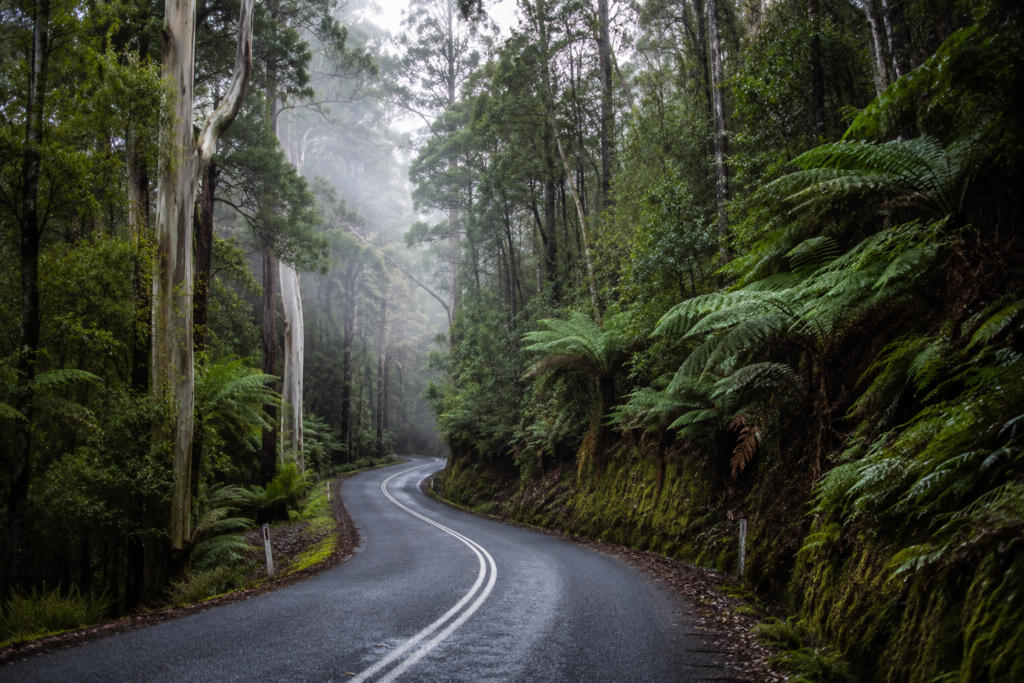
Tasmania feels completely different from mainland Australia almost immediately. The air feels colder and cleaner, the roads quieter, and the landscapes far more untouched. It’s a destination where rugged wilderness exists alongside small creative towns, award-winning restaurants, and some of the most dramatic coastal scenery in the country. Unlike Sydney or Melbourne, Tasmania doesn’t rely on fast-paced tourism or major city attractions. Instead, it rewards slower travel. Long drives through mist-covered forests, empty beaches, mountain lakes, and tiny towns become just as memorable as the major landmarks themselves. Tasmania is the kind of place where you stop constantly—not because you planned to, but because another incredible view appears around every corner.
One of the reasons Tasmania has become increasingly popular among travellers is because it offers something many destinations no longer do: space and quietness. You can spend hours driving without seeing heavy traffic, walk through national parks without crowds, and stay in lodges where the loudest sound at night is wind moving through the trees. The island combines adventure, luxury, wildlife, incredible food, and raw natural beauty in a way that feels authentic rather than overdeveloped. This guide focuses on experiencing Tasmania properly—from Hobart and Bruny Island to Freycinet National Park, Cradle Mountain, and the Bay of Fires—while also covering exact hotels, restaurants, scenic drives, and practical travel advice.
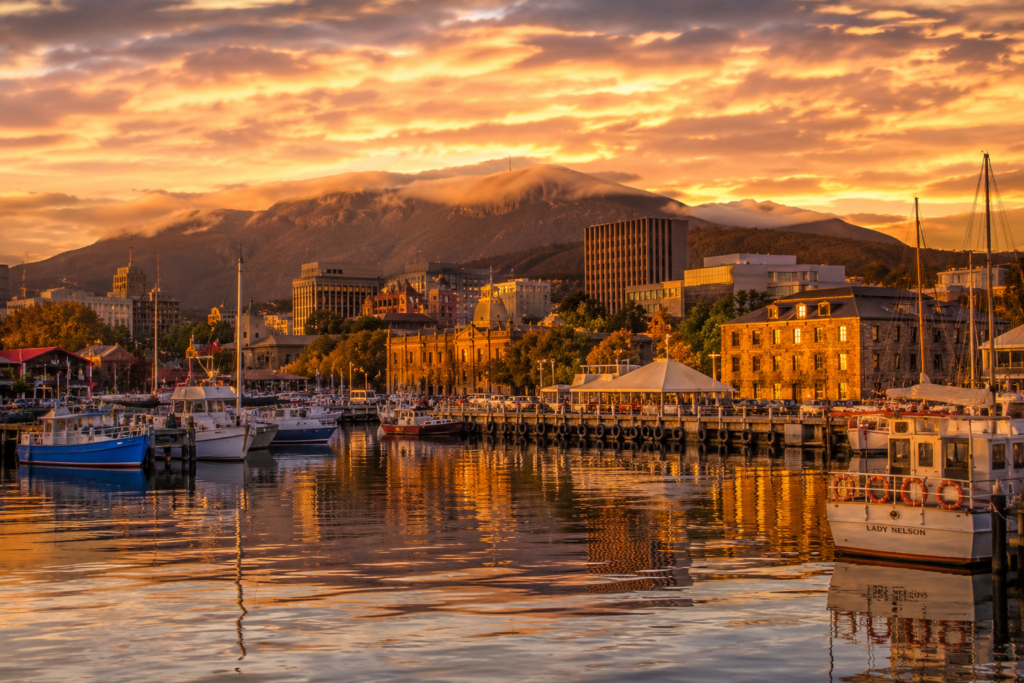
Hobart is where most Tasmania trips begin, and it immediately sets the tone for the rest of the island. Sitting beneath Mount Wellington beside the River Derwent, Hobart combines historic sandstone architecture with one of Australia’s strongest food and arts scenes. The city feels compact, creative, and atmospheric, especially during colder months when fog settles around the mountain and waterfront restaurants glow warmly at night. Salamanca Place is one of the best areas to explore first. The old sandstone warehouses lining the street have been transformed into cafés, galleries, boutiques, bars, and restaurants while still maintaining their original colonial character. On Saturdays, Salamanca Market becomes one of Australia’s best local markets, filled with Tasmanian produce, handmade goods, fresh pastries, coffee, whisky, and artisan products.
Battery Point is another essential part of Hobart to walk through slowly. Narrow streets lined with cottages and colonial-era homes create one of the most charming neighbourhoods in Australia. The area feels peaceful and timeless, particularly in the early morning or evening when fewer people are around. Mount Wellington, known locally as kunanyi, towers above the city and completely changes atmosphere depending on the weather. On clear days, the summit offers panoramic views across Hobart, the surrounding coastline, and distant mountain ranges. During winter, snow often covers the mountain while the city below remains relatively mild, creating a dramatic contrast that makes Hobart feel unlike anywhere else in Australia.
MONA, the Museum of Old and New Art, has become Tasmania’s most famous attraction for good reason. The museum combines underground architecture, controversial exhibitions, dramatic riverfront surroundings, and immersive experiences into something that feels unlike any other museum in Australia. Even people who aren’t usually interested in art often end up enjoying MONA because of the atmosphere and creativity of the entire experience. Taking the MONA ferry along the Derwent River is also part of the appeal. Arriving by water makes the museum feel more isolated and cinematic.
Hobart’s restaurant scene is exceptional considering the city’s size, largely because Tasmania’s produce is among the best in Australia. Seafood, cool-climate wines, beef, dairy, and fresh produce all thrive in Tasmania’s environment. Frank Restaurant remains one of Hobart’s most popular dining spots, combining Tasmanian ingredients with South American flavours in a warm, energetic setting near the waterfront. Landscape Restaurant & Grill inside the IXL complex focuses heavily on local meats and produce in a more refined atmosphere. For seafood, Mures Upper Deck serves fresh Tasmanian oysters, scallops, and fish while overlooking the harbour. Dier Makr is widely regarded as one of Tasmania’s best fine-dining restaurants and is known for creative seasonal tasting menus that constantly evolve depending on local ingredients.
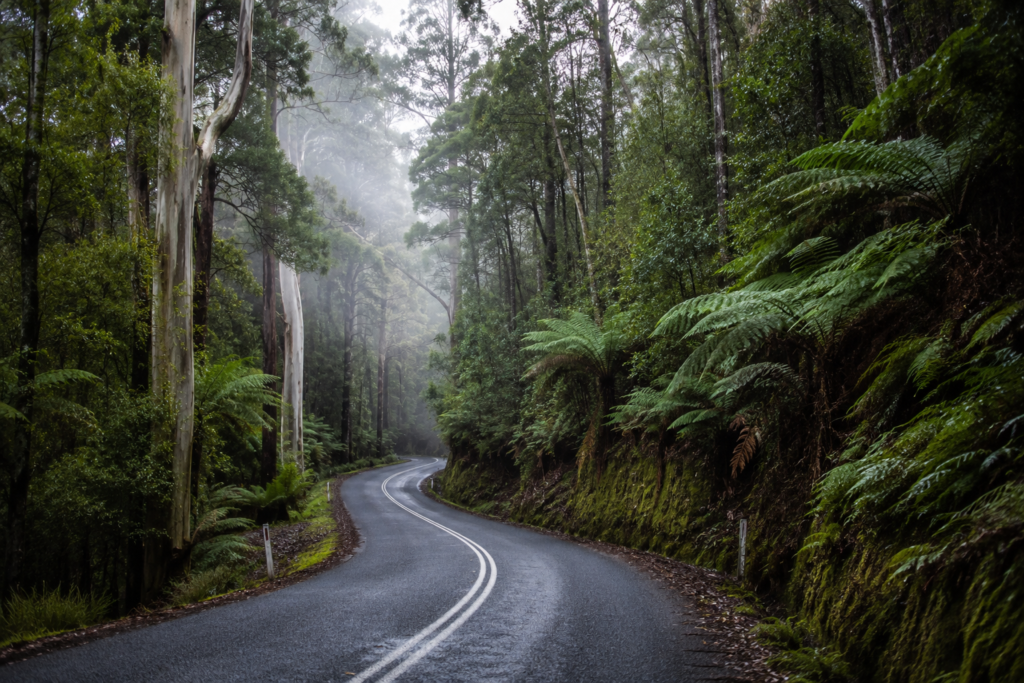
When it comes to accommodation, Hobart offers everything from boutique luxury to cosy heritage hotels. MACq 01 Hotel combines premium waterfront accommodation with storytelling focused on Tasmanian history and culture. The Tasman, part of Marriott’s Luxury Collection, blends heritage architecture with modern luxury in the heart of the city. For something smaller and more intimate, Islington Hotel offers boutique luxury inside a beautifully restored mansion surrounded by gardens and antique furnishings.
After Hobart, many travellers head toward Bruny Island, located south of the city and accessible via ferry. Despite being so close to Hobart, the island feels remote and untouched. The drive through Bruny Island constantly changes between dense forest, farmland, cliffs, beaches, and coastal viewpoints. One of the island’s most photographed locations is The Neck Lookout, where a narrow strip of land connects North and South Bruny. The elevated boardwalk provides panoramic views across both coastlines and is especially beautiful at sunrise and sunset.
Bruny Island is also one of Tasmania’s best food destinations. Get Shucked Oyster Farm serves incredibly fresh oysters directly overlooking the water, while Bruny Island Cheese Co. produces excellent cheeses and woodfired bread inside a rustic farm setting. Bruny Island Premium Wines combines wine tasting with excellent lunches in a peaceful vineyard environment surrounded by forest. Adventure Bay is one of the best areas to stay overnight, especially for travellers wanting a quieter experience surrounded by coastline and bushland. Wildlife is common throughout the island, with wallabies, echidnas, and birdlife appearing frequently around roadsides and walking trails.
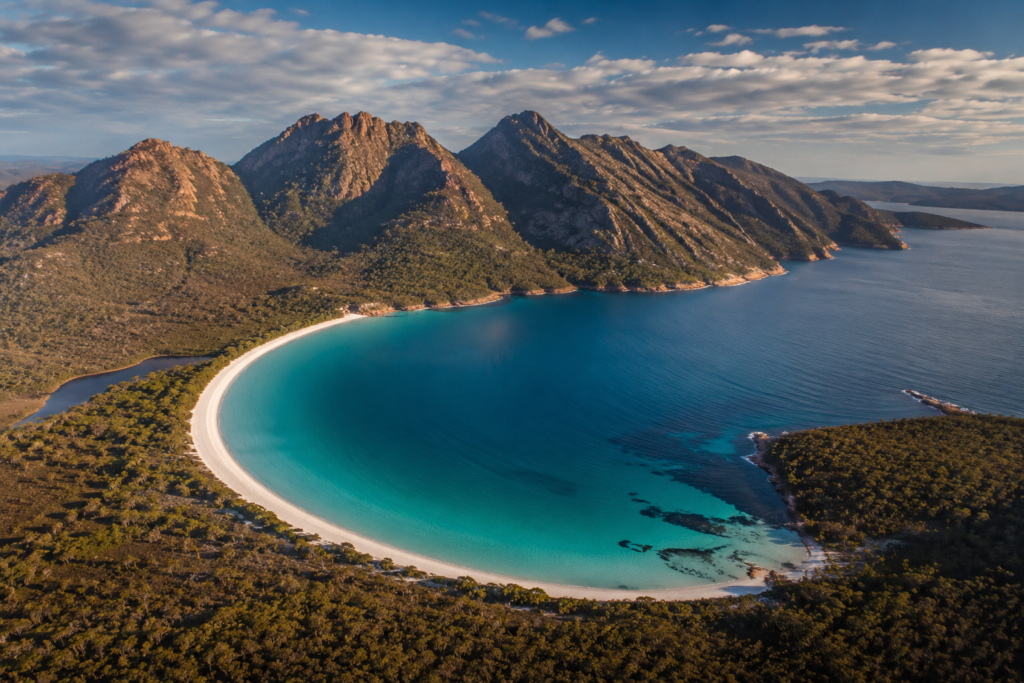
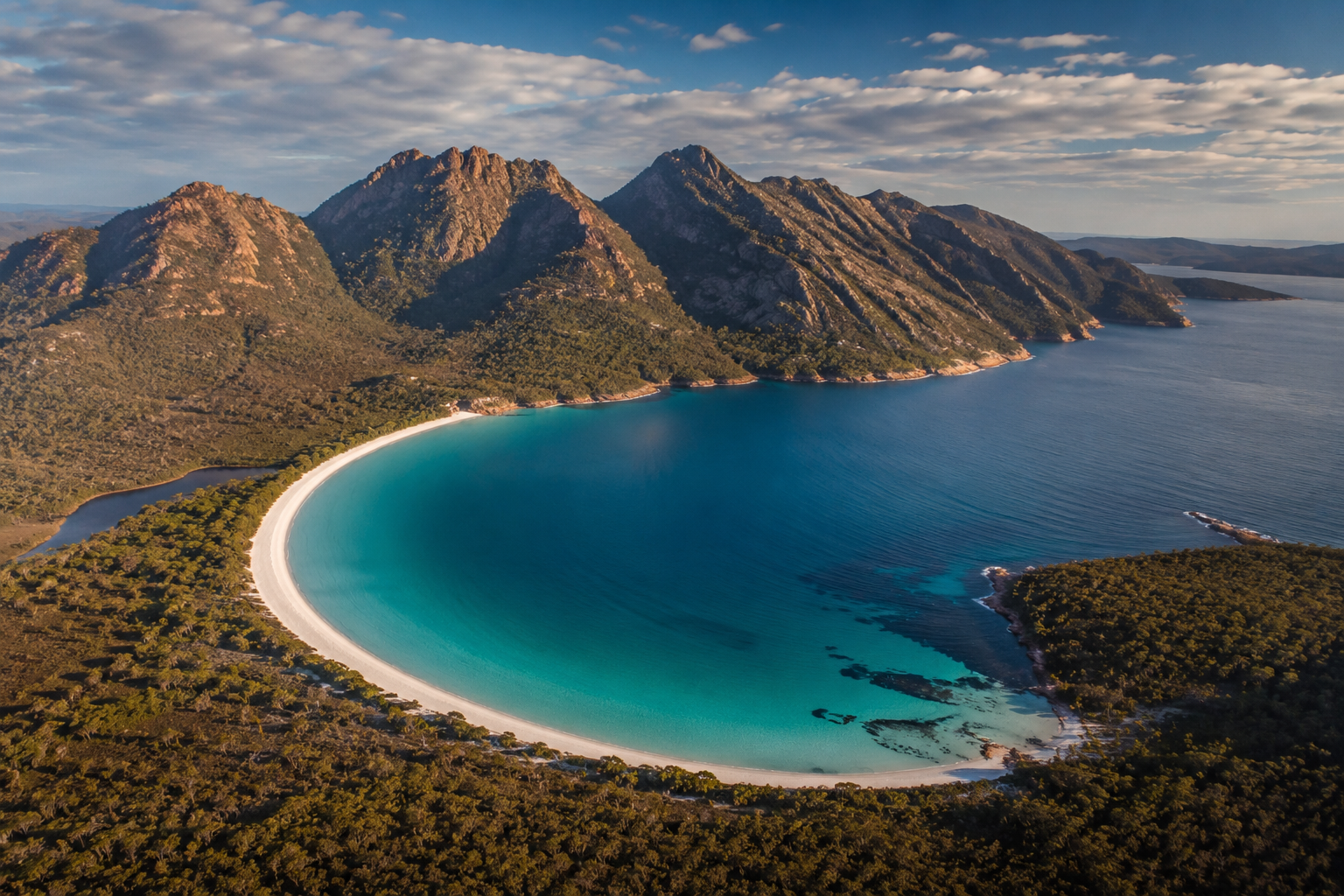
Tasmania’s east coast is home to some of the most beautiful beaches and coastal scenery in Australia. Freycinet National Park is one of Tasmania’s signature destinations and absolutely deserves several days rather than a quick stop. Wineglass Bay is the park’s most famous location, known for its perfect crescent-shaped white sand beach surrounded by granite mountains and turquoise water. The Wineglass Bay Lookout walk is relatively short and accessible, though continuing down to the beach itself offers a much more rewarding experience. The contrast between white sand, crystal-clear water, and orange granite peaks creates one of the most iconic landscapes in Australia.
Freycinet National Park feels especially peaceful early in the morning when mist drifts through the mountains and the beaches remain almost empty. Honeymoon Bay is another quieter but equally beautiful location nearby, especially during sunrise or sunset when the water becomes completely still and reflective. Kayaking, hiking, swimming, and wildlife spotting are all popular activities throughout the region.
Saffire Freycinet is widely considered one of Australia’s best luxury lodges. Overlooking the Hazards mountain range and coastline, the property combines architecture, food, service, and scenery exceptionally well. For something more affordable but still excellent, Freycinet Lodge places visitors directly inside the national park surrounded by native bushland and wildlife.
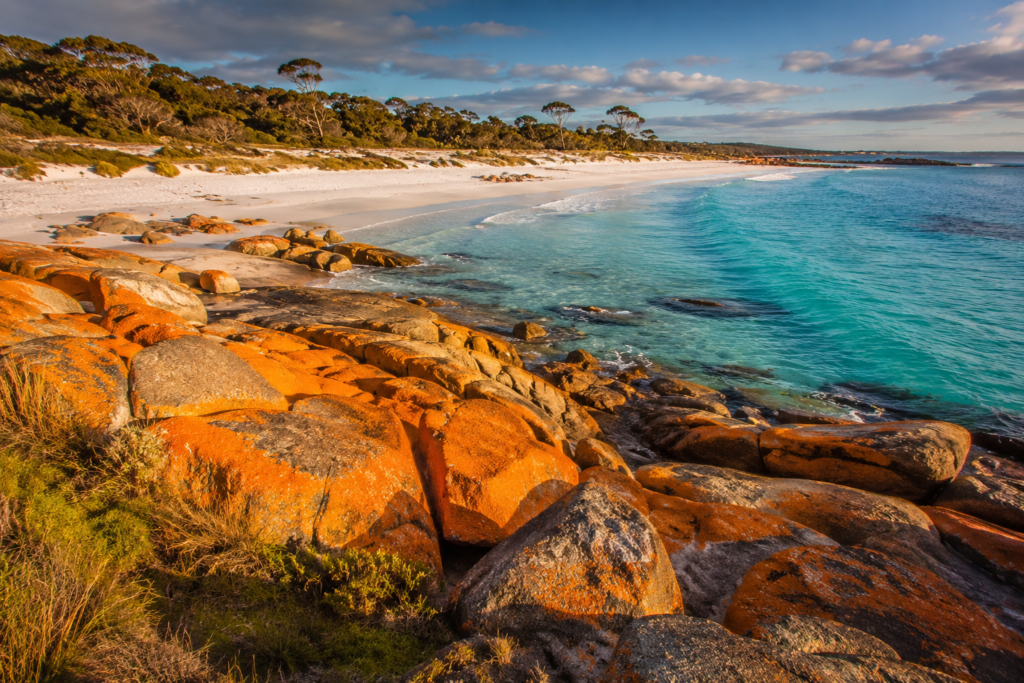
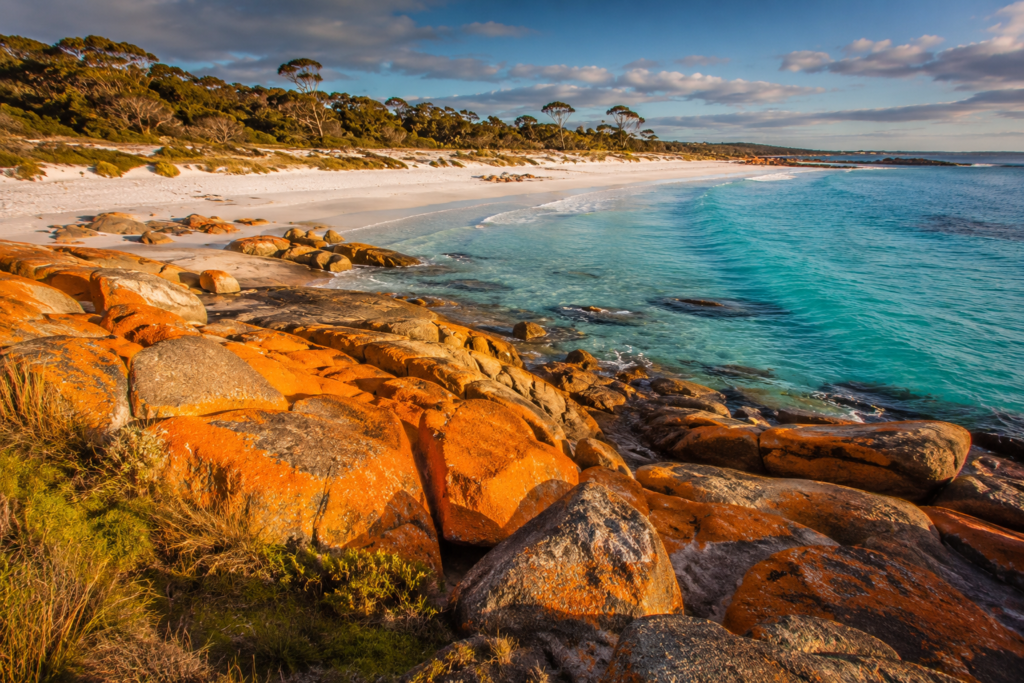
The drive north toward the Bay of Fires is one of Australia’s most underrated coastal road trips. The Bay of Fires is famous for its white beaches, bright turquoise water, and orange lichen-covered granite rocks. The colours genuinely appear surreal in good lighting conditions. Unlike many coastal destinations, much of this region still feels undeveloped and wild. Beaches often feel empty even during peak season.
Binalong Bay acts as the main access point and is one of the best places to stay nearby. The area is ideal for travellers wanting a quieter coastal experience focused on beaches, photography, and relaxation rather than nightlife or major tourism infrastructure. Tasmania’s cooler climate also makes the east coast excellent for wineries. Devil’s Corner Cellar Door combines wine tasting with sweeping ocean views and modern architecture, while nearby The Lobster Shack serves fresh seafood in a casual waterfront setting.
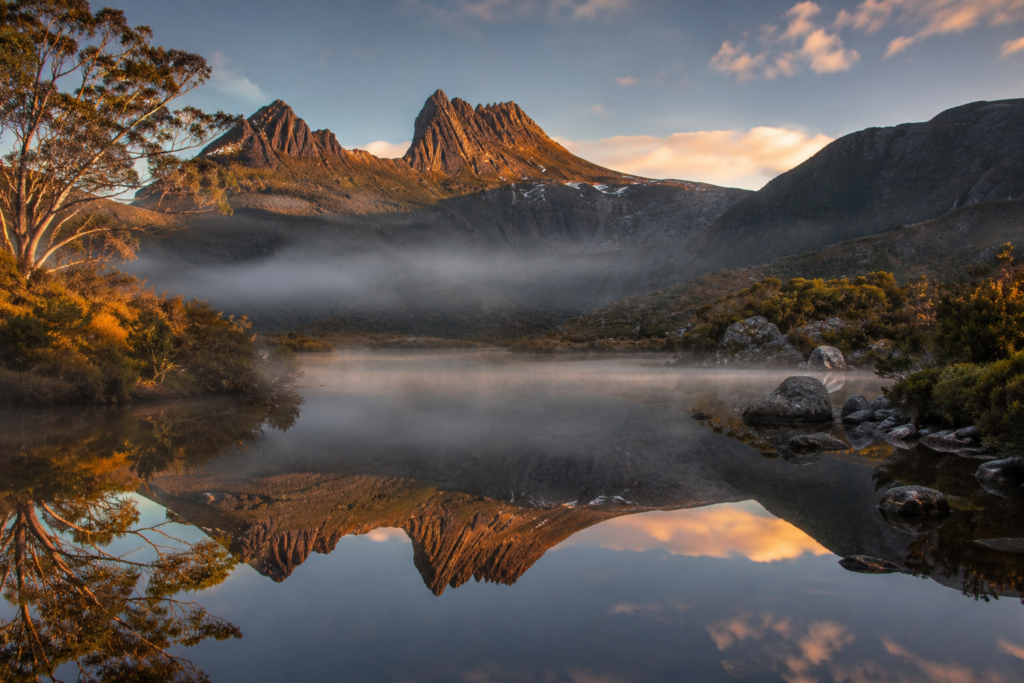
Further inland, Tasmania’s wilderness becomes even more dramatic. Cradle Mountain-Lake St Clair National Park is one of Australia’s most iconic alpine environments. Jagged peaks, glacial lakes, button grass plains, and dense rainforest create landscapes that feel more like New Zealand or parts of Europe than mainland Australia. Dove Lake Circuit is one of the best walks in Tasmania because it remains accessible while still offering extraordinary scenery. Early mornings are particularly beautiful when mist drifts across the lake beneath Cradle Mountain.
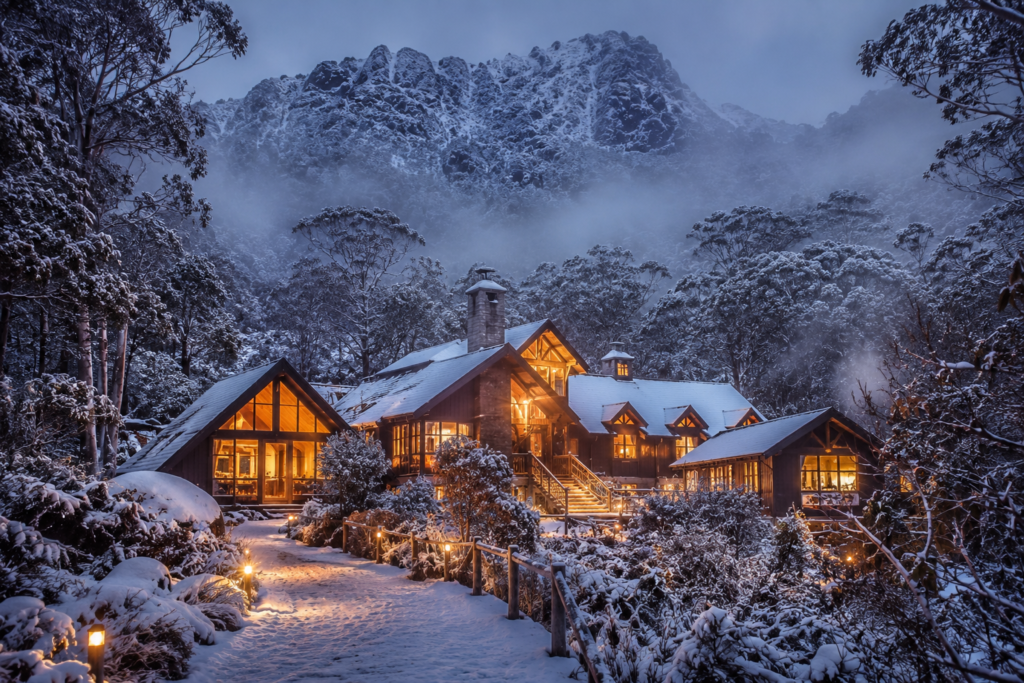
Wildlife becomes much more noticeable throughout this region. Wombats, wallabies, echidnas, and Tasmanian pademelons frequently appear around walking trails and lodges, particularly during dawn and dusk. Peppers Cradle Mountain Lodge is one of the best places to stay here. The cabins surrounded by forest create an incredibly cosy atmosphere, especially during colder months when fireplaces are lit and fog settles through the trees. Staying overnight in the national park completely changes the experience because the environment feels far more atmospheric once day visitors leave.
Tasmania’s weather changes quickly, especially in alpine areas, so packing properly matters even during summer. A reliable backpack like the Bagsmart 40L Carry-On Travel Backpack is ideal for Tasmania road trips because it keeps layers, camera gear, hiking essentials, and travel items organised without becoming bulky during frequent stops. Portable charging also becomes surprisingly important throughout Tasmania because long drives, photography, and navigation quickly drain batteries, particularly in remote regions. Something like the Anker 10,000mAh 22.5W Power Bank becomes genuinely useful throughout the trip.
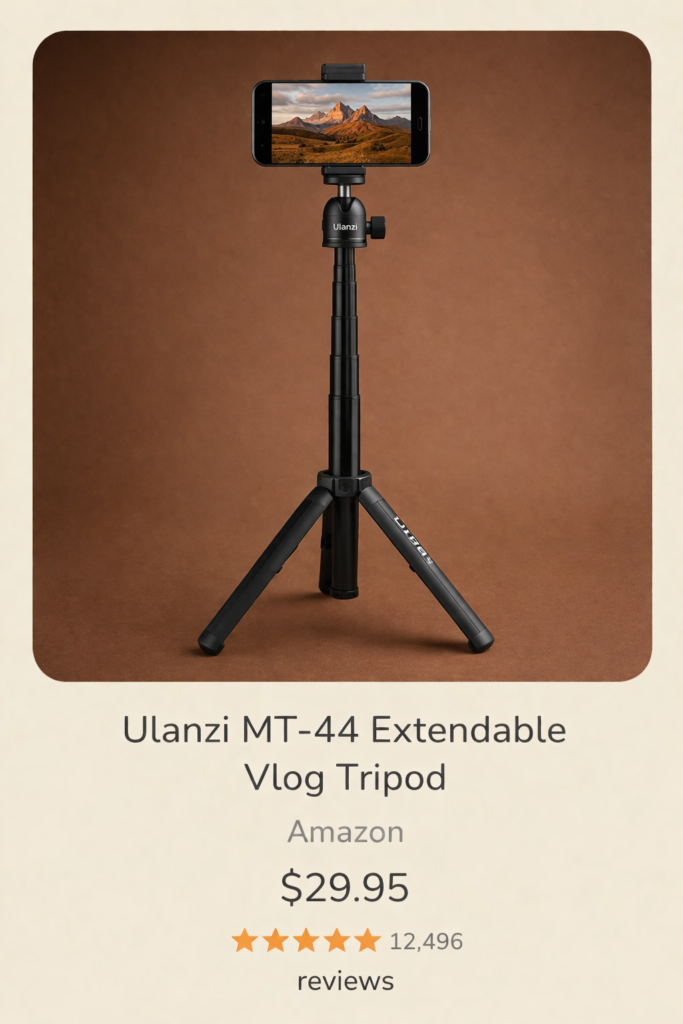
Tasmania is also one of Australia’s best destinations for photography and content creation. Sunrise fog, mountain reflections, wildlife encounters, coastal scenery, and constantly changing weather create endless opportunities for capturing cinematic landscapes. Carrying a lightweight tripod like the Ulanzi MT-44 Extendable Vlog Tripod makes photographing sunrise, waterfalls, and low-light scenes significantly easier without adding excessive weight. Since Tasmania’s climate shifts constantly, layering clothing becomes more practical than overpacking. Using Amazon Basics Packing Cubes helps keep clothing organised during multi-stop road trips where travellers frequently move between hotels and lodges.
Long drives are unavoidable when exploring Tasmania properly, and some roads can feel isolated for hours at a time. Noise-cancelling headphones like the Sony WH-1000XM5 Noise Cancelling Headphones make flights, ferry rides, and downtime much more comfortable, particularly during long travel days between regions.
Launceston, Tasmania’s second-largest city, is often overlooked compared to Hobart but deserves far more attention. Cataract Gorge sits only minutes from the city centre and feels completely unexpected—a dramatic natural gorge with walking trails, cliffs, gardens, and swimming areas directly beside the city. Launceston is also one of Tasmania’s strongest food regions due to its proximity to farms, wineries, and produce suppliers. Stillwater Restaurant remains one of the city’s standout dining experiences, located inside a restored flour mill overlooking the river. Black Cow Bistro is another favourite known for Tasmanian beef and relaxed fine dining.
The Tamar Valley wine region begins just outside the city and contains numerous wineries surrounded by rolling countryside and river views. Pinot noir and sparkling wines are particularly strong throughout this region thanks to Tasmania’s cool climate.
For travellers wanting even more remote experiences, Tasmania’s west coast offers some of the wildest scenery in Australia. Strahan acts as the gateway to Macquarie Harbour and the Gordon River, where river cruises move through ancient rainforest and mirror-like waterways that feel almost untouched by modern development. Nearby Queenstown has a dramatically different appearance due to historic mining activity, with barren hills creating an almost lunar landscape.
Tasmania also has some of the best scenic drives in Australia. The road between Hobart and Freycinet combines vineyards, beaches, forests, and small coastal towns, while the Tarkine Drive in the northwest moves through one of the world’s largest remaining temperate rainforests.
Food becomes a major part of Tasmania travel because local produce is consistently exceptional. Beyond restaurants, roadside farm gates, bakeries, whisky distilleries, and small cafés often become unexpected highlights. Tasmania is particularly famous for whisky production, with Sullivan’s Cove becoming internationally recognised. Lark Distillery in Hobart is another excellent place to experience Tasmanian whisky culture.
The best time to visit Tasmania depends heavily on what kind of experience you want. Summer offers the best hiking weather and longest daylight hours, but it’s also the busiest season. Autumn is arguably Tasmania’s most underrated time to visit because cooler temperatures combine with beautiful changing foliage, particularly around inland regions. Winter transforms Cradle Mountain and alpine areas into atmospheric snow-covered landscapes, while spring brings wildflowers and fewer crowds.
Driving remains the best way to explore Tasmania properly. Public transport exists between major towns but doesn’t provide enough flexibility for national parks, coastal viewpoints, or remote regions. The biggest mistake travellers make in Tasmania is trying to rush through it too quickly. Distances on maps often appear short, but winding roads and constant scenic stops make travel slower than expected.
Tasmania works best when you leave room for unplanned moments: stopping at roadside bakeries, watching fog roll through forests, seeing wombats beside walking tracks, or discovering empty beaches with nobody else around. That slower pace is exactly what makes the island feel so different from mainland Australia.
Tasmania isn’t loud or overwhelming. It doesn’t constantly try to entertain you. Instead, it creates an atmosphere where landscapes, weather, food, and quietness become the experience itself. And for many travellers, that’s exactly why it becomes one of the most memorable places in Australia.
-
Nepal Travel Guide: A Journey Through Kathmandu, Pokhara, the Himalayas & Ancient Culture
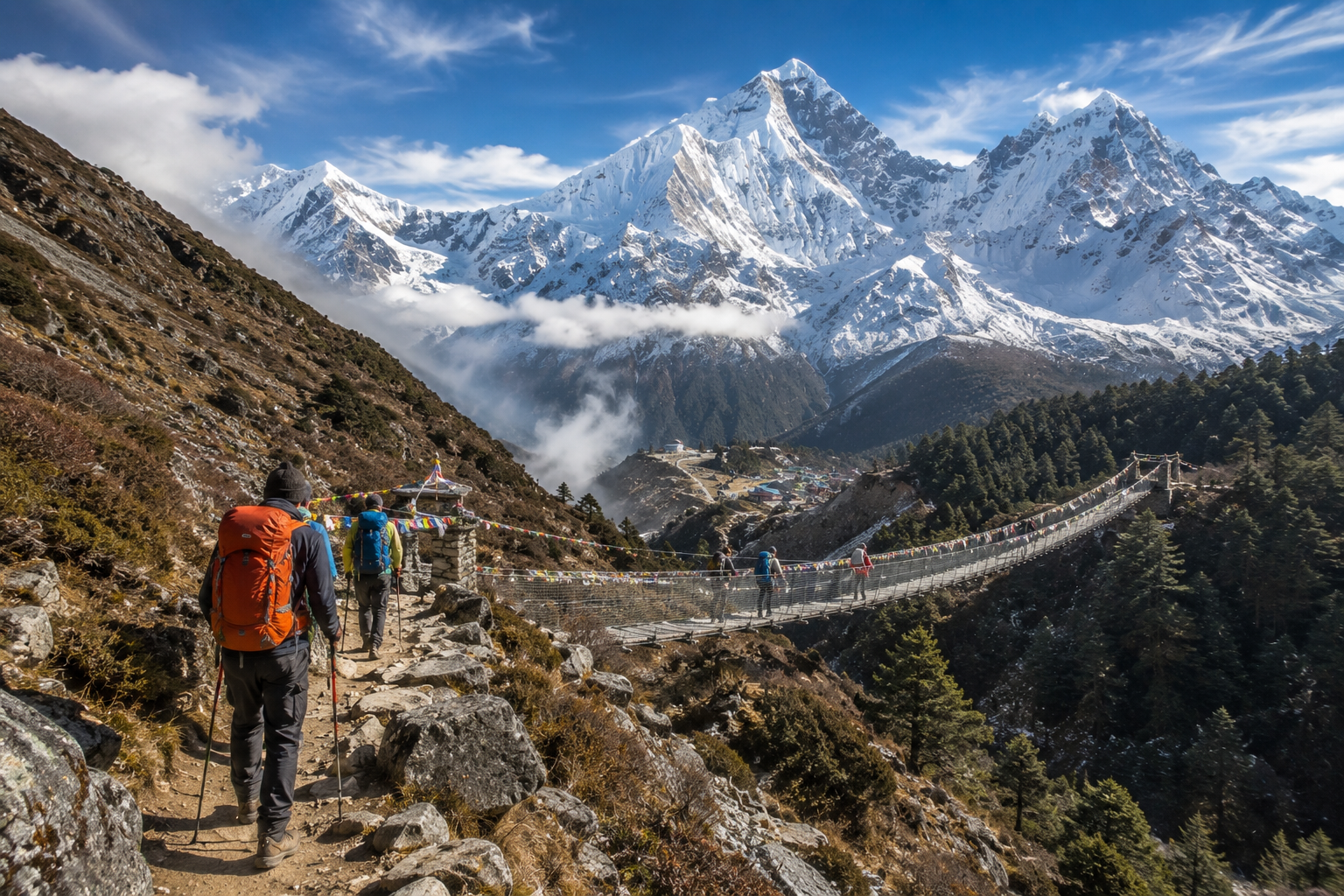
Nepal is one of those destinations that stays with people long after they leave. It’s not only because of the mountains—although the Himalayas are unlike anything else on earth—it’s because Nepal feels deeply alive. Streets are filled with incense smoke, prayer flags move in the wind above ancient temples, and everyday life unfolds against some of the most dramatic landscapes in the world.
What makes Nepal special is the contrast. You can move from chaotic city streets in Kathmandu to complete silence in the mountains within a matter of hours. One moment you’re drinking tea in a crowded alley lined with temples, and the next you’re watching sunrise over snow-covered Himalayan peaks.
This guide is designed to help you experience Nepal properly, whether you’re visiting for trekking, culture, photography, spirituality, or simply the experience of seeing a completely different way of life. From detailed destination recommendations to exact restaurants and hotels, this is a complete overview of one of the most unforgettable countries in Asia.
Kathmandu is where nearly every Nepal journey begins. At first, the city can feel overwhelming. The streets are crowded, traffic moves unpredictably, motorbikes weave through narrow lanes, and the air carries a constant mix of incense, dust, spices, and street food. But after a day or two, Kathmandu starts to make sense. It becomes less chaotic and more atmospheric.
The best area for first-time visitors is Thamel, which acts as the tourism and backpacking center of the city. Here you’ll find trekking stores, cafés, rooftop restaurants, bookstores, and travel agencies tucked into narrow streets filled with color and movement.
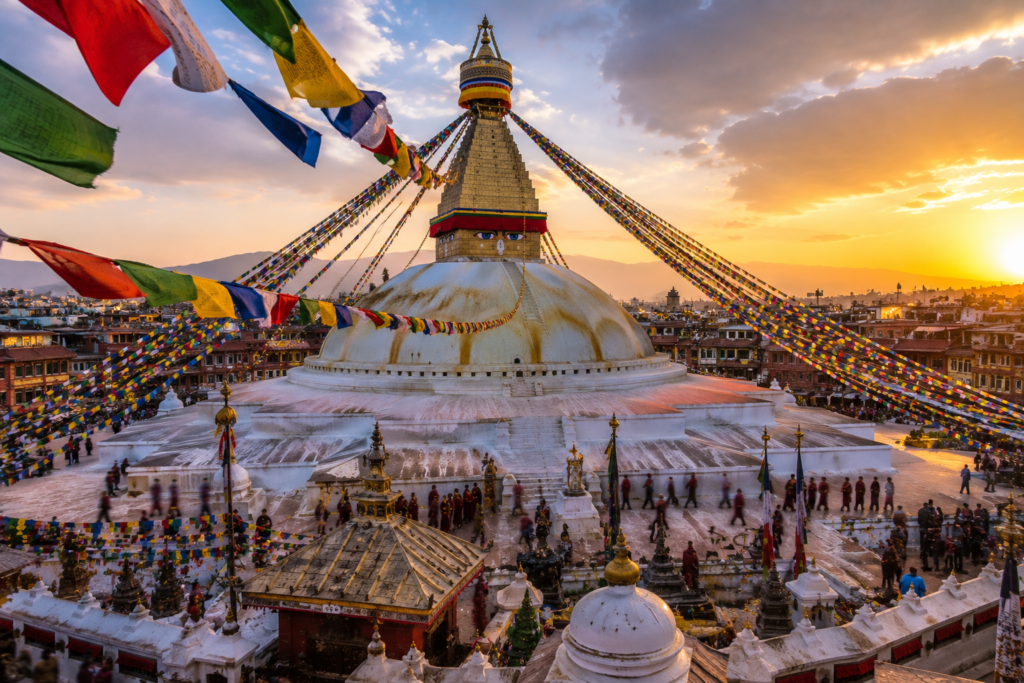
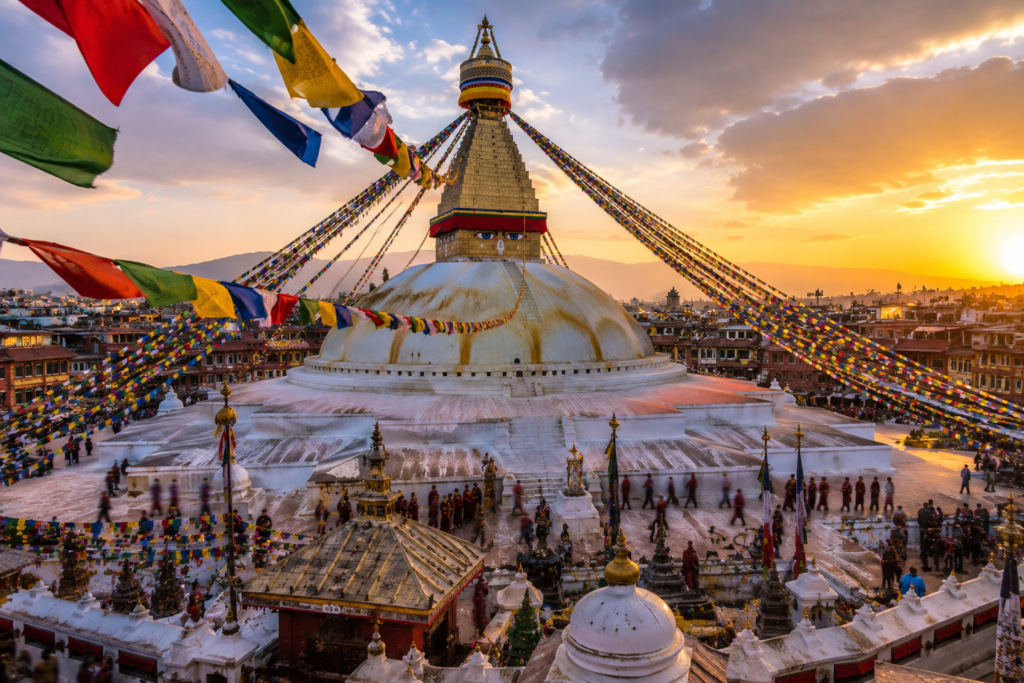
One of the most important places to visit in Kathmandu is Boudhanath Stupa. It’s one of the largest Buddhist stupas in the world and one of the most peaceful places in the city. Early morning and evening are the best times to visit, when locals walk slowly around the stupa spinning prayer wheels while monks chant nearby.
Another essential location is Swayambhunath, often called the Monkey Temple. Sitting high above the city, it offers panoramic views across Kathmandu Valley. The atmosphere here feels spiritual and calm despite the crowds. Prayer flags stretch between temples while monkeys move freely around ancient stone stairways.
Kathmandu Durbar Square is another highlight. Although parts were damaged during the 2015 earthquake, restoration continues, and the area still contains remarkable examples of traditional Nepalese architecture. The intricate wood carvings, temples, and courtyards reveal the deep cultural history of the Kathmandu Valley.
When it comes to food, Kathmandu has become far more diverse than many travelers expect. Traditional Nepali meals remain essential, but the city also offers excellent international cuisine thanks to the large trekking and travel community.
Want more scenes like this?
Download a curated pack of ultra-realistic images, perfect for wallpapers and inspiration.For authentic Nepali food, Bhojan Griha is one of the best experiences in the city. Set inside a restored traditional building, the restaurant serves classic dishes alongside cultural performances. Dal bhat—the staple Nepali meal of rice, lentils, vegetables, and curry—is simple but incredibly satisfying after long days exploring.
OR2K in Thamel has become a favorite among travelers for its relaxed rooftop atmosphere and Middle Eastern-inspired menu. For coffee and pastries, Himalayan Java remains one of the most reliable café chains in Nepal.
Accommodation in Kathmandu ranges from budget hostels to high-end boutique hotels. Dwarika’s Hotel is widely considered the city’s most luxurious stay, filled with traditional Newari craftsmanship and architecture. It feels more like a cultural experience than a standard hotel. For something more affordable but still comfortable, Kathmandu Guest House in Thamel remains one of the city’s most iconic traveler accommodations.
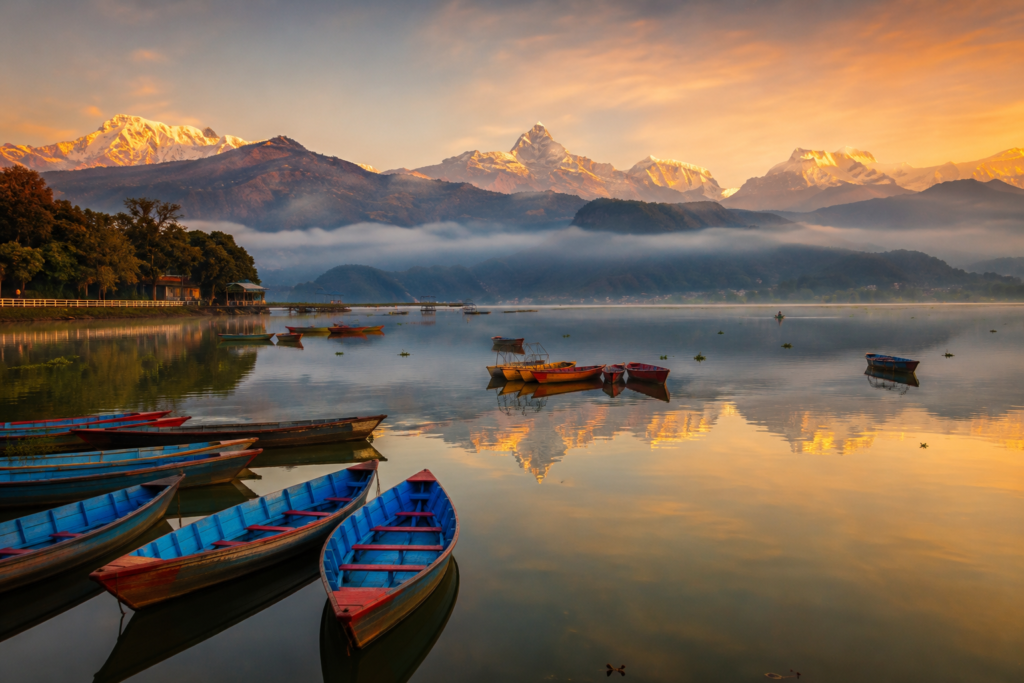
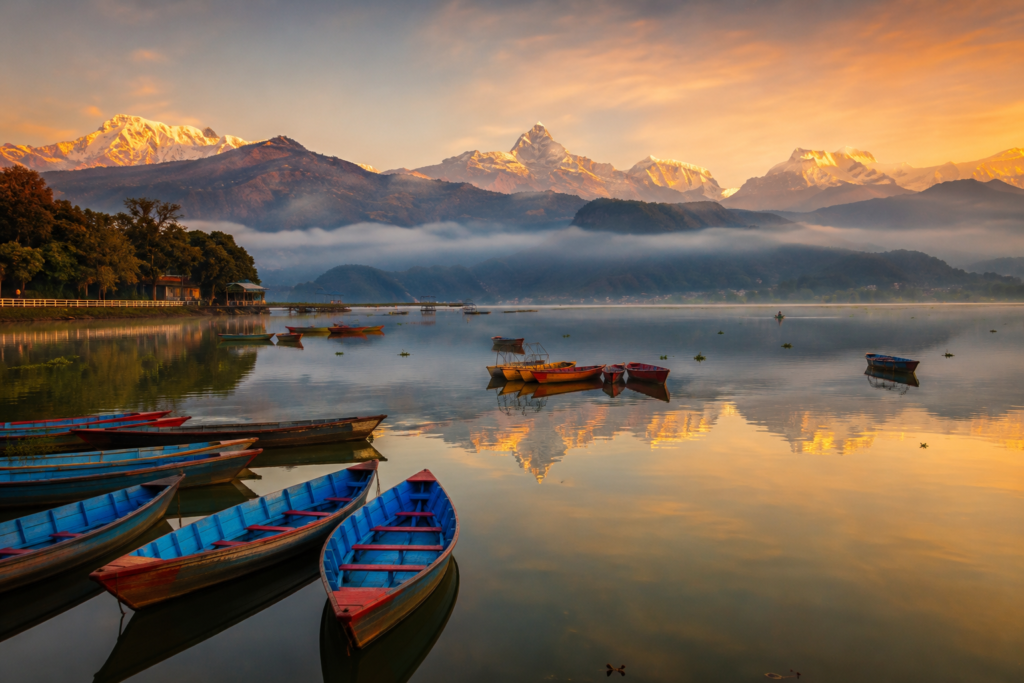
Many travelers move next to Pokhara, Nepal’s second most popular destination. If Kathmandu feels energetic and intense, Pokhara feels calm and open. Sitting beside Phewa Lake with the Annapurna mountain range visible in the distance, the city has a slower atmosphere that immediately feels more relaxing.
The lakeside area is the center of activity. Cafés, restaurants, yoga studios, and small hotels line the waterfront while boats drift slowly across the lake. One of the best experiences in Pokhara is simply renting a small wooden boat in the early morning and watching the mountains emerge through the mist.
Sarangkot is one of the most famous sunrise viewpoints in Nepal. Most people arrive before dawn and wait as the first light slowly illuminates the Annapurna range. On clear days, the mountains glow gold and orange as the sun rises behind them.
Adventure activities are also extremely popular in Pokhara. Paragliding above the lake and mountains has become one of the city’s signature experiences. Ziplining, ultralight flights, and white-water rafting are also widely available.
For food, Pokhara has developed a strong café culture. Fresh Elements is one of the best modern restaurants near Lakeside, offering high-quality international food. Moondance Restaurant is another longtime favorite among travelers.
Temple Tree Resort & Spa is one of Pokhara’s most comfortable luxury accommodations, while Fish Tail Lodge offers beautiful lakefront views with a quieter atmosphere.
Want more scenes like this?
Download a curated pack of ultra-realistic images, perfect for wallpapers and inspiration.For many travelers, however, Nepal is ultimately about trekking.
The Everest Base Camp Trek is the country’s most famous route and one of the world’s most iconic hiking experiences. The journey begins with a flight to Lukla, often considered one of the most dramatic airports on earth due to its short mountain runway.
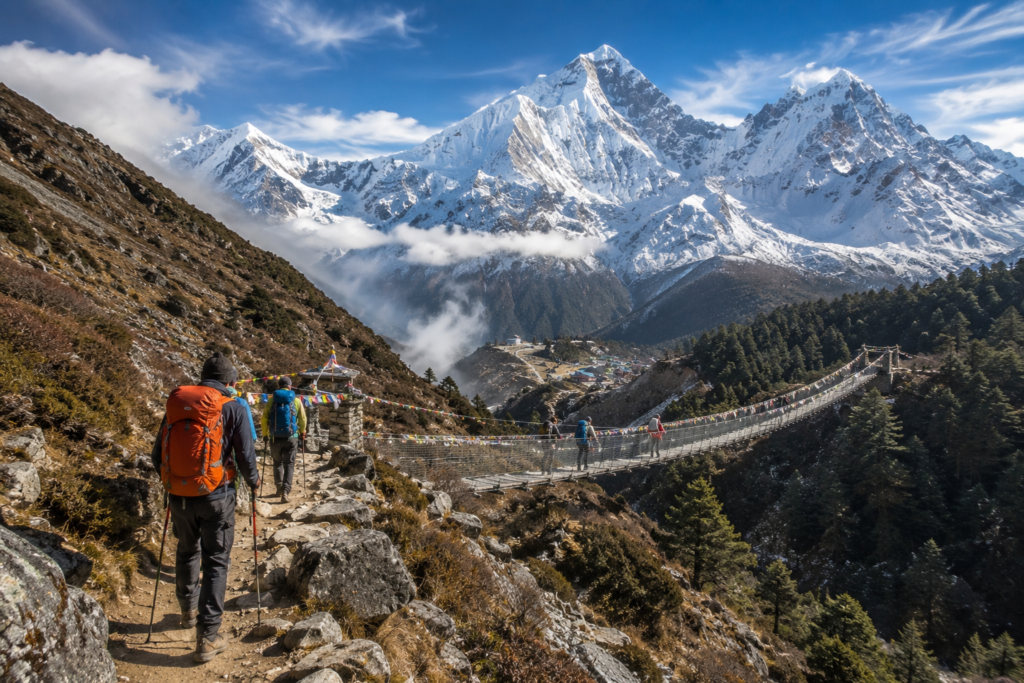
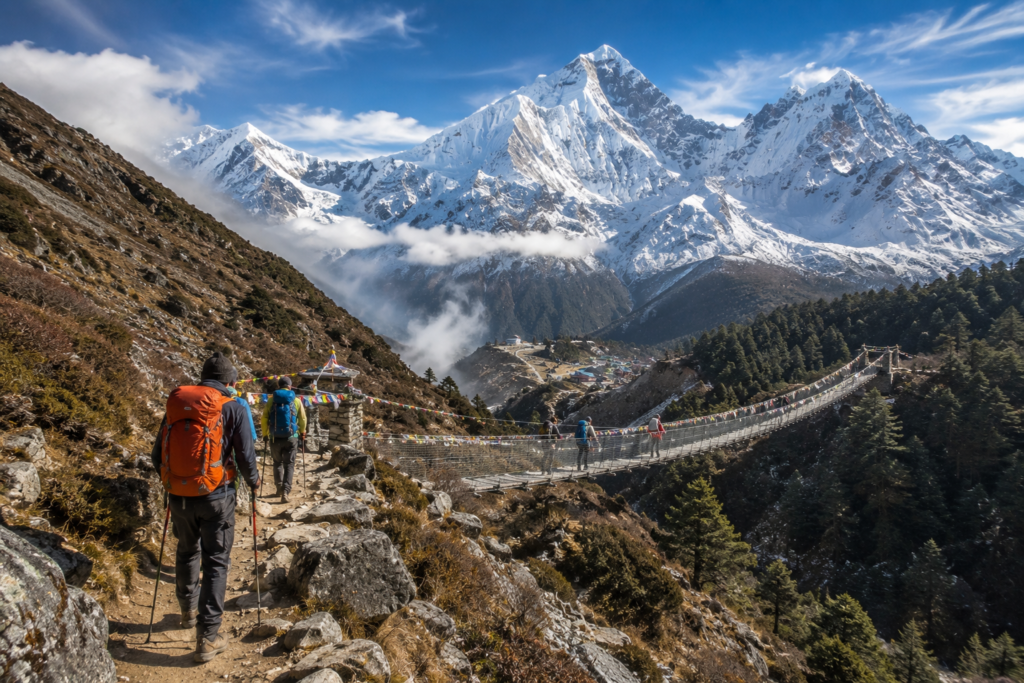
From there, the trek moves through Sherpa villages, suspension bridges, forests, and increasingly dramatic mountain scenery. Namche Bazaar acts as the main acclimatization stop and serves as the unofficial capital of the Khumbu region.
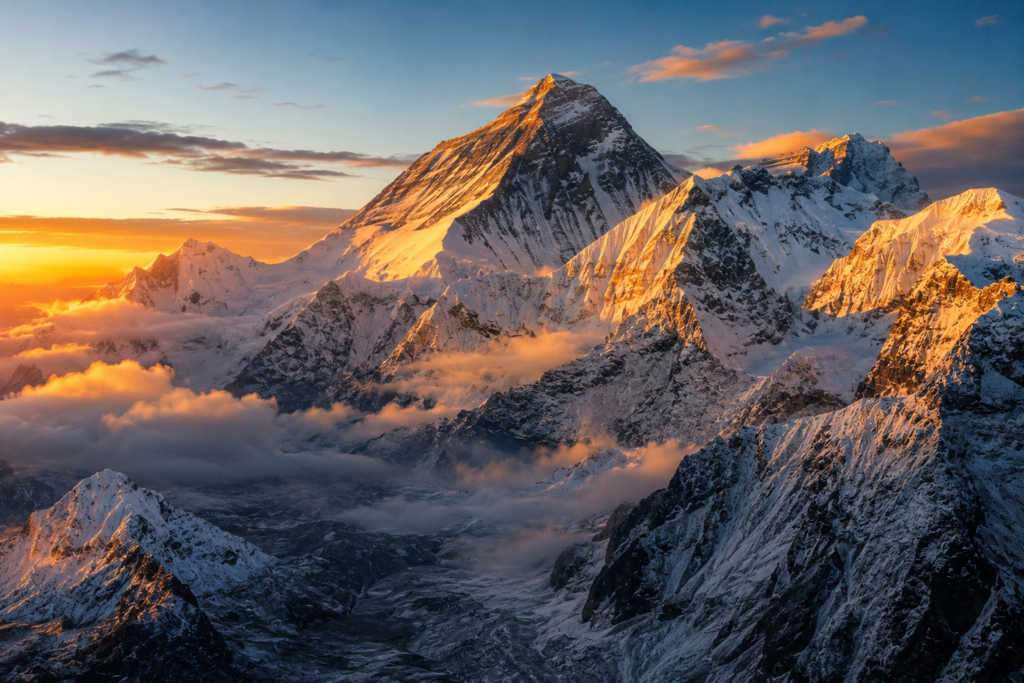
As altitude increases, the landscape becomes more barren and dramatic. Reaching Everest Base Camp itself is rewarding, but many trekkers say the real highlight is Kala Patthar, where sunrise views over Mount Everest create one of the most unforgettable scenes in the Himalayas.
Accommodation during treks usually consists of teahouses—simple mountain lodges that provide meals and basic rooms. While conditions are simple, the atmosphere becomes part of the experience.
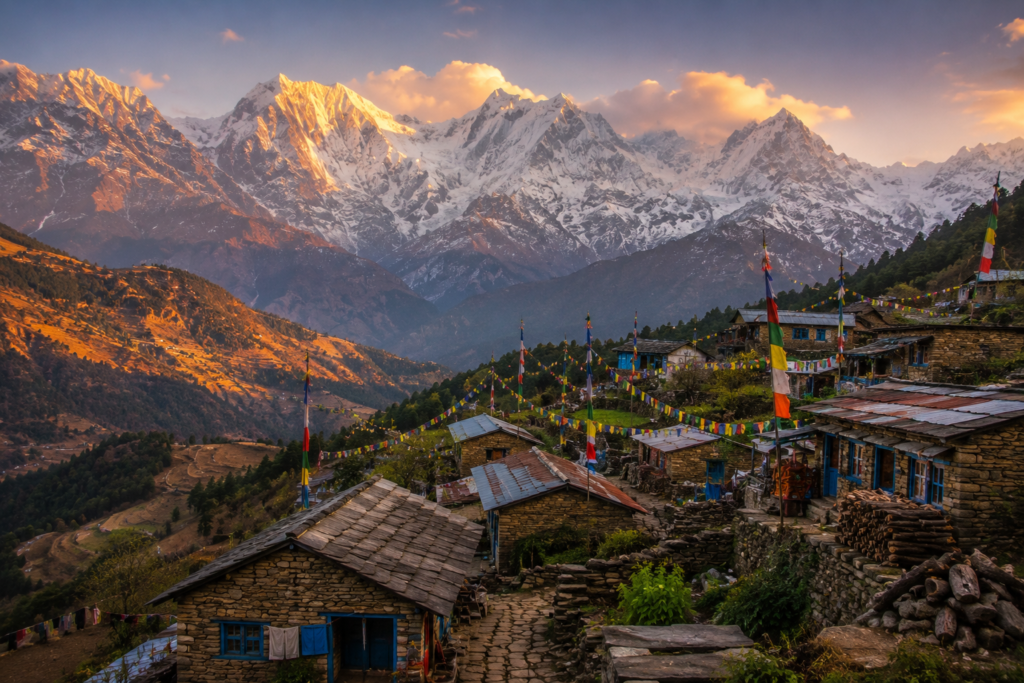
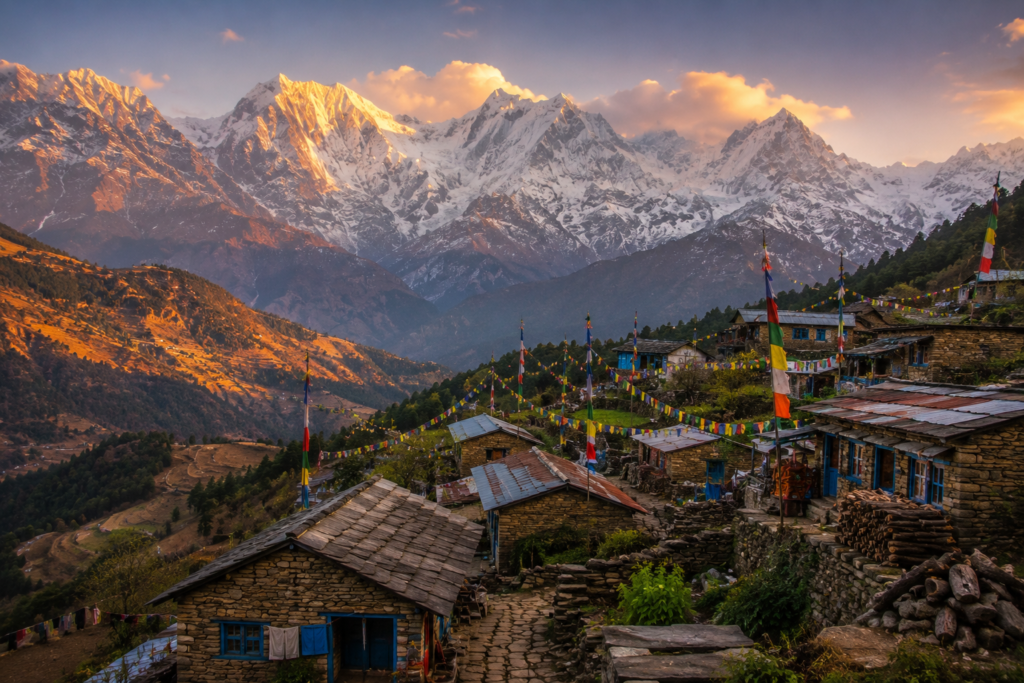
The Annapurna Circuit is another legendary trek and offers more variety in landscapes and culture than Everest Base Camp. The route moves through subtropical forests, villages, high mountain passes, and arid Himalayan terrain that begins to resemble Tibet.
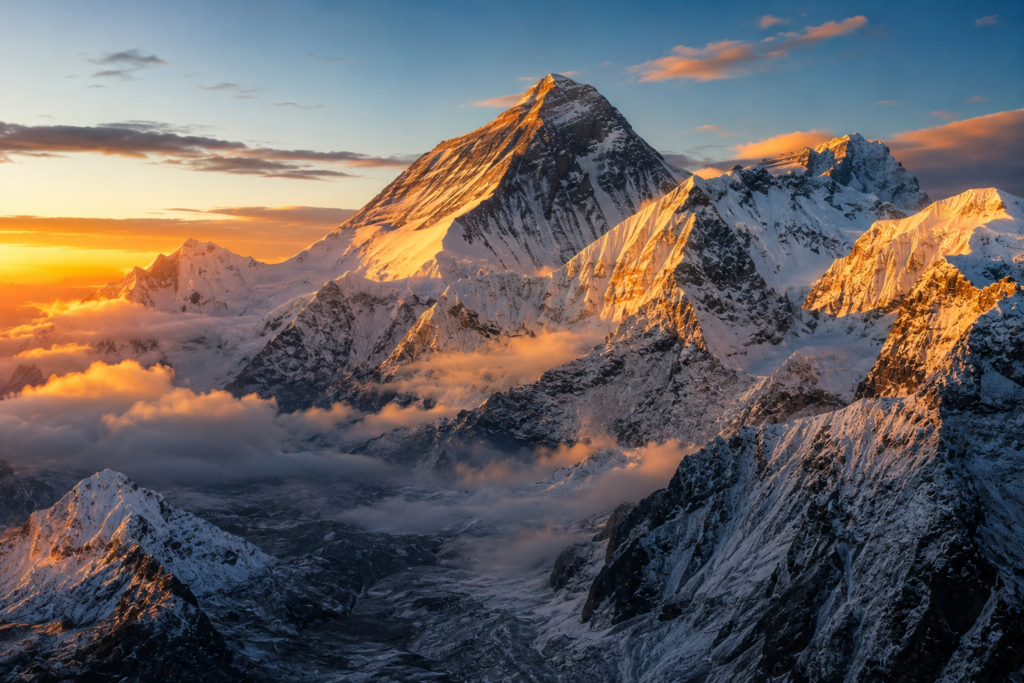
The Thorong La Pass, sitting above 5,400 meters, is one of the trek’s most challenging but rewarding sections. Crossing it at sunrise surrounded by snow-covered peaks feels surreal.
For travelers wanting shorter trekking experiences, the Poon Hill Trek is one of the best options. It’s accessible, less physically demanding, and still offers incredible Himalayan sunrise views.
Packing properly for Nepal matters more than many people realize, especially if trekking is involved. A reliable backpack becomes essential, particularly for flights, buses, and mountain trails. Something like the Bagsmart 40L Carry-On Travel Backpack works well because it keeps gear organized while remaining manageable during constant movement.
Want more scenes like this?
Download a curated pack of ultra-realistic images, perfect for wallpapers and inspiration.Power access can also become inconsistent during treks, which is why carrying a portable charger like the Anker 10,000mAh 22.5W Power Bank becomes genuinely useful. Phones are heavily relied upon for maps, photos, and communication, especially in mountain regions.
Weather in Nepal changes significantly depending on altitude and season. Layering clothing becomes more important than packing large amounts of clothing. Using Amazon Basics Packing Cubes helps organize gear efficiently, especially when frequently moving between hotels, buses, and trekking lodges.
For travelers interested in photography or content creation, Nepal provides endless opportunities. Whether it’s mountain landscapes, monasteries, prayer flags, or city streets, the country is visually remarkable. Carrying a lightweight tripod like the Ulanzi MT-44 Extendable Vlog Tripod helps capture sunrise views and low-light photography without adding excessive weight.
Long travel days are common throughout Nepal, especially when moving between regions by road or waiting during delayed mountain flights. Noise-cancelling headphones like the Sony WH-1000XM5 Noise Cancelling Headphones make long journeys significantly more comfortable, especially on flights and buses.
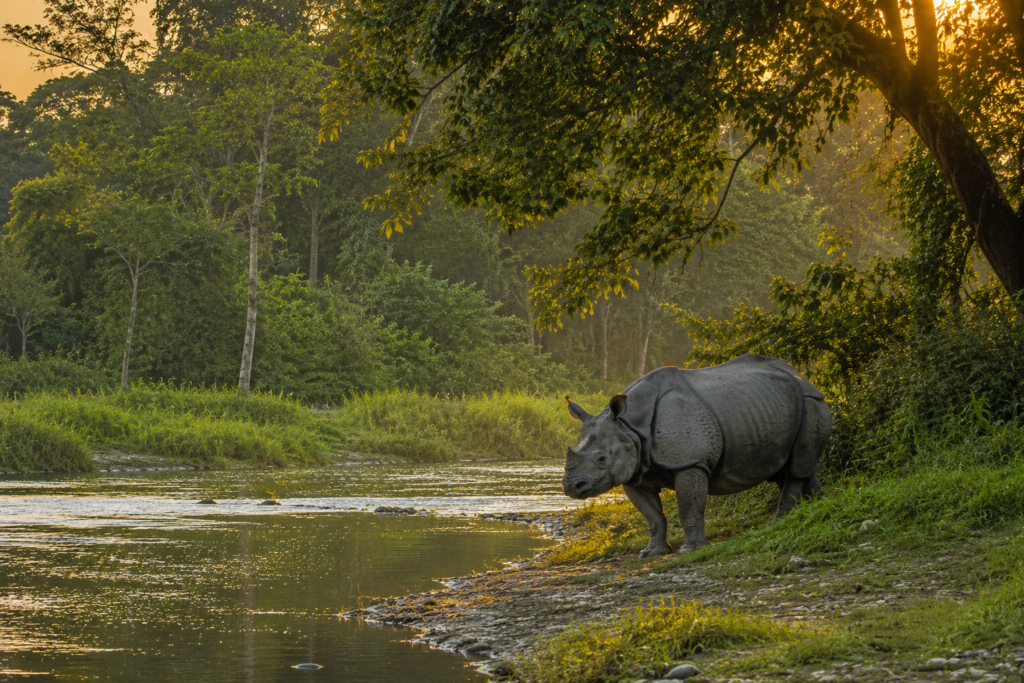
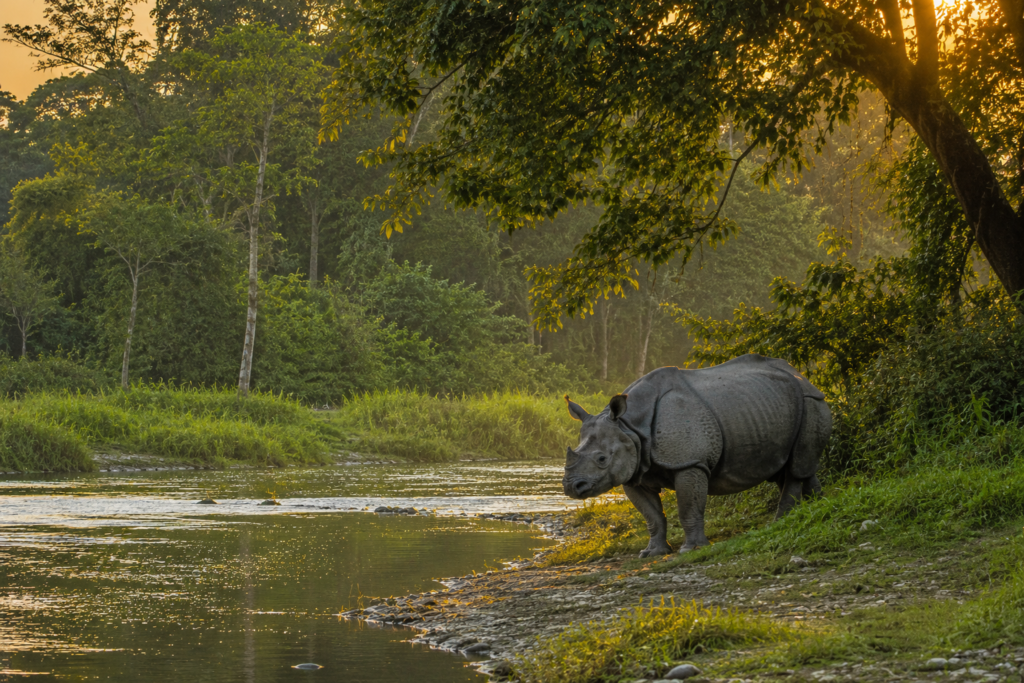
Chitwan National Park offers a completely different side of Nepal. Located in the lowland Terai region, it’s known for jungle safaris, rhinos, crocodiles, elephants, and Bengal tigers.
After spending time in the mountains, the warm jungle environment feels like entering another country entirely. Jeep safaris and canoe rides through the river systems provide opportunities to see wildlife in a natural setting.
Barahi Jungle Lodge is one of the best luxury safari accommodations in the region, combining comfort with excellent guided experiences.
Lumbini, the birthplace of Buddha, is another important destination for travelers interested in spirituality and history. The atmosphere here is much quieter than Kathmandu or Pokhara. Monasteries built by Buddhist communities from around the world create a peaceful international spiritual center.
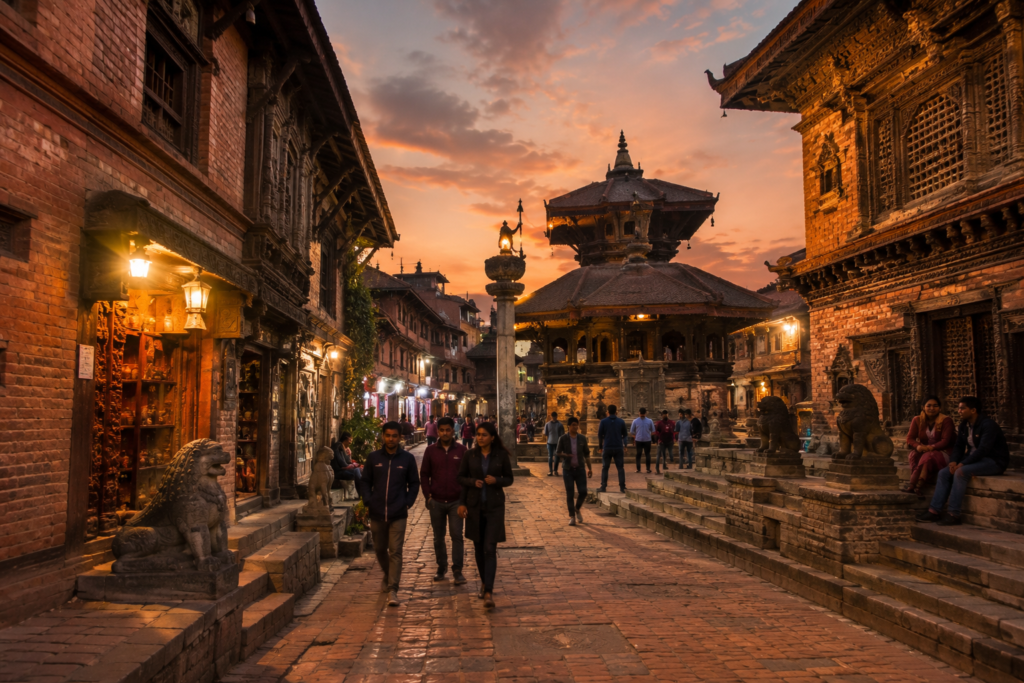
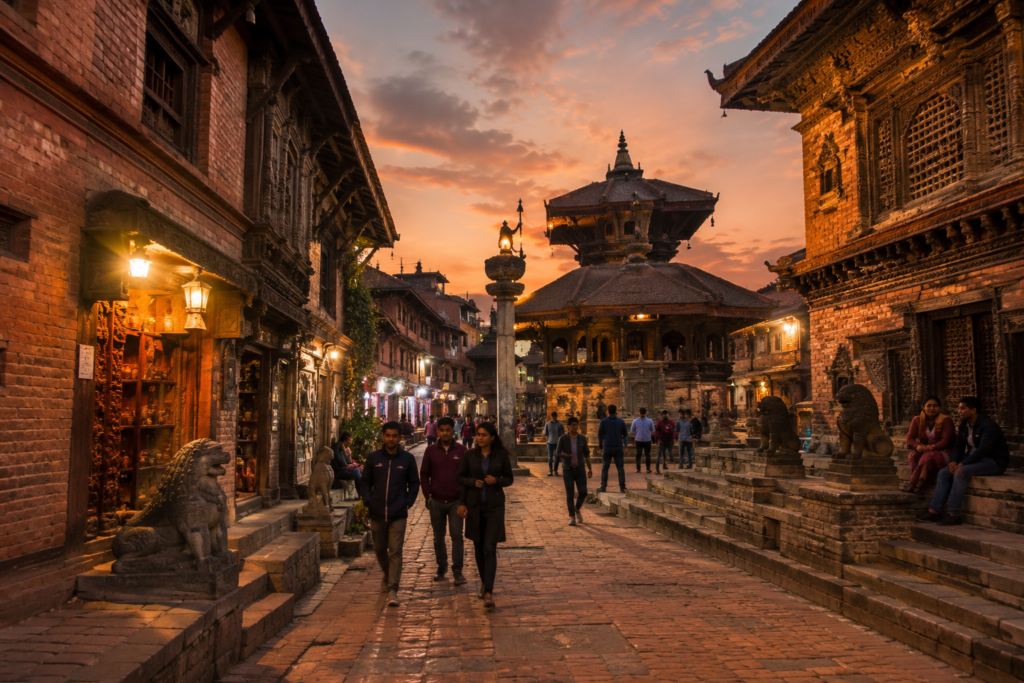
Bhaktapur is one of the best-preserved historic cities in Nepal and often becomes a favorite among visitors. Located just outside Kathmandu, it feels like stepping backward in time. Brick streets, temples, traditional wood carvings, and quiet courtyards create a completely different atmosphere from the capital.
Want more scenes like this?
Download a curated pack of ultra-realistic images, perfect for wallpapers and inspiration.The local specialty, juju dhau (“king yogurt”), is worth trying while wandering the city.
Transportation in Nepal requires patience. Domestic flights can be delayed due to weather, roads are often rough, and journeys can take longer than expected. But moving slowly through Nepal often becomes part of the experience rather than a problem.
The best seasons to visit Nepal are spring (March to May) and autumn (September to November). Autumn is particularly popular because skies tend to be clearer, making mountain visibility better for trekking and photography.
Winter can still be beautiful, especially in Kathmandu and Pokhara, though high-altitude trekking becomes more difficult. Monsoon season brings heavy rainfall but also lush green landscapes and fewer tourists.
One of the reasons Nepal feels so memorable is because experiences here often feel more personal and less commercialized than many other major travel destinations. Conversations with locals, tea stops during treks, and quiet moments in monasteries become some of the strongest memories people take home.
Nepal isn’t about luxury in the traditional sense. It’s about perspective. The mountains make everyday concerns feel smaller. The pace encourages patience. The culture encourages humility.
Whether you come for trekking, photography, spirituality, or adventure, Nepal has a way of slowing people down and making them more aware of where they are.
And that’s ultimately why so many travelers return.
-
France Travel Guide: A Journey Through Paris, Provence, the French Riviera, Bordeaux & the Alps
Introduction: Why France Continues to Inspire Travelers
France has a way of feeling timeless. It’s not just the landmarks or landscapes that make people return—it’s the atmosphere. The café culture, the slower pace of meals, the architecture that seems untouched by time, and the way every region feels like its own world.
You can spend the morning walking through centuries-old streets in Paris, the afternoon drinking wine in Burgundy, and the evening watching the sun disappear over the Mediterranean in Nice. France is incredibly diverse, and that diversity is what makes it one of the most rewarding countries to explore slowly.
This guide takes you through some of France’s most memorable destinations, with detailed recommendations for where to stay, where to eat, what to see, and how to experience the country beyond the typical tourist checklist.
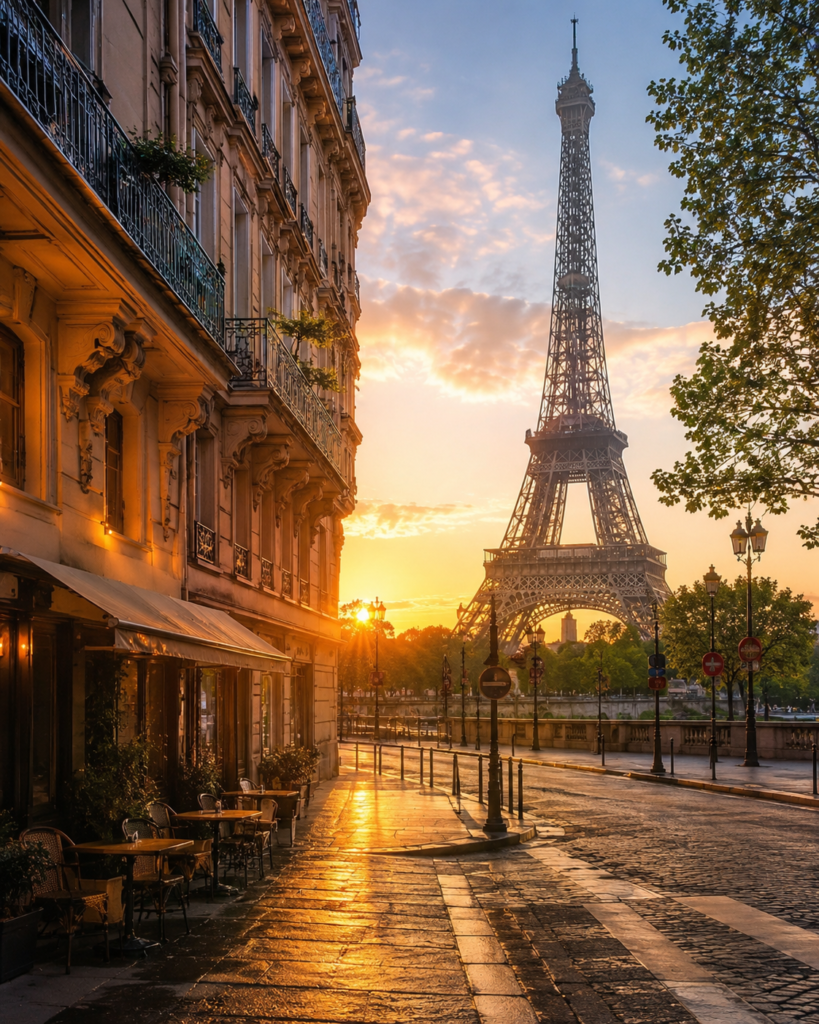
Paris: The Heart of France
Paris is one of the few cities in the world that genuinely lives up to its reputation. It’s elegant without trying too hard, historic without feeling frozen in time, and constantly alive without becoming overwhelming.
The best way to experience Paris is simply to walk. Some of the city’s best moments happen between destinations—quiet side streets, hidden cafés, bookstore windows, or watching the Seine glow at sunset.
The Eiffel Tower & Champ de Mars
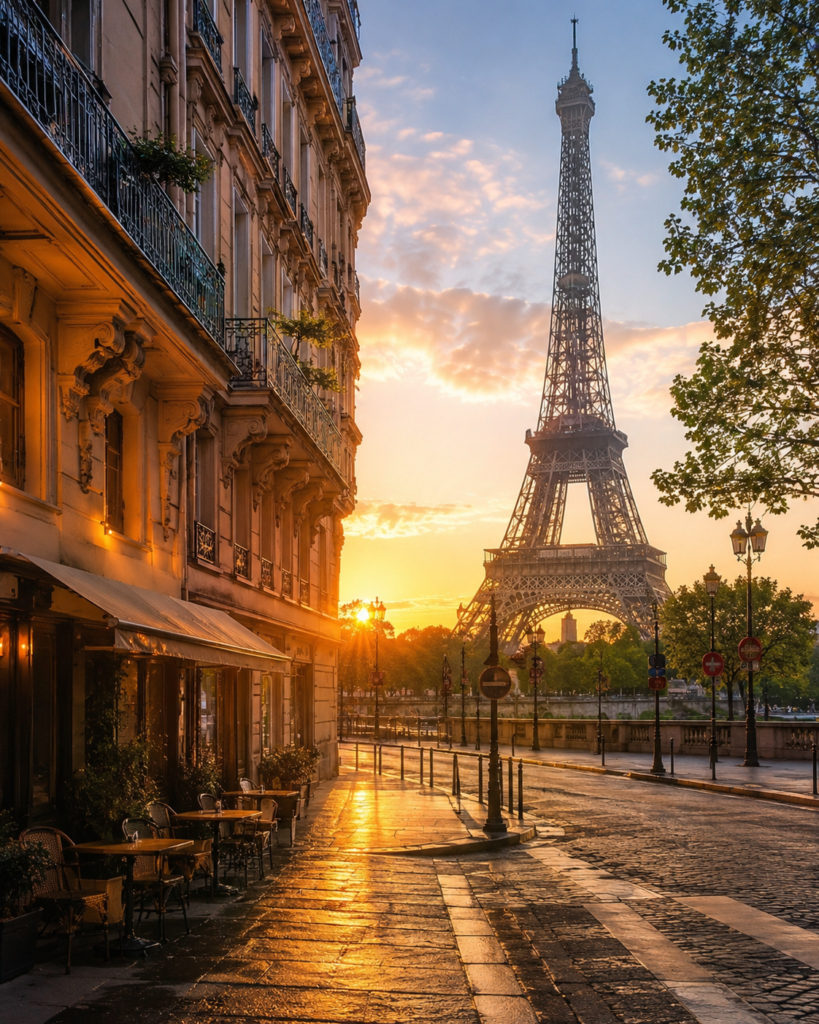
The Eiffel Tower is unavoidable, but seeing it in person still feels surreal. Early morning or late evening offers the best atmosphere, especially when the crowds thin slightly and the city lights begin reflecting across the Seine.
Nearby, the Champ de Mars is ideal for slowing down with coffee or pastries while taking in the view.
The Louvre & Tuileries Garden
Even people who don’t usually visit museums tend to appreciate the Louvre simply because of its scale and atmosphere. You could spend multiple days here, but even a few hours is worthwhile.
Afterward, walk through the Tuileries Garden toward Place de la Concorde and continue along the Seine.
Montmartre & Sacré-Cœur
Montmartre feels completely different from central Paris. The steep streets, artists, cafés, and views over the city give it a quieter, more cinematic atmosphere.
Sacré-Cœur Basilica offers one of the best panoramic views in Paris, especially at sunset.
Where to Eat in Paris
Septime
One of Paris’ most respected modern French restaurants. Seasonal tasting menus with minimalist presentation.
Café de Flore
Historic Parisian café culture at its best. Ideal for coffee and people-watching.
Pink Mamma
A popular Italian-French fusion restaurant with beautiful interiors and rooftop seating.
Du Pain et des Idées
Exceptional pastries and one of the city’s best bakeries.
Where to Stay in Paris
Hôtel Plaza Athénée
Classic Paris luxury near Avenue Montaigne.
Le Roch Hotel & Spa
Boutique modern hotel with understated elegance.
Hôtel des Grands Boulevards
Stylish and centrally located without feeling overly touristy.
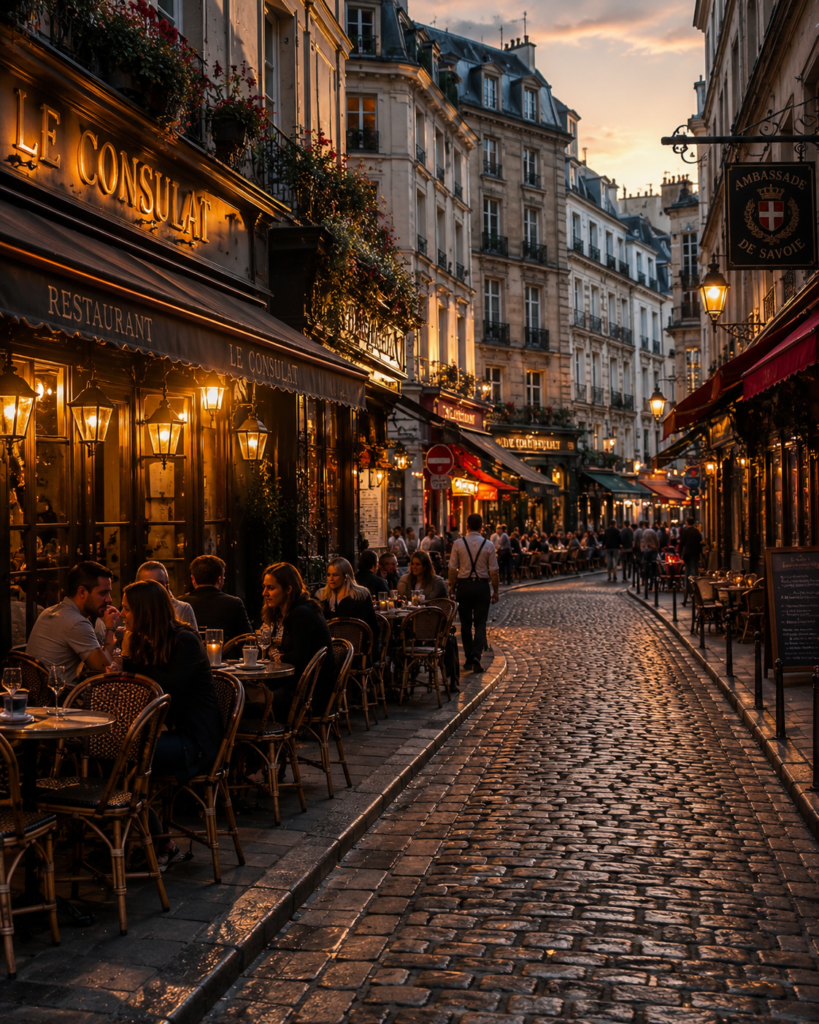
Provence: Lavender Fields & Slow Living
Provence feels softer than Paris. The pace changes. Meals become longer, roads quieter, and landscapes warmer.
Rolling vineyards, hilltop villages, and golden evening light define this region.
Gordes
One of the most beautiful villages in France, perched dramatically on a hillside.
Stone buildings, narrow alleyways, and panoramic countryside views make it feel almost unreal during golden hour.
Valensole Lavender Fields
If visiting during summer, the lavender fields around Valensole are iconic. Endless purple rows stretching into the distance create one of France’s most photographed landscapes.
Aix-en-Provence
Elegant streets, fountains, markets, and shaded cafés make Aix one of the most enjoyable smaller cities in France.
Spend time slowly wandering rather than rushing between attractions.
Where to Eat in Provence
La Bastide de Moustiers
Beautiful countryside restaurant focused on local ingredients.
Chez Bruno
Known for truffle-based dishes and classic Provençal cuisine.
Le Formal
Modern French dining in Aix-en-Provence.
Where to Stay in Provence
Airelles Gordes, La Bastide
Luxury hotel overlooking the valley.
Château de Berne
Wine estate with spa and vineyards.
Villa Gallici
Elegant boutique hotel in Aix-en-Provence.
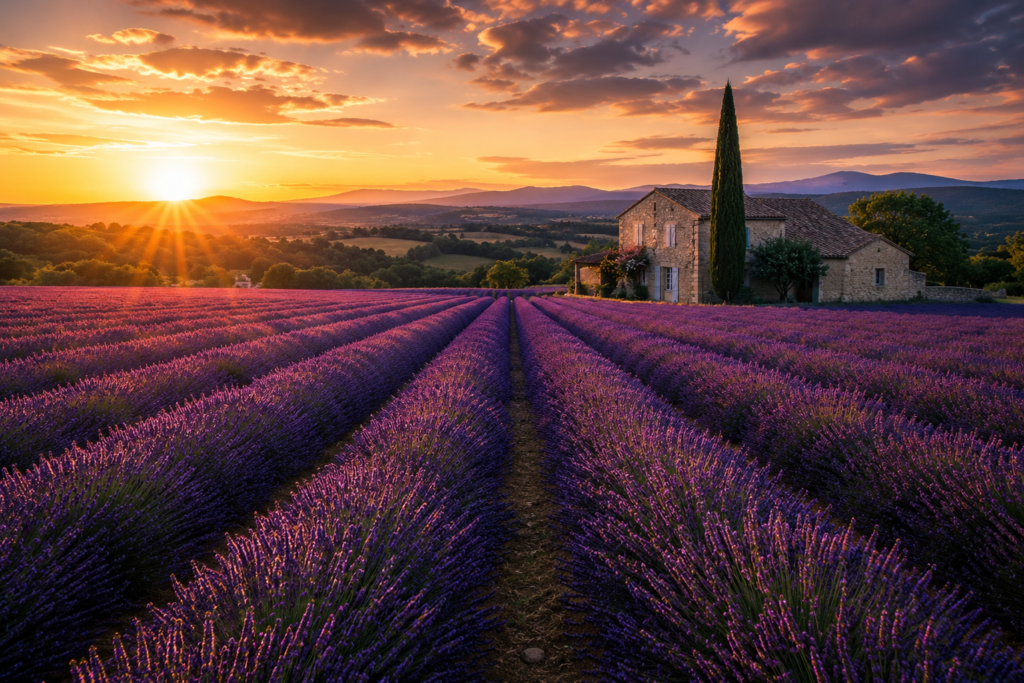
The French Riviera: Glamour & Coastal Beauty
The Côte d’Azur combines Mediterranean landscapes with luxury, nightlife, and relaxed coastal living.
Nice
Nice is one of the Riviera’s best bases because it balances beaches, culture, and accessibility.
Walk the Promenade des Anglais at sunset, explore Old Town, and spend evenings in waterfront restaurants.
Monaco
Small but dramatic, Monaco feels polished and cinematic. Luxury cars line the streets, yachts fill the harbor, and the city almost glows at night.
Saint-Tropez
Known for beach clubs and luxury tourism, but still beautiful early in the morning before crowds arrive.
Èze Village
A medieval village perched above the coastline with incredible panoramic views.
Where to Eat on the Riviera
La Chèvre d’Or (Èze)
Fine dining with unforgettable views.
Le Plongeoir (Nice)
Restaurant built above the sea.
Jan Restaurant (Nice)
Michelin-starred modern cuisine.
Where to Stay
Hotel du Cap-Eden-Roc
One of the Riviera’s most iconic luxury hotels.
Hyatt Regency Nice Palais de la Méditerranée
Great location on the waterfront.
Château Eza
Boutique luxury in Èze.
Bordeaux: Wine Country & Elegant Streets
Bordeaux feels refined but relaxed. It combines beautiful architecture with world-famous wine regions.
Place de la Bourse
Especially beautiful at night when reflections appear in the nearby water mirror.
Saint-Émilion
A medieval village surrounded by vineyards and wineries. One of the best day trips in France.
Wine Tours
Visiting local vineyards is essential here. Many offer tastings, cellar tours, and countryside lunches.
Where to Eat
Le Chapon Fin
Classic fine dining.
Racines
Modern French cuisine with local ingredients.
Miles
Creative tasting menus.
Where to Stay
InterContinental Bordeaux
Luxury hotel near the opera house.
Yndo Hotel
Stylish boutique option.
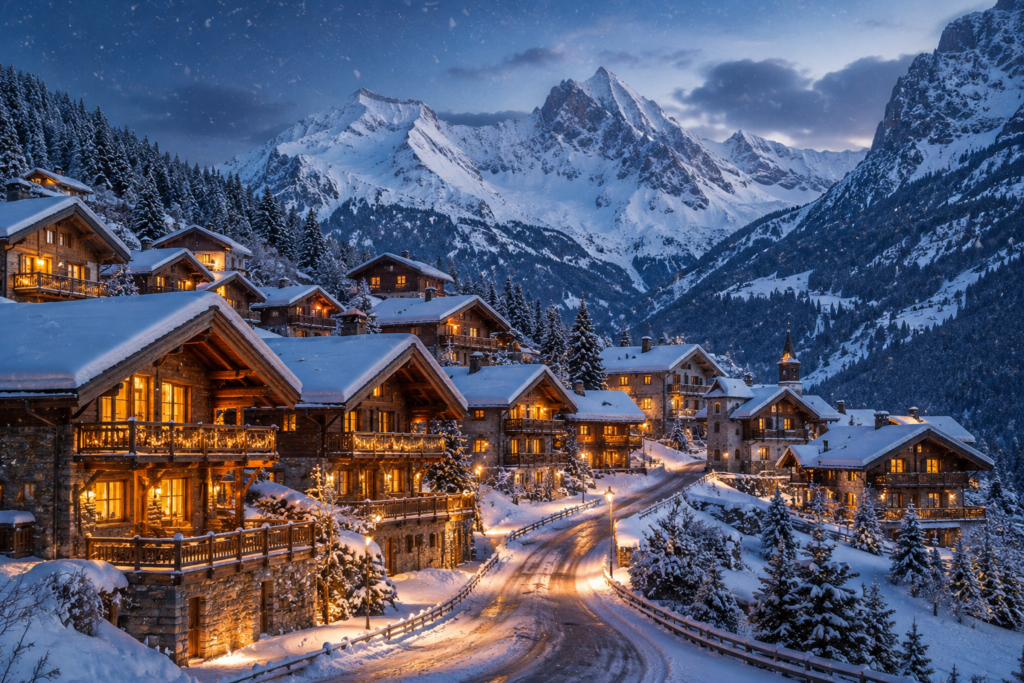
The French Alps: Mountain Landscapes & Alpine Villages
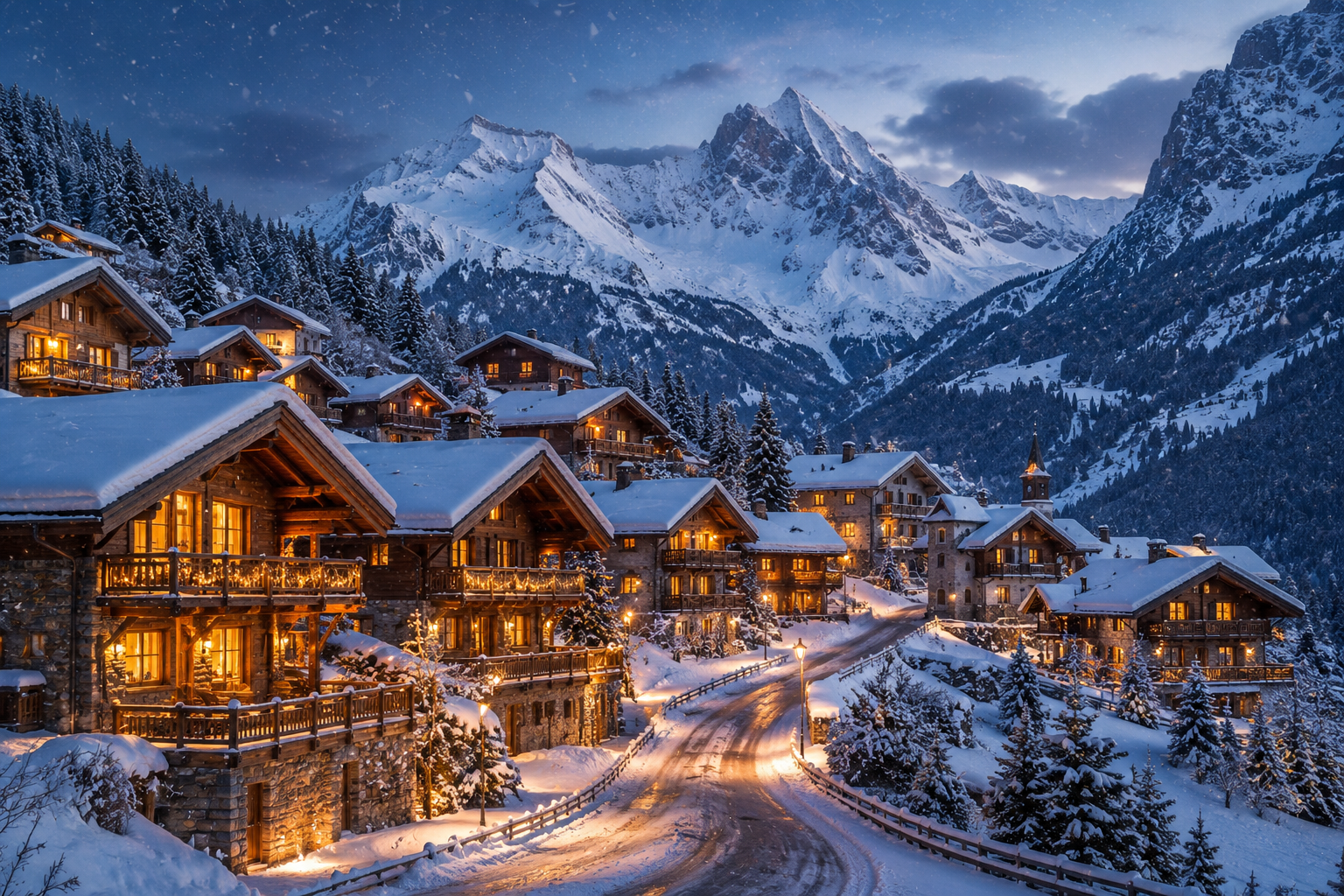
France’s alpine regions feel entirely different again—clean air, dramatic scenery, and quiet villages surrounded by mountains.
Chamonix
One of Europe’s most famous mountain towns beneath Mont Blanc.
Cable cars, hiking, skiing, and panoramic views make it beautiful year-round.
Annecy
Known as the “Venice of the Alps,” Annecy combines canals with mountain scenery.
The lake is one of the clearest in Europe.
Where to Eat
Albert 1er (Chamonix)
Elegant alpine dining.
La Ciboulette (Annecy)
Traditional French cuisine.
Where to Stay
Hôtel Mont-Blanc Chamonix
Classic alpine luxury.
Black Bass Hotel (Annecy)
Modern lakefront hotel.
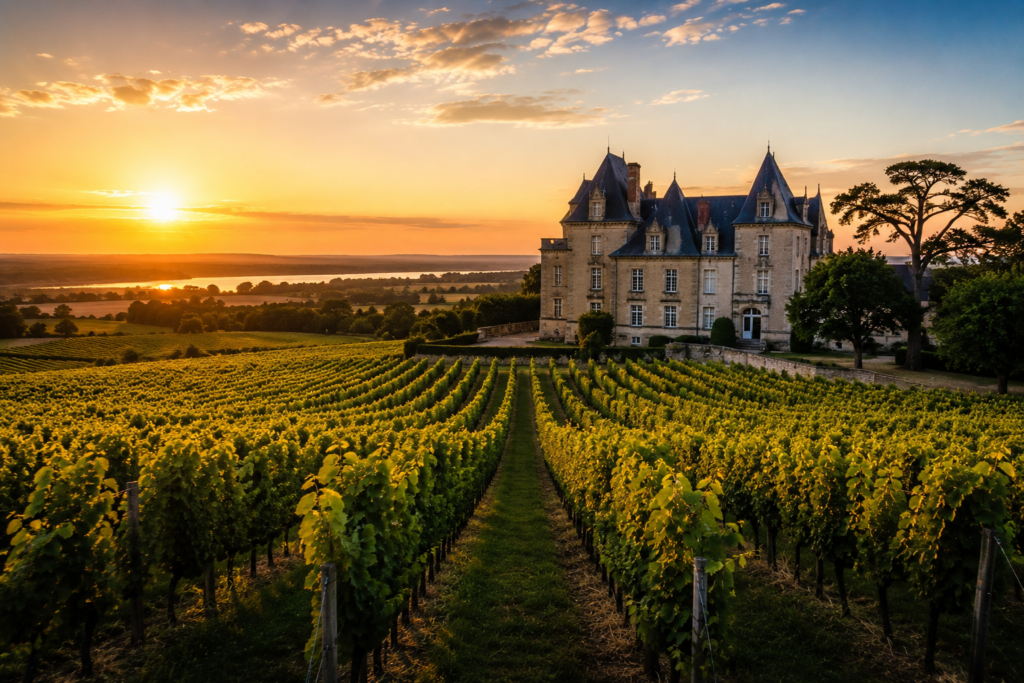
Loire Valley: Castles & Countryside
The Loire Valley is quieter but filled with history and landscapes that feel almost storybook-like.
Château de Chambord
France’s largest and most famous château.
Château de Chenonceau
Built across a river, it’s one of the most visually striking castles in Europe.
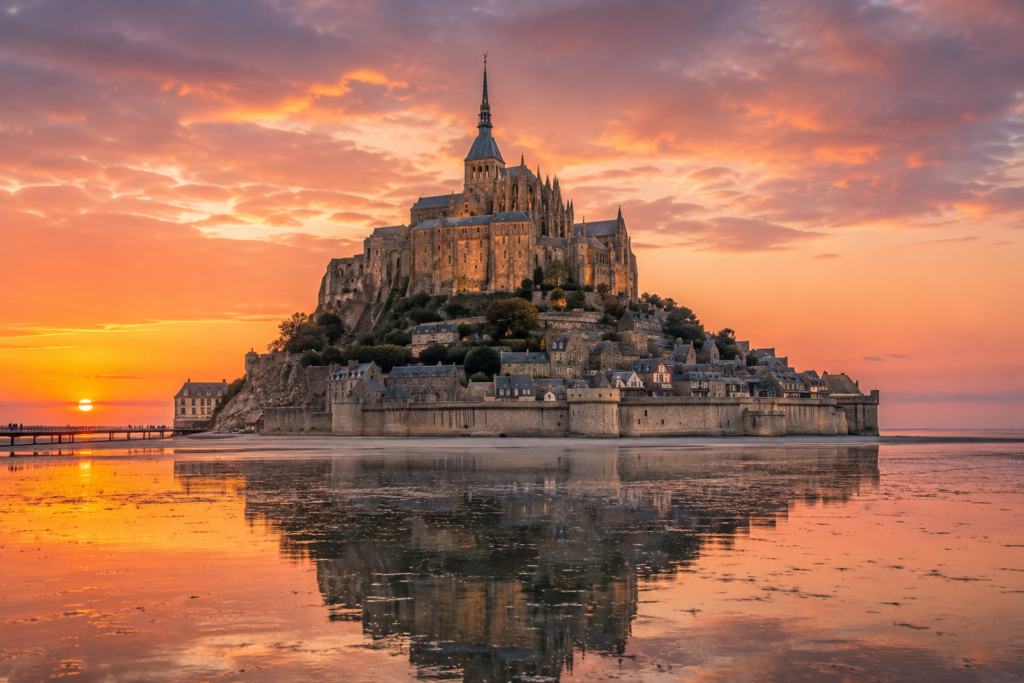
Travel Essentials for France
France involves a lot of walking, train travel, and movement between cities and regions.
A reliable travel backpack like the Bagsmart 40L Carry-On Travel Backpack makes navigating stations, airports, and day trips much easier.
Since maps, bookings, and photography quickly drain battery life, the Anker 10,000mAh 22.5W Power Bank becomes genuinely useful throughout long sightseeing days.
If you’re creating travel content or simply want stable photos during solo travel, the Ulanzi MT-44 Extendable Vlog Tripod is lightweight enough to carry daily without becoming annoying.
Keeping clothing organised is especially useful when moving frequently between destinations, which is where Amazon Basics Packing Cubes help simplify packing.
For long flights and train rides between regions, the Sony WH-1000XM5 Noise Cancelling Headphones make a noticeable difference in comfort.
Getting Around France
France’s train network is excellent.
The TGV high-speed rail system connects Paris with major cities quickly and comfortably. It’s often easier than flying domestically.
For Provence, wine regions, and smaller villages, renting a car offers more flexibility.
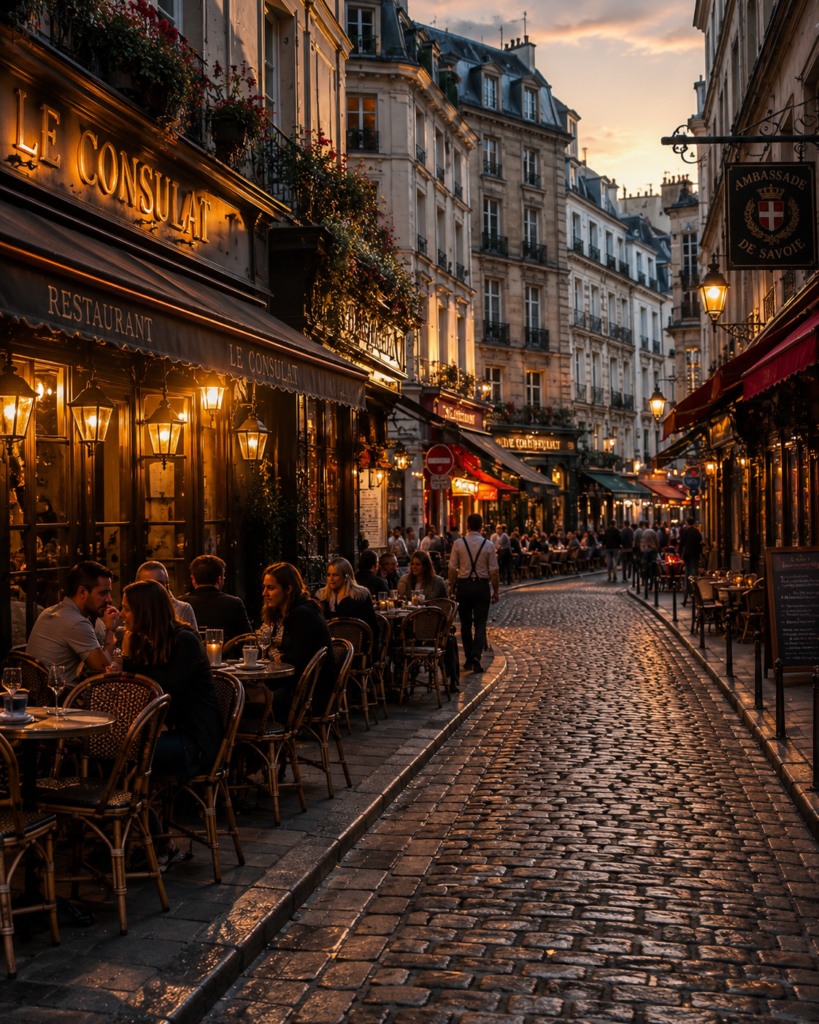
Best Time to Visit France
Spring (April–June)
Probably the best overall season—pleasant weather, fewer crowds, blooming countryside.
Summer (July–August)
Lively atmosphere but busiest season, especially in Paris and the Riviera.
Autumn (September–October)
Excellent for wine regions and milder tourism.
Winter
Perfect for skiing and Christmas markets, especially in alpine regions.
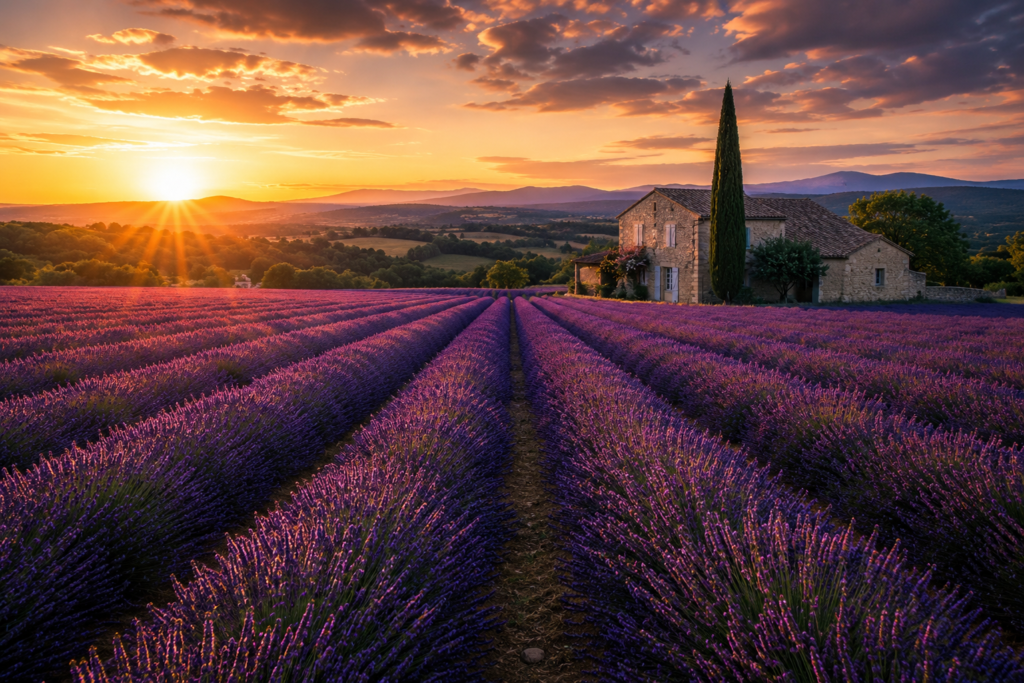
Final Thoughts
France rewards slower travel.
It’s not a country best experienced through rushing between attractions—it’s best understood through long meals, quiet mornings, train rides through countryside landscapes, and evenings spent wandering unfamiliar streets.
Each region feels distinct:
- Paris feels timeless
- Provence feels calm
- The Riviera feels cinematic
- Bordeaux feels refined
- The Alps feel grounding
And that variety is exactly why France remains one of the world’s most unforgettable destinations.
The more time you give it, the more layered it becomes.
-
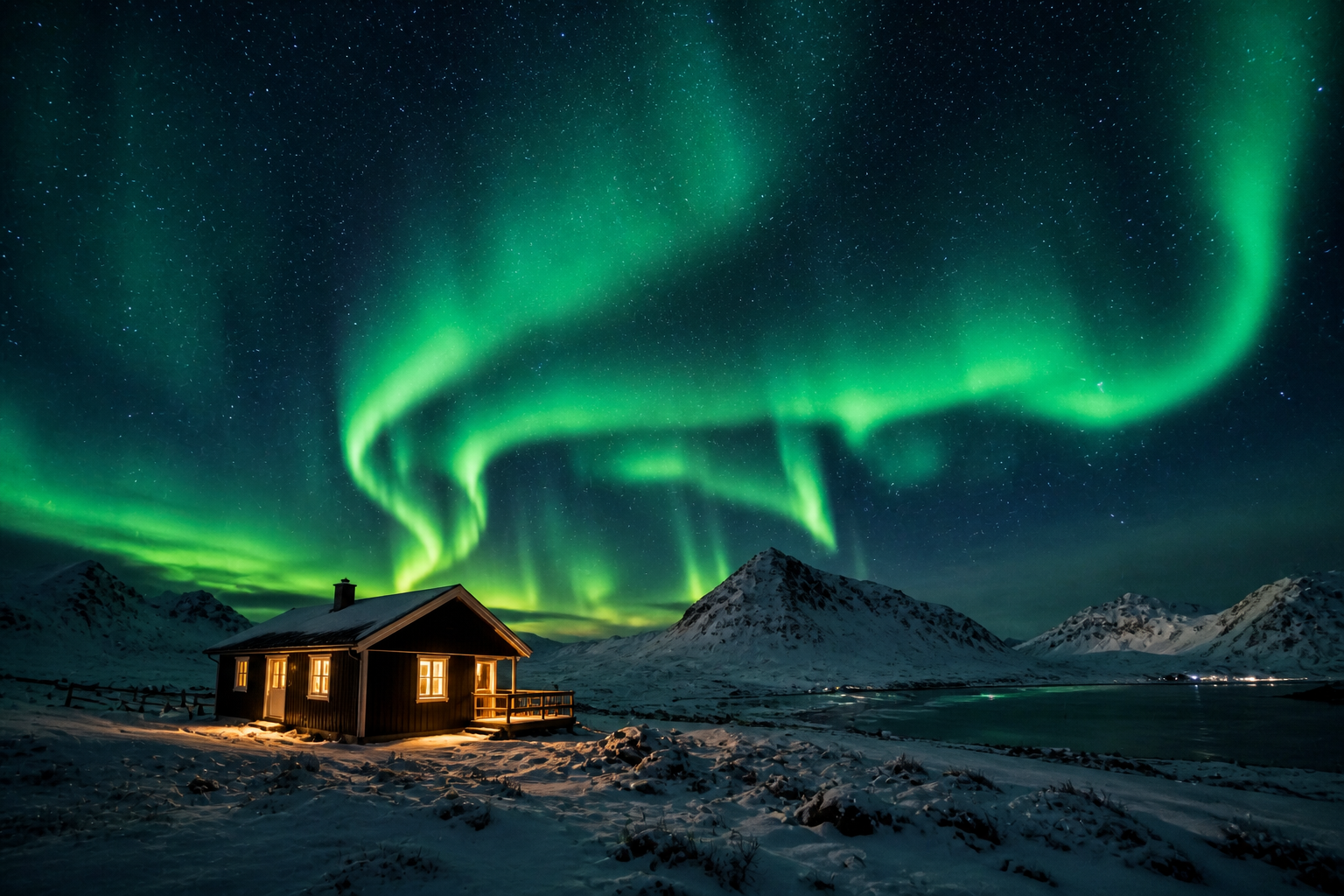
Iceland Travel Guide: A Complete Journey Through Fire, Ice & Untamed Landscapes
Introduction: Why Iceland Feels Like Another Planet
Iceland doesn’t feel like a typical destination. It feels raw, unfinished, and constantly in motion. Volcanoes shape the land beneath your feet, glaciers carve through mountains, and waterfalls appear almost everywhere you look.
There’s a stillness here—but it’s not empty. It’s powerful.
Unlike most countries, Iceland isn’t about cities—it’s about movement through landscapes. The best way to experience it is to travel across the country, following the Ring Road, stopping often, and letting the environment dictate your pace.
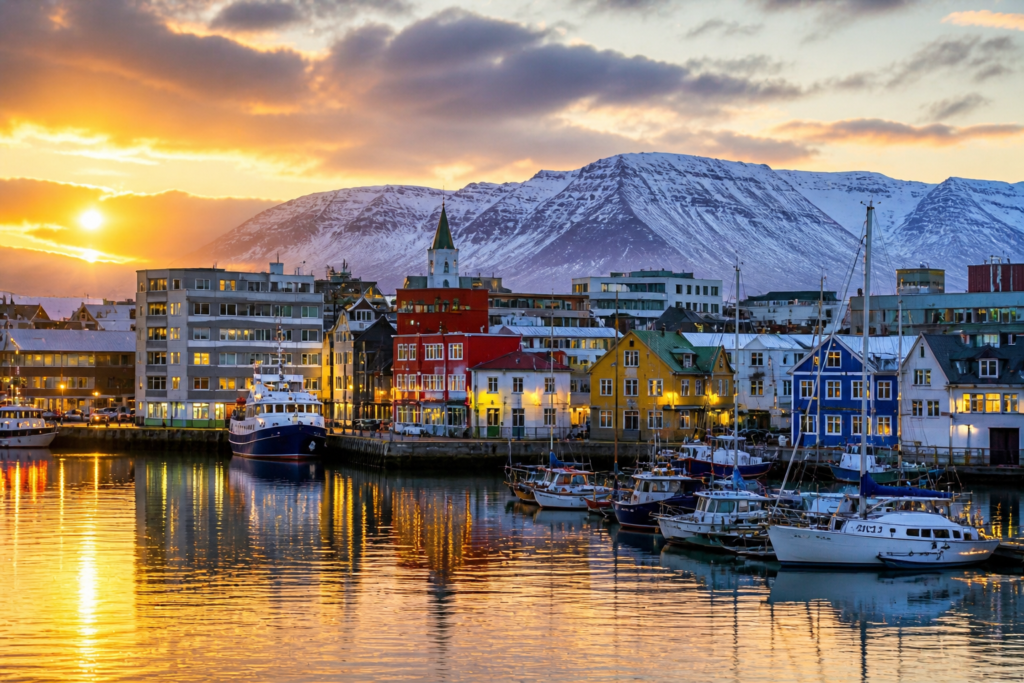
Reykjavik: The Starting Point
Most journeys begin in Reykjavik, Iceland’s capital. It’s compact, modern, and quietly creative—a place where design, music, and nature intersect.
What to Do
- Hallgrímskirkja Church
The city’s most iconic landmark. Take the elevator up for panoramic views over Reykjavik’s colorful rooftops. - Harpa Concert Hall
A striking glass building on the waterfront, reflecting both the ocean and sky. - Sun Voyager Sculpture
A minimalist sculpture along the water—best visited at sunset when the light softens across the bay.
Where to Eat
- Dill Restaurant – Iceland’s first Michelin-starred restaurant, focused on modern Nordic cuisine
- Sandholt Bakery – Excellent for breakfast, pastries, and coffee
- Messinn – Known for traditional Icelandic fish dishes
Where to Stay
- The Reykjavik EDITION – Modern luxury near the harbor
- Canopy by Hilton Reykjavik City Centre – Stylish and central
- KEX Hostel – Budget-friendly with character
The Golden Circle: Iceland’s Most Famous Route
This is often the first day trip from Reykjavik—and while it’s popular, it’s still worth doing.
Þingvellir National Park
A UNESCO World Heritage site where the North American and Eurasian tectonic plates meet. You can literally walk between continents.
Geysir Geothermal Area
Watch Strokkur geyser erupt every few minutes, sending boiling water high into the air.
Gullfoss Waterfall
One of Iceland’s most powerful waterfalls. The sheer force of the water—and the mist rising from the canyon—makes it unforgettable.
Want more scenes like this?
Download a curated pack of ultra-realistic images, perfect for wallpapers and inspiration.
South Coast: Waterfalls, Black Sand & Glaciers
The south coast is where Iceland begins to feel dramatic.
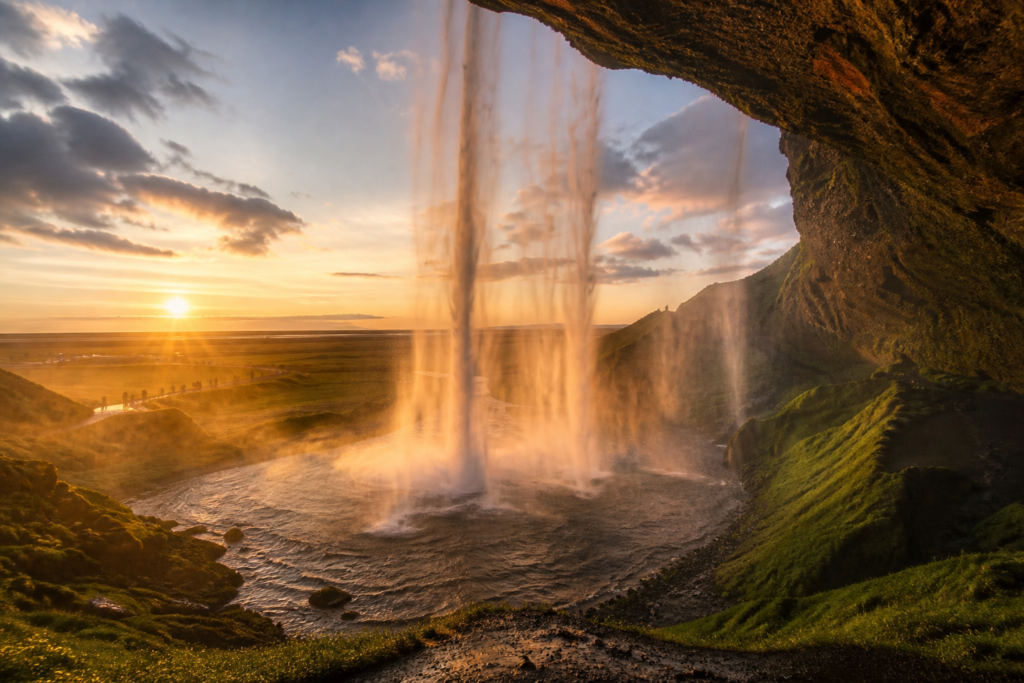
Seljalandsfoss
One of the few waterfalls you can walk behind. At sunset, the light filtering through the water creates a surreal atmosphere.
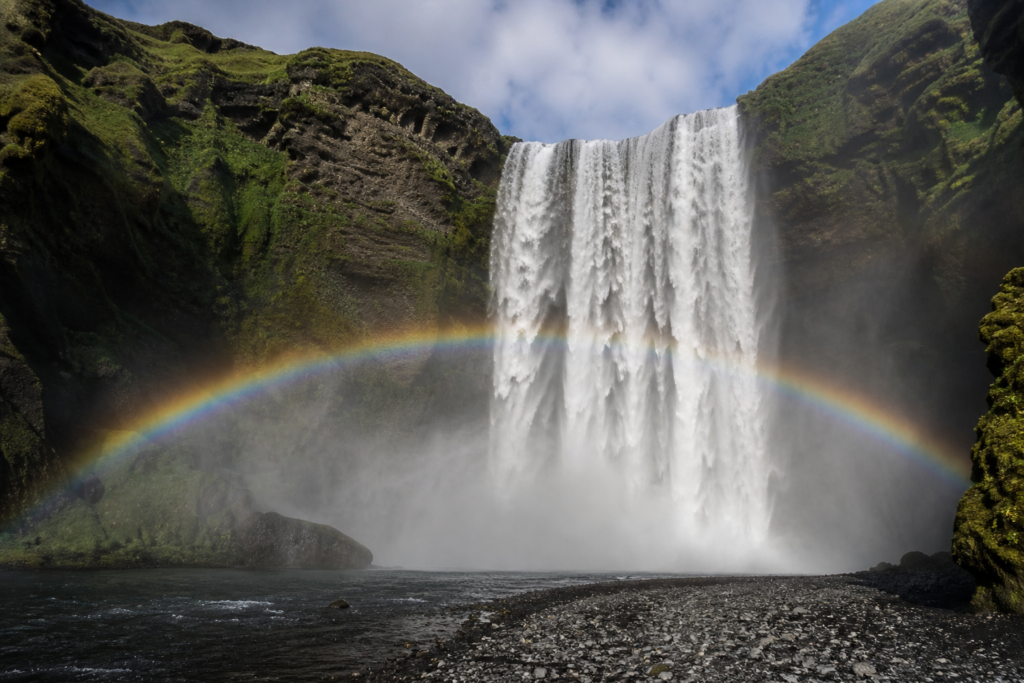
Skógafoss
Massive and symmetrical, with mist that often produces rainbows. You can climb the stairs beside it for a top-down view.
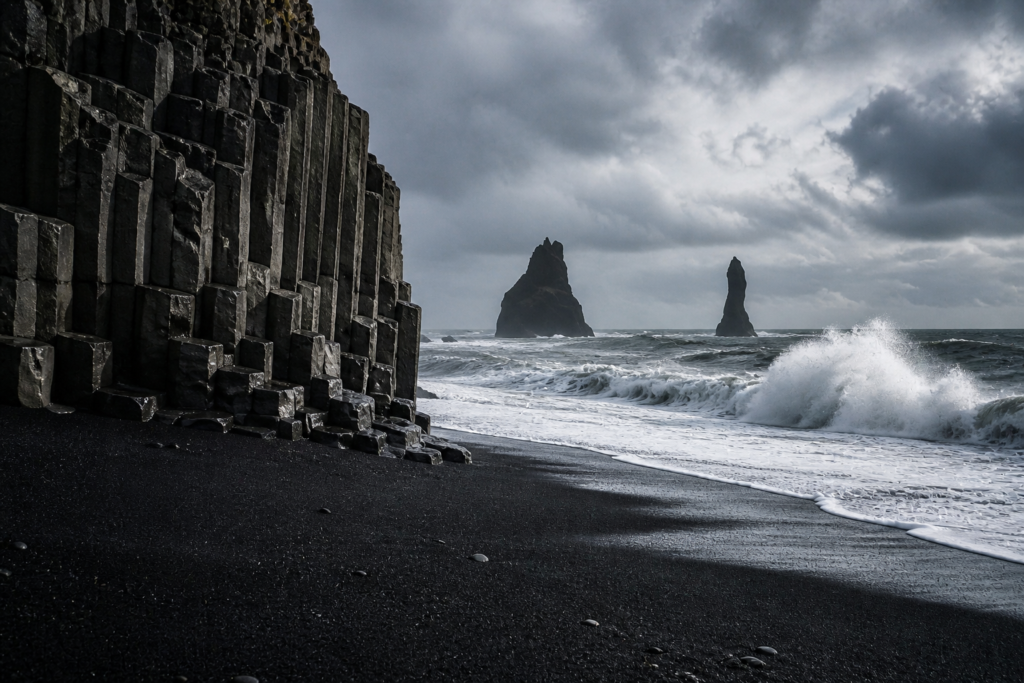
Reynisfjara Black Sand Beach
Known for its basalt columns and powerful waves. The contrast between black sand, white foam, and grey skies is striking.
Where to Eat (South Coast)
- The Soup Company (Vik) – Simple, warming meals
- Black Beach Restaurant – Great views over Reynisfjara
Where to Stay
- Hotel Kría (Vik) – Modern and comfortable
- Hótel Skógafoss – Close to the waterfall
- ION Adventure Hotel – Design-focused, slightly inland
Jökulsárlón Glacier Lagoon & Diamond Beach
Further along the south coast, the landscape becomes even more surreal.
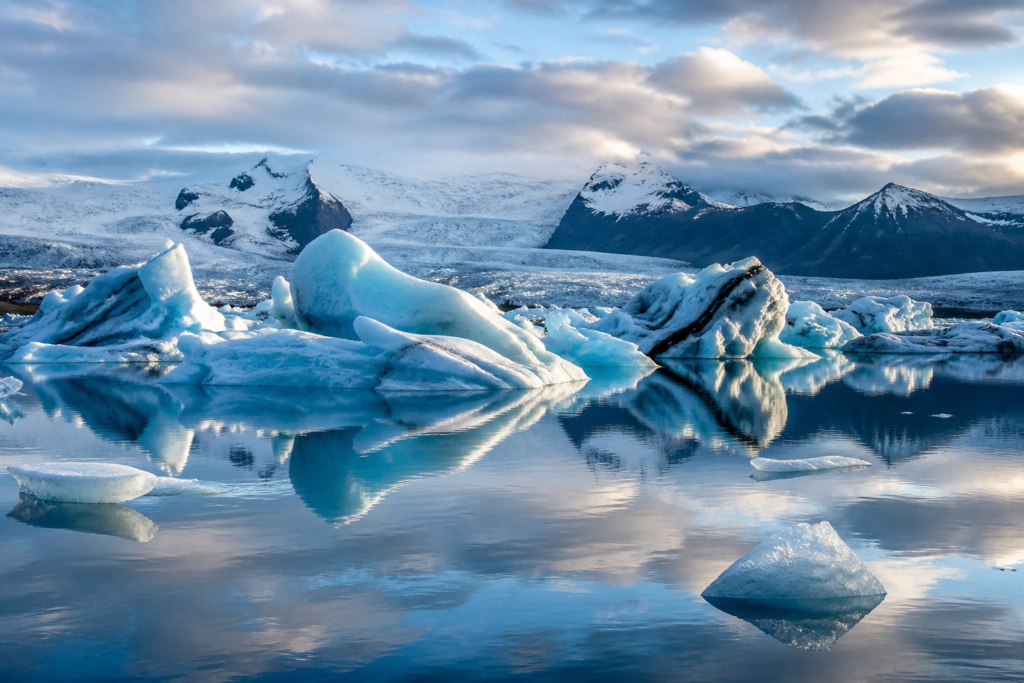
Jökulsárlón Glacier Lagoon
Icebergs drift slowly across a deep blue lagoon, breaking off from a nearby glacier. The silence here is what stands out most.
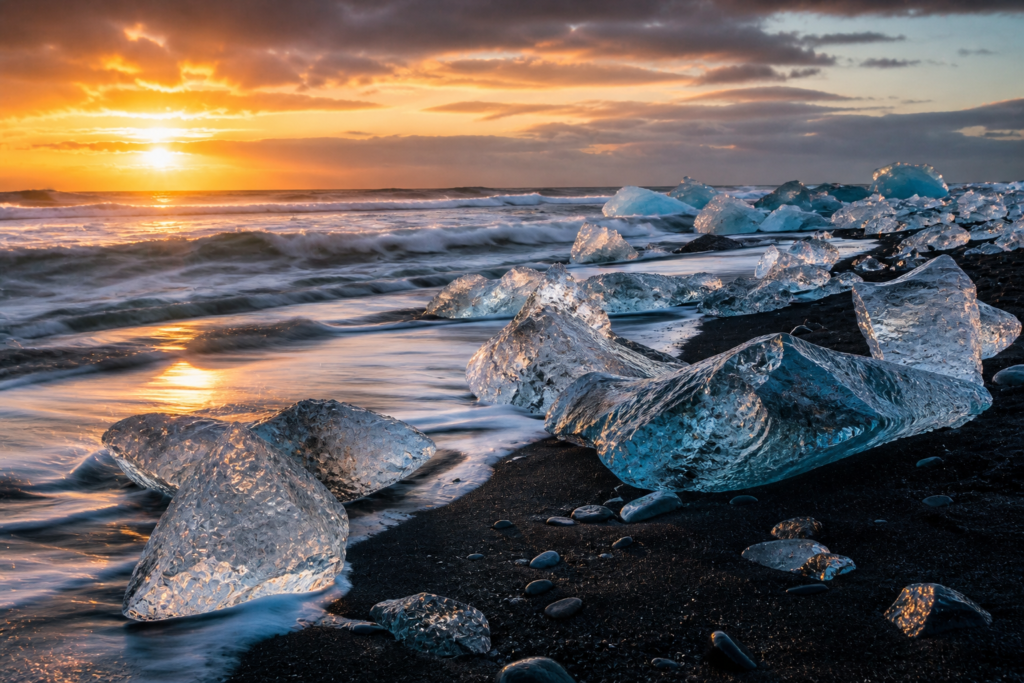
Diamond Beach
Just across the road, chunks of ice wash up onto black sand, glistening like glass under sunlight.
East Fjords: Quiet & Underrated
Many travellers skip this region—but it’s one of the most peaceful parts of Iceland.
Winding roads follow the coastline, small fishing villages appear unexpectedly, and mountains drop directly into the sea.
Where to Stop
- Seyðisfjörður – A small artistic town with colorful streets
- Egilsstaðir – The main hub of the east
Want more scenes like this?
Download a curated pack of ultra-realistic images, perfect for wallpapers and inspiration.
North Iceland: Wild & Less Crowded
The north offers a completely different feel—more remote, more rugged.
Lake Mývatn
A geothermal area filled with lava formations, steaming vents, and unusual landscapes.
Dettifoss Waterfall
Europe’s most powerful waterfall. Louder, rougher, and more intense than anything on the south coast.
Húsavík
One of the best places in the world for whale watching.
Where to Eat
- Naustið (Húsavík) – Fresh seafood
- Vogafjós Farm Resort – Farm-to-table experience
Where to Stay
- Fosshótel Mývatn – Stunning modern hotel overlooking the lake
- Hótel Kea (Akureyri) – Central and comfortable
Snæfellsnes Peninsula: Iceland in Miniature
Often called “Iceland in one region,” this area offers a mix of everything—mountains, coastlines, lava fields, and small villages.
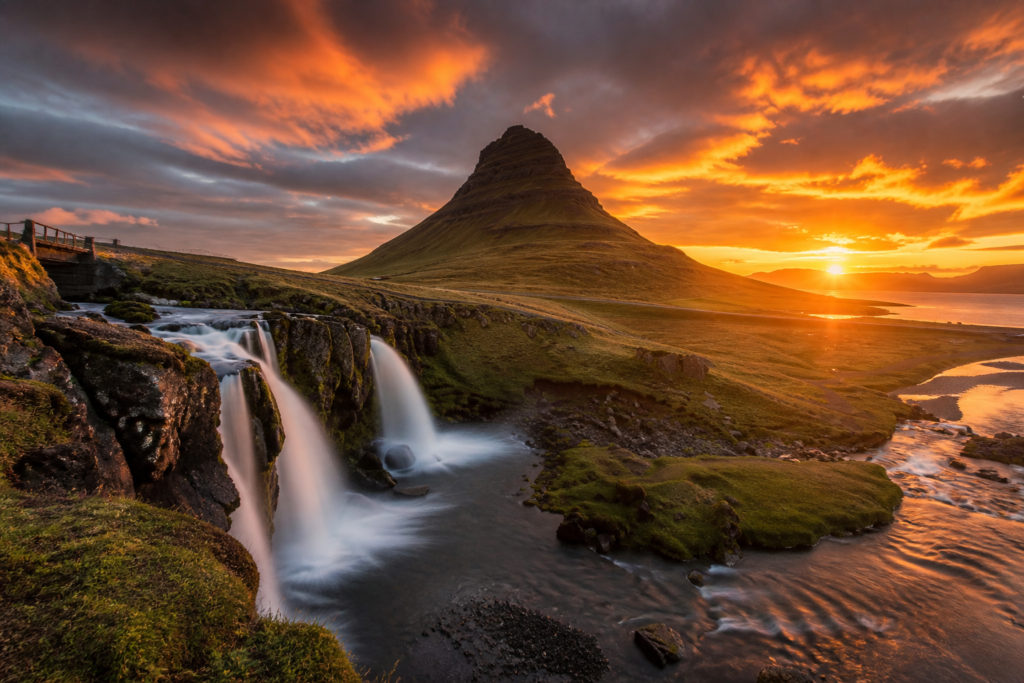
Kirkjufell Mountain
One of the most photographed locations in Iceland, especially with the waterfall in the foreground.
Arnarstapi & Hellnar
Coastal cliffs with dramatic ocean views.
Driving Iceland: What You Need to Know
Driving is the best way to experience Iceland—but it requires preparation.
Weather can change quickly, roads can be narrow or unpaved, and distances are longer than they seem.
Having a well-organised setup makes a big difference.
A durable backpack like the Bagsmart 40L Carry-On Travel Backpack is ideal for keeping essentials accessible during long drives and quick stops.
Since you’ll rely heavily on navigation, photography, and bookings, a reliable charger like the Anker 10,000mAh 22.5W Power Bank is essential—especially in remote areas.
Want more scenes like this?
Download a curated pack of ultra-realistic images, perfect for wallpapers and inspiration.
Capturing the Landscape
Iceland is one of the best places in the world for photography—but conditions can be unpredictable.
Wind, uneven terrain, and low light make stability important.
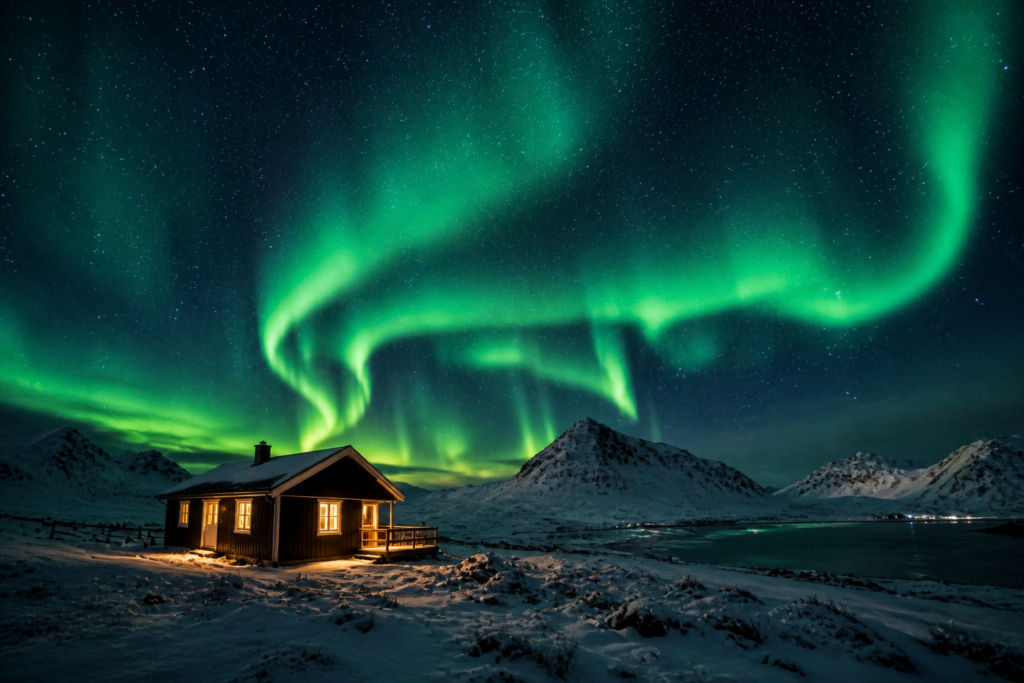
A compact setup like the Ulanzi MT-44 Extendable Vlog Tripod helps capture waterfalls, northern lights, and long exposure shots without adding bulk.
Packing Smart for Iceland
Packing for Iceland is less about quantity and more about organisation.
Weather can shift from sun to rain to wind in a single day.
Using something like Amazon Basics Packing Cubes keeps layers organised and easy to access without unpacking constantly.
Long Drives & Comfort
The Ring Road involves long stretches of driving. Having downtime that actually feels comfortable matters more than you expect.
Noise-cancelling headphones like the Sony WH-1000XM5 Noise Cancelling Headphones can completely change the experience—whether you’re on a flight, a bus, or relaxing after a long day.
Best Time to Visit
- Summer (June–August): Midnight sun, easier driving, more crowds
- Winter (November–March): Northern lights, fewer tourists, harsher conditions
- Shoulder Seasons (May, September): Best balance of light, weather, and fewer crowds
Want more scenes like this?
Download a curated pack of ultra-realistic images, perfect for wallpapers and inspiration.
Final Thoughts
Iceland isn’t a place you visit for comfort—it’s a place you visit for perspective.
It strips things back. There’s less distraction, less noise, and more space to actually experience where you are.
From waterfalls and glaciers to quiet roads and endless horizons, Iceland offers something that’s becoming harder to find elsewhere: a sense of scale and stillness at the same time.
And the more you slow down, the more you’ll notice.
- Hallgrímskirkja Church
-
Italy Travel Guide: A Complete Journey Through Rome, Florence, Venice, the Amalfi Coast & Tuscany
Introduction: Why Italy Feels Different
Italy isn’t just a destination—it’s an experience shaped by rhythm, history, and sensory detail. It’s the sound of espresso cups clinking in a quiet café, the glow of late afternoon light against centuries-old stone, and the slow, deliberate pace of meals that stretch into the evening.
Every region in Italy feels distinct. Rome is layered with history and energy, Florence is refined and artistic, Venice is surreal and atmospheric, while the Amalfi Coast and Tuscany offer landscapes that feel almost cinematic.
This guide takes you through Italy not just as a list of places, but as a way to experience the country properly—where to go, where to eat, where to stay, and how to move through it all seamlessly.
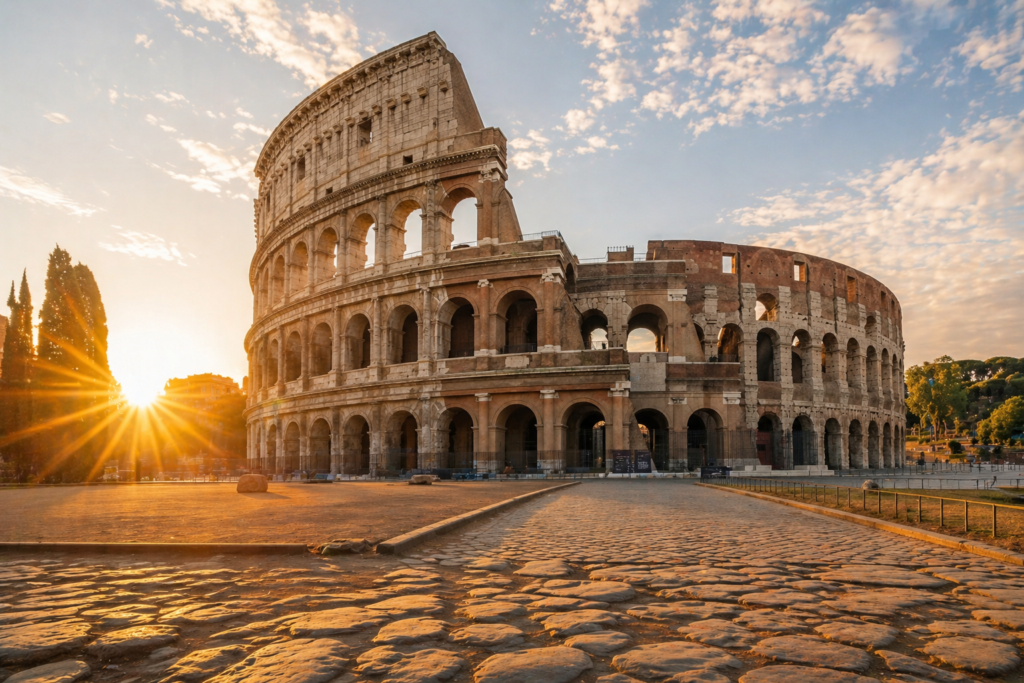
Rome: History, Chaos & Timeless Landmarks
Rome doesn’t ease you in—it throws you straight into its intensity. Ancient ruins sit beside busy streets, fountains appear around corners unexpectedly, and every walk feels like it passes through multiple centuries at once.
The Colosseum & Roman Forum
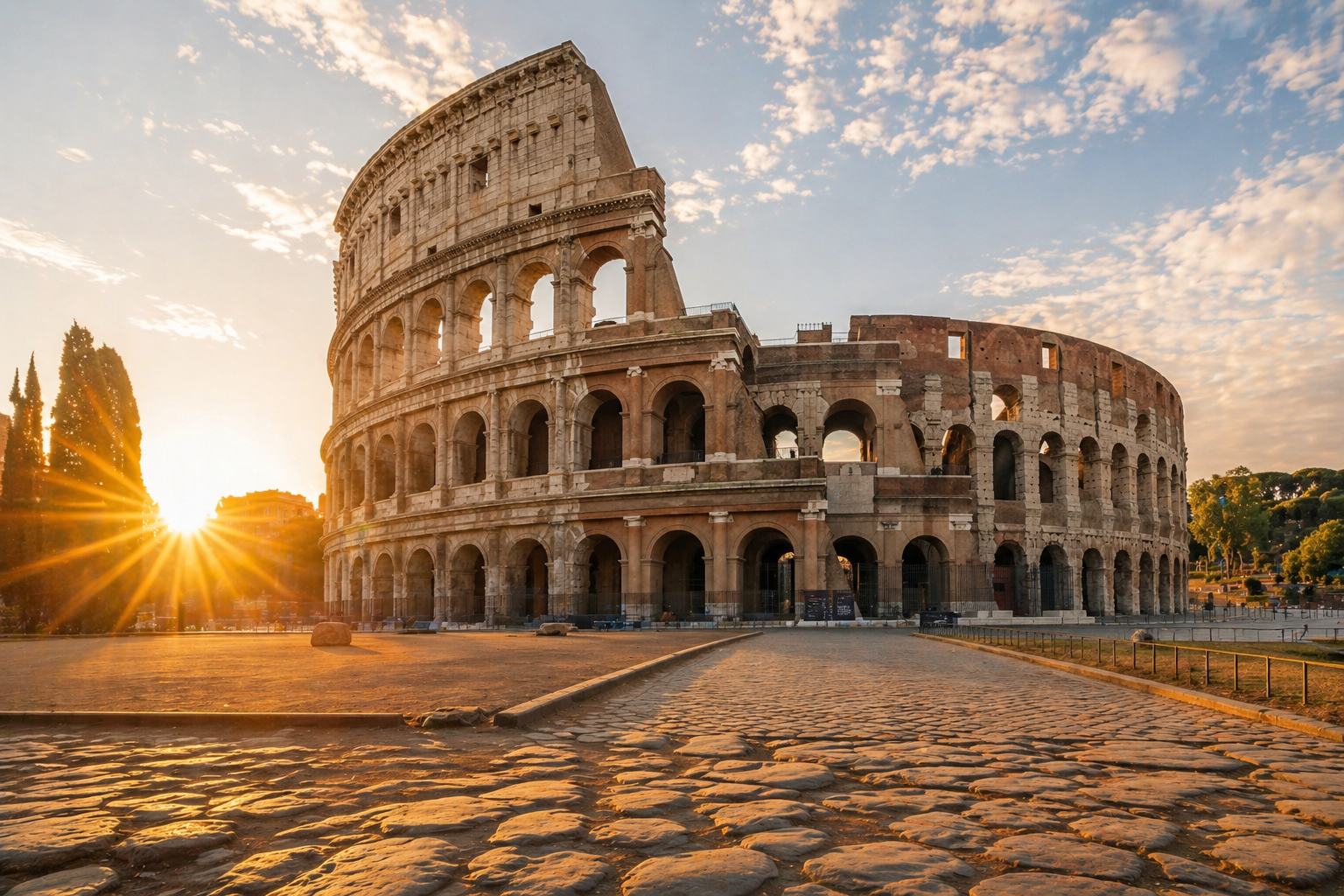
The Colosseum is one of those landmarks that exceeds expectations. Seeing it in person, especially early in the morning, gives you a sense of scale that photos don’t capture.
Just beside it, the Roman Forum stretches out into a landscape of ruins that once formed the centre of ancient Roman life. Walking through it feels less like sightseeing and more like stepping through history.
Trevi Fountain & Pantheon
The Trevi Fountain is crowded, but it’s worth seeing—especially late at night when the crowds thin and the lighting becomes softer. The Pantheon, by contrast, feels calm and grounded, its massive dome still one of the most impressive architectural feats in the world.
Where to Eat in Rome
- Roscioli – A mix of restaurant, deli, and wine bar known for exceptional pasta and cured meats
- Da Enzo al 29 (Trastevere) – Traditional Roman dishes in a small, authentic setting
- Armando al Pantheon – Classic Roman cuisine with a long-standing reputation
Where to Stay
- Hotel Artemide – Central, reliable, modern comfort
- JK Place Roma – Boutique luxury with understated design
- Generator Rome – Stylish budget-friendly option
Florence: Art, Architecture & Slower Living
Florence feels more contained than Rome. It’s a city that encourages walking, pausing, and paying attention to detail.
Florence Cathedral (Duomo)
The Duomo dominates the skyline. Its intricate marble façade and massive dome define the city visually and culturally. Climbing to the top offers one of the best views in Italy.
Uffizi Gallery & Ponte Vecchio
The Uffizi holds some of the most important works of the Renaissance, while the Ponte Vecchio offers a more atmospheric experience—especially in the evening when the light softens and reflections appear on the Arno River.
Where to Eat in Florence
- Trattoria Mario – Simple, authentic Tuscan dishes
- La Giostra – Slightly more refined, known for pear-filled pasta
- All’Antico Vinaio – Famous for large, overfilled sandwiches
Where to Stay
- Hotel Spadai – Central and well-designed
- Portrait Firenze – High-end, river views
- Hotel Dali – Affordable and simple
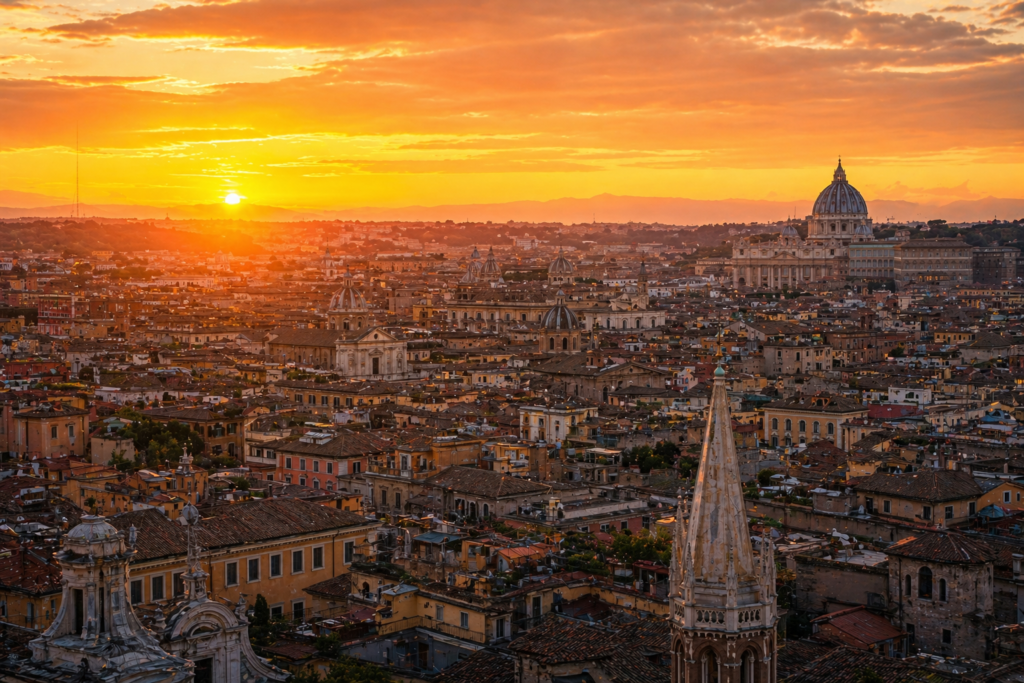
Want more scenes like this?
Download a curated pack of ultra-realistic images, perfect for wallpapers and inspiration.
Venice: Atmosphere Over Everything
Venice doesn’t feel real at first. There are no cars, streets turn into canals, and everything moves at a slower pace.
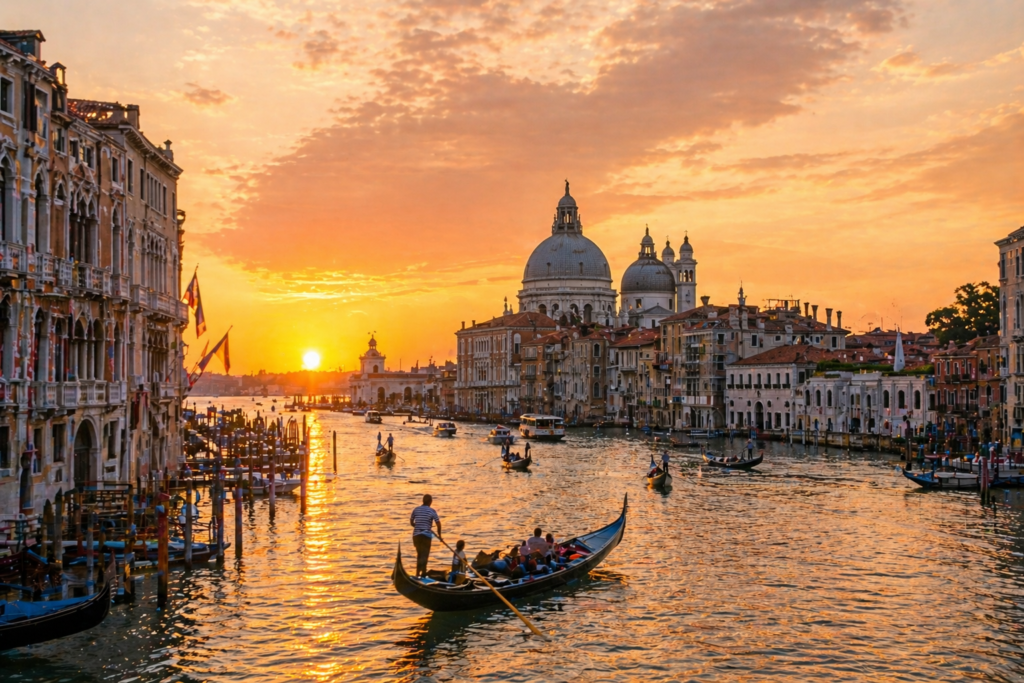
Grand Canal & St. Mark’s Basilica
The Grand Canal is the main artery of the city, lined with historic buildings that reflect beautifully in the water. St. Mark’s Basilica, with its intricate design and gold mosaics, is one of Venice’s most impressive landmarks.
Getting Lost (Intentionally)
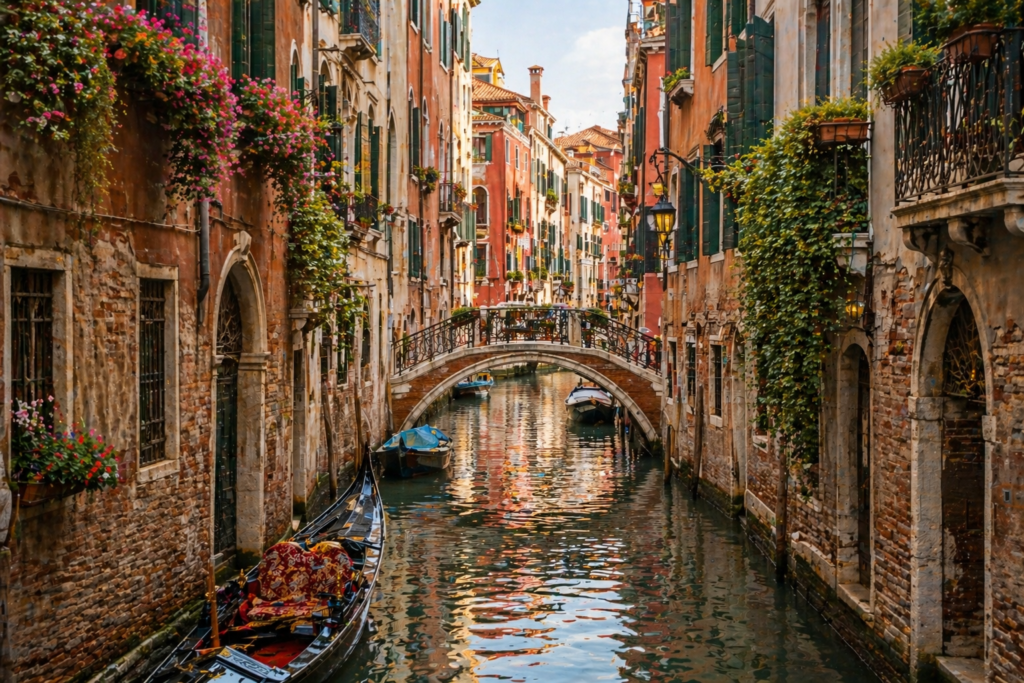
The best part of Venice isn’t the main attractions—it’s wandering. Narrow alleyways, small bridges, and quiet canals create moments that feel completely removed from the busy areas.
Where to Eat in Venice
- Osteria alle Testiere – Small, high-quality seafood restaurant
- Cantina Aziende Agricole – Local wines and relaxed atmosphere
- Trattoria al Gatto Nero (Burano) – Worth the trip for seafood
Where to Stay
- Ca’ Sagredo Hotel – Historic luxury
- Hotel Antiche Figure – Great location, mid-range
- Combo Venezia – Modern and affordable
Amalfi Coast: Dramatic Landscapes & Coastal Living
The Amalfi Coast is one of Italy’s most visually striking regions. Cliffs drop into the sea, roads wind along the coastline, and towns seem to cling to the landscape.
Positano
Positano is the most iconic town on the coast. Colourful buildings cascade down toward the beach, creating a layered, vertical landscape.
Amalfi & Ravello
Amalfi offers a mix of history and coastal views, while Ravello sits higher up, providing panoramic perspectives and a quieter atmosphere.
Where to Eat
- Da Adolfo (Positano) – Casual beachside dining
- La Tagliata (Positano) – Family-run, incredible views
- Villa Cimbrone Restaurant (Ravello) – Fine dining with scenery
Where to Stay
- Le Sirenuse (Positano) – Iconic luxury hotel
- Hotel Marincanto – Mid-range with excellent views
- Casa Angelina – Modern and minimalist
Tuscany: Countryside, Vineyards & Space
Tuscany feels slower, more open, and more grounded than the cities.
Val d’Orcia
Rolling hills, cypress-lined roads, and small villages define this region. It’s one of the most photographed areas in Italy—and for good reason.
Siena & San Gimignano
Siena offers a strong medieval atmosphere, while San Gimignano is known for its skyline of towers.
Where to Eat
- Osteria La Porta (Monticchiello) – Local dishes with views
- La Taverna di San Giuseppe (Siena) – Traditional Tuscan cuisine
Where to Stay
- Borgo Santo Pietro – Luxury countryside retreat
- Castello di Casole – Elegant and expansive
- Agriturismo Il Rigo – Authentic and peaceful
Travel Essentials (That Actually Make a Difference)
Moving through Italy involves trains, walking, uneven streets, and frequent changes between locations. Having the right essentials simplifies everything.
A reliable travel backpack like the Bagsmart 40L Carry-On Travel Backpack is ideal for navigating train stations and carrying daily essentials without feeling overloaded.
A portable charger such as the Anker 10,000mAh 22.5W Power Bank becomes essential when using maps, booking transport, and taking photos throughout the day.
For capturing content or even just better photos, the Ulanzi MT-44 Extendable Vlog Tripod provides stability without adding bulk.
Keeping everything organised is easier with Amazon Basics Packing Cubes, especially when moving between multiple cities.
And for long travel days, noise reduction makes a noticeable difference—something like the Sony WH-1000XM5 Noise Cancelling Headphones can make flights and train journeys far more comfortable.
Want more scenes like this?
Download a curated pack of ultra-realistic images, perfect for wallpapers and inspiration.
Getting Around Italy
Italy’s train system is one of the best ways to travel between cities. High-speed trains connect Rome, Florence, and Milan efficiently, while regional trains reach smaller towns.
Booking in advance often saves money and ensures availability.
Best Time to Visit
Spring (April–June) and autumn (September–October) offer the best balance of weather and crowds. Summer is vibrant but busy, while winter is quieter, especially outside major cities.
Final Thoughts
Italy isn’t a place you rush through. It’s a place where slowing down improves everything—meals, walks, conversations, and even the way you see the surroundings.
From Rome’s intensity to Tuscany’s calm, from Venice’s atmosphere to the Amalfi Coast’s dramatic views, each part of Italy offers something distinct.
And the more time you give it, the more it gives back.
-
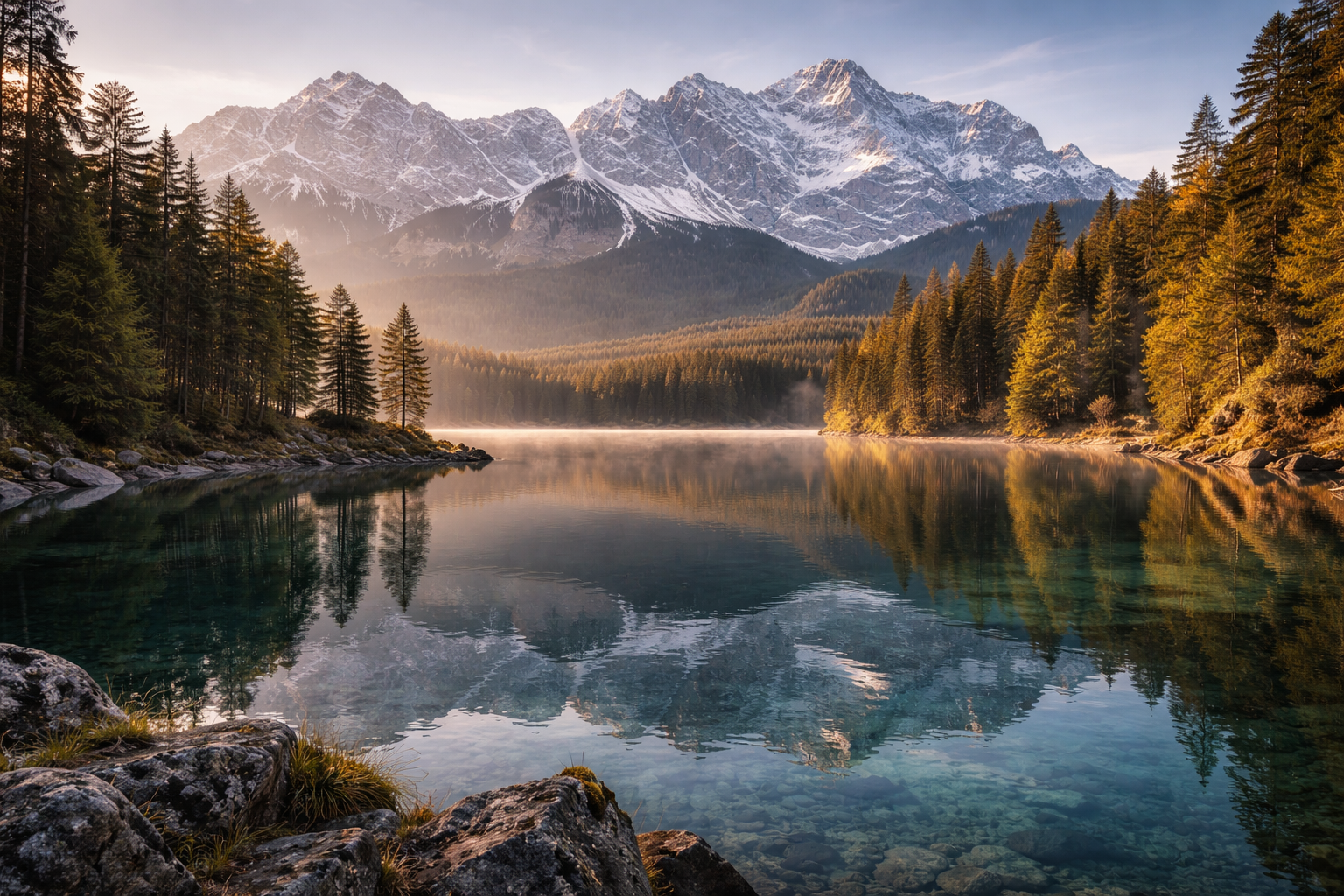
Germany Travel Guide: The Ultimate Guide to Berlin, Munich, Bavaria & Beyond
Introduction to Germany
Germany isn’t a place you visit for just one thing—it’s a country of contrasts. It’s where medieval towns sit beside modern cities, where dense forests give way to alpine landscapes, and where history feels present in almost every street you walk down.
There’s a certain structure to Germany. Things run on time, cities feel organised, and even the chaos has a kind of order to it. But beneath that structure is something more layered—culture, history, creativity, and an atmosphere that shifts dramatically depending on where you are.
You could spend your morning in a quiet café in Berlin, your afternoon walking through a centuries-old castle in Bavaria, and your evening in a lively beer garden in Munich. Each region feels distinct, yet everything connects.
This guide takes you through Germany’s most interesting places—cities, towns, landscapes, and the small details that make the experience feel complete.
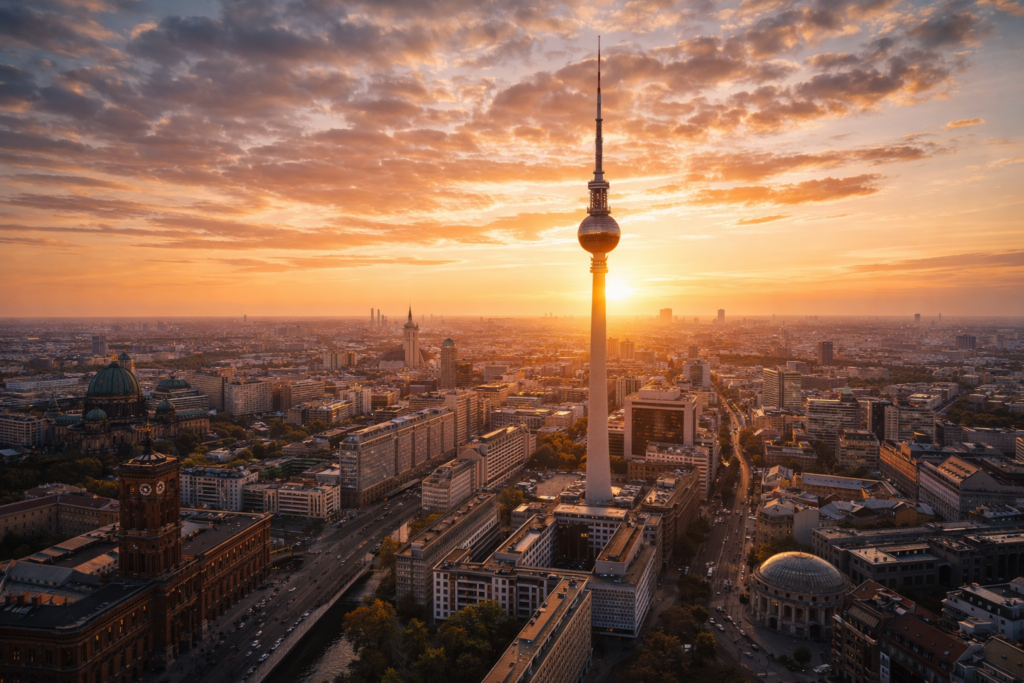
Berlin: History, Culture & Creative Energy
Berlin is a city that doesn’t try to hide its past. Instead, it integrates it into everyday life. You’ll find reminders of history everywhere, but they sit alongside modern architecture, street art, and a constantly evolving creative scene.
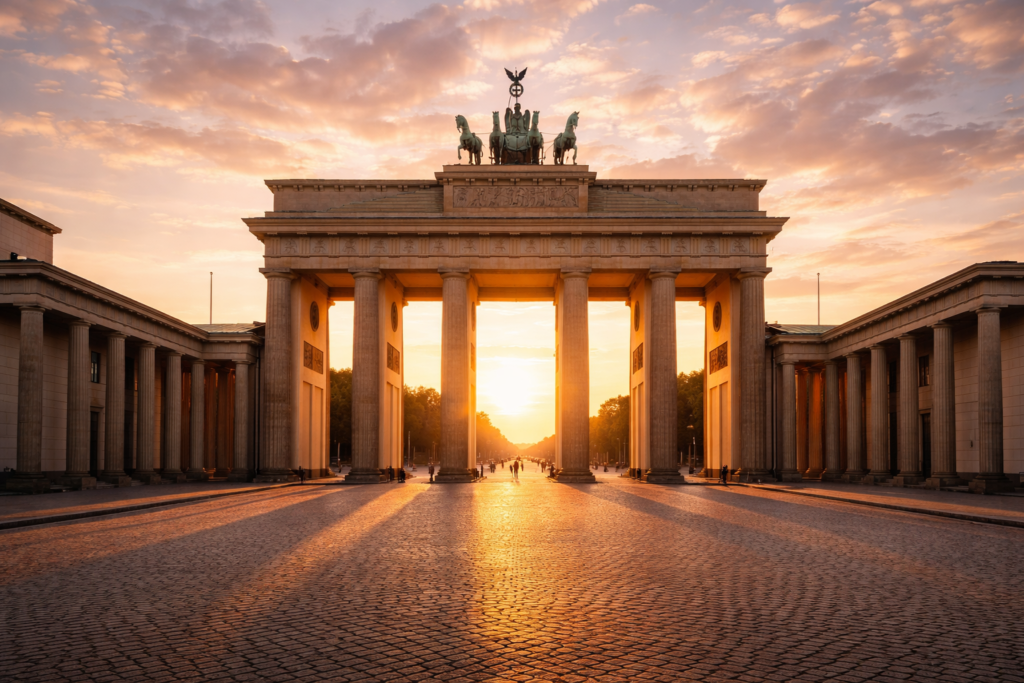
Brandenburg Gate & Reichstag
The Brandenburg Gate is one of Germany’s most recognisable landmarks. Standing in front of it, you get a sense of its historical weight, but also its place in modern Berlin as a symbol of unity.
Nearby, the Reichstag building blends historic architecture with a modern glass dome you can walk through, offering panoramic views of the city.
Berlin Wall & East Side Gallery
Sections of the Berlin Wall still stand, but the East Side Gallery transforms what remains into something entirely different—an open-air gallery covered in murals and artwork. It’s one of the most visually striking parts of the city.
Cafés in Berlin
Berlin’s café culture is understated but excellent.
- The Barn – Minimalist design, exceptional coffee
- Five Elephant – Known for both coffee and cheesecake
- Father Carpenter – A hidden courtyard café with a relaxed atmosphere
Berlin is a city you explore slowly. It rewards wandering.
Munich: Tradition Meets Modern Life
Munich feels completely different from Berlin. It’s cleaner, more traditional, and closely tied to Bavarian culture.
Marienplatz
The central square of Munich, Marienplatz, is surrounded by historic buildings and dominated by the Neues Rathaus. The Glockenspiel performance draws crowds, but even outside of that, the square has a lively, open feel.
English Garden
One of the largest urban parks in the world, the English Garden stretches across the city. You’ll find people cycling, relaxing by the river, and even surfing on the Eisbach wave.
Beer Gardens & Cafés
Munich’s beer gardens are part of the culture, not just a tourist attraction.
- Hofbräuhaus – Historic and lively
- Augustiner-Keller – More local, less crowded
For cafés:
- Man Versus Machine Coffee Roasters – Modern, minimal, excellent coffee
- Café Frischhut – Famous for traditional Bavarian pastries
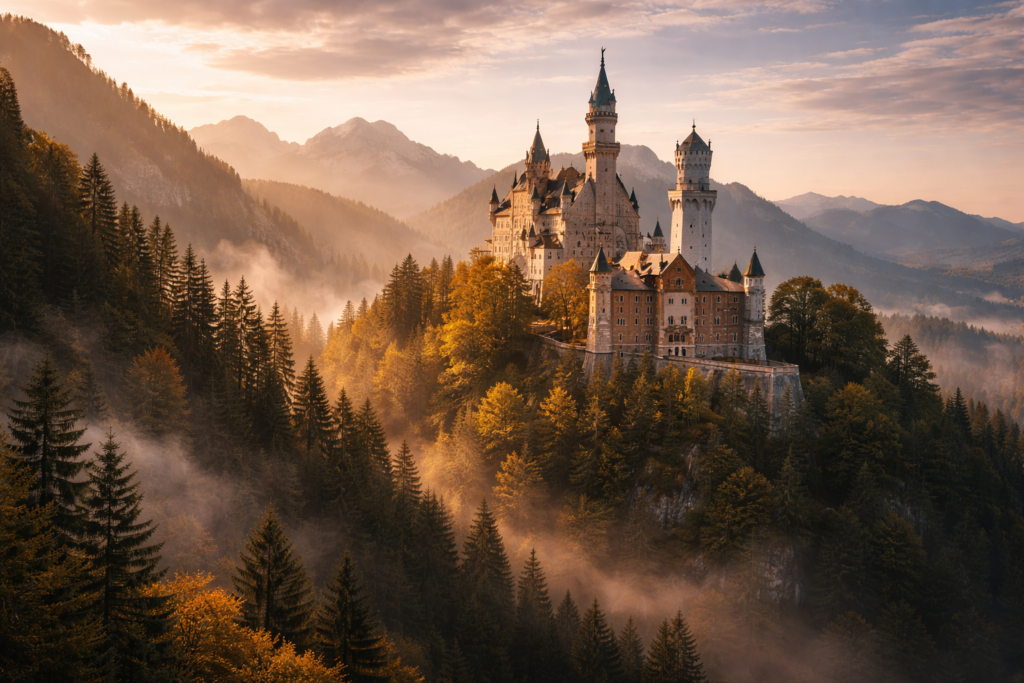
Bavaria: Castles, Mountains & Scenic Landscapes
Bavaria feels like a different country within Germany. The landscapes are softer, greener, and more dramatic.
Neuschwanstein Castle
Arguably Germany’s most famous castle, Neuschwanstein looks like something out of a fairytale. Sitting above the surrounding forests, it’s best viewed from a distance to fully appreciate its setting.
Getting there often involves walking uphill paths and exploring surrounding viewpoints, which is where having something practical to carry your essentials becomes useful. A bag like the Bagsmart 40L Carry-On Travel Backpack works well here—structured, comfortable, and easy to carry throughout the day without feeling bulky.
Zugspitze & The Alps
Germany’s highest peak, Zugspitze, offers panoramic views across the Alps. Whether you take the cable car or hike part of the way, the scenery is striking.
Garmisch-Partenkirchen
This alpine town is a base for exploring the mountains, with access to trails, lakes, and winter sports in colder months.
The Black Forest: Nature & Quiet Escapes
The Black Forest is known for its dense trees, rolling hills, and traditional villages. It’s quieter than Bavaria but just as scenic.
Triberg Waterfalls
Among Germany’s highest waterfalls, Triberg offers a series of cascading drops surrounded by forest. It’s a peaceful place, especially early in the day.
Freiburg
A small university city on the edge of the Black Forest, Freiburg is one of Germany’s most relaxed places. The old town is filled with narrow streets, small canals, and cafés that spill out into the open.
Want more scenes like this?
Download a curated pack of ultra-realistic images, perfect for wallpapers and inspiration.
Everyday Travel Essentials (That Make Germany Easier)
Germany is efficient, but that doesn’t mean travel is effortless—especially when you’re moving between cities, trains, and walking-heavy areas.
A reliable backpack quickly becomes essential. Whether you’re navigating train stations, walking through old towns, or heading out for a day trip, something like the Bagsmart 40L Carry-On Travel Backpack keeps everything organised without being cumbersome.
A portable charger is equally important. Between using maps, checking train times, and taking photos, your phone battery drains faster than expected. A compact option like the Anker 10,000mAh 22.5W Power Bank ensures you’re not stuck searching for outlets in unfamiliar places.
If you’re capturing photos—especially in scenic areas like Bavaria or the Black Forest—a compact tripod can elevate your shots significantly. The Ulanzi MT-44 Extendable Vlog Tripod is lightweight enough to carry all day and useful for both photos and video.
And for longer trips across multiple cities, packing cubes like the Amazon Basics Packing Cubes help keep everything organised, particularly when you’re frequently unpacking and repacking.
These aren’t necessities—but they make travel noticeably smoother.
Cologne: Architecture & Riverside Atmosphere
Cologne is known for one thing above all—the cathedral.
Cologne Cathedral
Standing directly beside the train station, Cologne Cathedral is impossible to miss. Its scale is overwhelming up close, and climbing to the top offers views across the Rhine River.
Old Town & Cafés
The old town sits along the river, filled with colourful buildings and casual restaurants.
- Café Rico – Relaxed and local
- Bastian’s – Popular bakery with excellent bread and pastries
Hamburg: Water, Architecture & Modern Energy
Hamburg feels different again—more maritime, more open.
Speicherstadt
The historic warehouse district, with its red-brick buildings and canals, is one of the most photogenic parts of Germany.
Elbphilharmonie
A modern architectural landmark, the Elbphilharmonie contrasts sharply with the older parts of the city but fits surprisingly well.
Cafés in Hamburg
- Nord Coast Coffee Roastery – Great coffee near the harbour
- Public Coffee Roasters – Clean design, strong coffee focus
Suggested 7–10 Day Itinerary
Start in Berlin for history and culture, then head south to Munich. From there, explore Bavaria and Neuschwanstein Castle. Continue west to the Black Forest, then finish in Cologne or Hamburg depending on your route.
Germany’s train system makes this relatively easy, though planning ahead helps.
Want more scenes like this?
Download a curated pack of ultra-realistic images, perfect for wallpapers and inspiration.
Best Time to Visit Germany
Spring and autumn offer the best balance of weather and fewer crowds. Summer is popular but busier, while winter brings Christmas markets that transform many cities into something completely different.
Final Thoughts
Germany isn’t a country that reveals itself all at once. It’s layered, structured, and constantly shifting depending on where you are.
From Berlin’s energy to Bavaria’s landscapes, from quiet forest towns to busy city centres, each place offers something distinct. And that’s what makes traveling through Germany so interesting—you’re not just visiting one destination, but many.
It’s a place that rewards movement, curiosity, and taking the time to explore beyond the obvious.
-
Bali Travel Guide: The Ultimate Guide to Ubud, Uluwatu, Seminyak & Beyond
Introduction to Bali
There are places you visit, and then there are places you feel—and Bali is firmly the latter. From the moment you arrive, everything shifts slightly. The air is warmer, heavier, scented with incense and frangipani. Scooters hum through narrow streets, offerings sit neatly on sidewalks, and the rhythm of daily life feels both chaotic and deeply peaceful at the same time.
Bali isn’t just one type of destination. It’s a blend of landscapes and lifestyles—lush jungles, dramatic cliffs, spiritual temples, beach clubs, and quiet villages all existing within a relatively small island. You can spend your morning walking through rice terraces, your afternoon in a café overlooking the jungle, and your evening watching the sun disappear into the ocean.
This guide takes you through the best places to visit in Bali, along with cafés, hidden spots, and a few essentials that genuinely make the experience easier.
Want more scenes like this?
Download a curated pack of ultra-realistic images, perfect for wallpapers and inspiration.
Ubud: The Cultural Heart of Bali
Ubud is where Bali slows down. Surrounded by jungle, rivers, and rice fields, it feels worlds away from the coast. It’s the kind of place where mornings start quietly—with mist hanging in the trees and soft light filtering through the leaves.
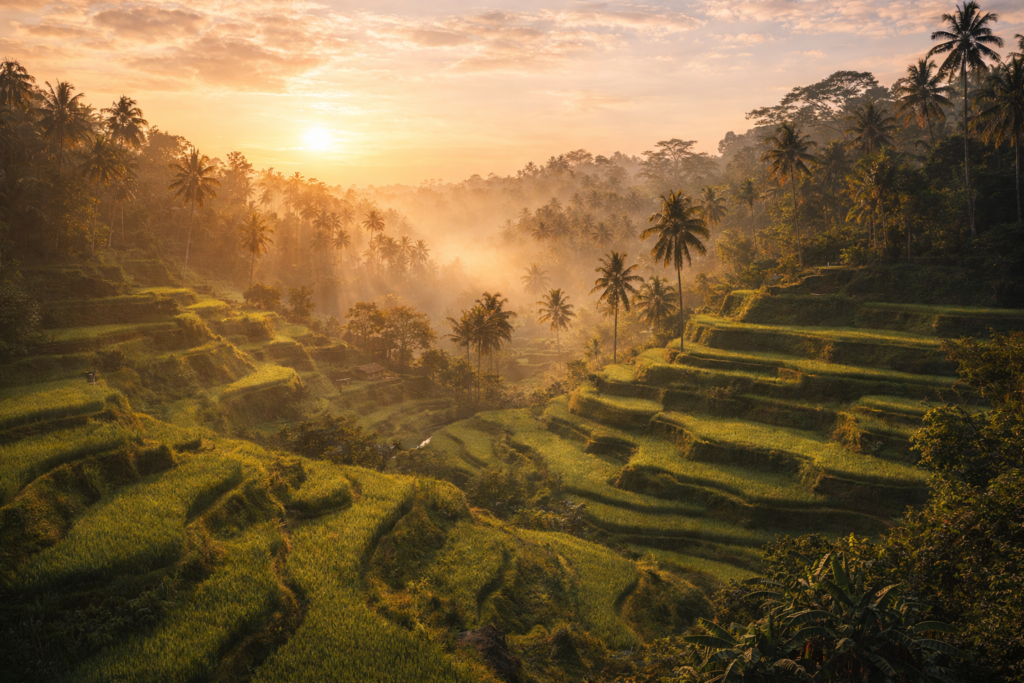
Tegallalang Rice Terraces
The Tegallalang Rice Terraces are one of Bali’s most iconic landscapes. Layers of vibrant green curve along the hillside, creating a scene that feels almost too perfect to be real. The best time to visit is early morning, when the light is soft and the crowds haven’t arrived yet.
Walking through the terraces involves uneven paths and stairs, so having something comfortable and practical to carry your things makes a big difference. A compact bag like the Bagsmart 40L Carry-On Travel Backpack works perfectly here—it’s light enough for day use but still fits water, a camera, and anything else you need for a few hours exploring.
Sacred Monkey Forest
Not far from the terraces, the Sacred Monkey Forest offers a completely different experience. Massive trees tower overhead, ancient stone statues peek out from the greenery, and monkeys move freely through the area.
It’s peaceful, slightly chaotic, and uniquely Bali all at once.
Cafés in Ubud
Ubud’s café scene is one of the best on the island. It’s less about quick meals and more about slowing down and enjoying the space around you.
Kynd Community is known for its vibrant smoothie bowls and colourful aesthetic, while The Lazy Cats Café offers a more relaxed, vintage feel with soft lighting and comfortable seating. For coffee, Seniman Coffee Studio is one of the best places on the island, focusing on locally sourced beans and unique brewing methods.
You’ll quickly notice that time moves differently here—and that’s part of the appeal.
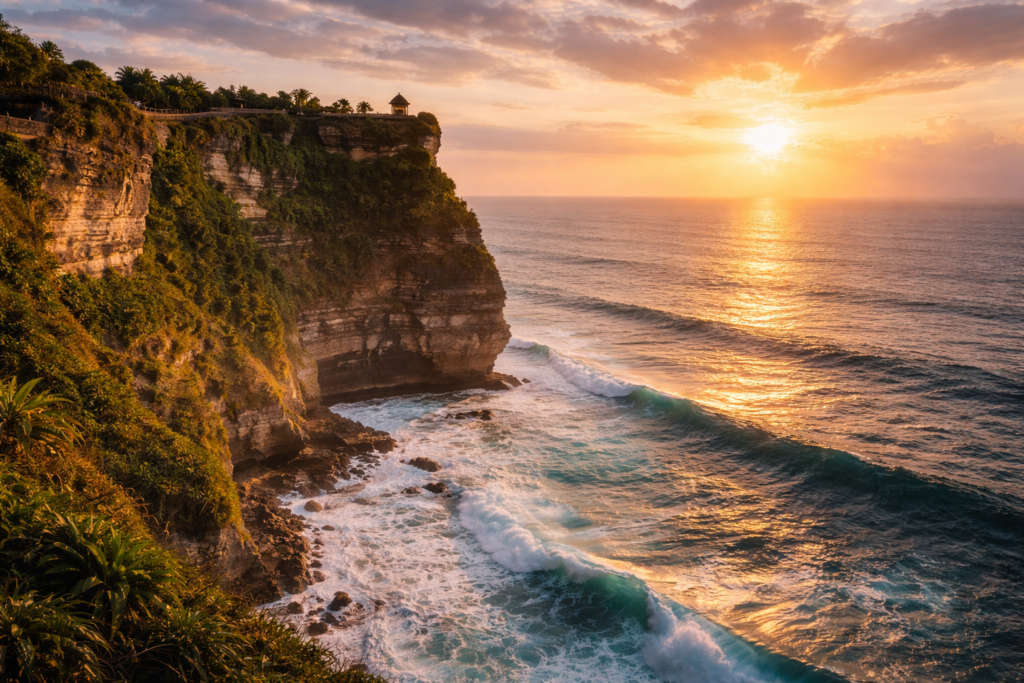
Uluwatu: Cliffs, Ocean & Sunsets
If Ubud feels inward and reflective, Uluwatu feels open and expansive. Perched on the southern tip of Bali, it’s defined by dramatic cliffs and endless ocean views.
Uluwatu Temple
Uluwatu Temple sits high above the ocean, built right along the edge of a steep cliff. The view alone makes it worth visiting, but sunset is when it becomes something else entirely. The sky shifts through layers of orange and pink, waves crash below, and everything feels cinematic.
Hidden Beaches
Below the cliffs are some of Bali’s most beautiful beaches, though reaching them usually involves a steep walk down narrow paths or staircases. The effort keeps them quieter than other parts of the island.
Carrying gear down to these spots is exactly where a good backpack matters again—something structured but not bulky makes the whole experience easier.
Cafés & Food
The Loft Uluwatu is a favourite for breakfast and coffee, while Single Fin is known for its sunset atmosphere and music. It’s the kind of place where you go for a drink and end up staying for hours.
Want more scenes like this?
Download a curated pack of ultra-realistic images, perfect for wallpapers and inspiration.
Nusa Penida: Bali’s Wild Side
A short boat ride from Bali, Nusa Penida feels raw and untouched. The landscapes here are more rugged, more dramatic, and far less developed.
Kelingking Beach
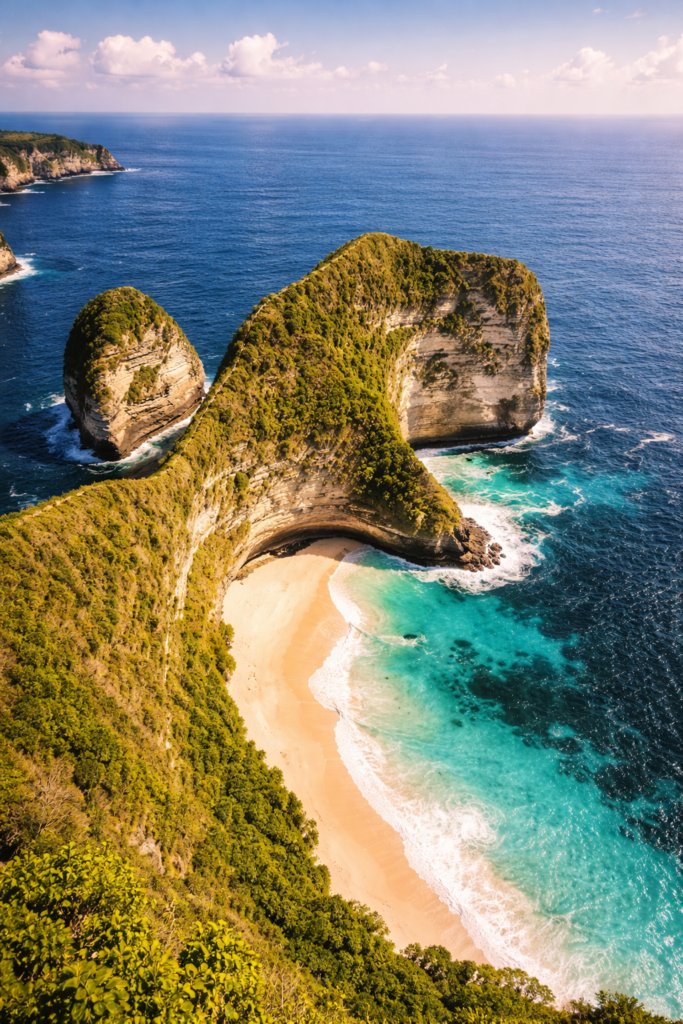
Kelingking Beach is easily one of the most recognisable views in Indonesia. From above, the cliff curves into the shape of a T-Rex, dropping sharply into bright turquoise water below.
The viewpoint itself is accessible, but the hike down is steep and challenging. Most people come for the view—and it’s one of those places that genuinely lives up to the photos.
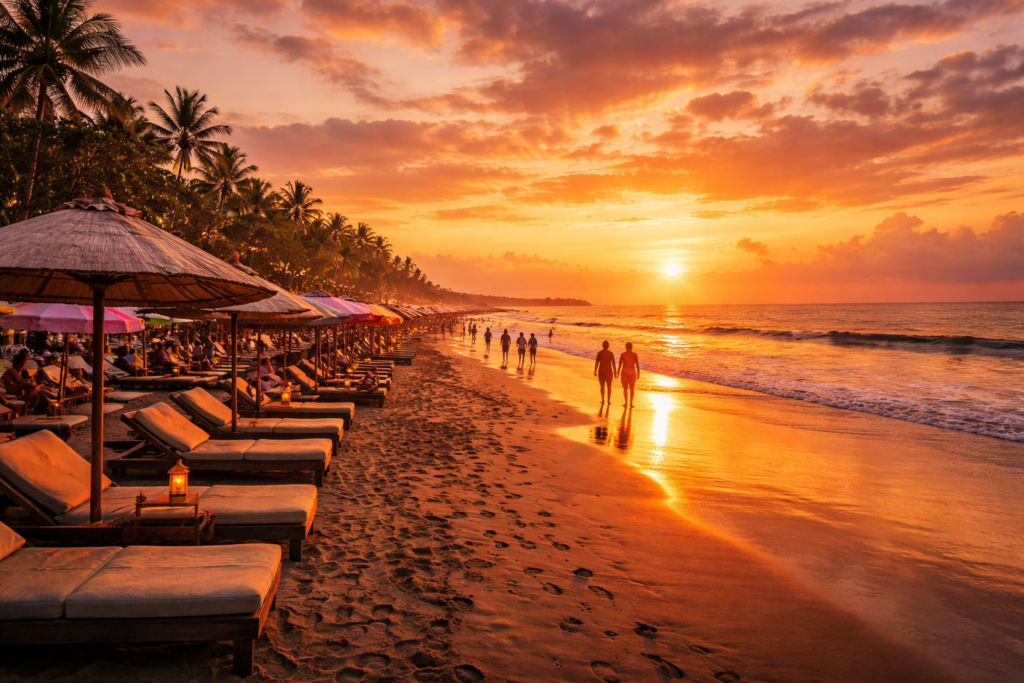
Seminyak: Modern Bali
Seminyak is where Bali shifts into something more polished. Beach clubs, restaurants, and boutique shops line the streets, and the atmosphere is more social and fast-paced.
Seminyak Beach
At sunset, the beach becomes the focal point. The sky glows in warm tones, reflecting off the wet sand as people walk along the shoreline.
It’s one of the best places in Bali to simply sit and watch the day end.
Cafés & Restaurants
Revolver Espresso is one of Bali’s best coffee spots, hidden behind a narrow entrance that opens into a moody, well-designed interior. Sea Circus is brighter and more playful, while La Lucciola offers a more refined beachfront dining experience.
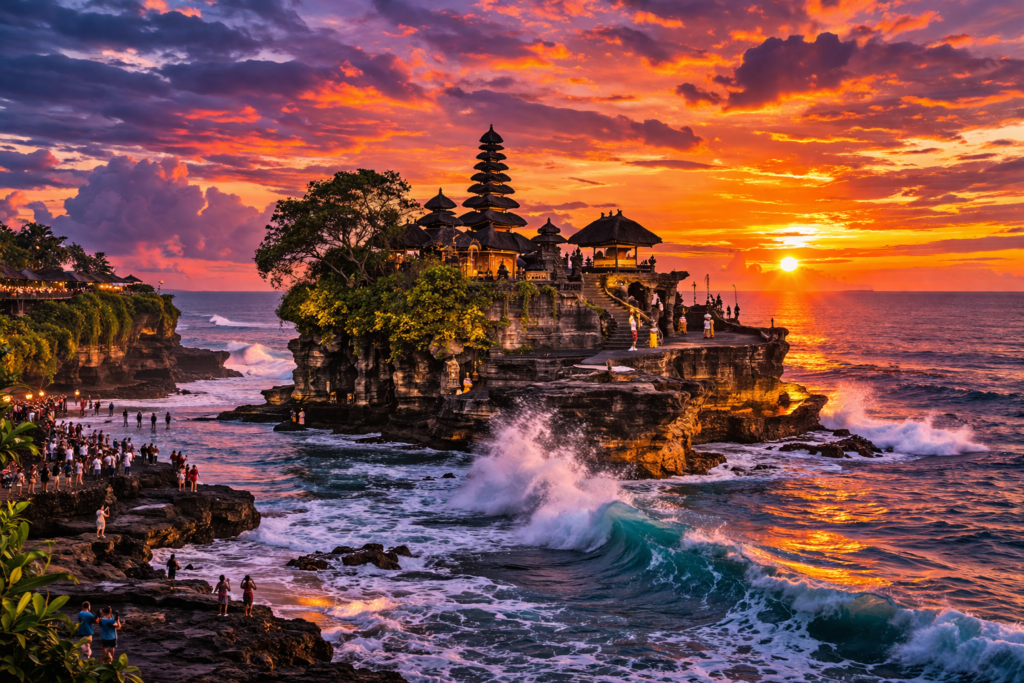
Tanah Lot: Bali’s Most Iconic Temple
Tanah Lot is one of those places that feels instantly recognisable. The temple sits on a rock formation just off the coast, surrounded by waves that crash dramatically against its base.
At sunset, the entire scene transforms. The temple becomes a silhouette, the sky deepens into orange and purple, and the ocean reflects the shifting light.
Want more scenes like this?
Download a curated pack of ultra-realistic images, perfect for wallpapers and inspiration.
Hidden Waterfalls & Jungle Escapes
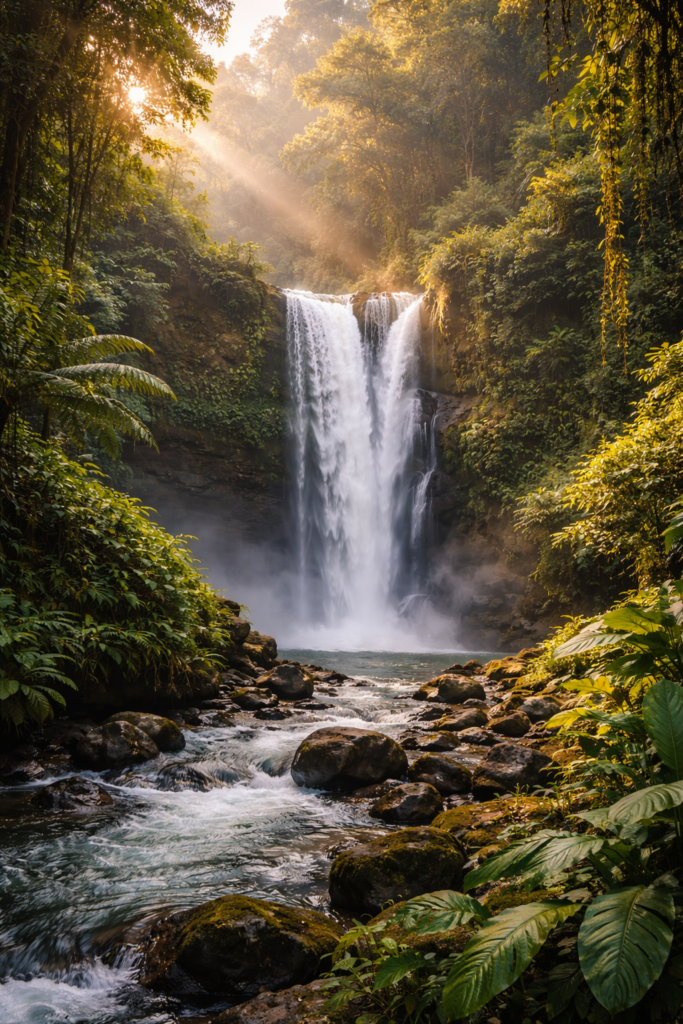
Bali’s interior is filled with waterfalls, many of which feel completely hidden once you reach them.
Sekumpul Waterfall is often considered the most beautiful, with multiple streams cascading down into a lush valley. Tegenungan is more accessible but still impressive, especially early in the day.
These spots often involve walking through uneven terrain, humidity, and water spray—so keeping your gear minimal and organised is key.
Everyday Travel Essentials (That Actually Make a Difference)
When you’re moving between locations in Bali—jungles, beaches, towns—you quickly realise how important a few simple things are.
A reliable portable charger is one of them. Between navigating, taking photos, and booking rides, your phone battery drains quickly. Something like the Anker 10,000mAh 22.5W Power Bank is small enough to carry all day and easily keeps your phone alive through long days of exploring.
If you’re capturing photos or videos, having a compact tripod makes a noticeable difference. Whether it’s sunrise in Ubud or sunset in Uluwatu, stable shots elevate everything. The Ulanzi MT-44 Extendable Vlog Tripod is lightweight, easy to carry, and doubles as a handheld grip—perfect for travel.
Keeping everything organised also becomes more important than you expect, especially if you’re moving around the island. A simple set like the Amazon Basics Packing Cubes helps separate clothes and gear so you’re not constantly digging through your bag.
None of these things are essential—but once you have them, you’ll notice the difference immediately.
Suggested 5–7 Day Itinerary
A good Bali trip balances movement with time to slow down.
Start with two days in Ubud, exploring rice terraces, cafés, and temples. Then head south to Uluwatu for beaches and sunsets. Take a day trip to Nusa Penida, and finish in Seminyak where everything is easy, social, and close together.
Best Time to Visit
Bali’s dry season runs from April to October, offering the best weather for exploring. The wet season is quieter, greener, and often less crowded, though rain can be unpredictable.
Final Thoughts
Bali is one of those places that stays with you—not because of one specific thing, but because of how everything fits together. The landscapes, the light, the culture, and the pace of life all combine into something that feels different from anywhere else.
Whether you’re walking through rice terraces at sunrise, sitting in a quiet café in Ubud, or watching the sun drop behind the ocean in Uluwatu, Bali has a way of making moments feel more vivid.
And that’s what brings people back—not just to see more, but to experience it again.
-
Egypt Travel Guide: Experiencing the Pyramids of Giza & Cairo in Depth
Introduction: Cairo, Where History Meets Motion
Cairo is not a quiet city. It hums, breathes, and moves with a rhythm that feels both chaotic and deeply alive. It is a place where the modern world presses up against one of the oldest civilizations in human history, where ancient stone monuments rise beyond highways and apartment blocks, and where the call to prayer echoes across a skyline shaped by centuries.
For most travelers, Cairo is defined by one image: the Pyramids of Giza. But to experience Cairo properly is to understand that the pyramids are not just an isolated wonder—they are part of a much larger story. A story of markets, riverbanks, hidden cafes, and the slow, golden movement of time across desert and city alike.
This guide focuses on experiencing Cairo and the Pyramids in depth—not rushing through them, but seeing them properly, with intention.
Bring Cairo to Your Screen
If you’re drawn to cinematic travel visuals, you can download a curated collection of travel wallpapers featuring scenes like the Pyramids, desert landscapes, and city skylines.
Arriving in Cairo: First Impressions
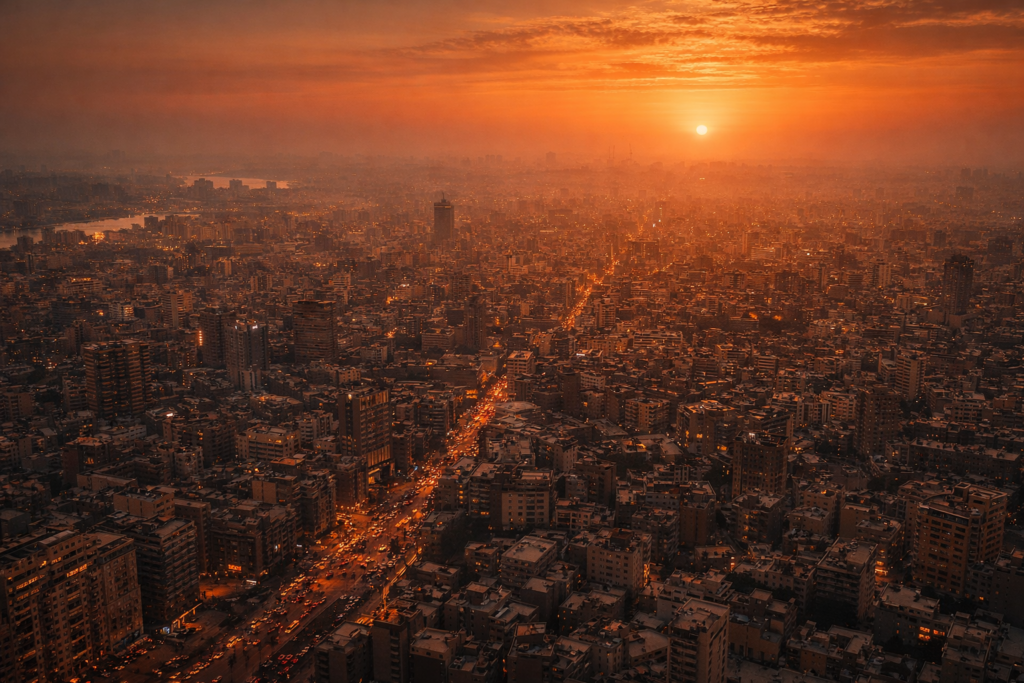
Landing in Cairo is an experience in itself. As you descend, the city stretches endlessly beneath you—a dense grid of buildings, roads, and movement. The air carries a slight haze, softening the edges of the skyline, giving everything a cinematic quality.
The moment you step outside the airport, the pace of the city becomes clear. Traffic flows in a way that feels almost improvised, horns punctuate the air, and yet there is an underlying rhythm to it all. It can feel overwhelming at first, but within a day or two, it begins to make sense.
Getting from the airport into the city is straightforward, but having your essentials easily accessible makes a noticeable difference. A compact travel backpack keeps everything organised—passport, charger, camera—so you’re not fumbling through luggage in the middle of a busy arrival hall. Cairo rewards preparedness, even in small ways.
Travel Essentials for Cairo & the Pyramids
Exploring Cairo and the Pyramids of Giza often means long days in the heat, moving between busy city streets and open desert landscapes. Having a few key items can make the experience significantly more comfortable and enjoyable.
A lightweight travel backpack is one of the most useful things to bring, especially for carrying water, a camera, and essentials while walking around the pyramids or navigating the city. Keeping everything in one organised place makes a noticeable difference throughout the day.
One option that works particularly well for this kind of trip is the Bagsmart 40L Carry-On Travel Backpack.
A reliable portable charger is equally important. Between taking photos, using maps, and navigating the city, your phone battery drains quickly. Having a backup ensures you don’t miss key moments, especially when exploring areas like the Giza plateau.
Packing cubes are a simple but effective way to stay organised, particularly if you’re moving between hotels or destinations. Being able to quickly access what you need without unpacking everything saves time and keeps things stress-free.
For international travel, a universal travel adapter is essential. Egypt uses different plug types depending on where you’re staying, and having one adapter that works everywhere removes any hassle.
Finally, if you’re interested in capturing high-quality travel photos or videos, a compact tripod can be incredibly useful. It allows for more stable shots, especially in lower light conditions or when framing wider compositions.
The Pyramids of Giza: Seeing Them Properly
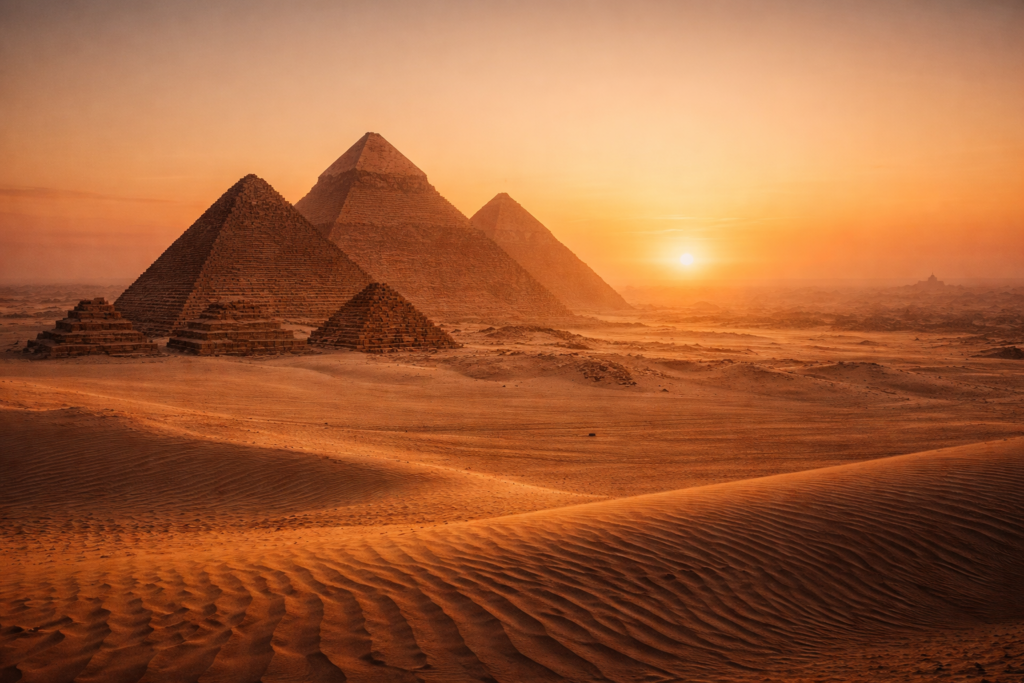
No matter how many images you’ve seen, the first real view of the pyramids is different. They don’t feel like distant historical objects—they feel immediate, massive, and almost surreal in scale.
The key to experiencing the pyramids well is timing.
Arriving early in the morning, just after sunrise, transforms the entire setting. The light is soft and warm, the desert air is cooler, and the crowds are minimal. The pyramids rise out of the sand with long shadows stretching across the ground, and for a moment, it feels almost quiet.
Walking across the plateau, you begin to notice the texture of the stone, the precision of the construction, and the sheer effort that must have gone into building something on this scale thousands of years ago.
If you plan to spend time here—exploring different viewpoints, walking between structures, and simply taking it in—it’s worth bringing a few simple essentials. The sun becomes intense quickly, and having a reliable portable charger ensures your phone or camera lasts through the experience. There’s nothing worse than reaching the best viewpoint and realising your battery is gone.
Photographing the Pyramids: Light, Space, and Perspective
The pyramids are one of the most photographed places in the world, but capturing them in a way that feels personal comes down to a few simple things: light, perspective, and patience.
Morning and late afternoon offer the best conditions. The harsh midday sun flattens the scene, while softer light adds depth and dimension. Moving slightly away from the main paths can also change everything—suddenly the crowds disappear, and the composition becomes cleaner.
A lightweight tripod can make a surprising difference here, especially if you want to experiment with framing or capture more stable shots during lower light conditions. Even for phone photography, having that extra stability allows you to slow down and be more intentional with each image.
Back in the City: The Energy of Cairo
Returning from Giza into central Cairo feels like stepping into another world entirely. The quiet vastness of the desert is replaced by movement, density, and noise.
But this is where Cairo reveals its personality.
Walking through neighbourhood streets, you’ll notice small details—the way shops spill out onto sidewalks, the conversations happening in doorways, the rhythm of daily life unfolding. It’s not polished or curated, but that’s exactly what makes it compelling.
Khan el-Khalili: The Atmosphere of the Old City
One of the most immersive places in Cairo is the Khan el-Khalili market. This historic bazaar is a maze of narrow alleys filled with colour, texture, and sound.
Lanterns hang overhead, casting warm patterns of light. Stalls display spices in deep reds and oranges. Metalwork, textiles, and handmade goods line the pathways. It’s busy, yes—but it’s also deeply atmospheric.
This is the kind of place where you don’t need a strict plan. Just walk, observe, and let the environment guide you.
Staying Organised While Travelling
Cairo is not a place where you want to be digging through your bag looking for things. Having a simple system—like using packing cubes to separate clothes and essentials—makes a noticeable difference, especially if you’re moving between locations.
It’s a small detail, but travel becomes significantly smoother when everything has its place. You spend less time managing your belongings and more time actually experiencing where you are.
The Nile at Sunset
If the pyramids represent Egypt’s ancient past, the Nile represents its continuity. The river moves slowly through the city, carrying with it a sense of calm that contrasts with Cairo’s intensity.
At sunset, the light softens, reflecting off the water in shades of gold and orange. Felucca boats drift across the surface, their white sails catching the last light of the day.
This is one of the few moments where Cairo feels still.
Practical Comforts That Matter
Long days exploring Cairo can be demanding—heat, walking, crowds. Small things make a big difference.
Having a universal travel adapter means you’re never stuck without power in your accommodation. It’s one of those items you don’t think about until you need it—and then it becomes essential.
Where to Stay: Waking Up Near the Pyramids
Staying somewhere with a view of the pyramids changes the entire experience. Waking up and seeing them in the distance, especially in the early morning light, creates a sense of continuity—you’re not just visiting them, you’re living alongside them, even if only briefly.
A Slower Way to Experience Cairo
The biggest mistake people make in Cairo is rushing. Trying to see everything quickly reduces the experience to a checklist.
Instead, focus on fewer places and spend more time in each. Sit in a café. Walk without a strict destination. Watch how the city moves.
Conclusion: Why Cairo Stays With You
Cairo is not a place that reveals itself instantly. It takes time, patience, and a willingness to embrace its pace. But once you do, it offers something deeper than just landmarks.
It offers atmosphere.
It’s in the early morning light over the pyramids.
In the quiet movement of the Nile at sunset.
In the energy of the streets and the history embedded in the stone.Cairo stays with you because it feels real—unfiltered, layered, and alive.
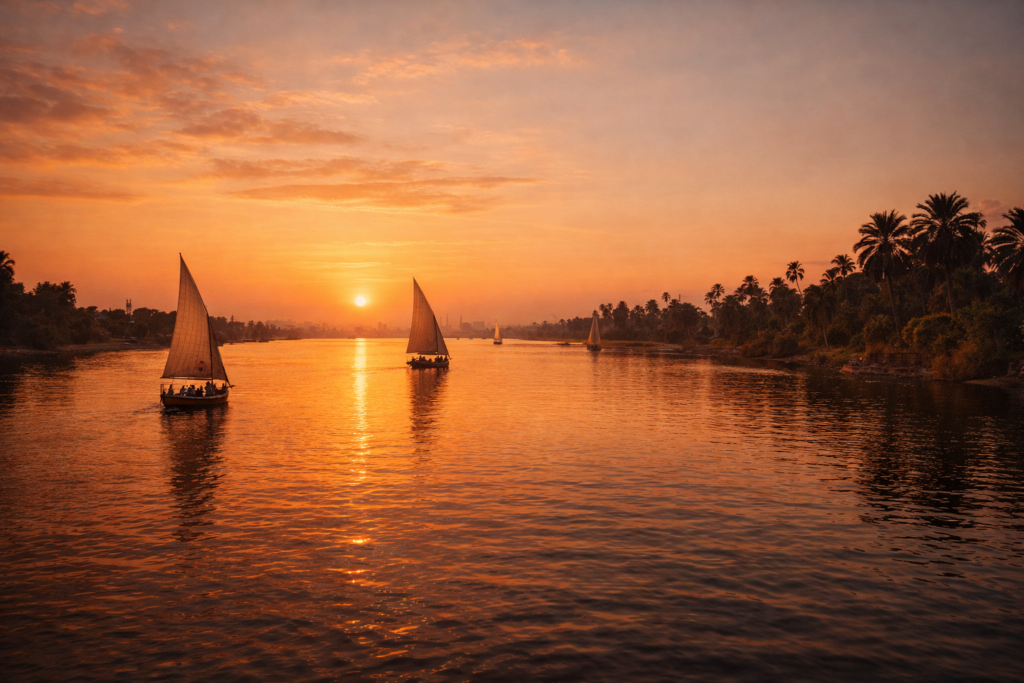
Bring Cairo to Your Screen
Download the full collection of cinematic travel wallpapers inspired by Egypt and beyond.* Product images and prices may vary slightly from the actual item on Amazon
This article may contain affiliate links. If you purchase through these links, I may earn a small commission at no additional cost to you. I only recommend products that are relevant and applicable. -
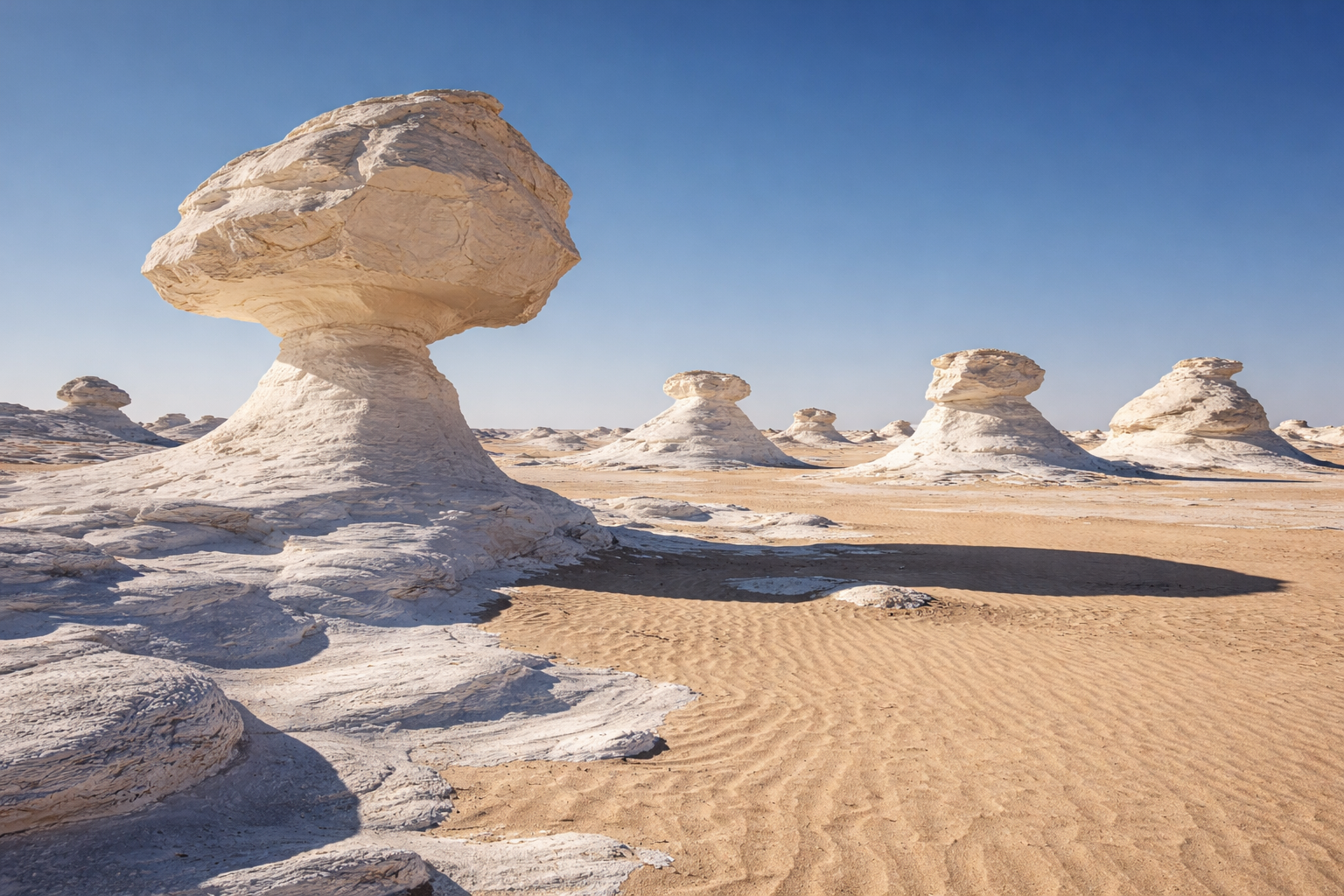
Egypt Travel Guide: The Ultimate Guide to Cairo, Luxor, Aswan & Beyond
Introduction to Egypt
Egypt is one of the few destinations in the world where history feels alive. Standing at the intersection of ancient civilisation and modern culture, it offers a travel experience unlike anywhere else on Earth. From the towering pyramids rising out of the desert to the timeless flow of the Nile River, Egypt is a country that captures imagination, curiosity, and awe in equal measure.
For thousands of years, Egypt has been a centre of innovation, architecture, and storytelling. It is home to some of the most recognisable landmarks in human history, including the Great Pyramids of Giza, the temples of Luxor, and the monumental statues of Abu Simbel. But beyond its iconic sites, Egypt also offers vibrant cities, rich cuisine, coastal escapes, and serene desert landscapes.
This Egypt travel guide will take you through the best places to visit, where to eat, where to stay, and how to plan your trip—while helping you experience the country in a deeper, more meaningful way.
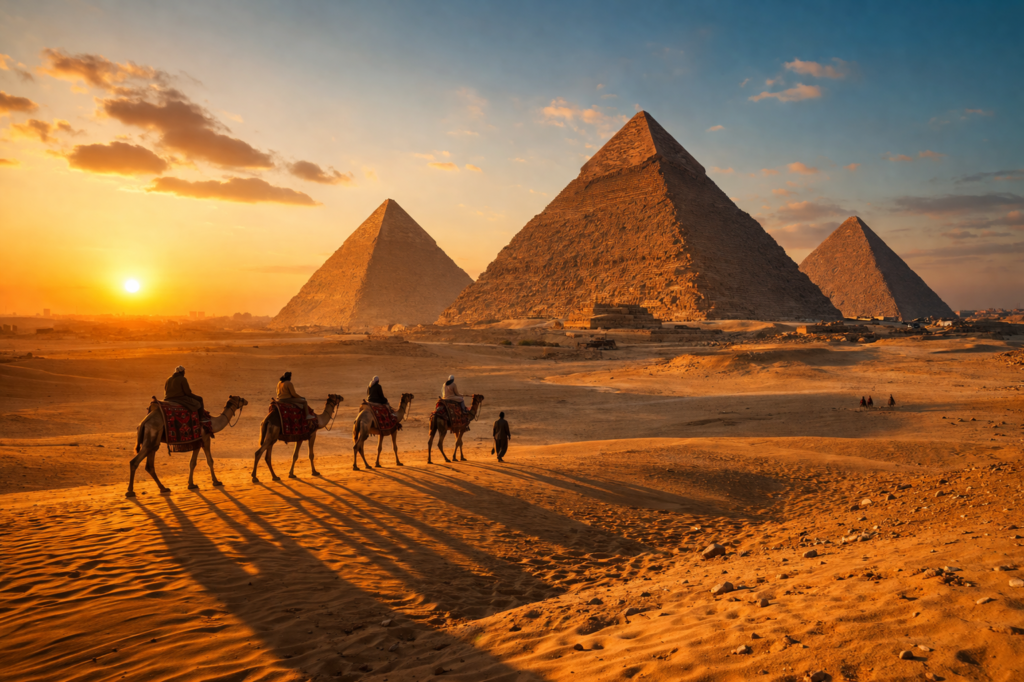
Bring Egypt to Your Screen
If you love cinematic travel visuals, you can download a curated collection of Egypt-inspired wallpapers featuring scenes from the Pyramids, Nile River, and desert landscapes.
Best Places to Visit in Egypt
Cairo: The Heart of Egypt
Cairo is a city of contrasts—ancient monuments stand beside modern buildings, and centuries-old markets exist alongside busy urban streets. It is chaotic, energetic, and endlessly fascinating.
Pyramids of Giza
The Pyramids of Giza are Egypt’s most iconic landmark and one of the Seven Wonders of the Ancient World. Located just outside Cairo, these monumental structures have stood for over 4,500 years.
Visiting at sunrise or sunset transforms the experience. The soft golden light casts long shadows across the desert, highlighting the sheer scale and precision of these ancient constructions.
Egyptian Museum
Located in central Cairo, the Egyptian Museum houses one of the world’s most extensive collections of ancient Egyptian artefacts. Highlights include:
- The treasures of Tutankhamun
- Ancient mummies
- Detailed statues and carvings
Khan el-Khalili Market
This historic bazaar is one of the oldest markets in the Middle East. Walking through its narrow alleys, you’ll find:
- Lanterns glowing with warm light
- Stalls filled with spices and textiles
- Handmade jewellery and souvenirs
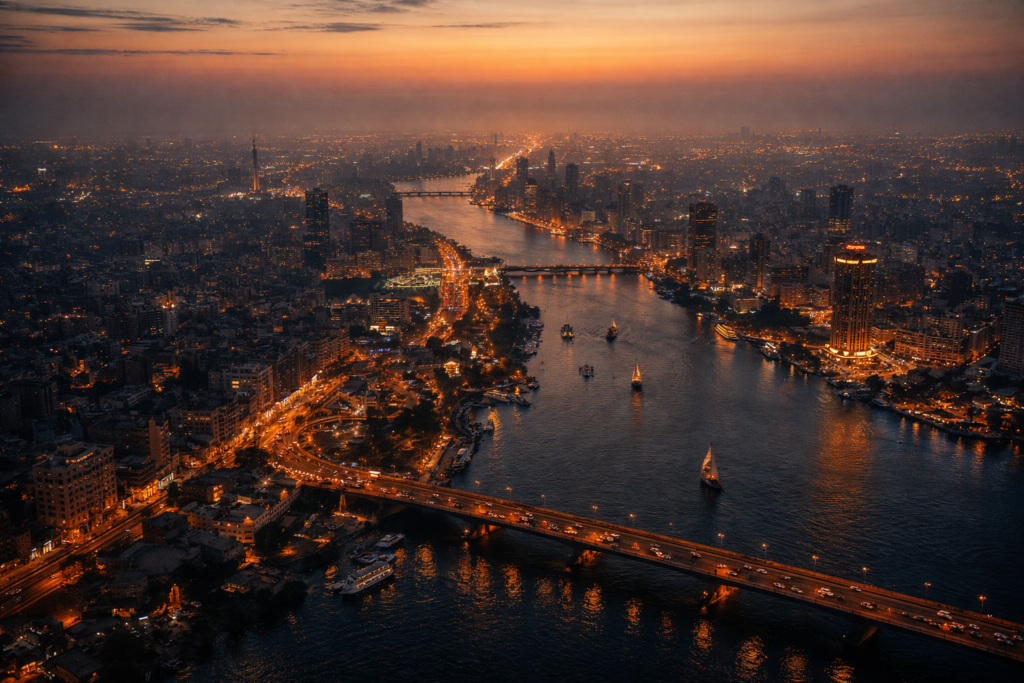
Love these scenes?
Download the full Egypt travel wallpaper pack featuring cinematic views of Cairo, the pyramids, and more.
Luxor: The World’s Greatest Open-Air Museum
Luxor is often described as the world’s greatest open-air museum, and for good reason. It is home to some of the most impressive ancient monuments in existence.
Karnak Temple
Karnak Temple is one of the largest religious complexes ever built. Walking through its massive columns, covered in hieroglyphics, feels like stepping into another era.
Valley of the Kings
This is where Egypt’s pharaohs were buried, including Tutankhamun. The tombs are intricately decorated with vivid colours that have survived for thousands of years.
Luxor Temple
Located along the Nile, Luxor Temple is especially beautiful at night when it is illuminated by warm lighting, creating a dramatic and atmospheric scene.
Aswan: Tranquility Along the Nile
Aswan offers a slower, more relaxed pace compared to Cairo and Luxor. It is known for its scenic Nile views and beautiful temples.
Abu Simbel
One of Egypt’s most impressive sites, Abu Simbel features massive rock-cut temples built by Ramses II. The scale and detail of these structures are extraordinary.
Philae Temple
Located on an island in the Nile, Philae Temple is dedicated to the goddess Isis. The setting alone makes it one of the most picturesque sites in Egypt.
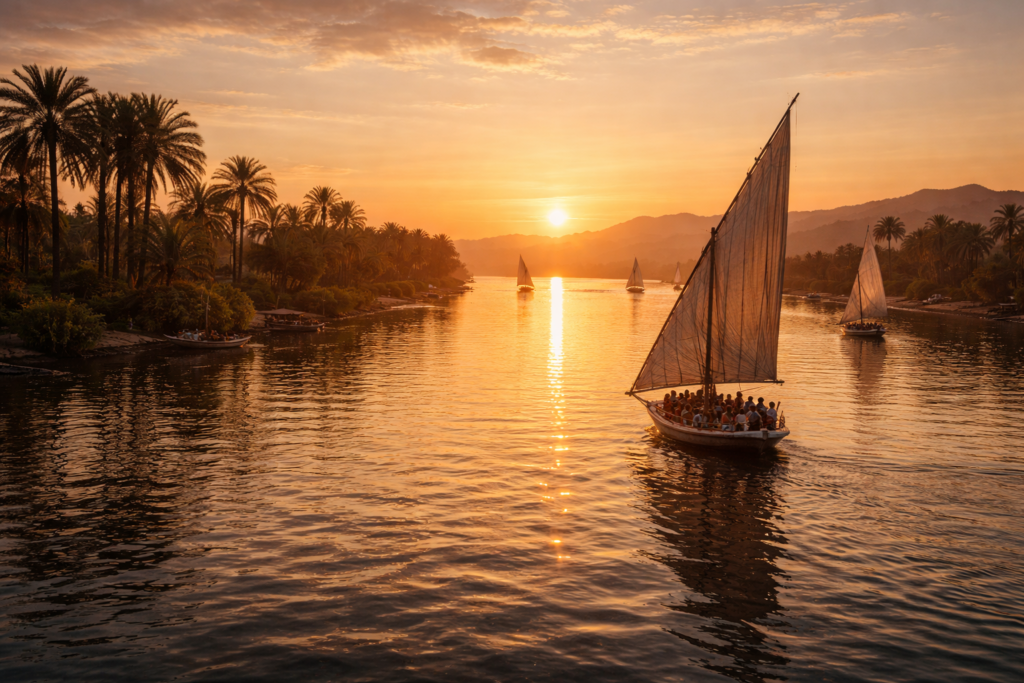
Hurghada & The Red Sea
If you’re looking for relaxation, Hurghada offers pristine beaches and crystal-clear waters.
- Snorkelling and diving in coral reefs
- Luxury resorts
- Calm, turquoise water
White Desert
The White Desert is one of Egypt’s most unique landscapes. Its surreal rock formations, shaped by wind erosion, create an almost otherworldly environment.
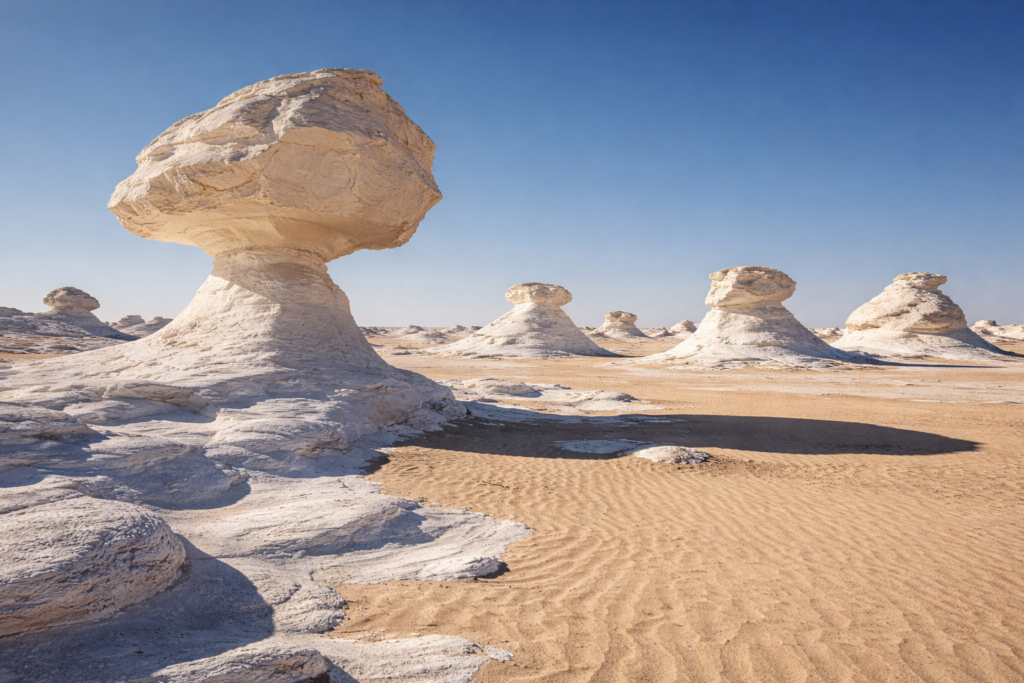
Want more scenes like this?
Download a curated pack of ultra-realistic Egypt travel images, perfect for wallpapers and inspiration.
Cafes & Restaurants in Egypt
Naguib Mahfouz Café (Cairo)
Located in Khan el-Khalili, this café offers a traditional Egyptian atmosphere with intricate décor and warm lighting.
What to order:
- Egyptian mezze
- Mint tea
- Grilled meats
Sequoia Restaurant (Cairo)
Situated along the Nile, Sequoia offers modern dining with stunning river views.
What to order:
- Mezze platters
- Fresh seafood
- Cocktails at sunset
1886 Restaurant (Luxor)
Located inside the Winter Palace Hotel, this is one of Egypt’s most elegant dining experiences.
Sofra Restaurant & Café (Luxor)
A charming restaurant serving authentic Egyptian cuisine in a beautifully decorated setting.
The Terrace – Old Cataract Hotel (Aswan)
Overlooking the Nile, this is one of the most iconic dining spots in Egypt.
Where to Stay in Egypt
Marriott Mena House (Cairo)
Located near the pyramids, this hotel offers one of the most iconic views in Egypt.
Sofitel Legend Old Cataract (Aswan)
A historic hotel overlooking the Nile, known for its luxury and atmosphere.
Steigenberger Nile Palace (Luxor)
A comfortable and well-located hotel along the Nile.
Sunrise Arabian Beach Resort (Hurghada)
A luxury beachfront resort perfect for relaxation.
Suggested 5–7 Day Itinerary
Day 1–2: Cairo
- Visit Pyramids of Giza
- Explore Egyptian Museum
- Walk through Khan el-Khalili
Day 3–4: Luxor
- Karnak Temple
- Valley of the Kings
- Luxor Temple
Day 5: Aswan
- Philae Temple
- Nile boat ride
Day 6–7: Hurghada or Desert
- Beach relaxation OR White Desert tour
Best Time to Visit Egypt
- October–April: Best weather
- Summer: Very hot, especially inland
- Winter: Mild and comfortable
Travel Tips
- Dress modestly
- Stay hydrated
- Use reputable guides
- Carry cash
Photography & Visual Highlights
Best locations:
- Pyramids at sunrise
- Nile at sunset
- Temples in golden light
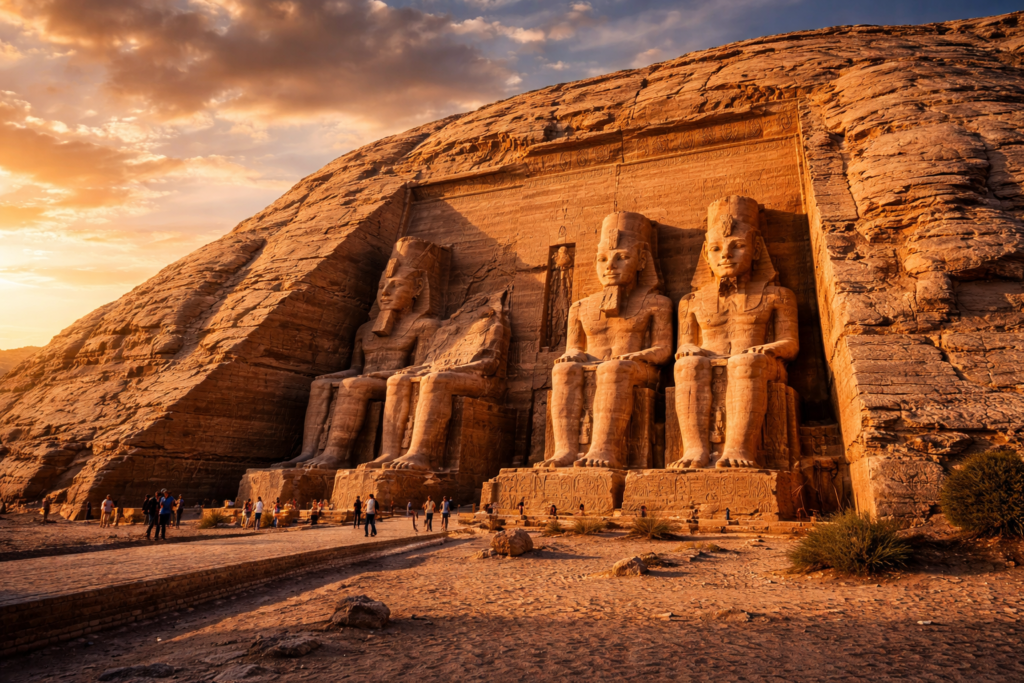
Download Egypt Travel Wallpapers
Download 50 ultra-realistic Egypt travel wallpapers featuring the Pyramids, Nile River, and desert landscapes. Perfect for phone and desktop backgrounds.
Conclusion
Egypt is a destination that leaves a lasting impression. It is a place where history, culture, and landscape come together to create something truly unique. Whether you are exploring ancient temples, sailing along the Nile, or walking through vibrant markets, every moment feels like part of a larger story.
For travellers seeking both adventure and inspiration, Egypt remains one of the most unforgettable destinations in the world.
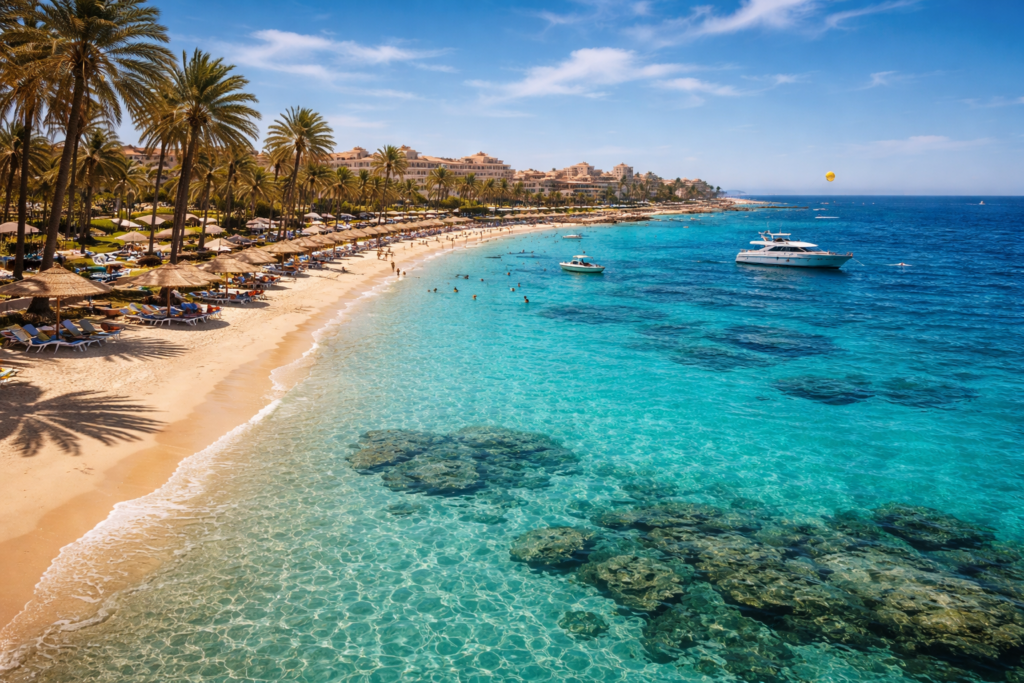
-
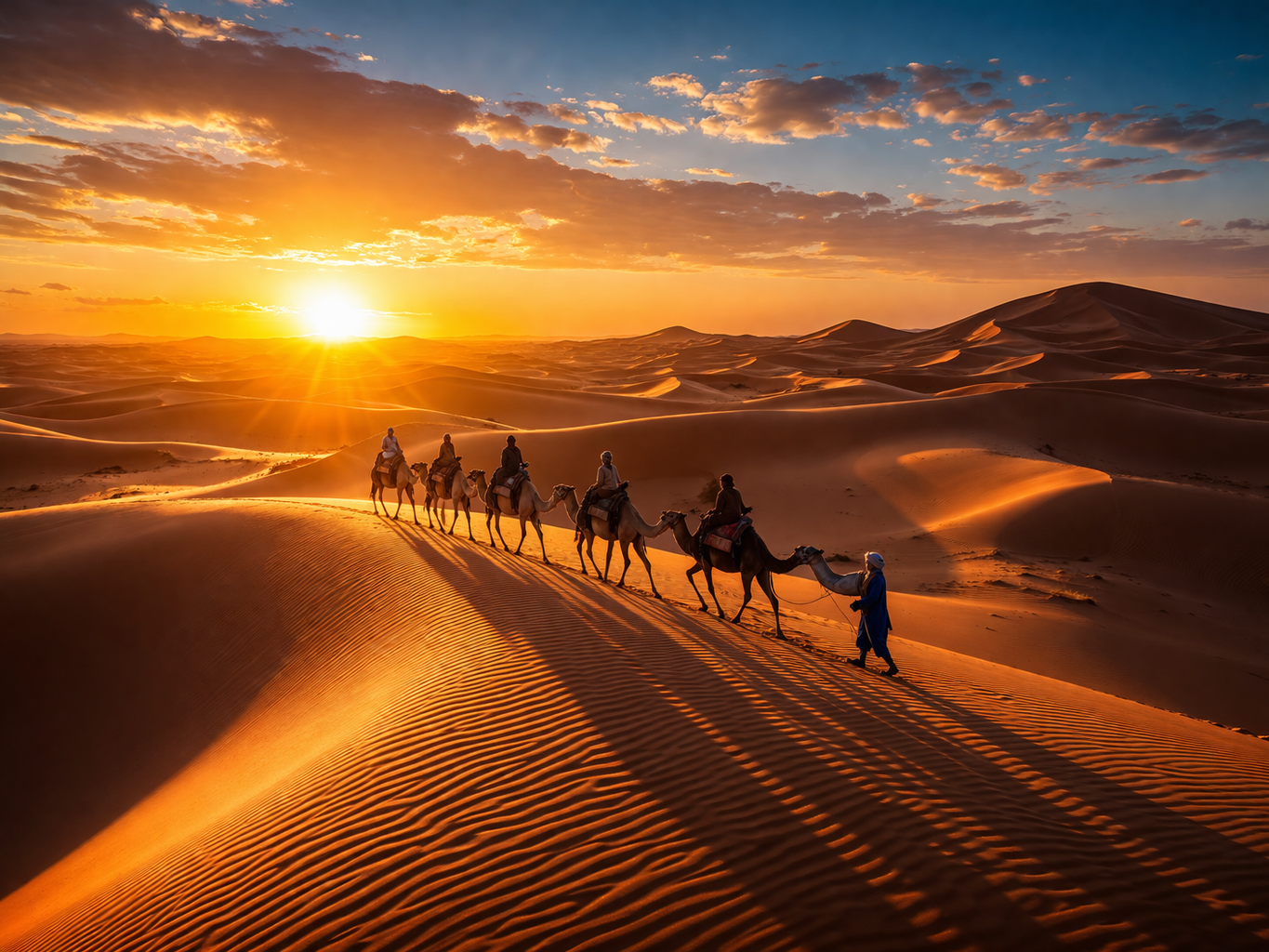
Morocco Travel Guide: The Ultimate Journey Through Deserts, Cities, Mountains & Culture
Morocco is a country that doesn’t just offer travel—it delivers an experience that engages every sense. From the rhythmic call to prayer echoing through ancient medinas to the silence of the Sahara Desert under a sky bursting with stars, Morocco is a destination where history, culture, and landscape collide in unforgettable ways.
This guide is your complete, detailed roadmap to Morocco—covering cities, landscapes, where to stay, what to eat, and how to travel like a pro.
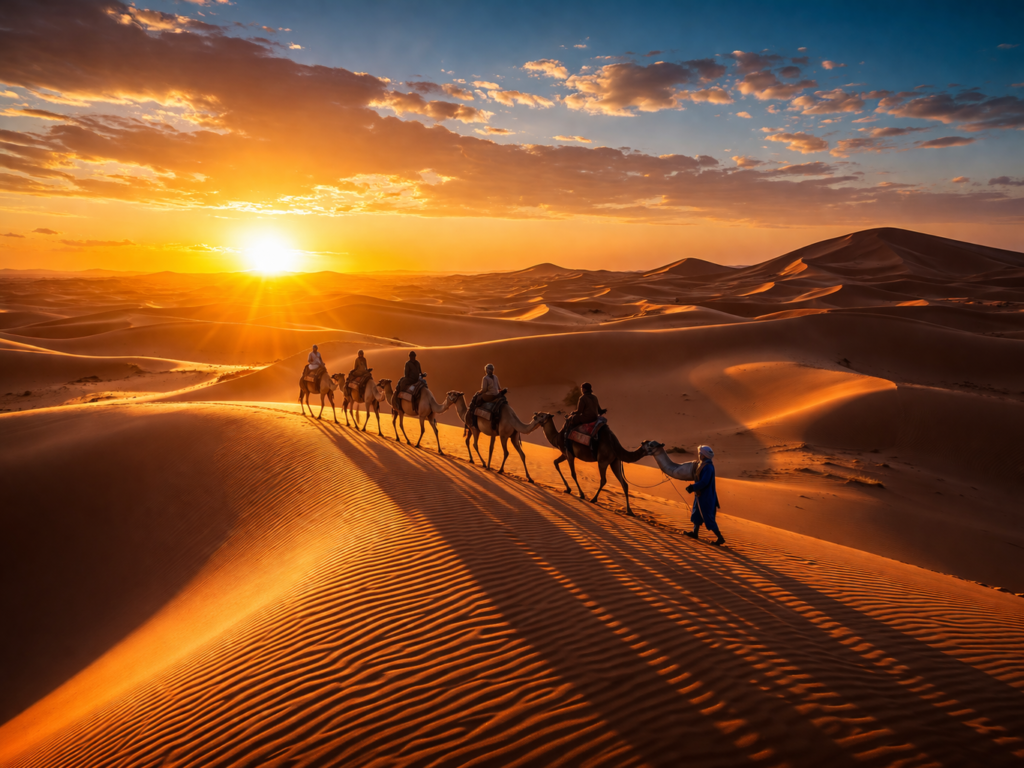
🌍 Why Visit Morocco?
Morocco is one of the most diverse travel destinations in the world:
- 🏜️ Sahara Desert dunes
- 🏔️ Atlas Mountains villages
- 🏙️ Ancient imperial cities
- 🌊 Atlantic coastline towns
- 🛍️ Vibrant markets (souks)
- 🍲 World-famous cuisine
Few countries allow you to:
👉 Ride a camel at sunrise
👉 Drink mint tea in a centuries-old riad
👉 Walk through a UNESCO-listed city
👉 Surf the Atlantic—all in one trip
🗺️ Best Places to Visit in Morocco
🏜️ 1. Sahara Desert (Merzouga)
The Sahara is the heart of Morocco’s magic.
What to Expect
- Endless golden dunes (Erg Chebbi)
- Camel trekking at sunset
- Luxury desert camps
- Star-filled skies with zero light pollution
Best Experience
- Sunset camel ride → overnight desert camp → sunrise over dunes
Where to Stay
Luxury Desert Camps
- Luxury Desert Camp Merzouga
- Scarabeo Camp (near Marrakech desert region)
Expect:
- Private tents
- Real beds
- Moroccan dinners under the stars
🏙️ 2. Marrakech – The Cultural Heart
Marrakech is chaotic, colourful, and unforgettable.
Must-See Places
- Jemaa el-Fnaa square
- Bahia Palace
- Koutoubia Mosque
- Majorelle Garden
Souks (Markets)
- Spices
- Lanterns
- Carpets
- Leather goods
🏨 Where to Stay in Marrakech
Luxury
- Royal Mansour Marrakech
- La Mamounia
Mid-Range
- Riad Yasmine (Instagram-famous pool courtyard)
- Riad Be Marrakech
Budget
- Equity Point Hostel Marrakech
👉 Tip: Stay in a riad (traditional Moroccan house with courtyard)
🍽️ Where to Eat in Marrakech
- Nomad – modern Moroccan rooftop dining
- Café des Épices – great for lunch overlooking the souks
- Le Jardin – hidden garden restaurant
- Plus61 – modern fusion food
🕌 3. Fes – The Oldest Medina in the World
Fes is Morocco’s spiritual and intellectual centre.
Highlights
- Fes el-Bali (UNESCO site)
- Al Quaraouiyine University (oldest in the world)
- Chouara Tannery
What Makes It Unique
- 9,000+ narrow streets
- No cars—only donkeys and foot traffic
🏨 Where to Stay in Fes
- Riad Fes (luxury)
- Palais Faraj Suites & Spa
- Dar Seffarine (authentic experience)
🌊 4. Essaouira – Coastal Escape
A laid-back Atlantic town with a totally different vibe.
Why Go
- Fresh seafood
- Windy beaches (great for surfing/kitesurfing)
- Blue-and-white architecture
Highlights
- Skala de la Ville (fortress walls)
- Fishing harbour
- Medina (less chaotic than Marrakech)
🍽️ Where to Eat
- La Table by Madada – upscale seafood
- Triskala Café – vegetarian favourite
- Fish stalls at the port – cheap + fresh
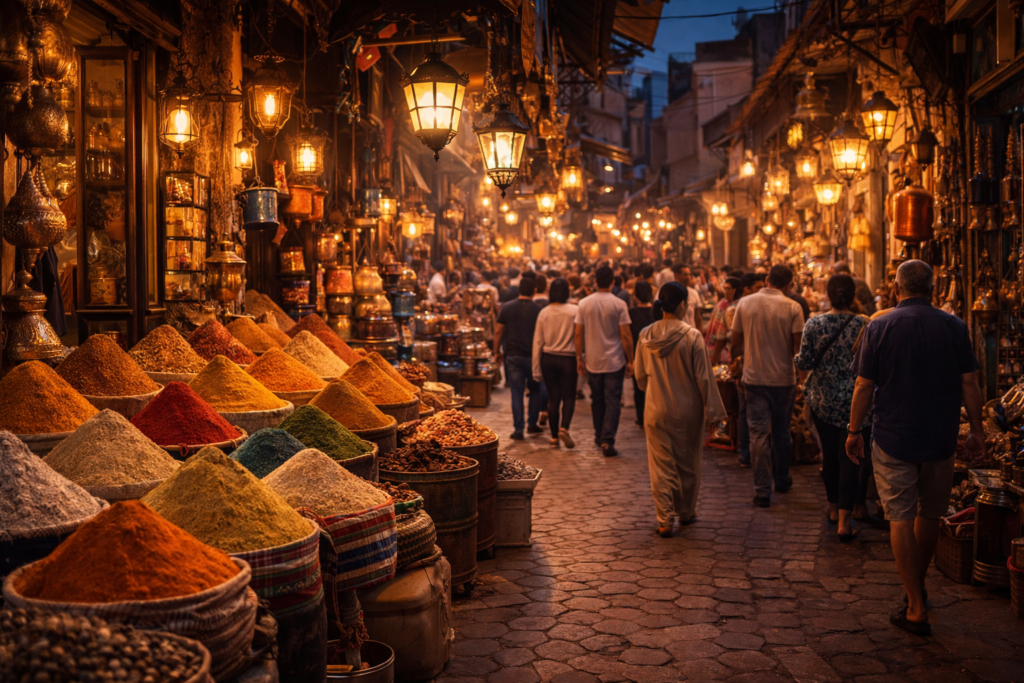
🏔️ 5. Atlas Mountains
A complete contrast to the cities.
What You’ll See
- Berber villages
- Snow-capped peaks
- Terraced agriculture
Best Base
- Imlil (for hiking & trekking)
🏨 Where to Stay
- Kasbah du Toubkal (incredible mountain views)
- Dar Imlil
🏜️ 6. Aït Benhaddou
A UNESCO-listed ksar (fortified village).
Why It’s Famous
- Filming location for:
- Gladiator
- Game of Thrones
Best Time to Visit
- Golden hour (sunset)
🌴 7. Draa Valley
One of Morocco’s most underrated gems.
What Makes It Special
- Palm oasis stretching for miles
- Ancient kasbahs
- Traditional agriculture
🍲 Moroccan Food Guide (You NEED to try these)
🥘 Tagine
Slow-cooked stew with:
- Chicken + preserved lemon
- Lamb + prunes
- Vegetables
🍚 Couscous
Traditionally eaten on Fridays
Served with vegetables + meat
🍢 Street Food
- Brochettes (grilled meat skewers)
- Msemen (Moroccan pancakes)
- Harira soup
🍵 Mint Tea
Called “Moroccan whiskey”
Sweet + poured from height
🚗 How to Travel Around Morocco
✈️ By Air
- Main airports: Marrakech, Casablanca, Fes
🚆 By Train
- Reliable and affordable
- Best routes:
- Casablanca ↔ Marrakech
- Fes ↔ Rabat
🚗 By Car
- Best for flexibility
- Great for:
- Atlas Mountains
- Desert trips
🐪 Tours
Most Sahara trips are:
- 2–4 days
- Start from Marrakech or Fes
📅 Best Time to Visit Morocco
🌸 Spring (March–May)
Best overall
Mild weather + green landscapes
🍂 Autumn (Sept–Nov)
Also ideal
Less heat than summer
☀️ Summer
- Very hot (especially desert + Marrakech)
❄️ Winter
- Cold in mountains
- Desert still great
📸 Photography Tips
- Sunrise & sunset = best lighting
- Use wide-angle in medinas
- Drone shots = incredible in desert/oasis
⚠️ Travel Tips (Important)
- Dress modestly
- Bargain in markets (expected)
- Carry cash (many places don’t take cards)
- Learn basic French/Arabic phrases
🧭 Sample 10-Day Morocco Itinerary
Day 1–3: Marrakech
Markets, palaces, food
Day 4–5: Atlas Mountains
Hiking + villages
Day 6–7: Sahara Desert
Camel trek + camp
Day 8: Aït Benhaddou
Historic exploration
Day 9–10: Essaouira
Relax by the coast
🌟 What Makes Morocco So Special?
Morocco is not just a destination—it’s a sensory journey.
You’ll experience:
- The smell of spices in the souks
- The silence of the desert
- The call to prayer at sunset
- The warmth of Moroccan hospitality
✨ Final Thoughts
Morocco offers something few places can:
👉 A perfect mix of adventure, culture, history, and beautyWhether you’re:
- Exploring ancient medinas
- Watching the sunrise over dunes
- Drinking tea in a mountain village
…you’ll leave Morocco with stories you’ll never forget.