Your cart is currently empty!
Iceland Travel Guide: A Complete Journey Through Fire, Ice & Untamed Landscapes
Introduction: Why Iceland Feels Like Another Planet
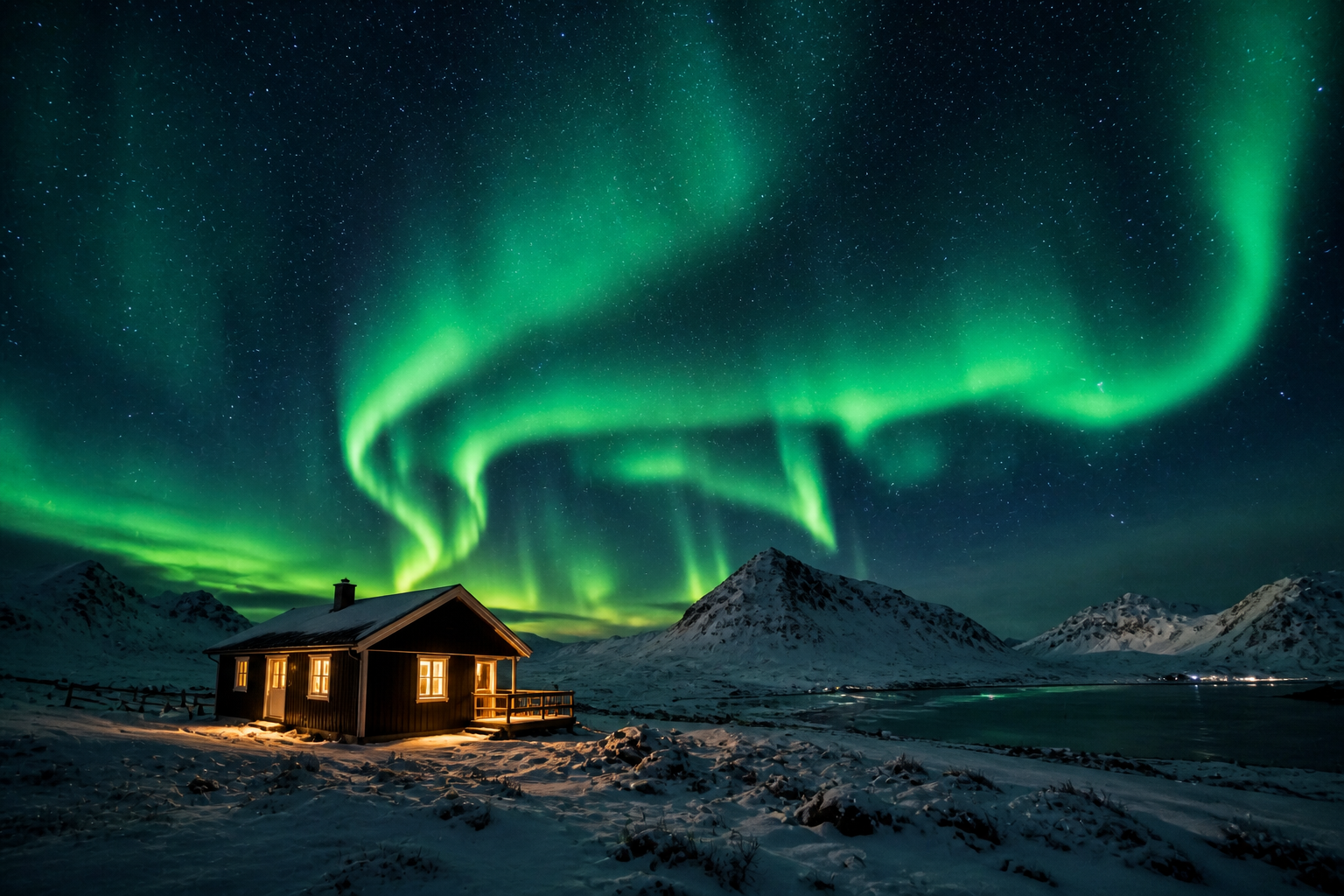
Iceland doesn’t feel like a typical destination. It feels raw, unfinished, and constantly in motion. Volcanoes shape the land beneath your feet, glaciers carve through mountains, and waterfalls appear almost everywhere you look.
There’s a stillness here—but it’s not empty. It’s powerful.
Unlike most countries, Iceland isn’t about cities—it’s about movement through landscapes. The best way to experience it is to travel across the country, following the Ring Road, stopping often, and letting the environment dictate your pace.
Reykjavik: The Starting Point
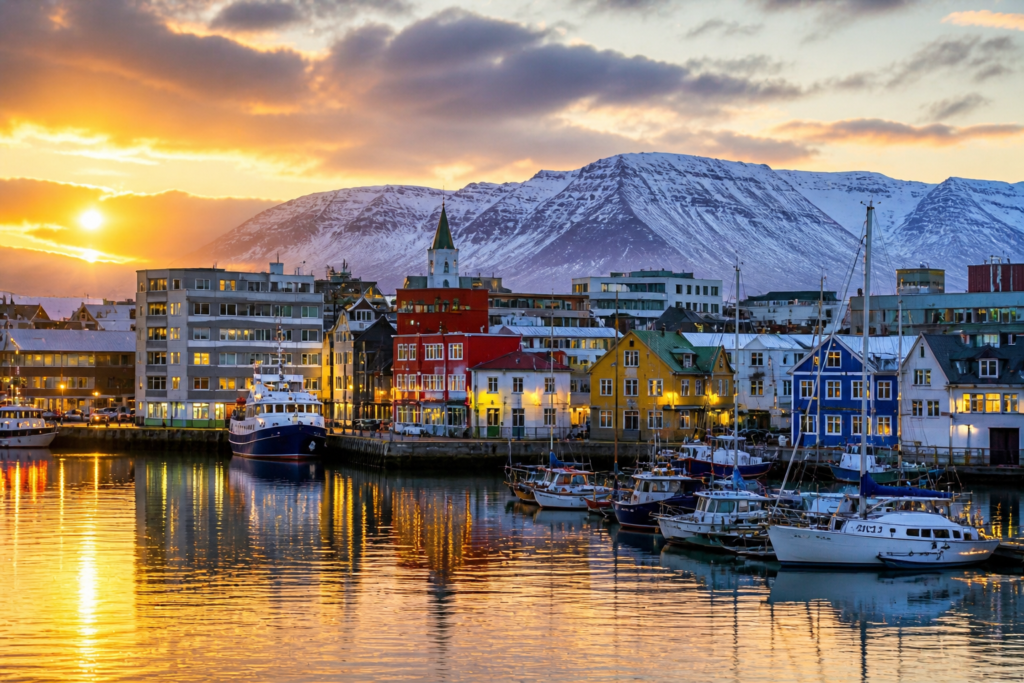
Most journeys begin in Reykjavik, Iceland’s capital. It’s compact, modern, and quietly creative—a place where design, music, and nature intersect.
What to Do
- Hallgrímskirkja Church
The city’s most iconic landmark. Take the elevator up for panoramic views over Reykjavik’s colorful rooftops. - Harpa Concert Hall
A striking glass building on the waterfront, reflecting both the ocean and sky. - Sun Voyager Sculpture
A minimalist sculpture along the water—best visited at sunset when the light softens across the bay.
Where to Eat
- Dill Restaurant – Iceland’s first Michelin-starred restaurant, focused on modern Nordic cuisine
- Sandholt Bakery – Excellent for breakfast, pastries, and coffee
- Messinn – Known for traditional Icelandic fish dishes
Where to Stay
- The Reykjavik EDITION – Modern luxury near the harbor
- Canopy by Hilton Reykjavik City Centre – Stylish and central
- KEX Hostel – Budget-friendly with character
The Golden Circle: Iceland’s Most Famous Route
This is often the first day trip from Reykjavik—and while it’s popular, it’s still worth doing.
Þingvellir National Park
A UNESCO World Heritage site where the North American and Eurasian tectonic plates meet. You can literally walk between continents.
Geysir Geothermal Area
Watch Strokkur geyser erupt every few minutes, sending boiling water high into the air.
Gullfoss Waterfall
One of Iceland’s most powerful waterfalls. The sheer force of the water—and the mist rising from the canyon—makes it unforgettable.
Want more scenes like this?
Download a curated pack of ultra-realistic images, perfect for wallpapers and inspiration.
South Coast: Waterfalls, Black Sand & Glaciers
The south coast is where Iceland begins to feel dramatic.
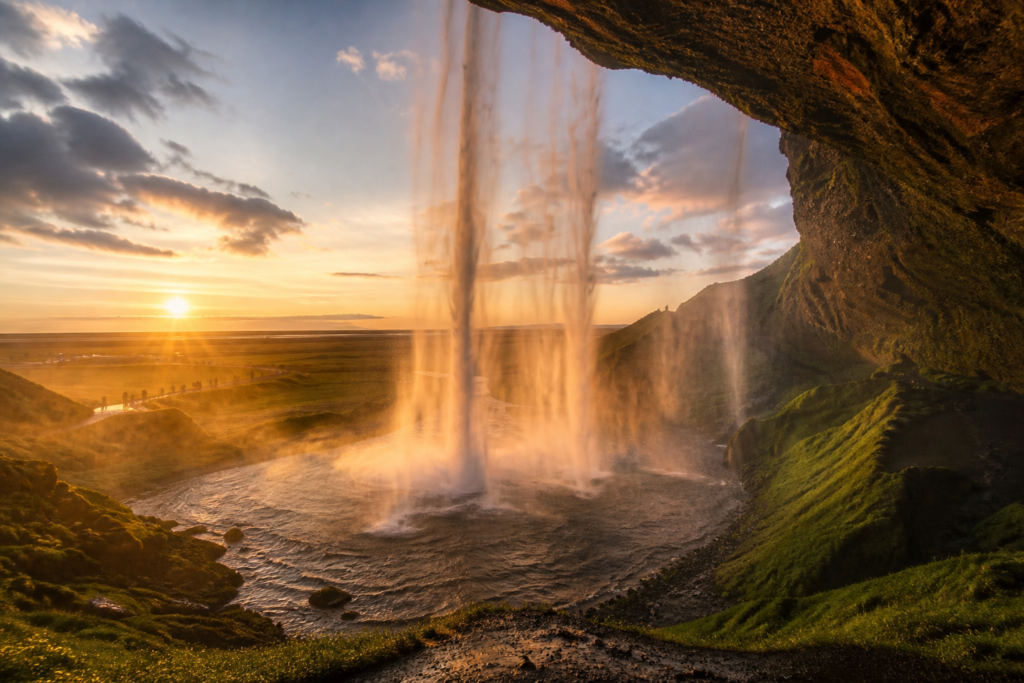
Seljalandsfoss
One of the few waterfalls you can walk behind. At sunset, the light filtering through the water creates a surreal atmosphere.
Skógafoss
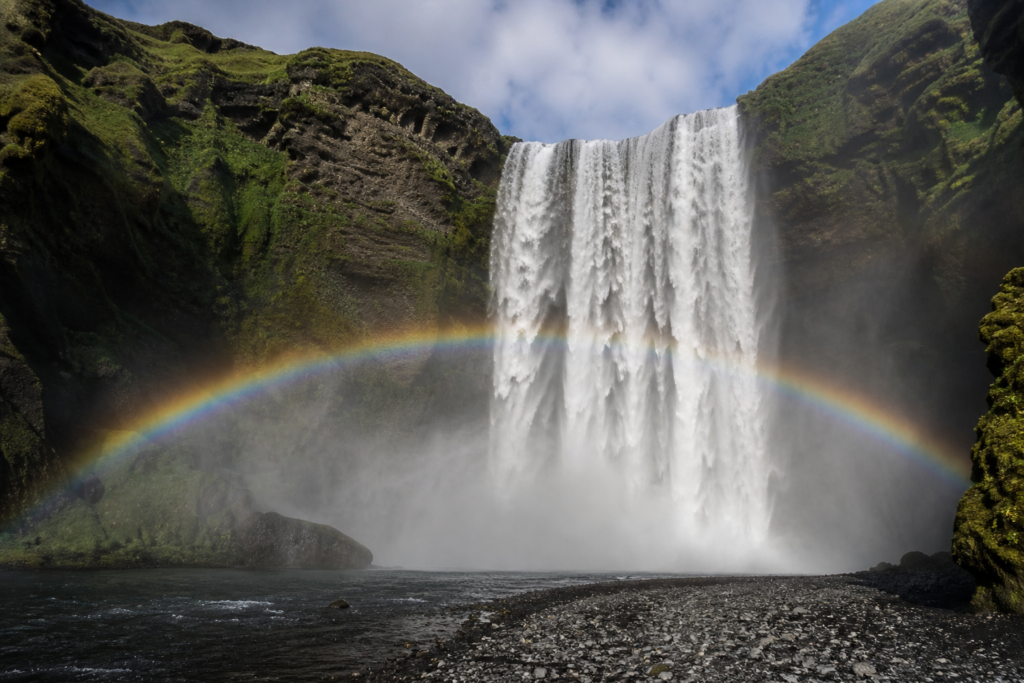
Massive and symmetrical, with mist that often produces rainbows. You can climb the stairs beside it for a top-down view.
Reynisfjara Black Sand Beach
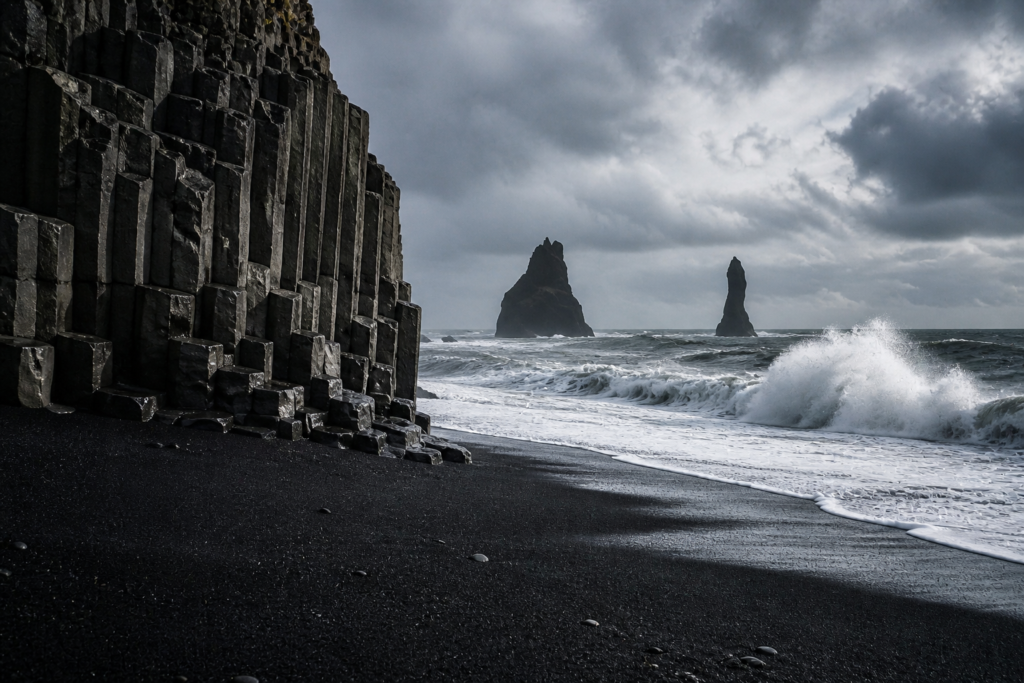
Known for its basalt columns and powerful waves. The contrast between black sand, white foam, and grey skies is striking.
Where to Eat (South Coast)
- The Soup Company (Vik) – Simple, warming meals
- Black Beach Restaurant – Great views over Reynisfjara
Where to Stay
- Hotel Kría (Vik) – Modern and comfortable
- Hótel Skógafoss – Close to the waterfall
- ION Adventure Hotel – Design-focused, slightly inland
Jökulsárlón Glacier Lagoon & Diamond Beach
Further along the south coast, the landscape becomes even more surreal.
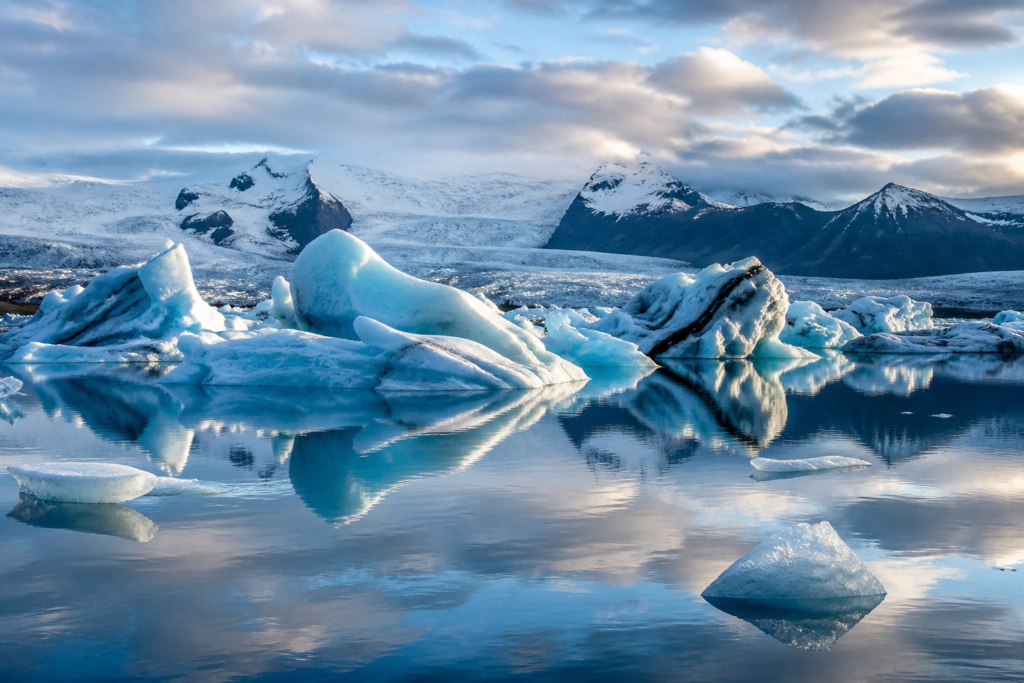
Jökulsárlón Glacier Lagoon
Icebergs drift slowly across a deep blue lagoon, breaking off from a nearby glacier. The silence here is what stands out most.
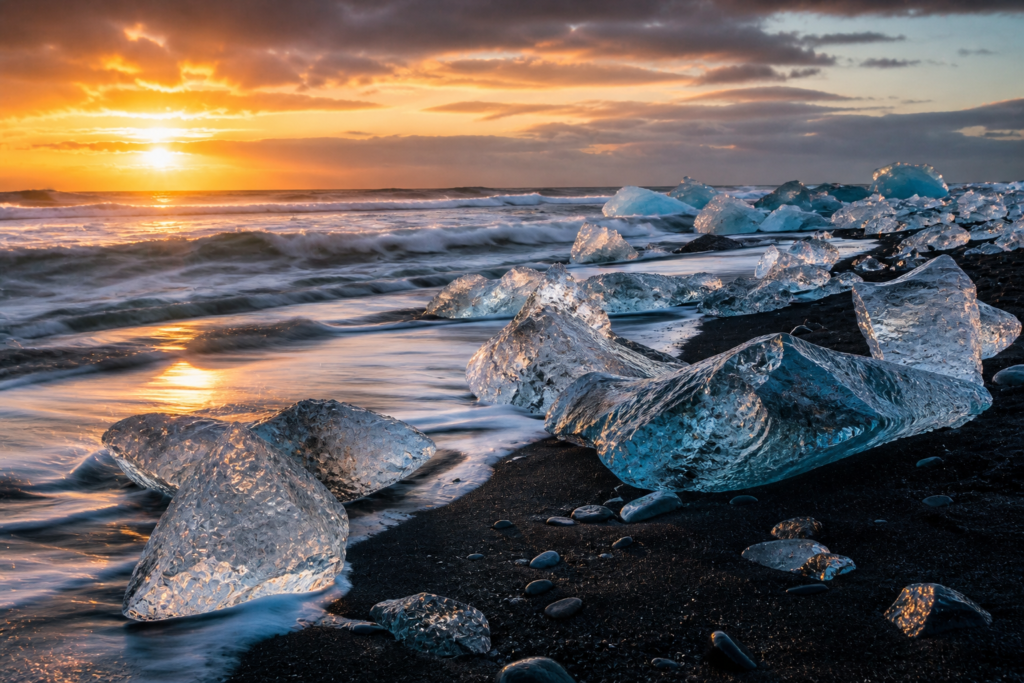
Diamond Beach
Just across the road, chunks of ice wash up onto black sand, glistening like glass under sunlight.
East Fjords: Quiet & Underrated
Many travellers skip this region—but it’s one of the most peaceful parts of Iceland.
Winding roads follow the coastline, small fishing villages appear unexpectedly, and mountains drop directly into the sea.
Where to Stop
- Seyðisfjörður – A small artistic town with colorful streets
- Egilsstaðir – The main hub of the east
Want more scenes like this?
Download a curated pack of ultra-realistic images, perfect for wallpapers and inspiration.
North Iceland: Wild & Less Crowded
The north offers a completely different feel—more remote, more rugged.
Lake Mývatn
A geothermal area filled with lava formations, steaming vents, and unusual landscapes.
Dettifoss Waterfall
Europe’s most powerful waterfall. Louder, rougher, and more intense than anything on the south coast.
Húsavík
One of the best places in the world for whale watching.
Where to Eat
- Naustið (Húsavík) – Fresh seafood
- Vogafjós Farm Resort – Farm-to-table experience
Where to Stay
- Fosshótel Mývatn – Stunning modern hotel overlooking the lake
- Hótel Kea (Akureyri) – Central and comfortable
Snæfellsnes Peninsula: Iceland in Miniature
Often called “Iceland in one region,” this area offers a mix of everything—mountains, coastlines, lava fields, and small villages.
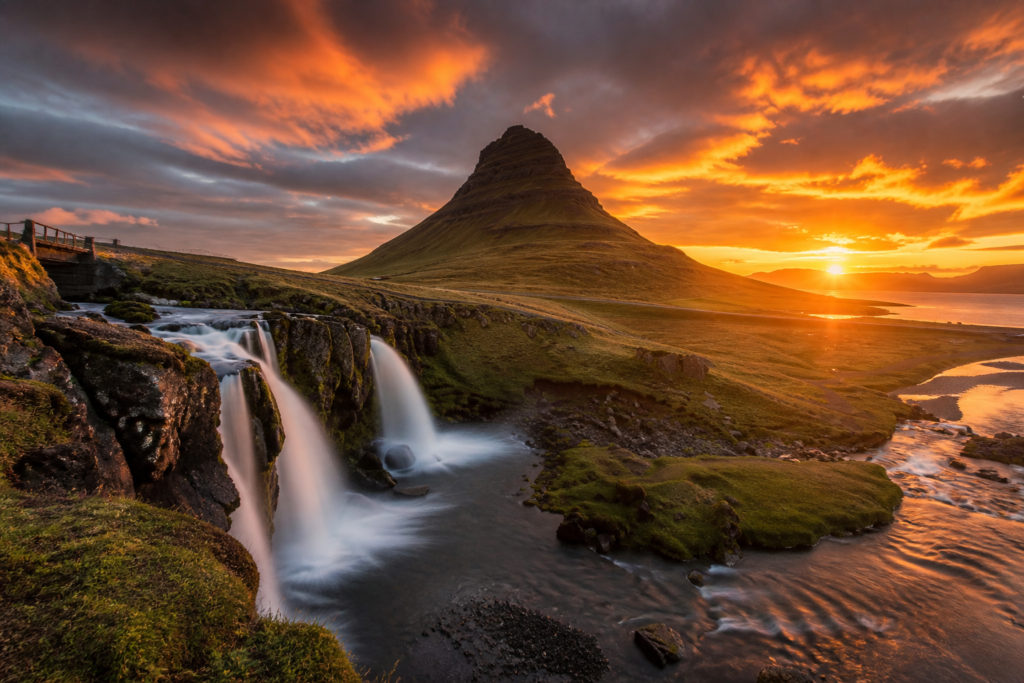
Kirkjufell Mountain
One of the most photographed locations in Iceland, especially with the waterfall in the foreground.
Arnarstapi & Hellnar
Coastal cliffs with dramatic ocean views.
Driving Iceland: What You Need to Know
Driving is the best way to experience Iceland—but it requires preparation.
Weather can change quickly, roads can be narrow or unpaved, and distances are longer than they seem.
Having a well-organised setup makes a big difference.
A durable backpack like the Bagsmart 40L Carry-On Travel Backpack is ideal for keeping essentials accessible during long drives and quick stops.
Since you’ll rely heavily on navigation, photography, and bookings, a reliable charger like the Anker 10,000mAh 22.5W Power Bank is essential—especially in remote areas.
Want more scenes like this?
Download a curated pack of ultra-realistic images, perfect for wallpapers and inspiration.
Capturing the Landscape
Iceland is one of the best places in the world for photography—but conditions can be unpredictable.
Wind, uneven terrain, and low light make stability important.
A compact setup like the Ulanzi MT-44 Extendable Vlog Tripod helps capture waterfalls, northern lights, and long exposure shots without adding bulk.
Packing Smart for Iceland
Packing for Iceland is less about quantity and more about organisation.
Weather can shift from sun to rain to wind in a single day.
Using something like Amazon Basics Packing Cubes keeps layers organised and easy to access without unpacking constantly.
Long Drives & Comfort
The Ring Road involves long stretches of driving. Having downtime that actually feels comfortable matters more than you expect.
Noise-cancelling headphones like the Sony WH-1000XM5 Noise Cancelling Headphones can completely change the experience—whether you’re on a flight, a bus, or relaxing after a long day.
Best Time to Visit
- Summer (June–August): Midnight sun, easier driving, more crowds
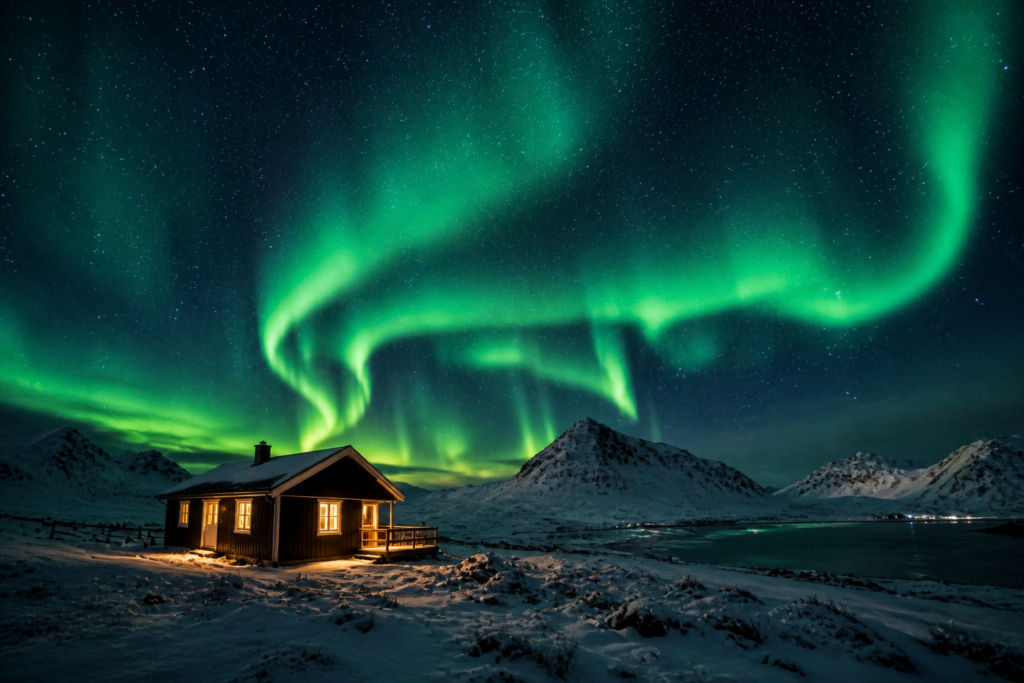
- Winter (November–March): Northern lights, fewer tourists, harsher conditions
- Shoulder Seasons (May, September): Best balance of light, weather, and fewer crowds
Want more scenes like this?
Download a curated pack of ultra-realistic images, perfect for wallpapers and inspiration.
Final Thoughts
Iceland isn’t a place you visit for comfort—it’s a place you visit for perspective.
It strips things back. There’s less distraction, less noise, and more space to actually experience where you are.
From waterfalls and glaciers to quiet roads and endless horizons, Iceland offers something that’s becoming harder to find elsewhere: a sense of scale and stillness at the same time.
And the more you slow down, the more you’ll notice.
Leave a Reply