Your cart is currently empty!
Nepal Travel Guide: A Journey Through Kathmandu, Pokhara, the Himalayas & Ancient Culture
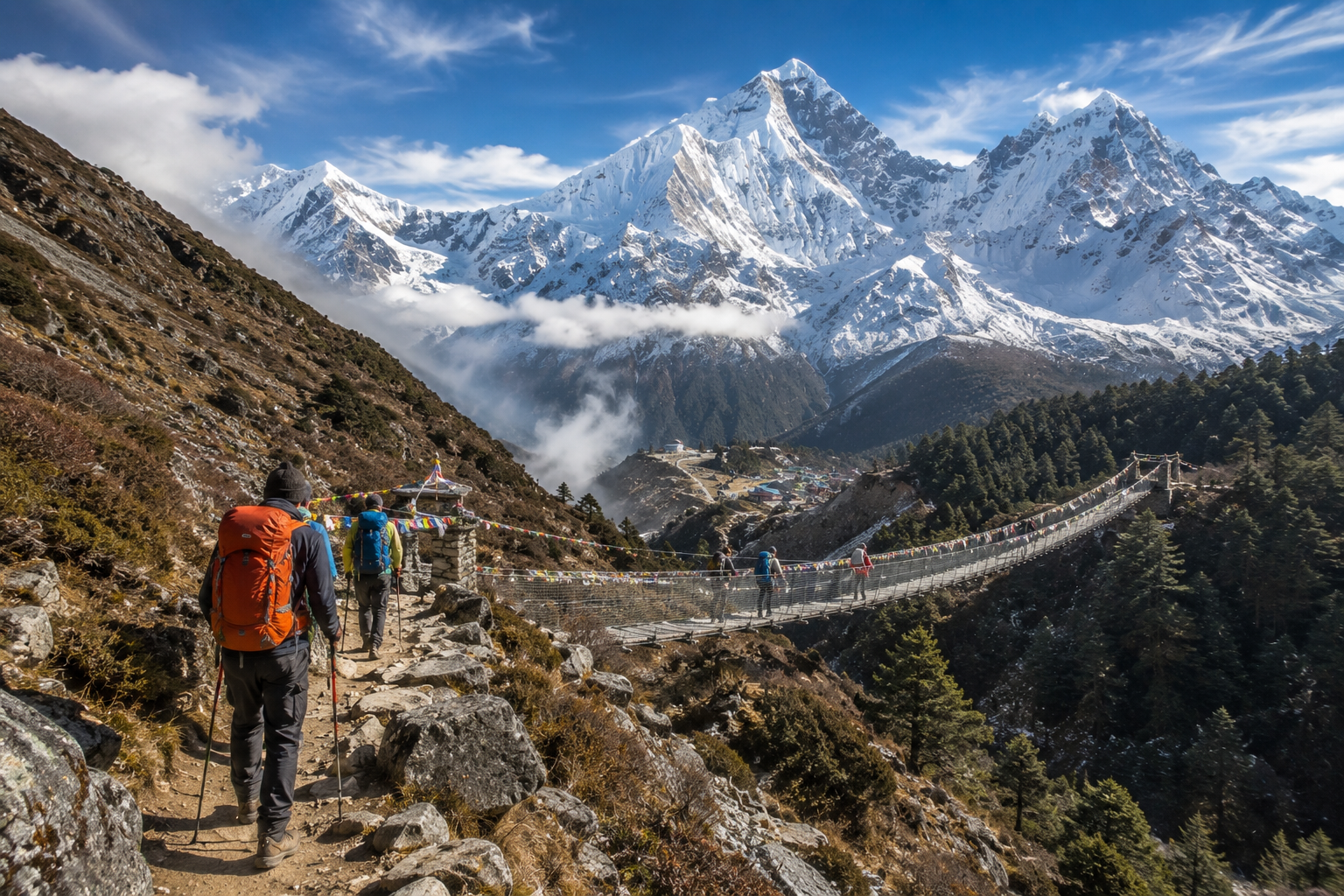
Nepal is one of those destinations that stays with people long after they leave. It’s not only because of the mountains—although the Himalayas are unlike anything else on earth—it’s because Nepal feels deeply alive. Streets are filled with incense smoke, prayer flags move in the wind above ancient temples, and everyday life unfolds against some of the most dramatic landscapes in the world.
What makes Nepal special is the contrast. You can move from chaotic city streets in Kathmandu to complete silence in the mountains within a matter of hours. One moment you’re drinking tea in a crowded alley lined with temples, and the next you’re watching sunrise over snow-covered Himalayan peaks.
This guide is designed to help you experience Nepal properly, whether you’re visiting for trekking, culture, photography, spirituality, or simply the experience of seeing a completely different way of life. From detailed destination recommendations to exact restaurants and hotels, this is a complete overview of one of the most unforgettable countries in Asia.
Kathmandu is where nearly every Nepal journey begins. At first, the city can feel overwhelming. The streets are crowded, traffic moves unpredictably, motorbikes weave through narrow lanes, and the air carries a constant mix of incense, dust, spices, and street food. But after a day or two, Kathmandu starts to make sense. It becomes less chaotic and more atmospheric.
The best area for first-time visitors is Thamel, which acts as the tourism and backpacking center of the city. Here you’ll find trekking stores, cafés, rooftop restaurants, bookstores, and travel agencies tucked into narrow streets filled with color and movement.
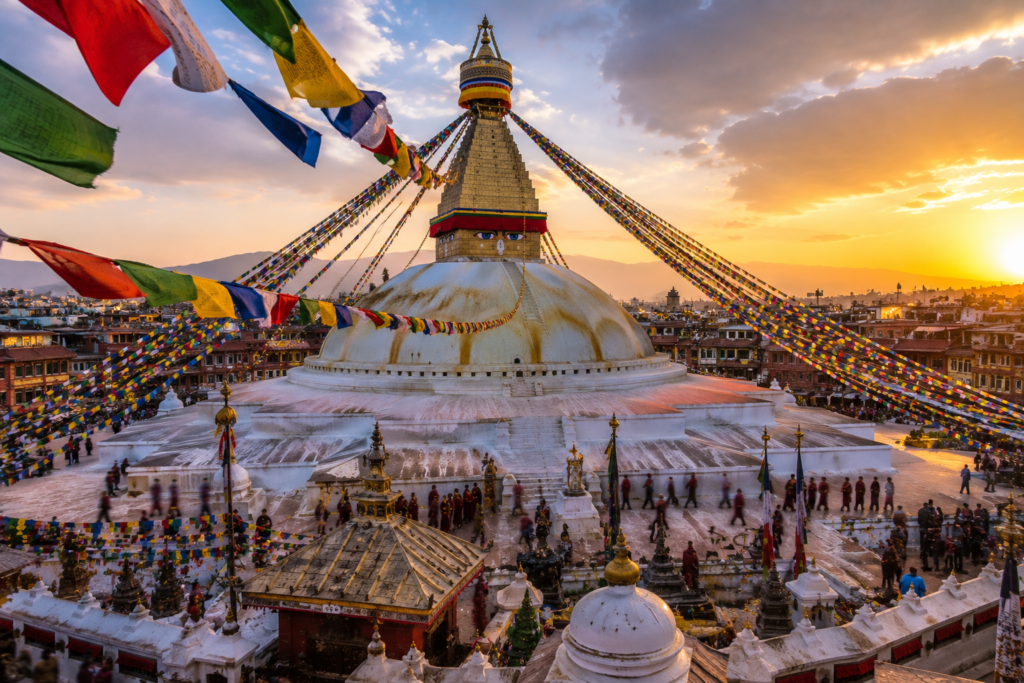
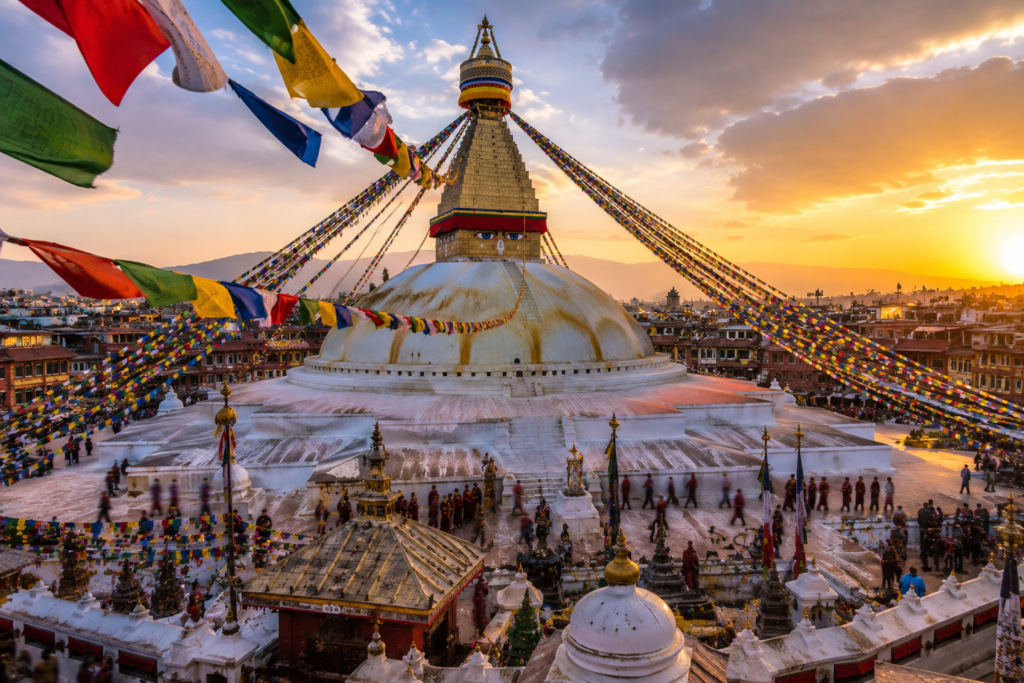
One of the most important places to visit in Kathmandu is Boudhanath Stupa. It’s one of the largest Buddhist stupas in the world and one of the most peaceful places in the city. Early morning and evening are the best times to visit, when locals walk slowly around the stupa spinning prayer wheels while monks chant nearby.
Another essential location is Swayambhunath, often called the Monkey Temple. Sitting high above the city, it offers panoramic views across Kathmandu Valley. The atmosphere here feels spiritual and calm despite the crowds. Prayer flags stretch between temples while monkeys move freely around ancient stone stairways.
Kathmandu Durbar Square is another highlight. Although parts were damaged during the 2015 earthquake, restoration continues, and the area still contains remarkable examples of traditional Nepalese architecture. The intricate wood carvings, temples, and courtyards reveal the deep cultural history of the Kathmandu Valley.
When it comes to food, Kathmandu has become far more diverse than many travelers expect. Traditional Nepali meals remain essential, but the city also offers excellent international cuisine thanks to the large trekking and travel community.
Want more scenes like this?
Download a curated pack of ultra-realistic images, perfect for wallpapers and inspiration.
For authentic Nepali food, Bhojan Griha is one of the best experiences in the city. Set inside a restored traditional building, the restaurant serves classic dishes alongside cultural performances. Dal bhat—the staple Nepali meal of rice, lentils, vegetables, and curry—is simple but incredibly satisfying after long days exploring.
OR2K in Thamel has become a favorite among travelers for its relaxed rooftop atmosphere and Middle Eastern-inspired menu. For coffee and pastries, Himalayan Java remains one of the most reliable café chains in Nepal.
Accommodation in Kathmandu ranges from budget hostels to high-end boutique hotels. Dwarika’s Hotel is widely considered the city’s most luxurious stay, filled with traditional Newari craftsmanship and architecture. It feels more like a cultural experience than a standard hotel. For something more affordable but still comfortable, Kathmandu Guest House in Thamel remains one of the city’s most iconic traveler accommodations.
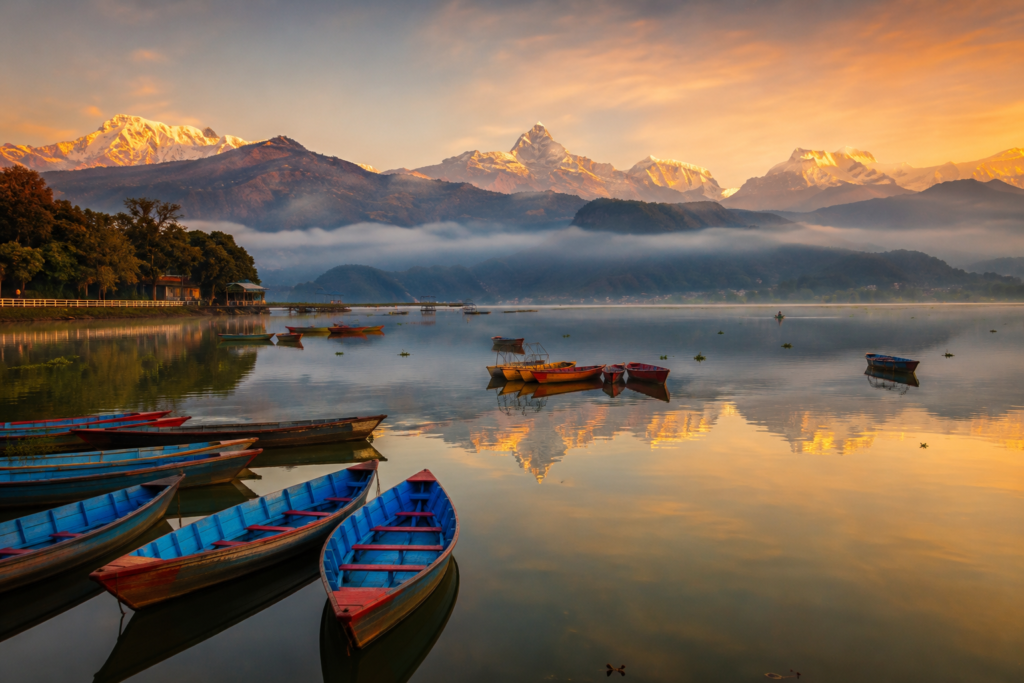
Many travelers move next to Pokhara, Nepal’s second most popular destination. If Kathmandu feels energetic and intense, Pokhara feels calm and open. Sitting beside Phewa Lake with the Annapurna mountain range visible in the distance, the city has a slower atmosphere that immediately feels more relaxing.
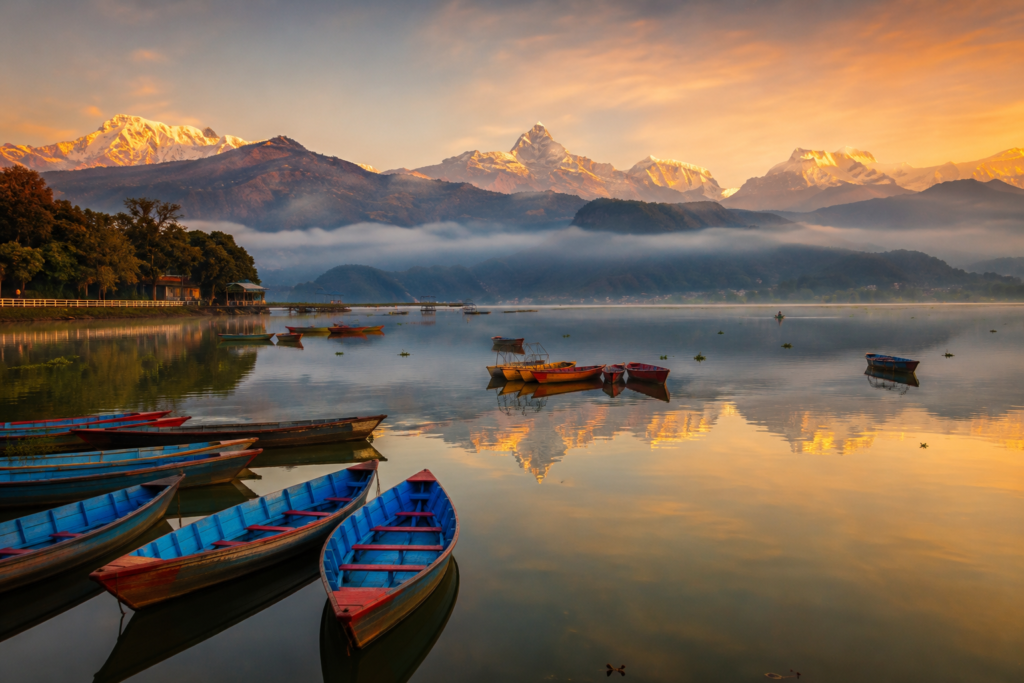
The lakeside area is the center of activity. Cafés, restaurants, yoga studios, and small hotels line the waterfront while boats drift slowly across the lake. One of the best experiences in Pokhara is simply renting a small wooden boat in the early morning and watching the mountains emerge through the mist.
Sarangkot is one of the most famous sunrise viewpoints in Nepal. Most people arrive before dawn and wait as the first light slowly illuminates the Annapurna range. On clear days, the mountains glow gold and orange as the sun rises behind them.
Adventure activities are also extremely popular in Pokhara. Paragliding above the lake and mountains has become one of the city’s signature experiences. Ziplining, ultralight flights, and white-water rafting are also widely available.
For food, Pokhara has developed a strong café culture. Fresh Elements is one of the best modern restaurants near Lakeside, offering high-quality international food. Moondance Restaurant is another longtime favorite among travelers.
Temple Tree Resort & Spa is one of Pokhara’s most comfortable luxury accommodations, while Fish Tail Lodge offers beautiful lakefront views with a quieter atmosphere.
Want more scenes like this?
Download a curated pack of ultra-realistic images, perfect for wallpapers and inspiration.
For many travelers, however, Nepal is ultimately about trekking.
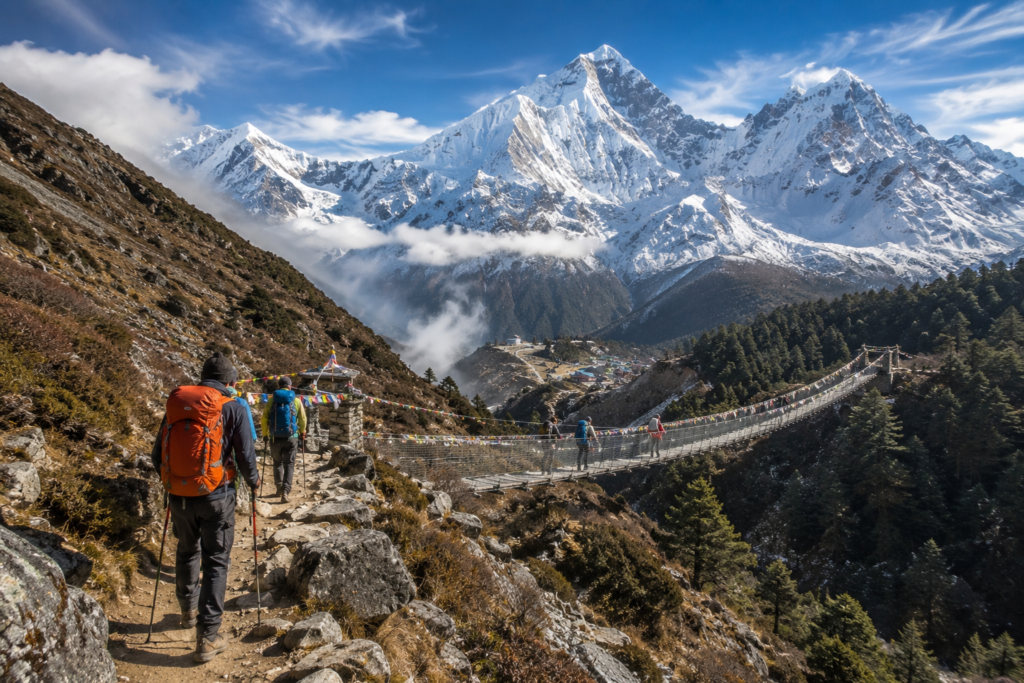
The Everest Base Camp Trek is the country’s most famous route and one of the world’s most iconic hiking experiences. The journey begins with a flight to Lukla, often considered one of the most dramatic airports on earth due to its short mountain runway.
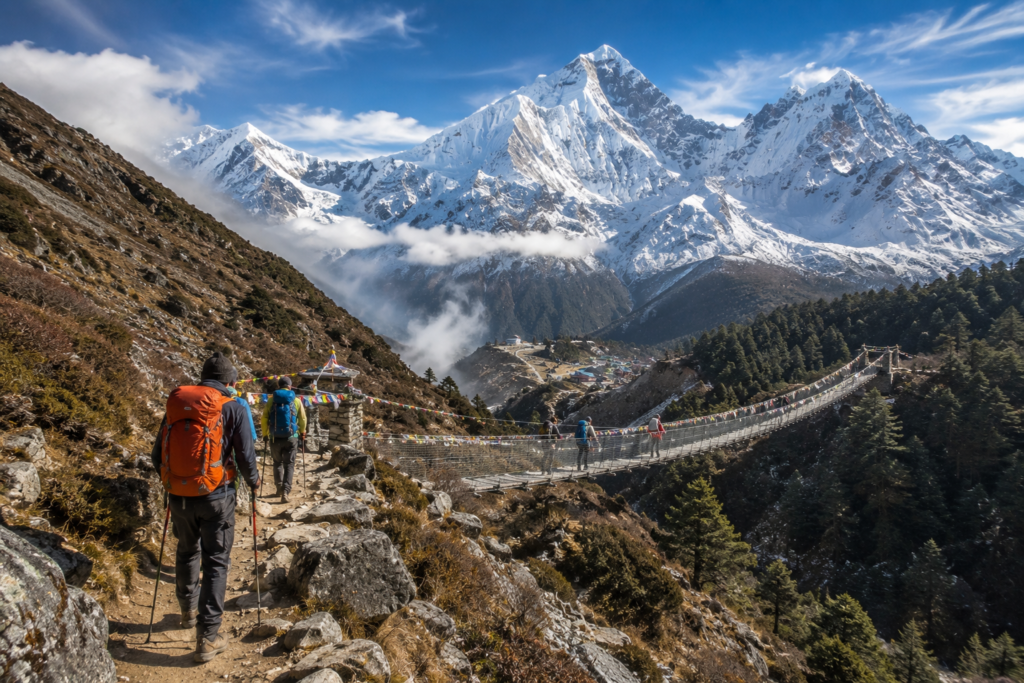
From there, the trek moves through Sherpa villages, suspension bridges, forests, and increasingly dramatic mountain scenery. Namche Bazaar acts as the main acclimatization stop and serves as the unofficial capital of the Khumbu region.
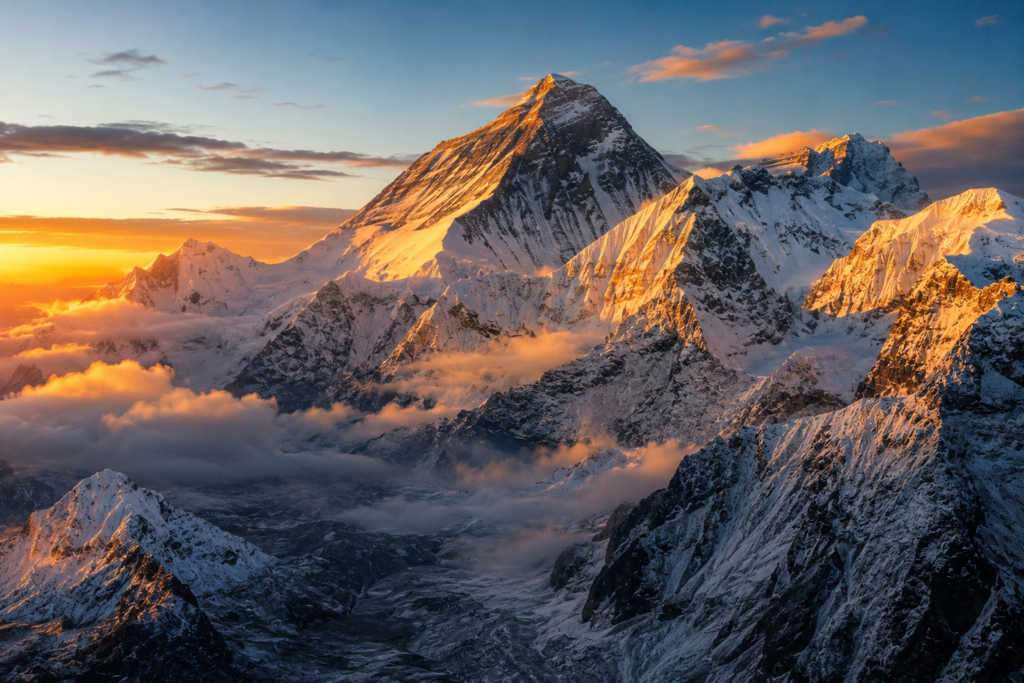
As altitude increases, the landscape becomes more barren and dramatic. Reaching Everest Base Camp itself is rewarding, but many trekkers say the real highlight is Kala Patthar, where sunrise views over Mount Everest create one of the most unforgettable scenes in the Himalayas.
Accommodation during treks usually consists of teahouses—simple mountain lodges that provide meals and basic rooms. While conditions are simple, the atmosphere becomes part of the experience.
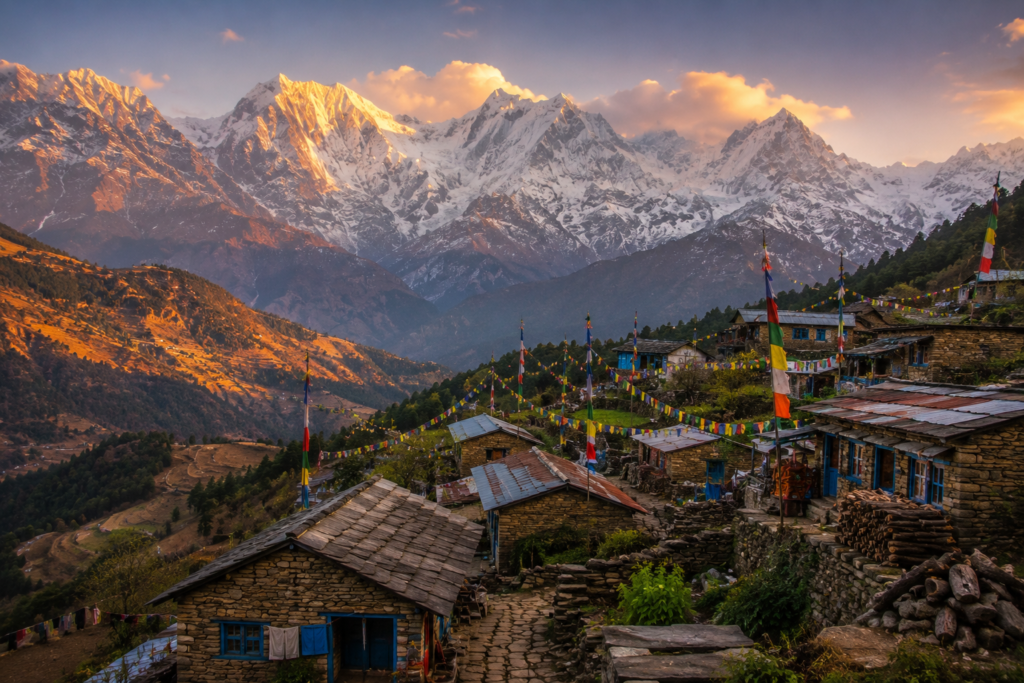
The Annapurna Circuit is another legendary trek and offers more variety in landscapes and culture than Everest Base Camp. The route moves through subtropical forests, villages, high mountain passes, and arid Himalayan terrain that begins to resemble Tibet.
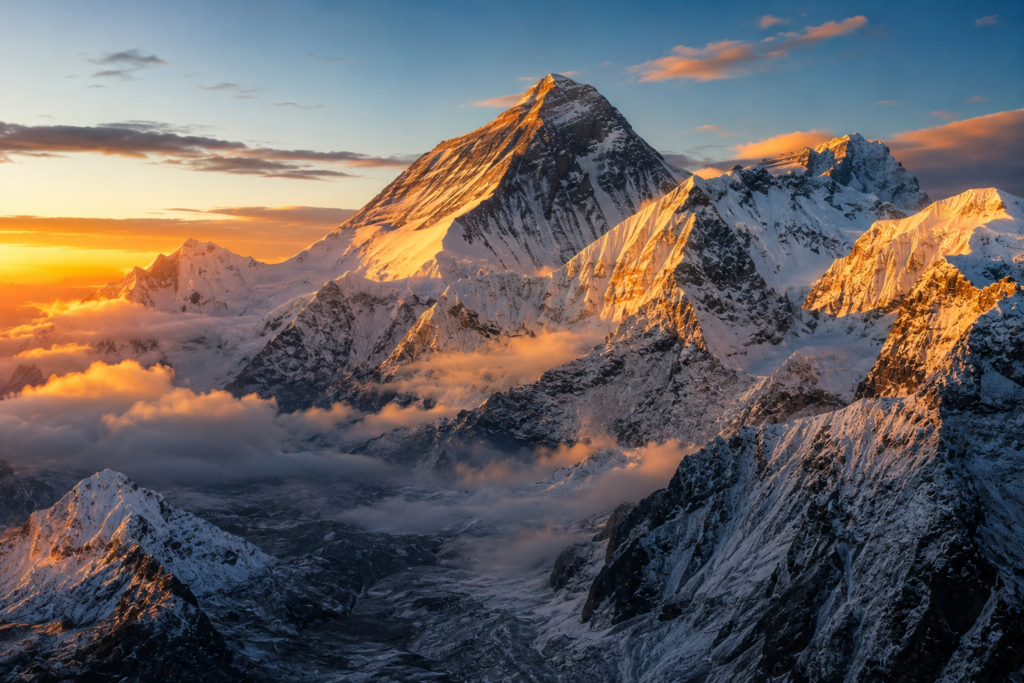
The Thorong La Pass, sitting above 5,400 meters, is one of the trek’s most challenging but rewarding sections. Crossing it at sunrise surrounded by snow-covered peaks feels surreal.
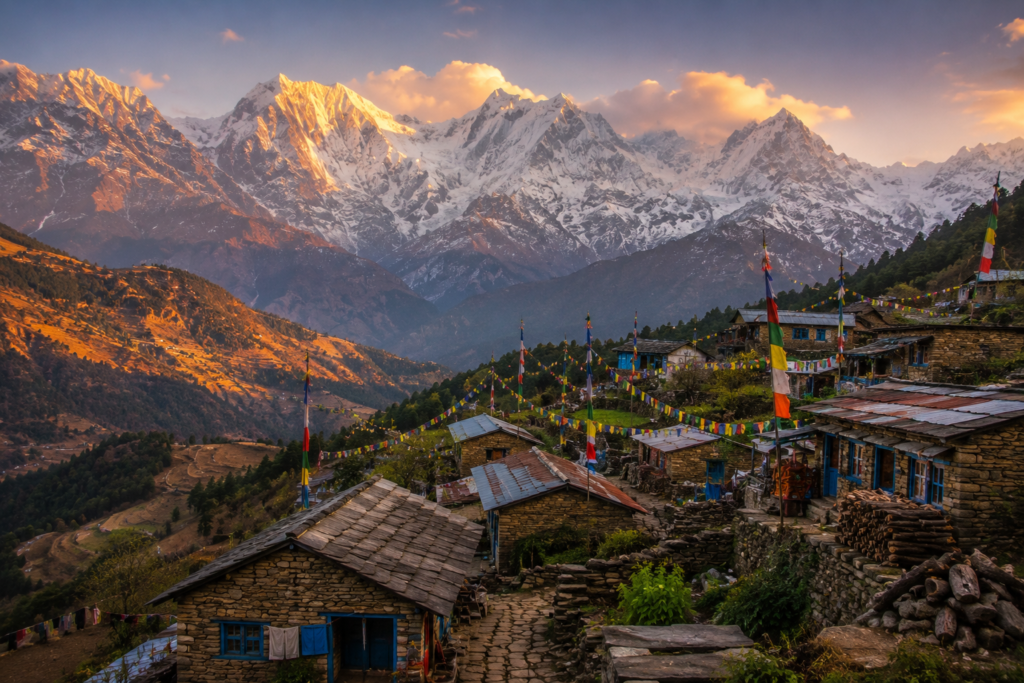
For travelers wanting shorter trekking experiences, the Poon Hill Trek is one of the best options. It’s accessible, less physically demanding, and still offers incredible Himalayan sunrise views.
Packing properly for Nepal matters more than many people realize, especially if trekking is involved. A reliable backpack becomes essential, particularly for flights, buses, and mountain trails. Something like the Bagsmart 40L Carry-On Travel Backpack works well because it keeps gear organized while remaining manageable during constant movement.
Want more scenes like this?
Download a curated pack of ultra-realistic images, perfect for wallpapers and inspiration.
Power access can also become inconsistent during treks, which is why carrying a portable charger like the Anker 10,000mAh 22.5W Power Bank becomes genuinely useful. Phones are heavily relied upon for maps, photos, and communication, especially in mountain regions.
Weather in Nepal changes significantly depending on altitude and season. Layering clothing becomes more important than packing large amounts of clothing. Using Amazon Basics Packing Cubes helps organize gear efficiently, especially when frequently moving between hotels, buses, and trekking lodges.
For travelers interested in photography or content creation, Nepal provides endless opportunities. Whether it’s mountain landscapes, monasteries, prayer flags, or city streets, the country is visually remarkable. Carrying a lightweight tripod like the Ulanzi MT-44 Extendable Vlog Tripod helps capture sunrise views and low-light photography without adding excessive weight.
Long travel days are common throughout Nepal, especially when moving between regions by road or waiting during delayed mountain flights. Noise-cancelling headphones like the Sony WH-1000XM5 Noise Cancelling Headphones make long journeys significantly more comfortable, especially on flights and buses.
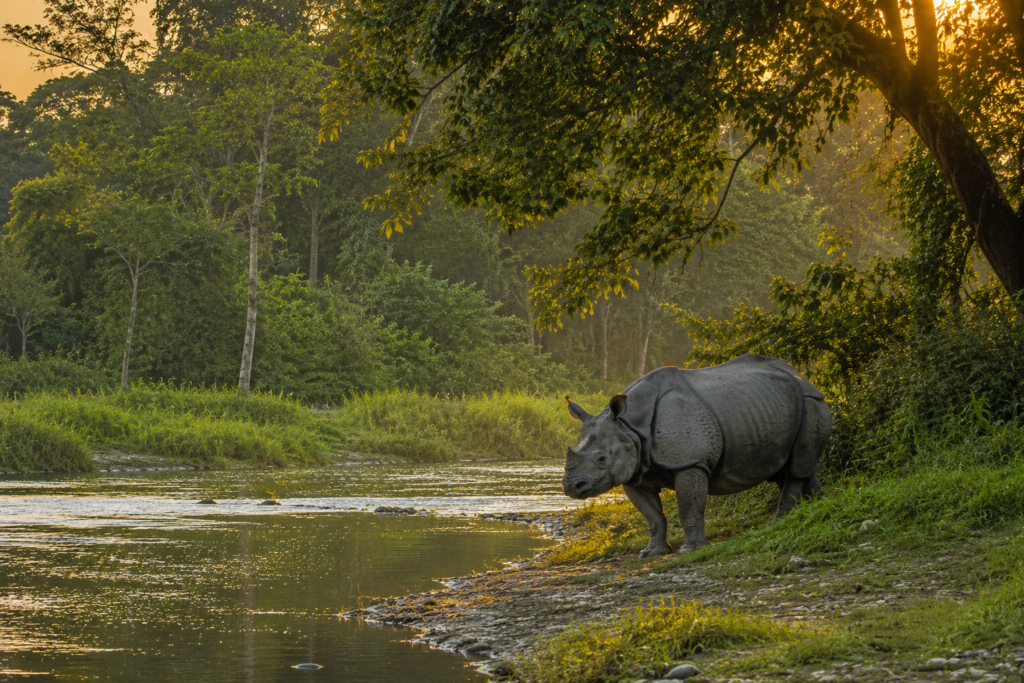
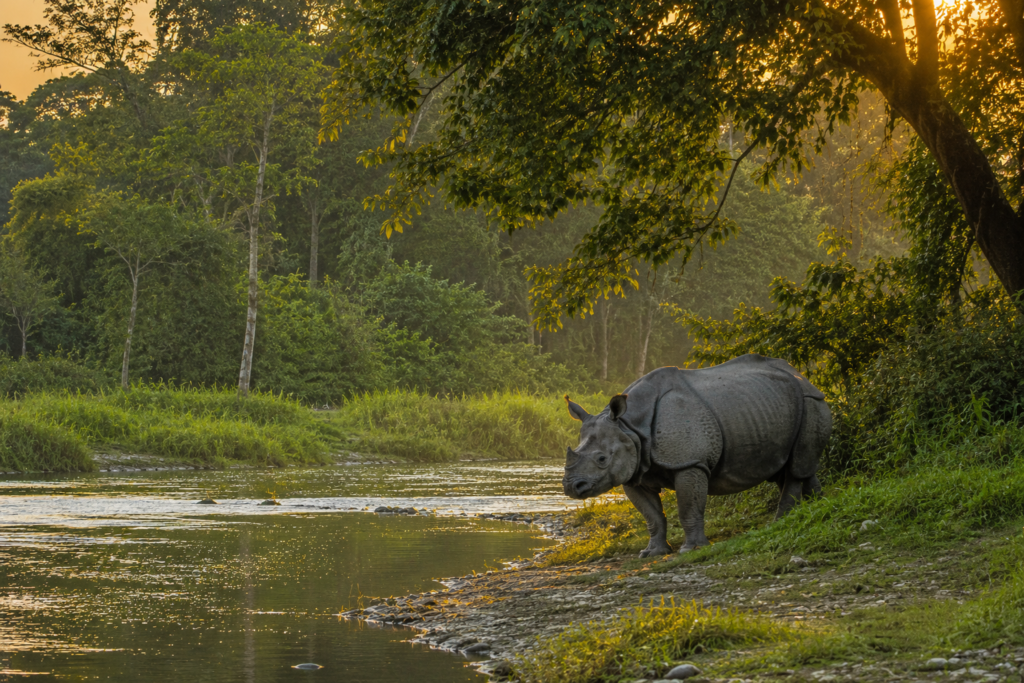
Chitwan National Park offers a completely different side of Nepal. Located in the lowland Terai region, it’s known for jungle safaris, rhinos, crocodiles, elephants, and Bengal tigers.
After spending time in the mountains, the warm jungle environment feels like entering another country entirely. Jeep safaris and canoe rides through the river systems provide opportunities to see wildlife in a natural setting.
Barahi Jungle Lodge is one of the best luxury safari accommodations in the region, combining comfort with excellent guided experiences.
Lumbini, the birthplace of Buddha, is another important destination for travelers interested in spirituality and history. The atmosphere here is much quieter than Kathmandu or Pokhara. Monasteries built by Buddhist communities from around the world create a peaceful international spiritual center.
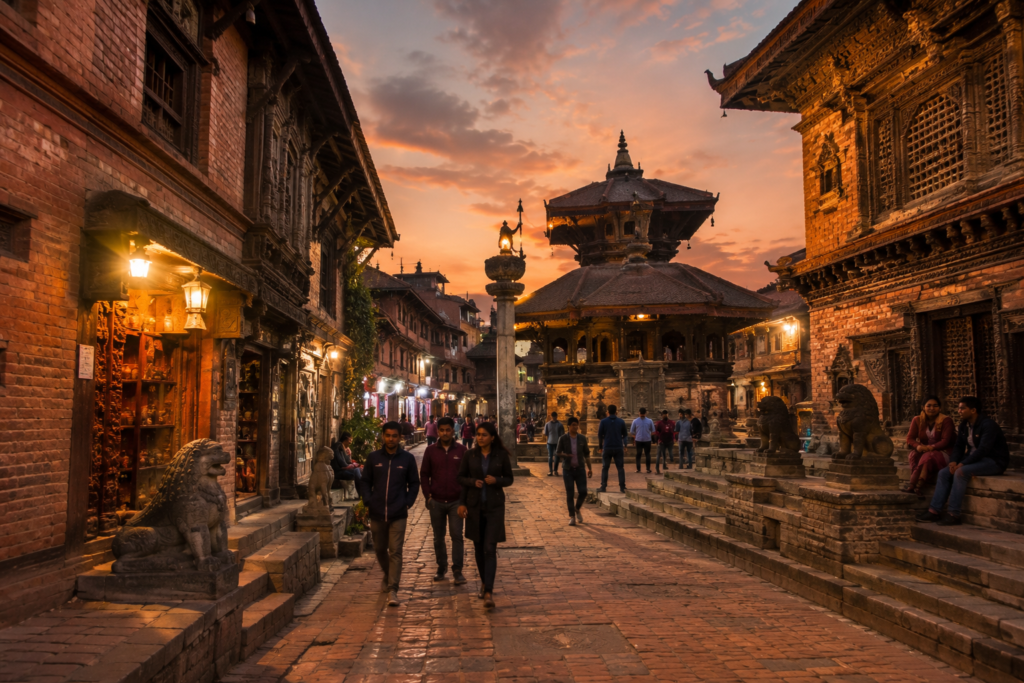
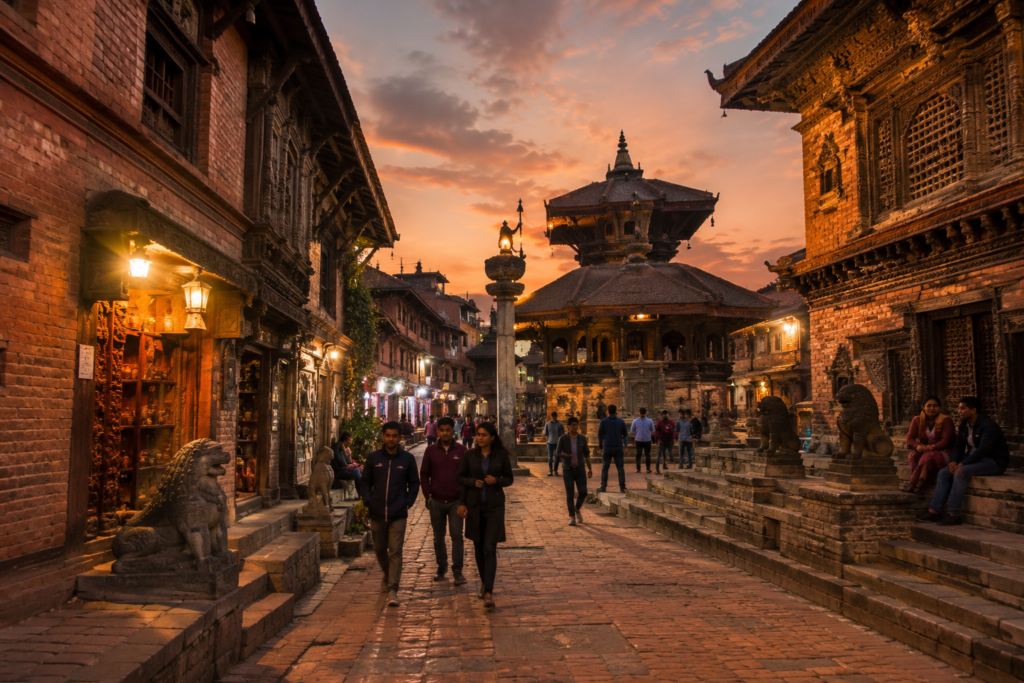
Bhaktapur is one of the best-preserved historic cities in Nepal and often becomes a favorite among visitors. Located just outside Kathmandu, it feels like stepping backward in time. Brick streets, temples, traditional wood carvings, and quiet courtyards create a completely different atmosphere from the capital.
Want more scenes like this?
Download a curated pack of ultra-realistic images, perfect for wallpapers and inspiration.
The local specialty, juju dhau (“king yogurt”), is worth trying while wandering the city.
Transportation in Nepal requires patience. Domestic flights can be delayed due to weather, roads are often rough, and journeys can take longer than expected. But moving slowly through Nepal often becomes part of the experience rather than a problem.
The best seasons to visit Nepal are spring (March to May) and autumn (September to November). Autumn is particularly popular because skies tend to be clearer, making mountain visibility better for trekking and photography.
Winter can still be beautiful, especially in Kathmandu and Pokhara, though high-altitude trekking becomes more difficult. Monsoon season brings heavy rainfall but also lush green landscapes and fewer tourists.
One of the reasons Nepal feels so memorable is because experiences here often feel more personal and less commercialized than many other major travel destinations. Conversations with locals, tea stops during treks, and quiet moments in monasteries become some of the strongest memories people take home.
Nepal isn’t about luxury in the traditional sense. It’s about perspective. The mountains make everyday concerns feel smaller. The pace encourages patience. The culture encourages humility.
Whether you come for trekking, photography, spirituality, or adventure, Nepal has a way of slowing people down and making them more aware of where they are.
And that’s ultimately why so many travelers return.
Leave a Reply