Your cart is currently empty!
Tag: geothermal wonders
-
Where the Earth Breathes Warm: A Global Journey Through Hot Springs, Onsen Traditions, and the Ancient Art of Thermal Healing
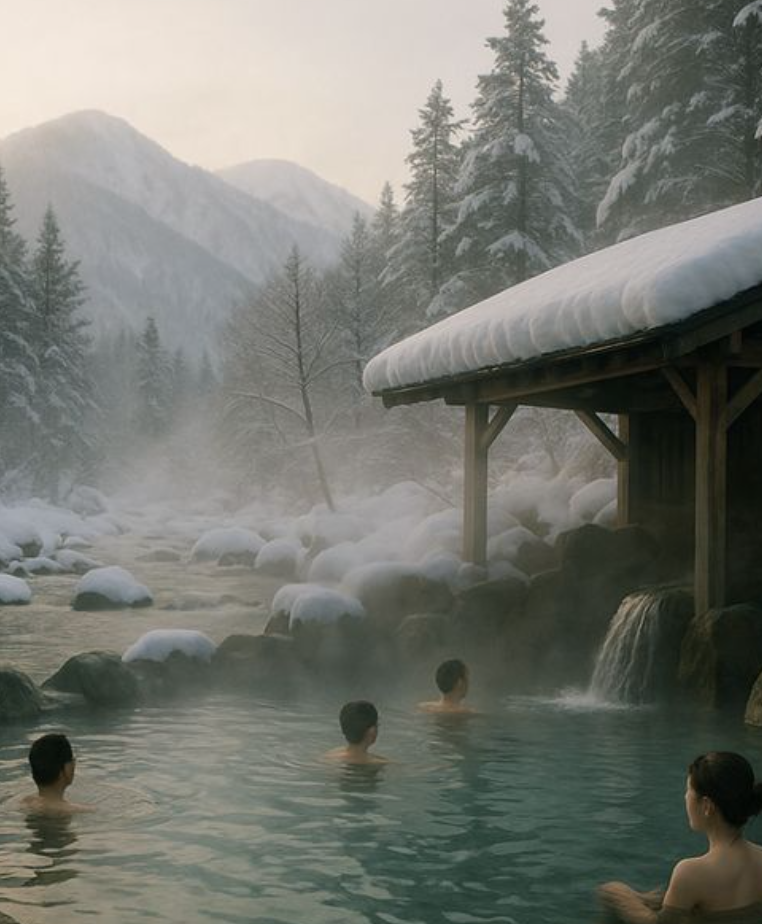
There are few experiences as quietly transformative as sinking into warm, mineral-rich water while winter presses softly against the world outside. Steam rises like a veil. Snowflakes drift down without a sound. Your breath becomes visible in the crisp air, then disappears into the stillness as if the mountains themselves are exhaling with you.
This is the magic of hot springs — places where the Earth opens its palms and offers warmth. Places where time slows, senses expand, and something ancient inside you begins to relax and remember.
Across cultures and continents, human beings have always been drawn to natural heat. From Japan’s snowy onsens to Iceland’s blue geothermal lagoons, from the stone-ringed pools of Italy’s Saturnia to the red desert springs of New Mexico, the ritual remains the same: step into nature’s warm embrace, release what you carry, and let the water reshape you.
This is a story about those waters — about how different cultures bathe, heal, connect, and find meaning in the simple, profound act of lowering oneself into the Earth’s warmth.
Part I: Winter in Japan — Entering the World of Onsen
The Stillness of Snow and Steam
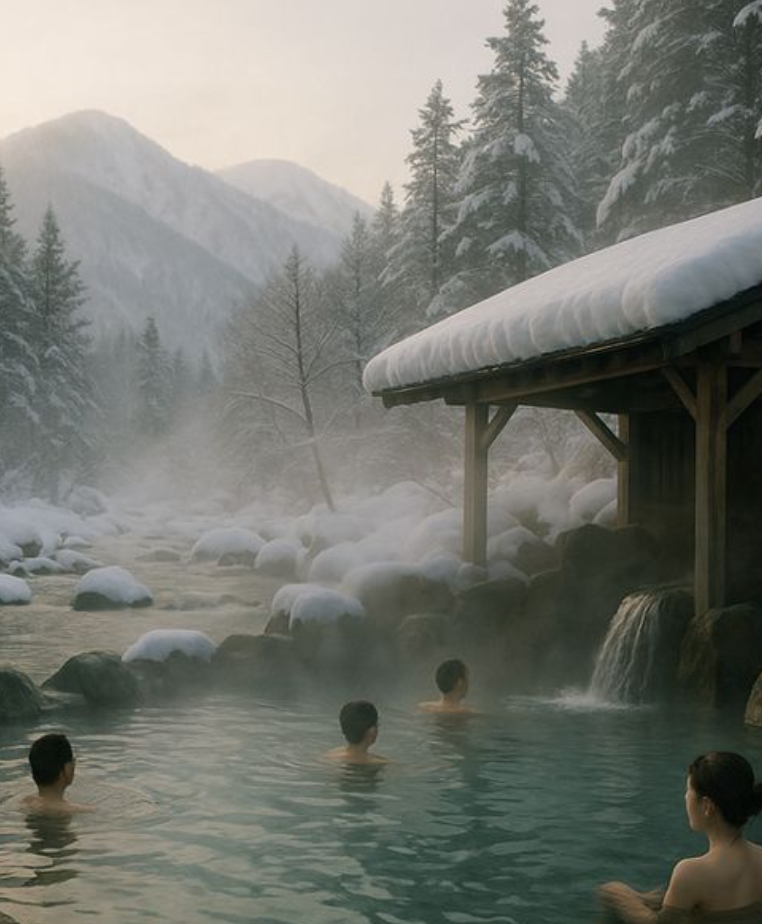
Picture this: a deep winter night in the mountains of Nagano. The forest is silent except for the soft hiss of snow landing on cedar branches. Lanterns hang gently from wooden walkways, each glowing a quiet amber. And before you, framed by drifted snow and jagged rock, lies a steaming onsen pool.
You step in.
The shock of heat against the cold air makes your breath catch. Then — a long, releasing exhale. Your muscles soften, the world falls away, and for a moment, nothing exists outside this pool of warmth and light.
Japanese onsen culture is not simply about bathing. It’s about harmony — between body and environment, between calm and chaos, between you and the land beneath your feet.
A Tradition Thousands of Years Old
Japan has over 3,000 natural hot springs, many of them active for millennia. The oldest onsens were used as far back as the 8th century and appear in some of the country’s earliest recorded texts. Ancient monks wrote about their healing effects. Samurai visited to soothe battle-worn bodies. Farmers soaked after long seasons in the fields.
Onsen waters vary dramatically depending on geography — sulfur-rich springs in volcanic regions, iron-heavy pools that stain stone a deep red, silky alkaline waters in remote valleys. Each spring has its own personality, its own history, its own healing reputation.
But beyond minerals, the real essence of onsen culture lies in its mindset.

Ritual, Purity, and Presence
Before entering the water, you cleanse yourself. You rinse slowly, mindfully, each gesture deliberate. This is not about hygiene; it’s symbolic. You’re washing off the weight of days, the noise of the outside world.
Onsen reminds you:
Leave your burdens at the edge of the pool.Then you step into warmth — a warmth that feels like returning to the beginning of the world.
In Japan, bathing is a form of meditation. It teaches stillness. It invites you to let the mind drift like steam rising into cold air.
The Role of Nature in Japanese Wellness
Onsens are rarely just pools. They are landscapes. You bathe beside waterfalls, in caves, under pine trees, at the foot of volcanic cliffs.
To soak in an onsen is to experience the concept of shinrin-yoku — forest bathing — through water. You become part of the environment instead of separate from it.
Japan reminds us:
Wellness is not something you buy. It is something you return to — something nature gives freely.The Spiritual Meaning of Water
In Shintoism, water is cleansing, sacred, alive. Natural springs are considered gifts from kami — spirits inhabiting mountains and earth. To immerse yourself is to receive a blessing, a renewal.
You step out of the onsen lighter. Calmer. Somehow more honest with yourself.
This is where our global journey begins — in warmth, in snow, in silence.
Part II: Iceland — Bathing in a Land of Fire and Ice
Steam Rising from Black Lava Fields
Fly thousands of kilometers northwest, and you arrive in a place that feels like another planet: Iceland.
Here, hot springs are everywhere — steaming rivers weaving through moss-covered valleys, turquoise pools beside frozen lakes, natural hot pots hidden among jagged lava formations.
The contrast is stunning: ice against heat, darkness against light, the fierce energy of the earth beneath a sky that glows with northern lights.
Geothermal Living: A Way of Life
In Iceland, geothermal energy powers homes, heats water, warms sidewalks in winter. Bathing in natural springs isn’t a luxury — it’s part of everyday life. Communities gather after work in local pools, sharing stories, relaxing, reconnecting.
While Japan’s onsen tradition is contemplative, Iceland’s is communal — a meeting point between nature and society.
Stories in the Steam
Travel deeper into the countryside and you find the poetic heart of Iceland’s spring culture: rugged pools tucked into mountainside crevices and warm rivers running like veins from volcanic peaks.
One of the most magical experiences is soaking in a natural riverside hot spring in the dark Icelandic night while aurora lights dance overhead. The steam blurs everything into softness, and you feel the earth churn beneath you — alive, pulsing, ancient.
Healing Through Extremes
Icelandic culture embraces the idea that contrast strengthens the spirit: cold plunges followed immediately by hot spring immersion, icy winds followed by warm waters. It mimics life — challenge followed by relief, effort followed by rest.
Geothermal bathing becomes a metaphor:
Even in the coldest environments, warmth is always waiting beneath the surface.
Part III: Italy’s Saturnia — Ancient Heat and Roman Myth
The Milk-Blue Pools of Tuscany
Travel southeast to Italy, where the landscape softens and the light becomes golden. In southern Tuscany lies Saturnia — a series of terraced pools flowing with turquoise geothermal water.
Mineral-rich steam rises into the countryside. Rolling hills stretch beyond the horizon. Cypress trees stand like sentinels. The scent of sulfur lingers in the warm air.
Unlike the quiet reverence of Japan or the communal relaxation of Iceland, Saturnia feels joyful. Playful. Alive.
A Legend Born of Gods
According to Roman mythology, the Saturnia springs were created when the god Saturn threw a lightning bolt to earth, splitting the land and releasing underground waters. He intended the springs as a gift — a place where humans could find peace and harmony.
For thousands of years, travelers, nobles, farmers, and monks have visited these waters to soak, heal, and socialize.
Thermal Baths in Roman Culture
Ancient Romans were masters of bathing culture. Public baths were social hubs — places to relax, converse, debate, and conduct business. Thermal springs were particularly revered for their health benefits and spiritual importance.
Saturnia, with its naturally warm flow, became one of the most beloved.
A Ritual of Ease
Today, the experience feels timeless:
You step from pool to pool, letting the water’s warmth circulate through your body. You find a quiet spot by a rock, listen to the waterfall’s steady hum, and let the Tuscan sun warm your face.Here, bathing is leisure — a reminder that slowing down is an art form.
Italy teaches us:
Comfort is not indulgence; it is nourishment.
Part IV: New Zealand, Turkey, Morocco & Beyond — The World’s Secret Springs
New Zealand — Māori Thermal Traditions
In Aotearoa (New Zealand), geothermal springs hold deep cultural significance for Māori communities. Natural pools were used for healing, cooking, and ceremonial rites. Water was considered both practical and sacred — a connector between physical and spiritual realms.
Rotorua, a region where steam vents erupt from the earth and geysers rumble, remains one of the world’s most active geothermal areas. Bathe here and you feel the planet’s pulse.
Turkey — The Cotton Castles of Pamukkale
Pamukkale’s terraces, formed from white mineral deposits, look like frozen waterfalls. Within each terrace, warm spring water gathers, shimmering under the sun.
These “cotton castles” were used for millennia by Greeks and Romans, who believed the water healed ailments and restored vitality. Bathing here feels like stepping into a dream — white, soft, surreal.
Morocco — Desert Springs Under Starry Skies
In the Moroccan Sahara, scattered oases hide natural springs warmed by geological layers beneath the sand. Here, bathing is both communal and essential — a way to cool, hydrate, and restore during desert journeys.
At night, under the vast desert sky, warm springs become sanctuaries of story, song, and connection.
United States — Red Rocks and Quiet Healing
In the American Southwest — Colorado, New Mexico, Arizona — mineral springs bubble up beside red canyons and desert plateaus. Indigenous communities used these waters for ceremonial cleansing, healing, and communal gathering.
Today, travelers soak beneath broad desert skies, watching stars blink to life as steam curls into darkness.
Part V: The Universal Meaning of Hot Springs
A Shared Human Instinct
What unites Japan’s snowy onsens, Iceland’s volcanic pools, Italy’s ancient baths, and New Zealand’s steam-covered valleys?
A shared longing for warmth.
A shared belief in nature’s ability to comfort.
A shared instinct to gather, reflect, and renew.Across cultures, hot springs symbolize the same things:
- healing,
- connection,
- rebirth,
- a return to the essential.
The Sensory Soul of Thermal Bathing
Regardless of where you are, the experience engages every sense:
- The sound of water trickling.
- The feel of heat seeping into bone.
- The scent of minerals or forest air.
- The glow of lanterns, auroras, or desert stars.
- The taste of crisp winter or salty steam.
To bathe in natural hot water is to be fully, completely present.
Mindful Travel Through Water
Hot springs remind travelers of a truth often forgotten in modern travel:
You don’t have to do much to experience a place.
You can simply be in it.You can sit in a pool carved by nature itself and feel a country’s heartbeat. Its climate. Its culture. Its quiet wisdom.
Thermal bathing becomes an act of mindful travel — a way to slow down, reconnect with the body, and listen to the landscape.
The Earth as Caregiver
In every culture, hot springs symbolize something profoundly hopeful: the Earth, despite everything, continues to offer warmth.
When you soak in a spring, you are held by the planet. Sustained by it. Healed by it.
Part VI: Reflections at the Edge of the Steam
Imagine returning to that snowy onsen.
The forest is still quiet. Steam rises softly. Lanterns flicker. Somewhere in the distance, a river murmurs beneath ice.
You sink deeper into the water, letting warmth spread slowly, like light entering a room. Around you, snow continues to fall, each flake melting instantly when it touches the surface of the pool.
As you watch the shapes of mountains blur through steam, one truth settles inside you:
Hot springs are reminders that comfort can be found even in the coldest places — both in the world and within ourselves.
Every culture expresses this truth differently, beautifully, uniquely.
But the message remains the same:Slow down.
Let warmth in.
Let the earth hold you.
Be present in your own body.And remember that you carry these waters with you — traces of comfort, memory, and meaning — long after you leave the pool.