Your cart is currently empty!
Tag: cultural architecture stories
-
Cities in Stone and Steel: A Journey Through the World’s Most Iconic Architectural Landmarks
There are places we know long before we ever visit them — shapes we can sketch from memory, silhouettes that stir something inside us even if we’ve only ever seen them in photographs. Landmarks that feel like old friends. Buildings that become symbols of cities, countries, entire eras.
And sometimes, all it takes is a single glance.
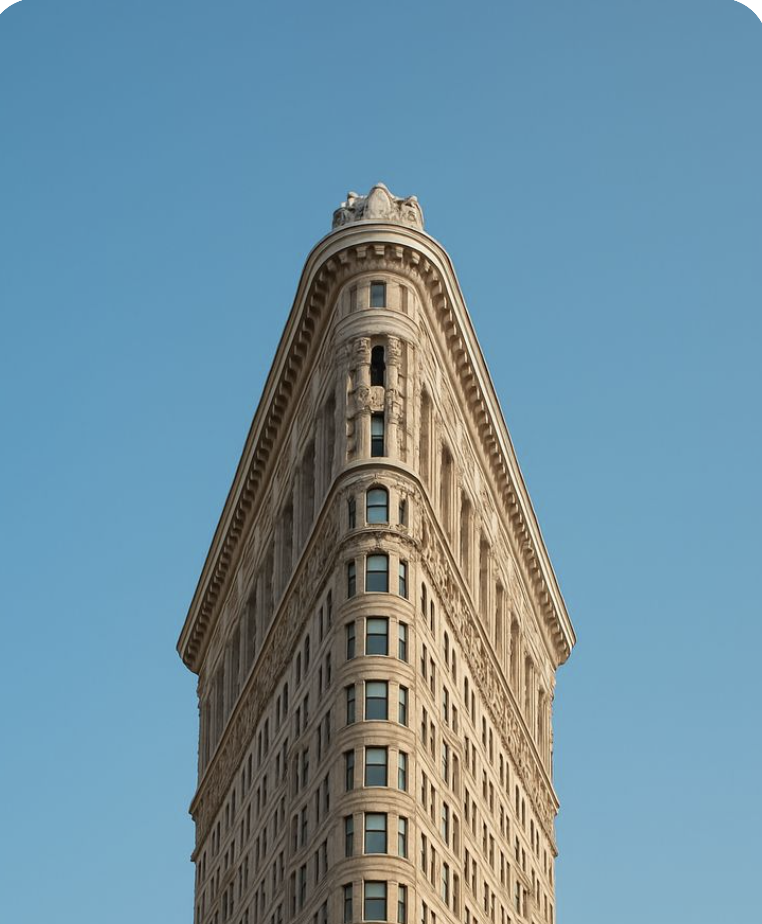
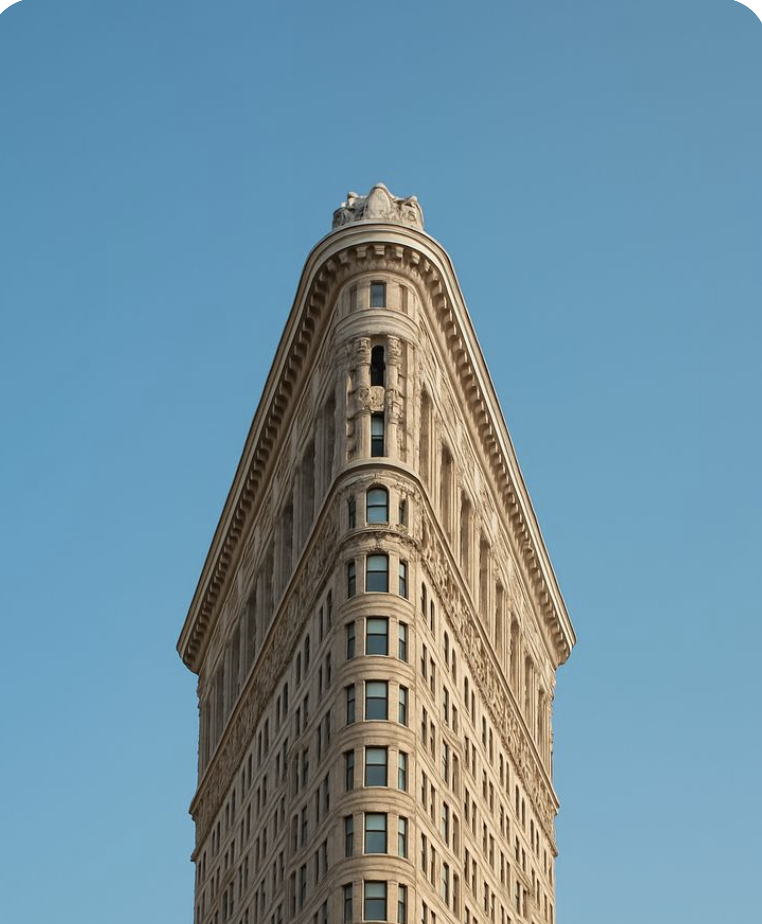
Imagine standing at the corner of Fifth Avenue and Broadway on a crisp New York morning. The light has that golden, early-day clarity that makes everything seem cinematic. Cars hum past. People flow along the sidewalks. And then you look up — and there it is: the Flatiron Building.
It’s as if the city suddenly gathers itself into a single shape. Thin. Triangular. Elegant in its simplicity. A slice of limestone and steel rising into the sky, anchoring a crossroads of movement and life. For more than a century, travelers have stopped here — letting their footsteps slow, their eyes lift, their minds wander.
Landmarks do this to us.
They place us.
They move us.
They become the way we pin a memory to a place.This is a journey into the world’s most iconic architectural landmarks — from the Flatiron to the Eiffel Tower, from the Sydney Opera House to the Parthenon — and an exploration of why certain structures become more than buildings. Why they become emblems. Why they shape how we experience a city. And why, long after we’ve left, we keep returning to them in memory, photographs, and wanderlust.
Part I: The Flatiron — New York’s Unexpected Icon
A Building That Shouldn’t Have Worked
When the Flatiron Building was completed in 1902, people weren’t sure it would survive. Its triangular shape was radically unusual, and critics feared that the structure wouldn’t withstand New York’s famously strong winds.
But it did more than survive — it thrived.
Designed by Daniel Burnham, the Flatiron was an early steel-frame skyscraper, standing proudly at 22 stories tall when most buildings barely reached 10. Its narrowest corner measures less than two meters wide, giving it the unmistakable look of a prow cutting through the streets.
Its form was not arbitrary. The building sits on a triangular plot at the intersection of Broadway, Fifth Avenue, and 23rd Street — a chaotic crossroads that demanded creativity instead of conformity. Burnham leaned into the challenge and created something that looked improbable, almost playful.
The result? A building that instantly captured the world’s imagination.
A New Kind of New York
The Flatiron symbolized the early 20th century optimism of New York — a city leaping upward, shedding limits, embracing speed and innovation. Its crisp Beaux-Arts façade, with its decorative limestone details, showed that a skyscraper didn’t have to be cold or mechanical.
It could be elegant.
It could be expressive.
It could have personality.The Flatiron was photographed endlessly — not just because of its design, but because of the way it shaped the experience of the city around it. The wind that curled around its pointed edge, the shadows it cast across Madison Square Park, the way sunlight danced along its limestone skin.
It became one of those places where New Yorkers — and travelers — learned to fall in love with the city.
Architecture as Identity
Some buildings take decades to become beloved. The Flatiron took days. It was instantly iconic, instantly symbolic, instantly “New York.”
To see the Flatiron is to understand something about the city:
That it embraces eccentricity.
That it celebrates perspective.
That its beauty lies not in order, but in energy.And so our journey begins here, with a building that taught the world a truth about landmark architecture:
Sometimes the most iconic structures are the ones that dare to be themselves.
Part II: When Buildings Become Symbols
The Shape of a City’s Soul
Why do certain structures become icons while others fade quietly into the skyline?
It isn’t only about beauty.
It isn’t only about size.
It isn’t even about fame.Iconic landmarks capture something essential about their cities — history, culture, ambition, identity. They become shorthand for a feeling.
The Eiffel Tower symbolizes romance and French flair.
The Sydney Opera House symbolizes creativity and coastal freedom.
The Taj Mahal symbolizes devotion and timeless love.
The Burj Khalifa symbolizes ambition without ceiling.
The Parthenon symbolizes philosophical dreaming and ancient legacy.Landmarks are emotional anchors — places where travelers experience a city at its most distilled.
The Power of Shape
Think of the Eiffel Tower. You only need its outline — that iron lattice curve blooming toward the sky — to instantly know the place.
Architecture becomes symbolic when it becomes unforgettable.
A perfect arc.
A daring triangle.
A symmetrical dome.
A soaring spire.
A wave of white sails.
A ring of stone pillars.These shapes live in our imagination long before we ever stand beneath them.
Part III: Paris — The Eiffel Tower and the Art of Becoming Iconic
A Tower That Was Almost Temporary
When Gustave Eiffel built his tower for the 1889 World’s Fair, Parisians hated it. Critics called it an eyesore, a monstrosity, a “metal smokestack” ruining the classical skyline.
But as the tower rose, something changed.
People began to feel something — awe, curiosity, pride.What was once controversial became beloved.
And over the decades, the Eiffel Tower transformed into Paris’s beating heart — a place where travelers propose, dream, photograph, picnic, linger, and watch the city glow.
Engineering as Elegance
The Eiffel Tower is beauty born from physics — a structure that is strong because it is delicate. Its iron lattice reduces wind resistance. Its tapered silhouette guides the eye upward. Its transparency allows sunlight to pour through.
It is both industrial and poetic — a perfect metaphor for Paris itself.
The Symbol of Romance
Why is the Eiffel Tower so romantic?
Not because of its shape alone.
But because of what it represents:Possibility.
Perspective.
The spark of wonder.Standing beneath it, Paris feels infinite — a city that invites you to dream a little bigger.
Part IV: Sydney — Where Architecture Becomes Sculpture
The Opera House That Changed a Coastline
If the Eiffel Tower is a symbol of metal and sky, the Sydney Opera House is a symbol of water and freedom.
Designed by Jørn Utzon, the structure is composed of interlocking white shells — like sails catching the wind, or waves breaking against the harbor. Its curves echo nature. Its boldness echoes Australia’s spirit.
When you see the Opera House, you know where you are.
Engineering Meets Vision
The structure was famously difficult to build. The shells were mathematically complex. Construction ran years over schedule. Engineers had to invent new methods just to bring it to life.
But that’s what iconic architecture does — it asks the impossible, then becomes the proof that creativity and technology can meet.
Sculpture You Can Enter
The Sydney Opera House is not just seen; it is experienced. You walk inside its soaring halls, touch its tiled exterior, feel the harbor breeze along its edges. The building becomes a character — part of your memory of Australia.
This is the magic of architecture: when it becomes a sensory experience, it becomes unforgettable.
Part V: Rome — Classical Grandeur and the Architecture of Time
The Colosseum: A Monument of Echoing Voices
In Rome, architecture is not just design — it is history alive and breathing. The Colosseum, with its rings of arches and monumental presence, tells stories from two thousand years ago.
You stand inside its ancient skeleton and hear echoes: of crowds, of gladiators, of emperors and everyday Romans.
The Colosseum reminds us that architecture can hold memory — not just of one era, but of many.
The Pantheon: A Lesson in Perfect Geometry
Step inside the Pantheon and you experience one of the greatest architectural achievements in human history. Its dome — once the largest in the world — feels effortless, floating above you like an open sky.
The oculus lets in a perfect circle of sunlight, shifting across the marble floor as the day passes.
The Pantheon is a reminder of what architecture can do:
Transport us. Astonish us. Connect us across time.Classical vs Modern
Classical architecture uses ornament, proportion, and symbolism to communicate meaning. Modernism uses simplicity, clarity, and form.
Both approaches shape how we experience a place — one through grandeur, the other through purity.
Part VI: Minimalist Modernism — When Simplicity Becomes Iconic
The Beauty of Less
Minimalism in architecture strips away excess to reveal essence. Think of:
- The sleek lines of Barcelona Pavilion
- The glass-and-steel transparency of the Louvre Pyramid
- The geometric serenity of Tadao Ando’s Church of the Light
- The quietude of Japanese modern homes
These buildings are iconic not because they overwhelm, but because they whisper.
Light as a Material
Modernism often plays with light — letting it enter, reflect, expand. Glass walls, open plans, simple surfaces. The experience becomes one of clarity.
While classical architecture impresses through complexity, modernism impresses through calm.
Both become iconic in their own way.
Part VII: How Architecture Shapes Experience
Buildings as Emotional Landscapes
Architecture is about feeling as much as function.
Standing beneath the Eiffel Tower feels hopeful.
Walking along the Brooklyn Bridge feels expansive.
Entering the Sagrada Família feels spiritual.
Standing inside the Taj Mahal feels intimate.
Approaching the Sydney Opera House feels freeing.Landmarks shape emotion — and emotion is what makes travel memorable.
Photography and Perspective

Iconic structures become part of our visual culture:
- silhouettes at sunset
- reflections in water
- skylines from afar
- textures up close
Photography captures not just the building, but the feeling of being there.
Memory Anchors in Travel
We associate cities with the landmarks that moved us most.
Paris becomes Eiffel.
Rome becomes Colosseum.
Sydney becomes Opera House.
New York becomes Flatiron — or the Chrysler Building, the Empire State, the new World Trade Center.Architecture becomes the way we carry a place home with us.
Part VIII: Wanderlust and the Architecture of Dreams
Why We Travel Toward Landmarks
Landmarks are promises:
That a place is unique.
That a city holds stories.
That beauty can be built, not just found.
That human creativity has no borders.We chase buildings because they help us imagine ourselves inside a different life, a different moment, a different world.
The Global Language of Landmarks
Whether minimalist or ornate, ancient or futuristic, landmarks speak a language beyond words:
shape, shadow, scale, material, light.
You can feel a landmark even if you don’t understand its history. But when you learn its story, it becomes even richer.
Conclusion: The Memory of Cities
Think again of the Flatiron.
The way it rises like a ship’s bow slicing through Manhattan wind.
The way it catches morning light.
The way people stop — even locals — to look up, pause, breathe.This is the power of iconic architecture.
Buildings become more than structures.
They become symbols.
They become teachers.
They become the way we understand a city’s soul.And in the end, they become part of us — woven into our photographs, our travel journals, our dreams of where we might go next.
The world’s landmarks remind us that cities, like people, express themselves through their most iconic shapes — and that every traveler carries those shapes forward, turning architecture into memory, meaning, and wanderlust.