Your cart is currently empty!
Author: Natural Universe Co.
-
Golden Hour in Motion: The Timeless Beauty of Grand Central Terminal
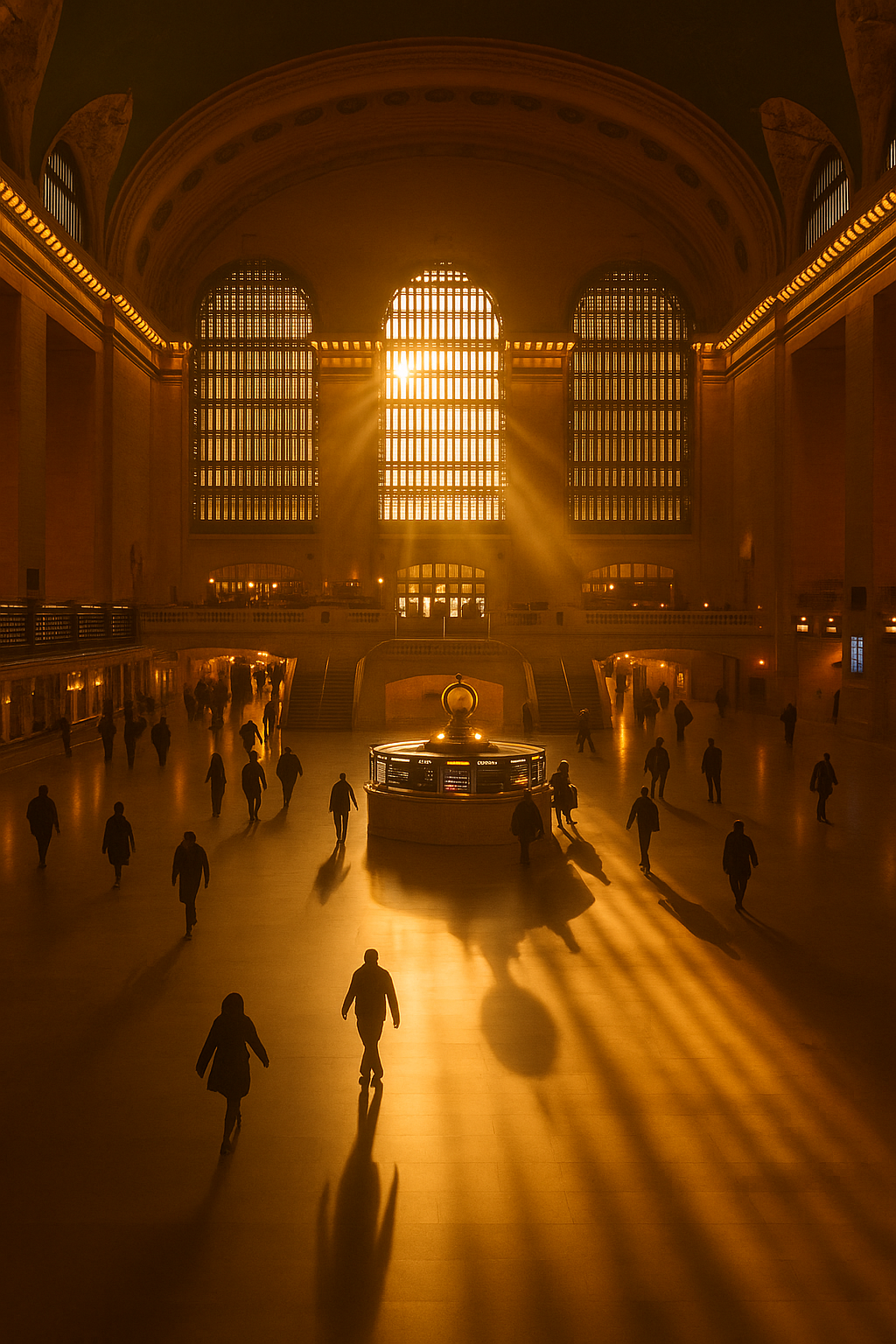
There are moments in New York City when time seems to pause — fleeting instants when light, space, and movement align to create something extraordinary. The image before you captures one such moment inside Grand Central Terminal, that majestic temple of motion and memory at the heart of Manhattan.
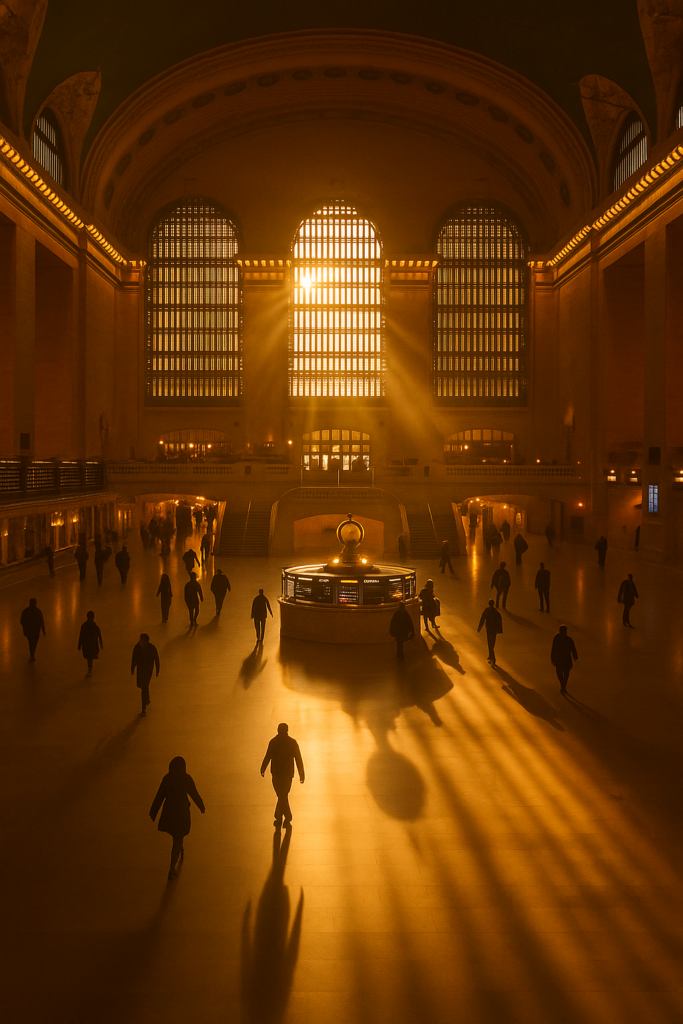
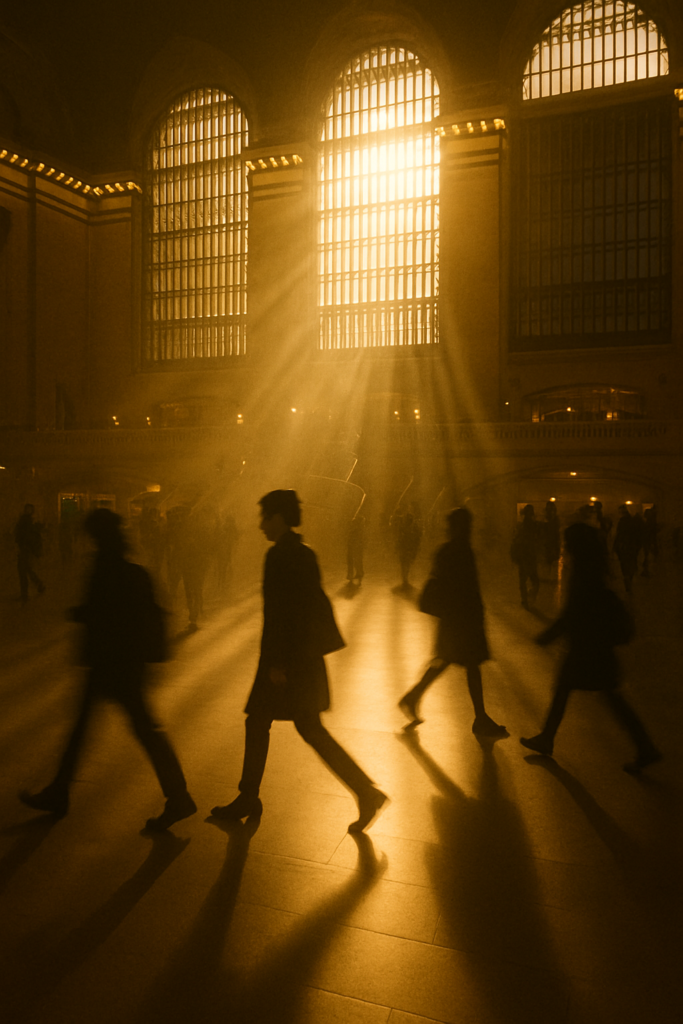
Golden sunlight floods through towering arched windows, cutting across the vast concourse in luminous beams. Dust particles shimmer like tiny stars suspended in air. Shadows stretch long and elegant across the marble floor, tracing the quiet rhythm of human movement — travelers, commuters, dreamers all passing through, unaware of how beautifully the light has chosen to frame them.
This isn’t just a photograph of a train station. It’s a portrait of a city’s soul — one that moves endlessly forward, yet somehow finds grace in the in-between.
A Cathedral for Commuters
Grand Central Terminal is often called the cathedral of transportation, and for good reason. When it opened in 1913, it wasn’t merely a hub for trains — it was a vision of what progress could look like when infused with art. Every arch, every marble surface, every curve of the ceiling was designed to inspire awe.
In the early 20th century, rail was more than travel — it was adventure, ambition, and connection. New York, the beating heart of modern America, deserved a gateway that felt both monumental and human. The architects, Reed & Stem and Warren & Wetmore, created exactly that: a masterpiece of Beaux-Arts design where engineering and emotion coexist.
Look at the image again. The grand windows stretch upward like stained glass in a cathedral. The light pours through not as decoration but as revelation. Commuters walking beneath those beams resemble pilgrims — not in a religious sense, but in the quiet reverence of people moving through something larger than themselves.
Here, even the ordinary becomes sacred. A man checking his watch, a woman walking briskly to her train, a couple pausing by the information booth — all bathed in the same golden light, all part of the same living artwork.
Light as Time’s Companion
Every photographer who has stood inside Grand Central knows this truth: the light is everything.
The terminal’s famous windows face east, so each morning, sunlight streams through in perfect alignment with the cavernous hall. The effect is pure magic — a celestial performance staged daily for anyone who happens to look up.
In this photo, the sun is low — perhaps early morning or late afternoon — when its rays stretch longest, turning the air into liquid gold. The beams are tangible, like ribbons of light weaving between people. They create both intimacy and grandeur: the space feels infinite, yet every figure feels seen.
Light, in Grand Central, doesn’t just illuminate; it narrates. It traces time, softens stone, and reveals the human scale of this monumental place. It’s as if the building itself breathes with the rhythm of the day — awakening with dawn, glowing at noon, and resting at dusk.
There’s something deeply human in that.
The Heartbeat of New York
Step into Grand Central at any hour, and you feel the city’s pulse. The constant movement, the echo of footsteps, the low hum of conversation, the rhythmic voice over the loudspeakers announcing departures — it’s the soundtrack of New York in motion.
And yet, in this photograph, there’s calm. The light transforms bustle into ballet. People glide through the frame rather than rush. The shadows elongate their forms, turning commuters into silhouettes that feel both anonymous and eternal.
That’s the paradox of Grand Central — it’s chaotic and serene at once. It’s where millions pass without noticing, yet each person adds something to its living story. The architecture absorbs human movement like a great heart — pumping trains, time, and emotion through its marble veins.
Every day, about 750,000 people pass through this hall. Yet somehow, even in that sea of motion, moments like this emerge — when stillness and beauty overtake speed.
Architecture That Breathes
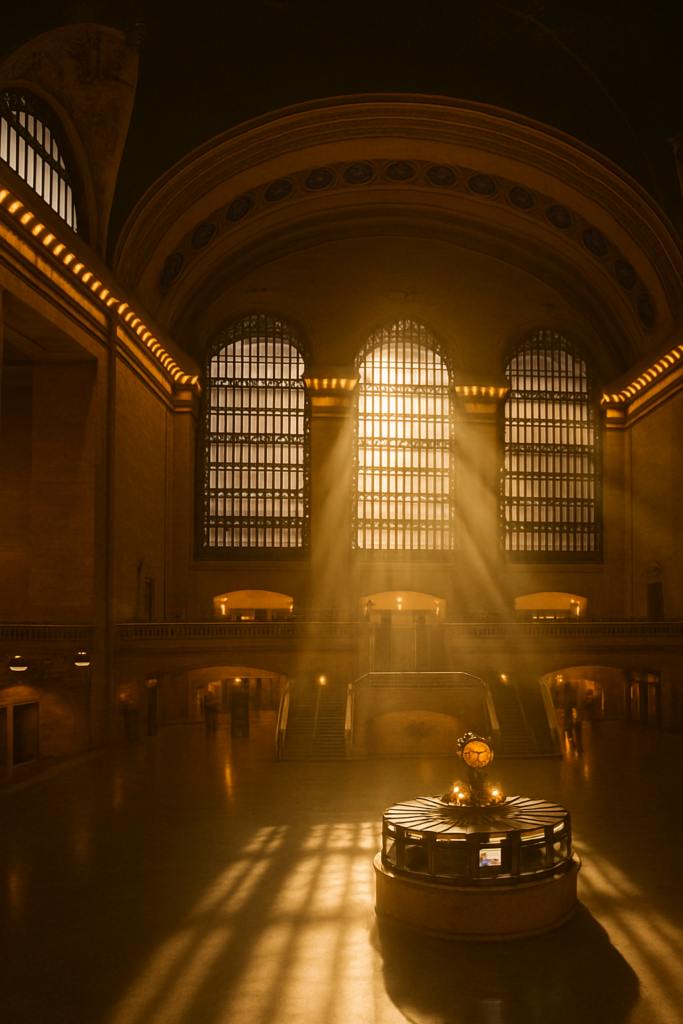
Grand Central is a study in harmony. The soaring arches, the celestial ceiling mural, the grand staircase, and the clock at the center — all arranged with mathematical precision and artistic intuition.
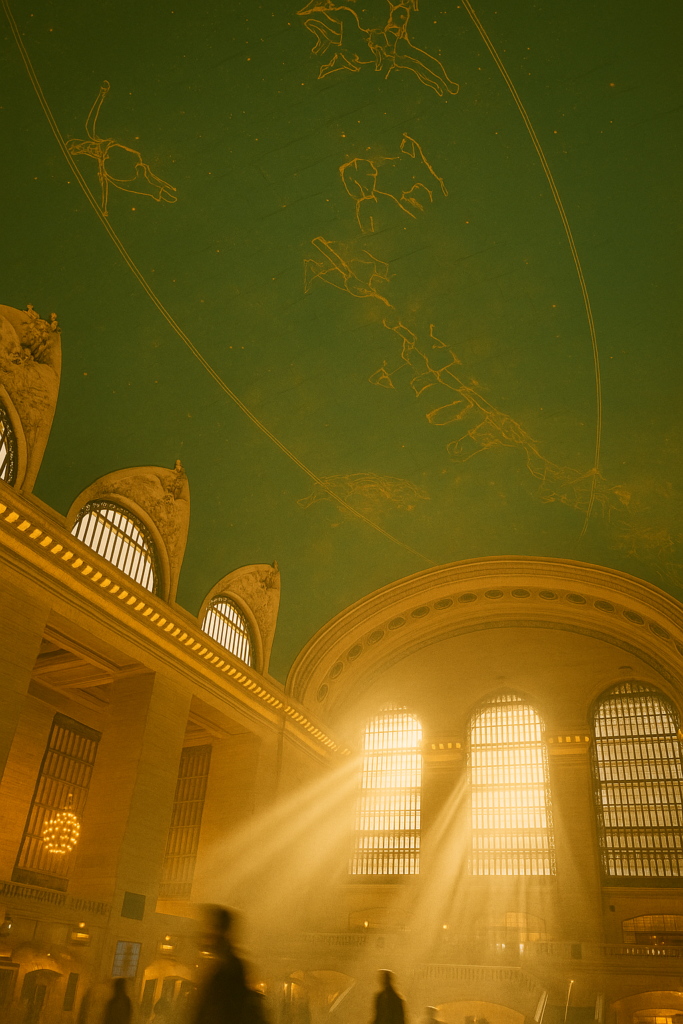
But beyond symmetry lies soul. The architects understood that a space designed for people should also move them emotionally. The ceiling’s zodiac constellations remind travelers to look up, to dream. The gold and opal clock at the information booth stands as both timekeeper and symbol — a meeting point, a legend, a promise.
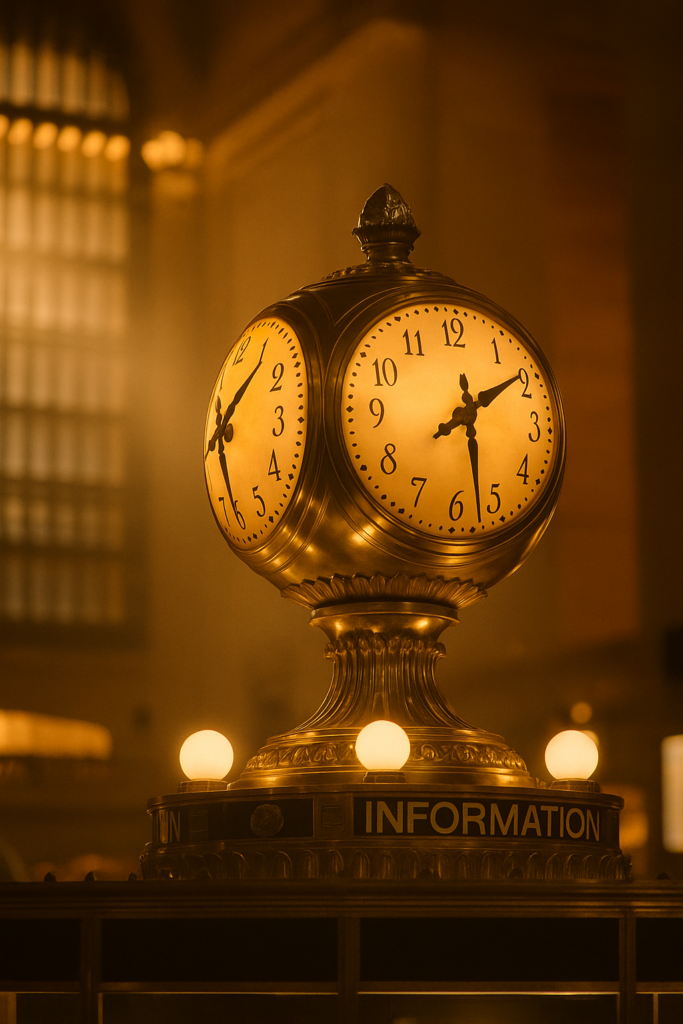
In this photo, the clock glows softly, the light wrapping it in warmth. Around it, people gather — some asking for directions, some simply pausing. Above them, the sunlight cascades down, merging with the building’s natural rhythm. The design of Grand Central doesn’t resist time; it invites it in.
Everything — from the limestone walls to the Tennessee marble floors — was built to last not just physically, but emotionally. That’s why, over a century later, Grand Central remains not just functional, but profoundly beautiful.
The Alchemy of Motion and Memory
There’s something almost cinematic about this scene. The combination of architecture, light, and movement evokes both nostalgia and timelessness. You can almost imagine the echo of past decades within these walls — the 1920s jazz age commuters in fedoras, the wartime soldiers embracing loved ones, the quiet moments of waiting that have played out here a million times.
In many ways, Grand Central is a memory machine. Every person who has ever crossed its floor has left an invisible imprint — a trace of emotion that lingers in the air. When sunlight floods in, it illuminates not just the present, but the ghosts of all those yesterdays.
The photograph captures that layering of time — the golden hue feels almost sepia, like a memory you can step inside. It’s both now and forever ago.
That’s what makes Grand Central so deeply cinematic: it is a stage, a setting, a living archive of human passage. Directors from Hitchcock to Nolan have used it not just for its grandeur, but for its symbolism — a place where fate, chance, and time converge.
A Moment Between Worlds
The beauty of this image lies in its transience. The light will move. The shadows will shift. The people will go their separate ways. Yet for one second, everything aligns — architecture, sunlight, humanity — and becomes perfection.
That’s the essence of New York itself. A city of constant motion where meaning hides in fleeting instants. You catch a reflection in a window, a melody from a street musician, a stranger’s smile on the subway — and for a heartbeat, the world feels whole.
This photograph freezes that feeling inside Grand Central. It reminds us that even in a place built for departure, there is presence. Even in a space meant for movement, there is stillness.
The rays of sunlight across the concourse don’t just illuminate people — they connect them. They remind us that every path, every journey, begins from the same shared light.
The Clock at the Center of Everything
No image of Grand Central feels complete without the clock — the golden heart of the terminal. Crafted from opal glass and valued in the millions, it has stood in the same spot for over a century. It has witnessed countless goodbyes, reunions, and missed connections.
In this photo, the clock glows softly in the golden light, anchoring the composition like a sun within the sunbeams. Around it, the shadows and movement revolve naturally, like planets around a star.

It’s more than an architectural centerpiece — it’s a symbol of time itself, of the way we measure life in moments rather than minutes. People have arranged to meet “under the clock” for generations — lovers, friends, strangers. In a city that changes constantly, that phrase remains the same.
Perhaps that’s why this scene feels eternal — it’s not about travel or trains, but about connection. The clock is both literal and emotional timekeeper, holding the rhythm of the city’s heart.
Light as a Storyteller
Photography is, at its essence, the art of light. In this image, light tells a story words cannot. It reveals the grandeur of space, the intimacy of detail, and the humanity within scale.
Notice how the beams don’t fall evenly. They curve and stretch, shaping the floor into a canvas of gold and shadow. The patterns echo the movement of the people below — unique yet unified, fleeting yet continuous.
Light transforms the ordinary into the sublime. The same marble, the same clock, the same crowd — but in this moment, under this glow, they become transcendent.
It’s a reminder that beauty often depends not on what we see, but when we see it. The photographer caught Grand Central at its perfect hour — when the sunlight enters like a blessing.
The Soul of a City
There’s a reason Grand Central Terminal continues to draw artists, travelers, and dreamers alike. It represents New York’s dual nature: relentless energy and quiet reflection. It’s both a machine and a monument, a place of motion and memory.
The photo captures this contradiction beautifully. People move, but not in chaos. Light floods in, but softly. The vastness of the hall doesn’t overwhelm; it embraces.
For New Yorkers, Grand Central isn’t just a landmark — it’s part of life’s rhythm. It’s the morning commute, the weekend escape, the first date, the final goodbye. It’s where journeys begin and stories overlap.
For travelers, it’s an introduction to the city’s soul — that blend of architecture, humanity, and light that defines New York’s magic.
The Timeless Dance of Light and People
When sunlight filters through Grand Central’s great windows, something beyond architecture happens. The air becomes alive. The people, whether they notice or not, become part of an ancient dance — one that repeats every morning, unchanged for more than a century.
The beams move across the floor like clock hands. The commuters follow their paths like constellations in motion. The result is choreography without a choreographer, grace without awareness.
That’s what makes this photograph so captivating. It doesn’t stage beauty — it witnesses it. It reveals that wonder is not rare, only unnoticed.
A City That Pauses
In a city famous for speed, Grand Central is a place that invites you to slow down. To look up. To listen. To see how the past and present coexist in light and shadow.
The image does exactly that. It asks nothing more than your attention. The sunlight doesn’t last forever, but while it does, everything seems possible.
Perhaps that’s the deeper message of Grand Central — not that time moves fast, but that beauty exists in motion. You can’t hold the light; you can only stand in it while it lasts.
Conclusion: The Light That Never Leaves
As the sun sinks or rises, its beams retreat from Grand Central’s marble floor. The hall returns to its usual rhythm — footsteps, trains, announcements. But the memory of that light lingers, caught in stone, glass, and human hearts.
The photograph freezes it for us — a golden moment of unity and peace in the world’s most restless city.
In the end, Grand Central Terminal isn’t just a building. It’s a poem written in light and architecture. A living metaphor for movement, connection, and time.
And as long as sunlight finds its way through those arched windows, the city will never lose its glow.
-

Drifting Through Color: The Magic of Southeast Asia’s Floating Markets
There are few places on Earth as mesmerizing as the floating markets of Southeast Asia. Here, life flows on water. Boats laden with fruits, flowers, and spices glide along narrow canals framed by dense green palms. Vendors in wide-brimmed straw hats call softly to passing travelers. The air is thick with the scent of mangoes and jasmine, and the sound of gentle paddling mingles with laughter and conversation.
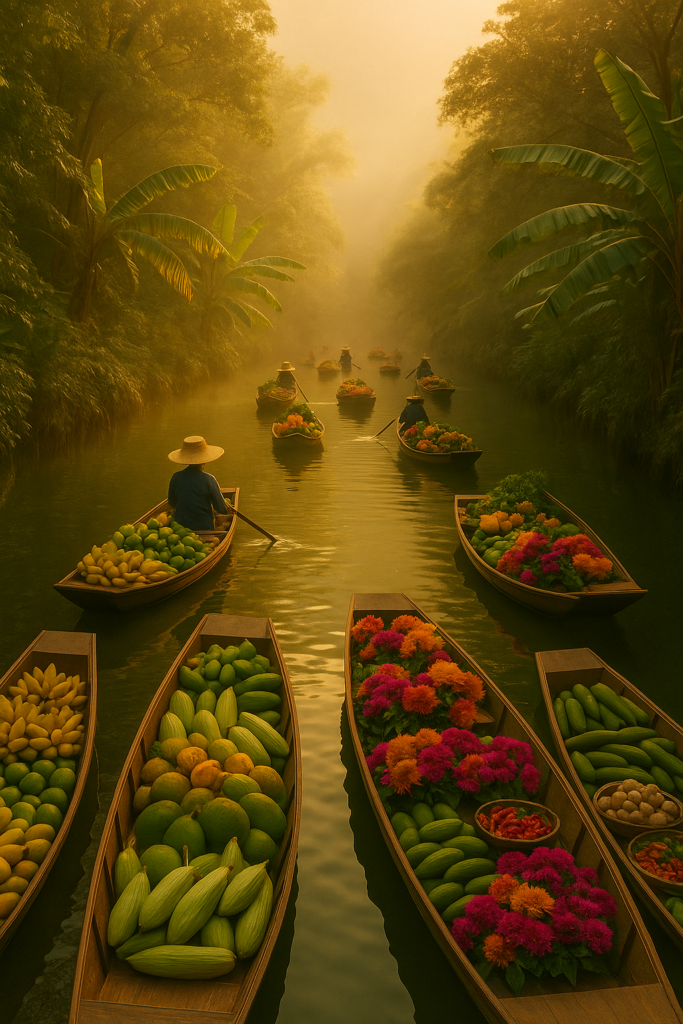
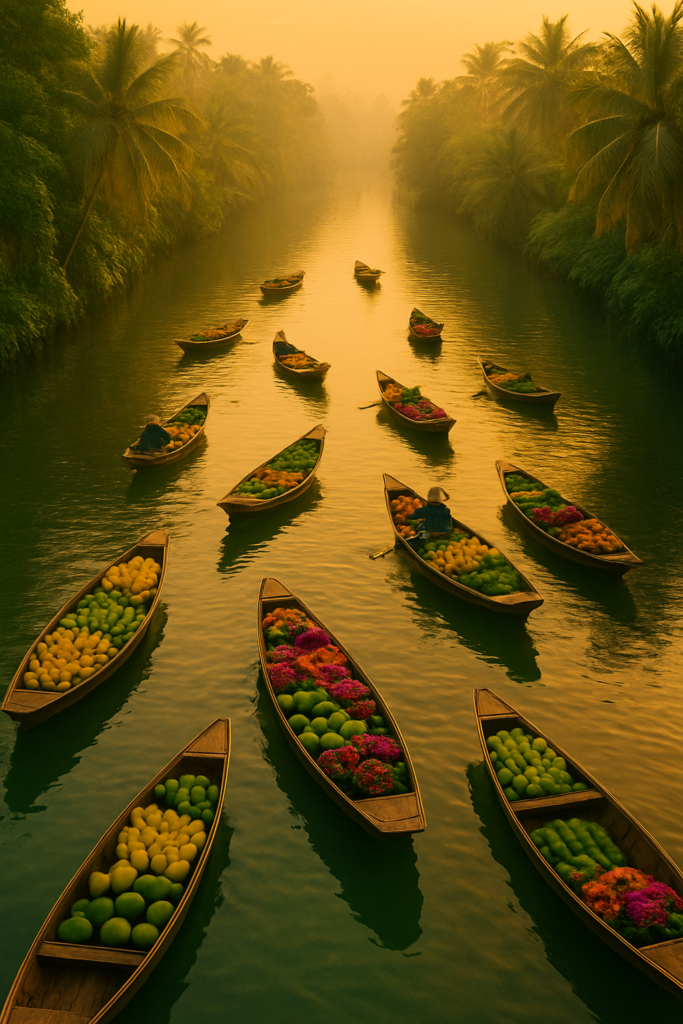
The image before you captures this perfectly: long wooden boats, heavy with produce and blossoms, drifting through a canal that looks like a dream made real. The scene is at once timeless and alive — a snapshot of daily life that feels more like a painting than a photograph. Bright yellows, greens, and pinks burst from every direction, reflected in the dark green water like brushstrokes of color and culture.
This is not just commerce; it’s connection. These floating markets have existed for centuries, long before bridges and roads reshaped the region. They are living traditions — part marketplace, part meeting place, part moving art. And to experience one is to step into the heart of Southeast Asia’s soul, where water and life flow as one.
Where Water and Life Meet
In places like Thailand, Vietnam, Indonesia, and Cambodia, rivers are not boundaries — they are lifelines. For generations, people have lived by the water, grown their food along it, and traveled upon it. Floating markets were born naturally from this way of life. When roads were few and rivers were everything, boats became shops. Families rowed their produce from farms to canalside towns, selling directly from their canoes.
Over time, these markets grew into bustling centers of community. Even today, in places like Damnoen Saduak and Amphawa in Thailand or Cai Rang in Vietnam, hundreds of wooden boats gather at dawn, piled high with coconuts, bananas, papayas, and flowers. The water ripples with color and sound. Bargaining, gossip, and greetings echo across the canals.
The image captures the quiet side of that rhythm — a procession of boats moving in harmony through a lush green corridor. The light filters softly through the canopy, illuminating the produce like treasure. It’s peaceful, yet you can almost hear the life within it. This is the heart of the floating market: vibrant, slow-moving, eternal.
The Language of Color
Color is the floating market’s poetry. Look closely at the image — every hue tells a story. The bright yellows of bananas and lemons, the deep greens of cucumbers and jackfruit, the fiery reds of chili peppers, and the fuchsia of tropical blossoms — all merge into a symphony of natural beauty.
In Southeast Asian culture, color is not decoration — it’s meaning. Green represents abundance and growth. Yellow and gold signify good fortune. Red is life, energy, and celebration. Flowers, often sold alongside fruit, are used in offerings, temples, and homes — a daily connection to spirituality.
The boats in this scene seem choreographed, each one carrying a palette of nature’s best work. The vibrant produce and flowers stand out against the still water, creating a striking contrast that feels both joyful and sacred. You can almost smell the sweetness of ripe mangoes, the sharp scent of citrus, and the earthy freshness of herbs piled high in woven baskets.
It’s a celebration of simplicity — a reminder that beauty often hides in the ordinary moments of everyday life.
The Floating Market Experience
To truly understand a floating market, you have to experience it — not as a tourist snapping pictures, but as a participant. You arrive early, when the mist still lingers over the canal and the first light touches the water. The air is cool and filled with the sounds of paddles dipping rhythmically into the river. Vendors call out softly in local dialects, offering fruit, noodles, or even steaming cups of coffee poured straight from a floating kitchen.
The boats are narrow and long, designed to balance on the calm currents. Some are family-run, passed down through generations. Children learn to row almost before they can walk. The entire market moves with gentle grace — no engines, no noise, just the sound of water and trade.
You can drift alongside a vendor selling mango sticky rice or fresh coconuts, watch a woman arrange flowers with the precision of an artist, or see a man carefully stack pineapples into perfect pyramids. Every interaction feels personal, human, alive.
The image captures that feeling — the closeness of the boats, the care in how the produce is arranged, the unhurried pace of it all. It’s a different kind of commerce, one rooted in rhythm rather than rush.

Nature’s Market
Floating markets are not just cultural wonders — they’re ecological miracles. Everything here depends on balance. The water that carries the boats also nourishes the farms. The surrounding greenery filters the air and shades the canals, creating microclimates perfect for tropical crops.
In this image, the lush vegetation on both sides forms a natural tunnel, cradling the boats in a world of green. Banana leaves arch overhead like nature’s cathedral. The water below reflects both the sky and the forest, turning the entire scene into a mirror of life.
This connection between land and water is central to Southeast Asian living. It’s sustainability before the word became fashionable — a system where nothing is wasted and everything flows. The wooden boats, handmade from local materials, last for decades. The produce is grown nearby, transported without pollution, and sold directly. Even the waste — peels, leaves, stems — returns to the earth.
Every piece of the picture fits together: the green of the crops, the gold of the sunlight, the deep brown of the boats, the shimmering jade of the water. It’s a perfect circle, quietly sustaining communities for centuries.
A Culture of Connection
What makes floating markets so magical isn’t just the scenery — it’s the spirit. The people who row these boats are storytellers of the old world. They carry not only fruit and flowers but traditions, dialects, recipes, and songs.
Imagine sitting in one of those boats, buying fruit from a smiling vendor who tells you which farm it came from, how to eat it, and when it’s sweetest. You’re not just making a purchase — you’re part of a conversation that stretches back through generations.

Even in an age of supermarkets and smartphones, these markets endure because they are about more than commerce. They are about connection — between people, between generations, between humanity and the natural world.
The photograph freezes that connection in a single timeless moment. You can feel the rhythm of trust, the exchange of care. The boats may be separate, but they move as one, each gliding through water that carries their shared heritage.
The Sound of Water and Trade
If you could step into this picture, you’d hear a symphony. The soft splash of paddles, the low hum of voices bartering, the rustle of leaves in the morning breeze. Somewhere, a child might be laughing, a rooster crowing from a riverside home, or a vendor singing as they work.
There’s no rush here — only flow. The pace is steady, the tone gentle. In a world that’s often loud and fast, the floating market is a reminder that life doesn’t need to shout to be full.
The combination of sound, scent, and color creates an experience that stays with you long after you leave. It’s sensory poetry — one that can’t be captured by cameras alone. But in this image, you catch a glimpse of it — a whisper of that slow, graceful music of water and life.

The Art of Simplicity
There’s an artistry to how each boat is arranged. Look again at the photograph — the symmetry, the color balance, the textures. Everything has been placed with care, not by accident but by instinct born of years of practice.
Farmers know how to display their goods not just for sale, but for beauty. The contrast between green cucumbers and yellow bananas, between pink flowers and wooden planks, is both functional and aesthetic. It draws the eye, invites appreciation.
This is what makes floating markets feel like moving galleries. Every boat is a composition. Every arrangement is an expression of pride and patience. The market becomes a living canvas, painted fresh each morning and gently erased each night when the boats return home.
A Glimpse of Timelessness
Though technology and tourism have touched these markets, their essence remains unchanged. The same techniques used a hundred years ago still guide them today. Wooden paddles, handmade baskets, local produce, barter over cash — traditions endure because they work.
The image before you could have been taken yesterday or decades ago. That’s the power of timeless beauty — it transcends years and trends. You could replace the fruit with today’s harvest or tomorrow’s, and the picture would still tell the same story: humans and nature, intertwined.
In many ways, the floating market is a metaphor for life itself — always moving, always renewing, yet deeply rooted in tradition.
The Photographer’s Dream
For photographers, floating markets are paradise. The combination of color, motion, light, and reflection offers endless possibilities. The early morning light casts golden highlights on the water. Mist softens the edges. Reflections create mirror images that blur the line between real and imagined.
The photograph you see is perfectly timed. The soft focus, the layered perspective of boats receding into the distance, the lush framing of tropical foliage — it’s cinematic and intimate at once. It captures not just what floating markets look like, but what they feel like: warm, rhythmic, and profoundly alive.
It’s no wonder images like this travel far across the world, inspiring wanderlust and admiration. They remind us that travel isn’t just about places — it’s about presence.

A Living Heritage
As tourism grows, many floating markets have adapted — some now cater to visitors as much as locals. Yet, beneath the surface of souvenir stalls and cameras, the heart remains the same. The people who row these boats continue to live by the rhythm of water and season.
Governments and communities across Southeast Asia are working to preserve these markets, not as relics but as living culture. They represent resilience — the ability to thrive in harmony with the environment.
When you see this photograph, you’re not just looking at fruit and flowers — you’re looking at a way of life that has survived centuries of change. The wooden boats carry more than produce; they carry identity.
Reflections on Water and Humanity
There’s a quiet lesson in this scene. The water reflects everything — sky, trees, boats, people — reminding us that we, too, are reflections of our surroundings. The floating market shows how deeply humans can live in balance with nature when we listen instead of dominate.
Every paddle stroke, every fruit sold, every flower arranged is part of a greater rhythm — one that sustains both land and soul. The image doesn’t just show a market; it shows a philosophy: that beauty, community, and nature can coexist gracefully.
Conclusion: The Flow of Life
The photograph of this floating market captures more than a scene — it captures an entire worldview. It tells of people who live with water, not against it. Of trade that feels like ritual. Of colors that tell stories, and traditions that flow through generations like the rivers themselves.
There’s peace in the way the boats drift, color in the way life unfolds, and wisdom in the way everything connects. It’s a reminder that the simplest things — fruit, flowers, water, and light — can create the most profound beauty.
In a world that moves too fast, the floating market teaches us to drift, to flow, to breathe. It shows us that life, like water, finds its balance when we move with it, not against it.
The scene is not just a picture of Southeast Asia — it’s a portrait of humanity at its best: rooted in tradition, alive with color, and guided by the quiet grace of nature.
-
A Winter’s Whisper: The Magic of New York Brownstones in the Snow
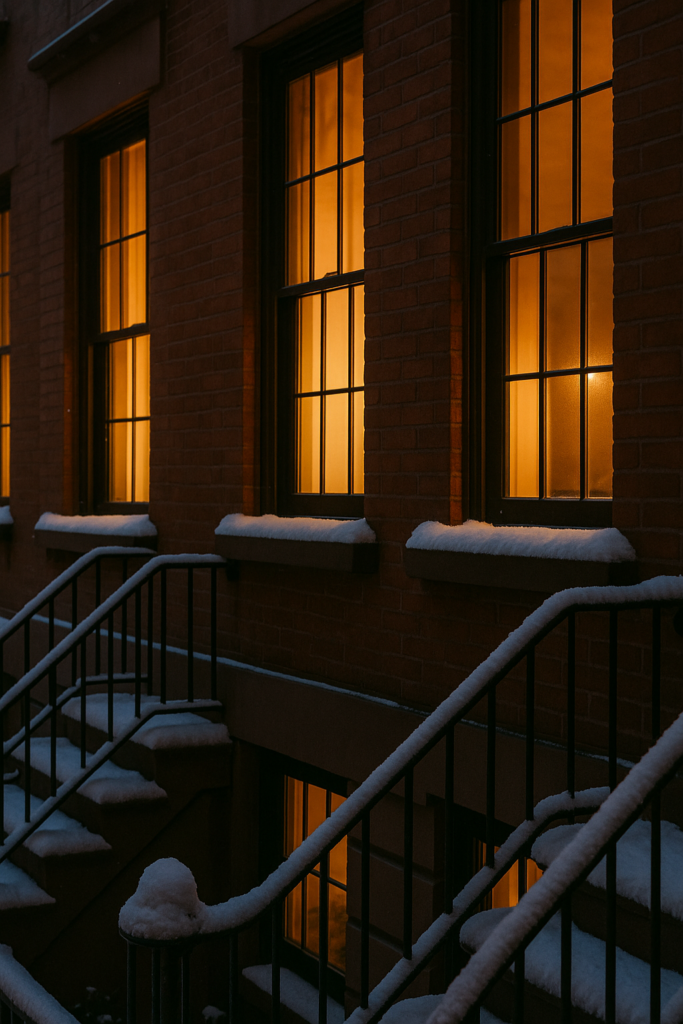
There is something undeniably enchanting about a New York City street after the first snowfall. The usual hum of the city quiets to a gentle murmur, the air turns crisp and still, and light from old-fashioned lamps reflects softly on snow-covered brownstones. For a moment, time seems to pause. The chaos of Manhattan fades, the pace of Brooklyn slows, and what’s left is pure, serene beauty — a city reborn under a blanket of white.
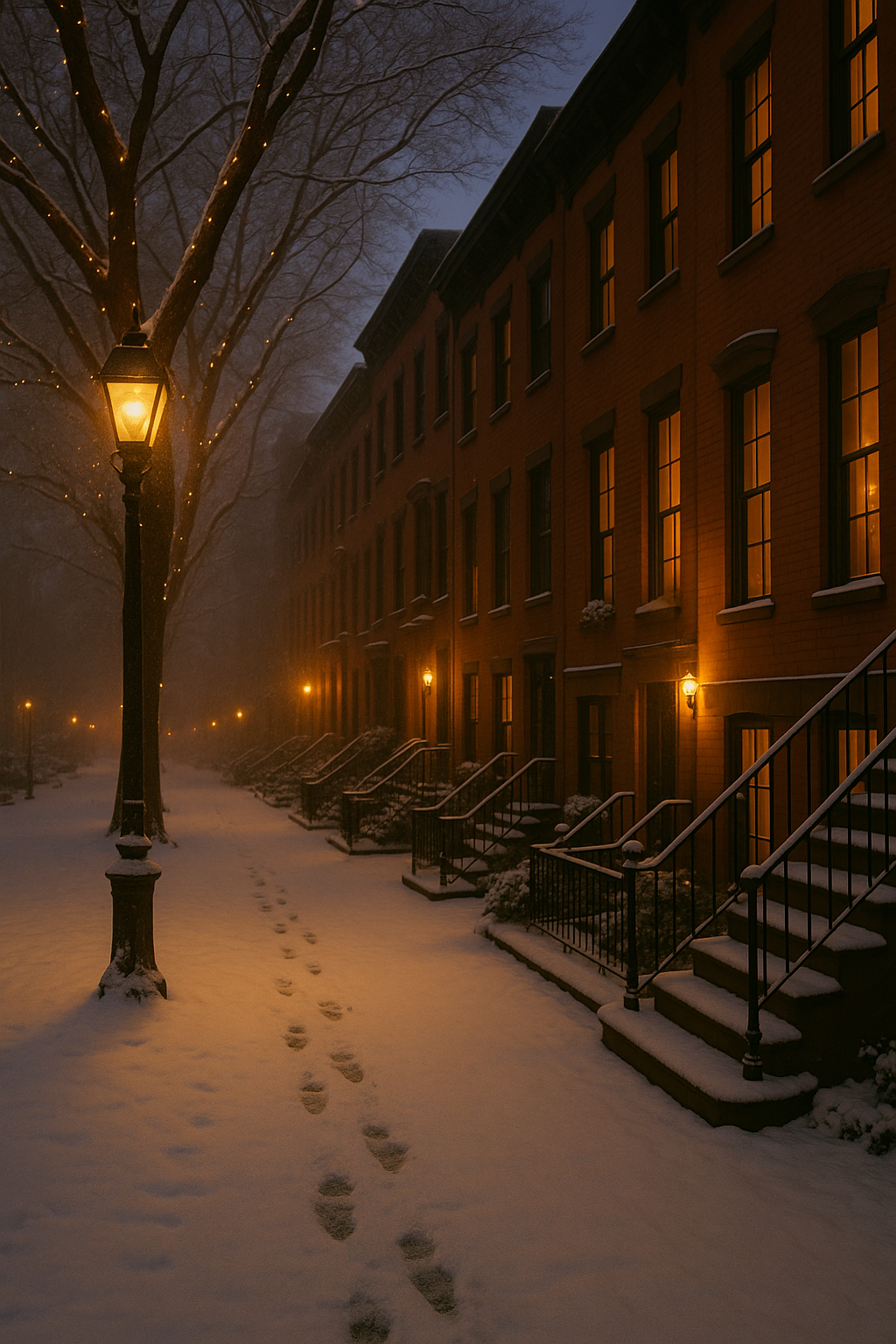
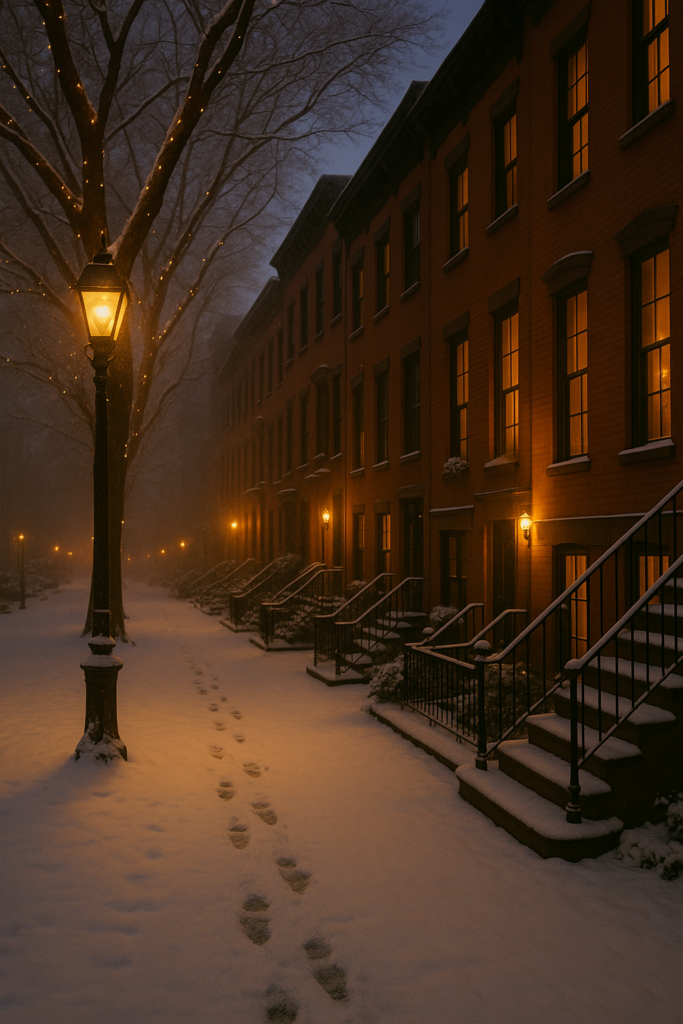
The photograph before you captures that perfect, fleeting moment: a row of red-brick brownstones draped in snow, warm light spilling from their windows, wreaths on doors, and trees laced with tiny golden fairy lights. Footprints mark the only path through the untouched snow, hinting at quiet life within — someone heading home, perhaps, or a neighbor walking their dog just before dusk. It is New York as it rarely is — intimate, peaceful, and almost storybook in its perfection.
This is the soul of a New York winter: a city built for speed suddenly caught in stillness, where the simplest things — the glow of a streetlamp, the crunch of snow underfoot, the scent of pine from a wreath — become moments of grace.
The Beauty of Stillness in a City That Never Sleeps
New York City is famous for motion. It moves fast, sounds loud, and never stops to rest. But winter — especially during a snowfall — transforms it. The relentless rhythm slows, muffled by layers of white. The sound of car horns and sirens gives way to the hush of falling flakes. Even the skyline seems gentler under the soft veil of snow.
Walking through neighborhoods like Brooklyn Heights, the West Village, or the Upper West Side in winter feels like stepping back in time. The brownstones, with their elegant staircases and warm lights, glow like living memories of another century. These are streets that have seen generations come and go — poets, dreamers, workers, artists — and every winter they wear the same timeless charm.
There’s poetry in this stillness. It invites reflection. The footprints in the snow remind us that life goes on quietly even when the world seems frozen. The light in the windows suggests warmth, family, laughter, perhaps the scent of cinnamon or cocoa inside. Outside, the lamplight stretches across the snow like brushstrokes on a canvas, golden against the blue-grey dusk.
For a city known for its steel and speed, these moments are the ones that touch the heart. They reveal a different New York — one that isn’t just powerful, but tender.
The Architecture That Holds the Season
The brownstone — that iconic New York townhouse with its stoop and tall, symmetrical windows — feels made for winter. The rich reddish hue of the stone contrasts beautifully with fresh snow, turning every block into a scene from a painting. Built mostly in the 19th century, these homes were designed with elegance and endurance in mind. Their facades stand strong through decades of seasons, from blazing summer heat to icy winter nights.
Each brownstone tells a story. The ornate doorways and wrought-iron railings were crafted in a time when design meant detail. Their stoops — those famous steps where children once played and neighbors still gather — are now dusted in snow, looking both romantic and nostalgic. At night, when the streetlights cast long shadows on the facades, every window seems to glow like a candle in the dark.
In this image, the warm interior lights and snow-covered railings create a sense of welcome — an unspoken promise that behind those doors lies comfort and belonging. Even if you’ve never lived in a brownstone, you feel drawn to it. It’s the dream of the perfect winter evening — a home where you can watch the snow fall through frosted glass, wrapped in a blanket, a mug of tea or cocoa warming your hands.
The Glow of a Winter Evening
There’s a reason artists and filmmakers are obsessed with how New York looks at dusk, especially in winter. The light changes in ways that feel almost magical. The sun sets early, but the city glows longer than anywhere else — not from daylight, but from its own golden pulse. Streetlamps, store windows, and the soft flicker of apartment lights paint the city in layers of warmth against the cold.
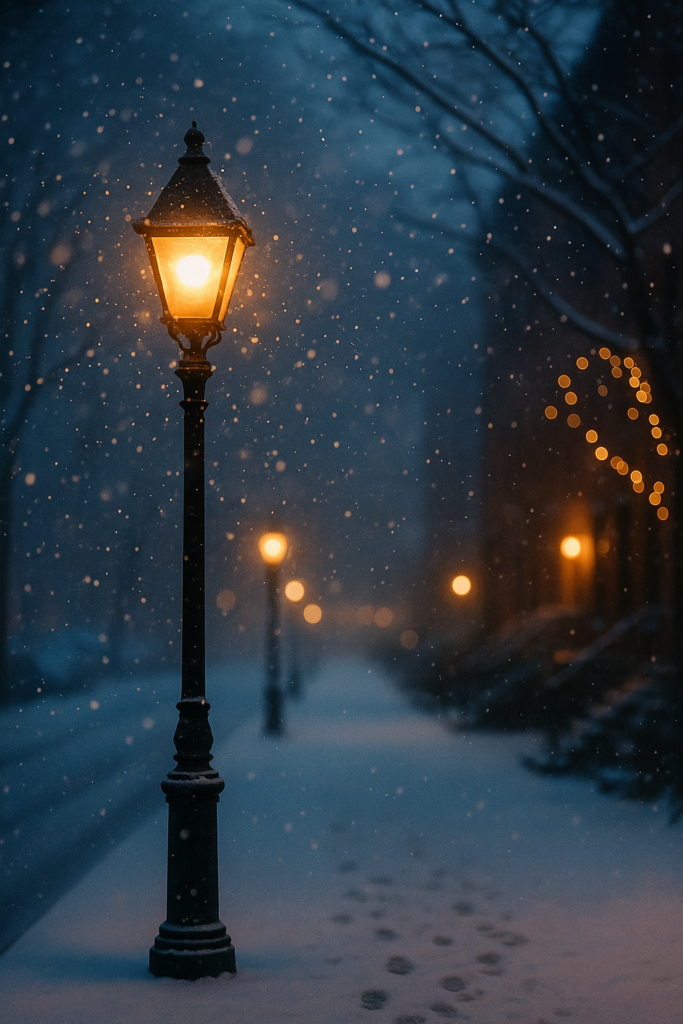
In this scene, the light spilling from the windows feels alive — amber and inviting, like small hearths scattered across the block. The lampposts, tall and timeless, stand like sentinels guiding wanderers through the snow. Even the trees join in, their branches strung with tiny fairy lights that twinkle softly through the mist. It’s the kind of light that makes you slow down.
You might imagine yourself walking down that very street, breath visible in the air, the sound of your footsteps the only thing breaking the silence. Each crunch feels rhythmic, meditative. You might look up at the wreaths hanging on the doors, each one slightly different — red ribbons, pine cones, sprigs of holly — and think about the small acts of care that make winter beautiful.
The entire street becomes a living painting: amber light against deep blue snow, the soft haze of twilight hanging in the air, every window like a tiny story unfolding behind glass.
New York in Winter: A Season of Contrasts
Winter in New York is a paradox. It’s both harsh and beautiful, isolating yet intimate. The cold bites, but the city feels closer. The streets can be icy, but hearts feel warmer. In the contrast lies the magic.
This image captures that duality perfectly. The snow — cold, silent, and pure — meets the warm glow of life within. The dark tree branches look stark against the sky, yet they sparkle with golden light. The stately brownstones, usually bustling with city life, appear hushed and timeless.

It’s both a city scene and a still life — full of energy, yet profoundly calm. People often think of New York as a place for summer — rooftop bars, Central Park picnics, outdoor concerts. But winter is when the city shows its soul. It’s when New York feels human again. The pace slows, the crowds thin, and moments of quiet beauty emerge — a lone figure crossing a snowy street, steam rising from a manhole, a café window fogged with warmth, laughter echoing behind frosted glass.
The beauty of winter in New York isn’t loud. It’s in the small, almost secret moments like the one in this photo. It’s the whisper of snow falling on a lamppost. The golden light flickering through a curtain. The muffled sound of the world holding its breath.
The Street as a Story
Every element of this winter scene tells a story. The footprints in the snow lead somewhere — maybe to a cozy apartment, maybe to a late-night walk, maybe to nowhere in particular. The snow on the stairs suggests someone recently arrived home, brushing flakes off their coat before stepping inside. The wreath on the door adds a touch of festive warmth — a silent nod to the season of togetherness.
Even the street itself has a voice. The trees, bare but beautiful, stand tall and dignified, their branches cradling lights that shimmer like stars. The lamps along the sidewalk glow steadily, their warm halos cutting through the mist. Everything feels intentional, like the city is performing a quiet symphony for anyone willing to stop and listen.
And perhaps that’s the true charm of a New York winter — it invites you to notice. To look closer. To slow down long enough to see the poetry in the everyday.
This street could be in Brooklyn Heights, Greenwich Village, or the Upper East Side. The neighborhood doesn’t matter as much as the feeling it evokes: a blend of nostalgia, comfort, and quiet wonder. It’s the kind of street that makes you believe in the beauty of ordinary moments — and reminds you that even in the biggest city in the world, there’s still space for peace.
The Emotional Landscape of Winter
There’s an emotional rhythm to winter that cities rarely show. Beneath the cold, there’s connection. Beneath the stillness, life hums quietly. This photo captures that beautifully — it’s not just about snow and architecture, but about feeling. The feeling of walking home at dusk with your hands in your pockets. The feeling of seeing the first snowflakes drift past a lamppost. The feeling of warmth when you step inside after being out in the cold.
Winter in New York magnifies emotion. The city’s edges soften. Strangers nod at one another in shared understanding of the cold. Cafés glow like sanctuaries. Windows become portraits of lives — someone reading, someone cooking, someone laughing. It’s a season that asks you to look inward while still marveling at the world outside.
The snow-covered brownstones in this image aren’t just buildings; they’re symbols of continuity. Year after year, they stand strong, welcoming the changing seasons, holding countless stories within their walls. In their steadfastness, they remind us of resilience — a theme that runs deep in the heart of New York itself.
Light in the Darkness
The most striking part of this image might be the light — soft yet powerful, warm yet restrained. In a season known for long nights, light becomes something sacred. It guides, comforts, and transforms.
The lampposts cast halos on the snow, the windows flicker like beacons, and the tiny string lights in the trees sparkle gently, almost like falling stars. Together, they create a tapestry of illumination that feels both romantic and reassuring. This isn’t the blinding brilliance of Times Square; it’s the quiet glow of belonging.
There’s a cinematic quality to it — as if you could step into the frame and hear faint music playing, smell wood smoke on the air, feel the soft crunch of snow beneath your boots. It’s the kind of light that turns even the most ordinary street into something transcendent.
And in that light lies the essence of winter in New York — a city that never stops shining, even in its quietest hours.

The Memory of Snow
Ask anyone who has lived through a New York winter, and they’ll tell you: it’s not the cold you remember, it’s the moments. The walk through Central Park after a storm, when the world feels made anew. The sound of laughter echoing off snow-covered streets. The sight of the skyline softened by mist and frost.
This street, with its snow and lamplight, captures the feeling of memory itself — gentle, glowing, slightly blurred at the edges. It could be yesterday or fifty years ago. Nothing dates it. The architecture, the snow, the light — all timeless.
There’s a bittersweetness to that kind of beauty. You know it won’t last — the snow will melt, the lights will fade, the noise will return. But maybe that’s what makes it so special. It’s fleeting, like all perfect things. A reminder to look, to feel, to remember.
Conclusion: The Heartbeat of a Winter City
The photograph of this snow-covered brownstone street is more than a scene — it’s an emotion captured in time. It speaks of warmth amid cold, peace amid motion, light amid darkness. It’s a love letter to New York in winter, to the quiet streets that tell their stories not through noise but through glow and shadow.
When you look at it, you’re reminded that beauty doesn’t always shout; sometimes it whispers. It lives in the footprints left behind, the lights in the windows, the hush between heartbeats.
In the heart of the busiest city in the world, winter offers a rare gift — a chance to stop, breathe, and remember that even in stillness, life continues to shine.
The snow may fall and melt, the lights may fade, but the feeling remains — that quiet, glowing sense that you are standing in the middle of something timeless, something human, something profoundly beautiful.

-
Golden Reflections: The Majesty of the Manhattan Skyline at Sunset
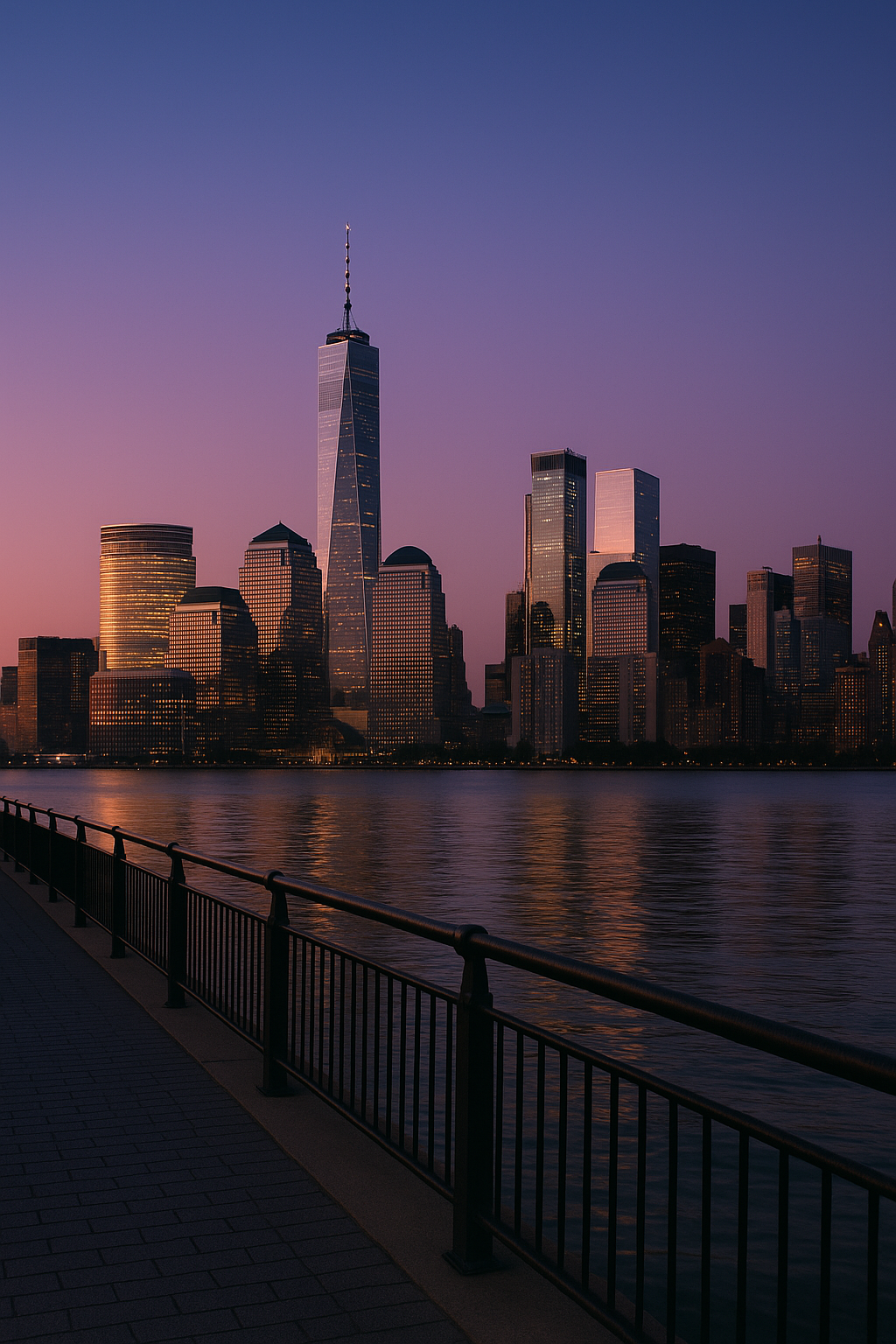
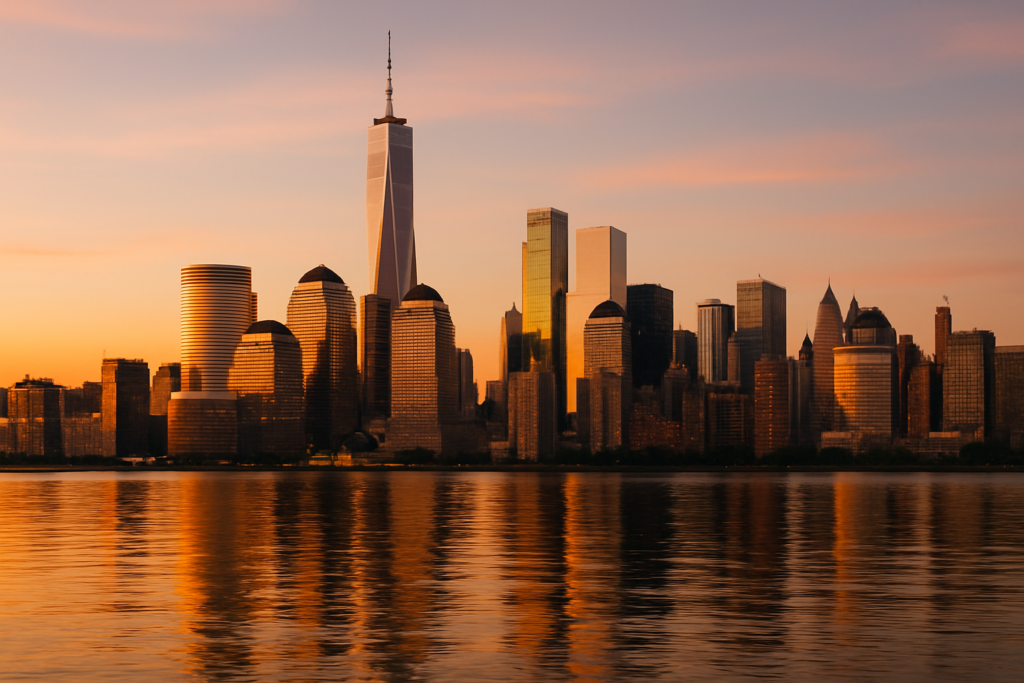
There are few sights in the world that rival the Manhattan skyline glowing at sunset. As the day fades and the light softens, the glass towers of Lower Manhattan turn molten gold, their reflections shimmering across the calm waters of the Hudson River. It’s a view that captures the heart of New York City — bold, brilliant, endlessly alive — and one that has inspired countless photographers, travelers, and dreamers for more than a century.
This is more than just a skyline; it’s a story told in steel and light. From the soaring pinnacle of One World Trade Center to the gleaming banks of the Hudson, the Manhattan skyline represents resilience, ambition, and the unshakable belief that anything is possible. Watching it at sunset feels almost cinematic — the city transforms into a living painting, one that changes minute by minute as the sun dips behind the horizon and the first stars blink awake over the river.
In this article, we’ll explore the magic of the Manhattan skyline at golden hour — how it came to be, what it symbolizes, and why standing before it at sunset feels like standing before a dream made real.
The Beating Heart of New York City
Manhattan is not just a place on a map; it’s an idea. It’s where the modern city was born — a space defined by movement, ambition, and reinvention. The skyline of Lower Manhattan, in particular, tells the story of New York’s evolution. From the days when sailing ships filled the harbor and warehouses lined the piers, to today’s sleek skyscrapers of glass and steel, every building is a chapter in the city’s unfolding narrative.
The image of the Manhattan skyline, bathed in golden sunlight, is one of the most recognized in the world. It embodies everything people imagine when they think of New York: power, opportunity, innovation, and unyielding spirit. Even from across the river, the sheer density of the buildings creates a silhouette unlike any other — a vertical city rising straight from the water, glistening like a crown in the evening light.
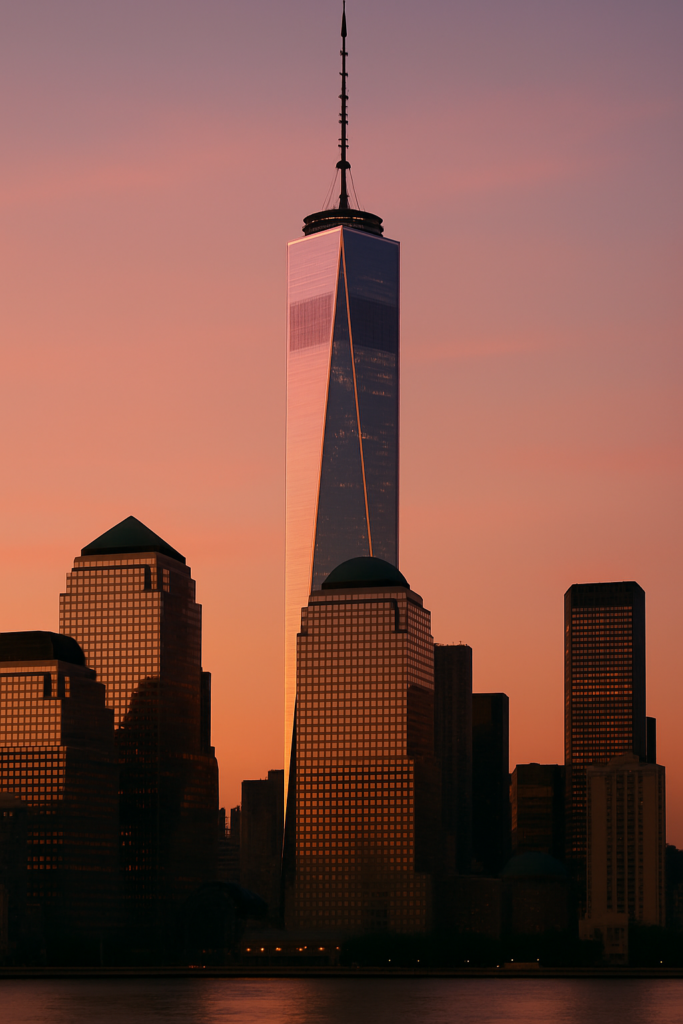
At the center of this view stands the One World Trade Center, the tallest building in the Western Hemisphere and a beacon of hope and resilience. Its shimmering façade mirrors the changing sky, transforming from silver to gold to deep indigo as night approaches. The building’s tapering geometry and striking spire seem to pull the eye upward, reminding everyone who sees it that New York’s spirit reaches ever higher.
The Architecture of Ambition
The Manhattan skyline is not an accident of geography — it’s a masterpiece of human ambition. Each building reflects a different era of design, technology, and vision, yet together they form a seamless and harmonious whole. To watch them glowing in the sunset is to see the story of a century told through architecture.
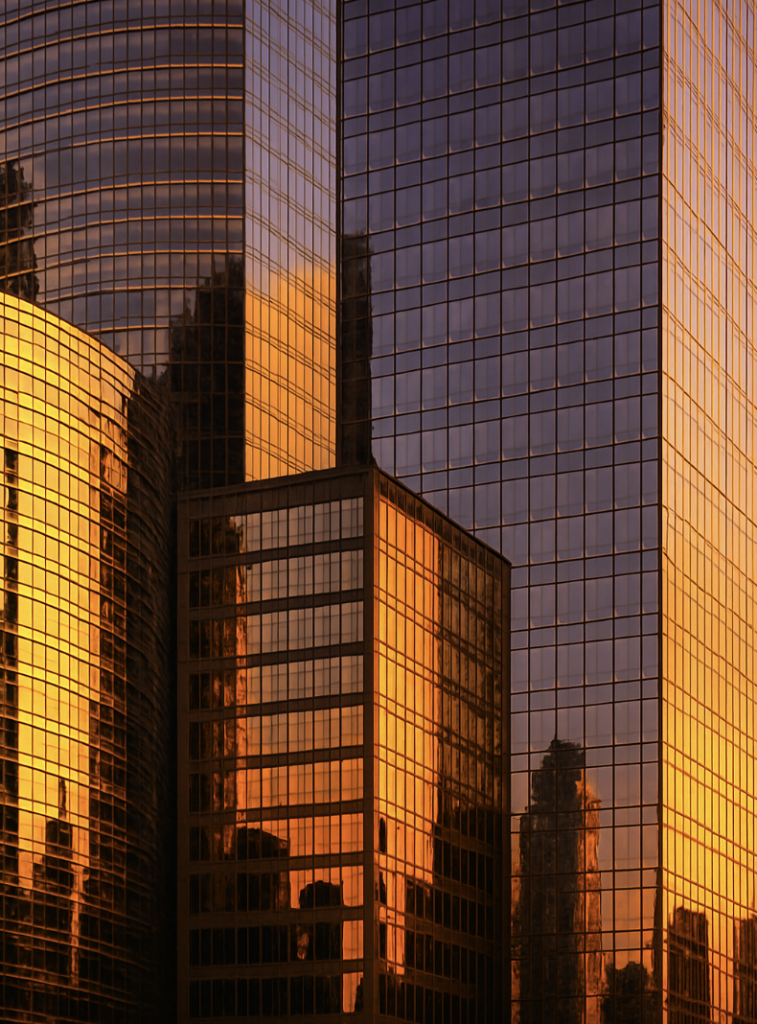
The One World Trade Center, completed in 2013, rises from the site of the original Twin Towers as both a memorial and a triumph of engineering. At 1,776 feet tall, its height is symbolic — a tribute to the year of American independence — and its design evokes both strength and transparency. The glass panels reflect the sky and water, blending the building into its surroundings and turning it into a living sculpture of light.
Surrounding it are other architectural gems of Lower Manhattan: the curved silver façade of the Goldman Sachs Tower, the reflective surfaces of the World Financial Center, and the sleek symmetry of the Battery Park City buildings. Each catches the evening light differently, some glowing like fire, others gleaming in soft champagne tones. The curved glass walls and sharp edges create a dance of reflections, as the sun slips lower and the colors deepen into amber and rose.
The result is pure poetry — a city that seems to be built out of light itself.

The Magic of Golden Hour
The period just before sunset — known as golden hour — is one of the most enchanting times to see the Manhattan skyline. The sun hangs low in the sky, casting a warm, golden hue that softens shadows and highlights every curve and contour. It’s when the city seems to exhale, caught between the rush of the day and the glow of the evening.
As the sun sets over the Hudson River, the tall towers of Lower Manhattan catch the last light of day, reflecting it like mirrors into the water below. The buildings become almost translucent, their glass surfaces turning molten orange, while the river becomes a rippling canvas of color — gold, copper, lavender, and deepening blue.
This interplay of light and reflection is what makes the view so unforgettable. Every few moments, it changes. The colors shift, the brightness fades, and new details emerge. The skyline becomes a living thing, breathing light and shadow, capturing the fleeting beauty of time itself.
Photographers call this the “magic hour” — the perfect moment when natural light transforms the ordinary into the extraordinary. But you don’t need a camera to feel it. Whether standing on the Brooklyn waterfront, riding the Staten Island Ferry, or walking along Battery Park, the experience of watching Manhattan turn to gold is enough to make anyone stop, breathe, and feel part of something bigger.
Reflections on the River
The Hudson River is as much a part of New York’s identity as its buildings. Flowing between the towers and the setting sun, it acts as both a mirror and a mood — calm one moment, shimmering the next. At sunset, the river becomes a sheet of glass, reflecting the entire skyline in rippling perfection.
The reflection doubles the beauty — the golden towers above, their liquid counterparts below. The One World Trade Center, in particular, casts a brilliant path of light across the surface, creating a visual link between earth and sky. Ferries drift by, their wakes spreading ripples that distort and dance with the reflections, as if the river itself were alive and responding to the city’s heartbeat.
It’s a view that never grows old. Locals pause to take it in after work; visitors travel thousands of miles to see it in person. The river at sunset reminds everyone that even in a city that never sleeps, there are moments of stillness — moments when nature and architecture find harmony.
The Symbolism of the Skyline
Beyond its beauty, the Manhattan skyline carries deep meaning. It stands as a symbol of human achievement — of what can be built when imagination and determination meet. But it also tells a story of resilience. The skyline has changed dramatically over the years, weathering disasters, economic upheavals, and transformations both planned and unexpected. Yet it always rises again, stronger, taller, brighter.
The skyline you see today is a testament to renewal. The One World Trade Center, in particular, embodies this spirit. Rising from the site of loss, it was designed not just as an office building, but as a symbol of unity, strength, and remembrance. Its spire reaches toward the sky like a statement of hope — a reminder that even out of darkness, light returns.
At sunset, this symbolism becomes almost tangible. The golden light pouring over the buildings feels like a benediction, a daily ritual of rebirth. The city glows as if to say: we endure, we rebuild, we rise.
For many, that’s what makes the Manhattan skyline so moving. It’s not just architecture — it’s emotion, history, and human aspiration made visible.
The Experience of Being There
Standing before the Manhattan skyline at sunset is an experience that words can only partially capture. The air feels charged, the light warm against your skin. The sound of the city — distant horns, murmuring voices, the rhythm of the water — forms a kind of music. The colors change every minute, and with each shift, the scene transforms: gold to rose, rose to violet, violet to the deep indigo of night.
As darkness settles, the city lights begin to sparkle. Windows flicker to life, reflections shimmer more vividly, and the skyline takes on a new identity — no longer glowing with sunlight but with its own electric heartbeat. The glass towers become lanterns in the night, guiding ships and souls alike.
From the Brooklyn waterfront or the ferries gliding across the river, the skyline feels like a dream just out of reach — vast, luminous, and eternal. It’s easy to see why so many fall in love with New York in these moments. The skyline is not just a view; it’s a feeling — of wonder, possibility, and connection to something larger than oneself.
The Evolution of the Skyline
What makes the Manhattan skyline even more remarkable is its evolution. It’s not frozen in time — it grows, changes, and adapts, reflecting the city’s ever-shifting identity. The skyline of a hundred years ago was dominated by stone and brick; today it’s a symphony of glass and steel. Yet somehow, the essence remains the same: vertical ambition.
In the early 20th century, Lower Manhattan was already the center of commerce and finance. Buildings like the Woolworth Building and the Equitable Life Building defined the early skyline. By the 1930s, Midtown began to rise, with icons like the Empire State Building and Chrysler Building shaping the image of New York known around the world.
After the tragic events of September 11, 2001, the skyline changed again. The absence of the Twin Towers left an ache in the city’s silhouette — but the rebuilding of the site, crowned by One World Trade Center, was both an act of remembrance and of hope. Today, the skyline stands not as a reminder of loss, but as a promise of resilience.
That constant renewal is part of what makes Manhattan timeless. Each decade brings new structures, new heights, new ideas. Yet the skyline’s essence — that feeling of limitless possibility — never fades.
Why the Skyline Matters
Why does this view matter so much? Because it represents something far beyond architecture or geography. The Manhattan skyline is a universal symbol of aspiration. It tells every person who looks at it that dreams are worth chasing, that progress is possible, and that beauty can arise even from hardship.
For New Yorkers, it’s a part of daily life — a familiar friend they glimpse on their commute or from their window. For visitors, it’s a moment of awe, a reminder that they’ve arrived in one of the greatest cities on Earth. For artists, it’s a muse. For photographers, it’s a lifelong obsession.
And for everyone who’s ever stood on the banks of the Hudson at sunset and watched the towers turn to gold, it’s something even more personal — a feeling that transcends words. A sense that for all its chaos and complexity, the world still contains wonder.
A Living Masterpiece
The Manhattan skyline at sunset is a living masterpiece — one that no painter could ever quite capture, because it never stops changing. The light, the weather, the season, even the mood of the day all play a part. On some evenings, the sky burns orange and crimson; on others, it glows softly in peach and lavender. The reflections on the water shift and shimmer, sometimes sharp and clear, other times hazy and dreamlike.
The buildings themselves change, too. As the sun sets, their reflections move, their glass panels catching and bending the light differently every minute. The skyline becomes a performance — not static, but dynamic, unfolding in real time. And just when it reaches its most breathtaking moment, the sun slips below the horizon and night begins.
The city doesn’t fade; it transforms. The warm sunlight gives way to cool electric light. The skyline that glowed gold now sparkles silver and blue. The energy changes from serene to vibrant, from calm to alive. And as the stars appear faintly above, the lights of the city form their own constellation below — a galaxy of human creation.
The Timeless Power of Light and Reflection
Ultimately, what makes the Manhattan skyline so mesmerizing — especially at sunset — is the interplay of light and reflection. Light defines New York: the way it bounces off glass, glows on water, filters through clouds, and illuminates the night. The city seems built not just of materials, but of light itself.
Every reflection in the river feels like an echo of the sky, a conversation between nature and architecture. The buildings, designed for function, become canvases for beauty. The water, shaped by tides, becomes a mirror for dreams. Together they create a harmony that feels almost spiritual — a balance between chaos and calm, between man-made order and natural wonder.
It’s easy to see why so many artists and poets have been inspired by this view. It’s not just the sight of the skyline that moves people — it’s what it represents: the blend of human creation with natural grace, the dialogue between permanence and change.
Conclusion: The City of Light, Reflected
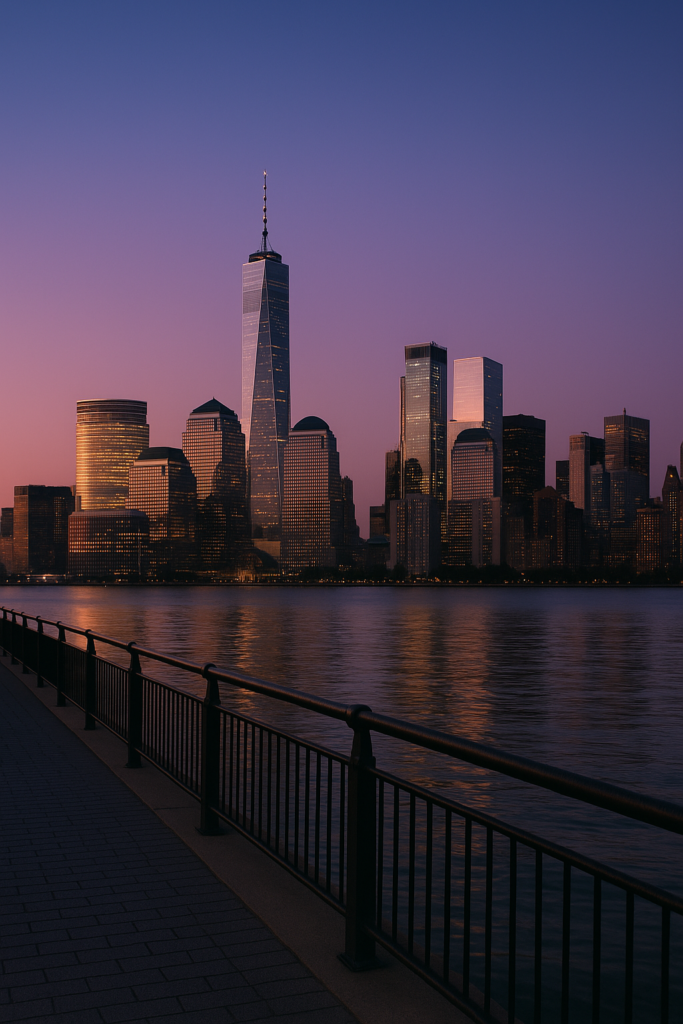
As the last light fades from the sky and the Manhattan skyline begins to shimmer with its own inner glow, it’s impossible not to feel a sense of awe. The sight of One World Trade Center gleaming above the river, the gold reflections on glass, the calm ripples of the Hudson catching the colors of the sky — all of it reminds you why New York is often called the city of dreams.
The Manhattan skyline at sunset is not just an image; it’s an experience. It captures the very essence of New York — its energy, resilience, elegance, and light. Whether seen from a ferry, a rooftop, or the opposite shore, it leaves an imprint on everyone who witnesses it.
And perhaps that’s the true magic of this golden hour — that for a few brief moments each day, amidst all the movement and noise, the city stands still. It glows. It breathes. It reflects not just sunlight, but the endless human spirit that built it. In the end, the skyline is more than a view — it’s a reminder that beauty can rise from ambition, and light can always find its way through the tallest towers of steel and glass.
-
Bridging Time: The Story and Spirit of the Brooklyn Bridge
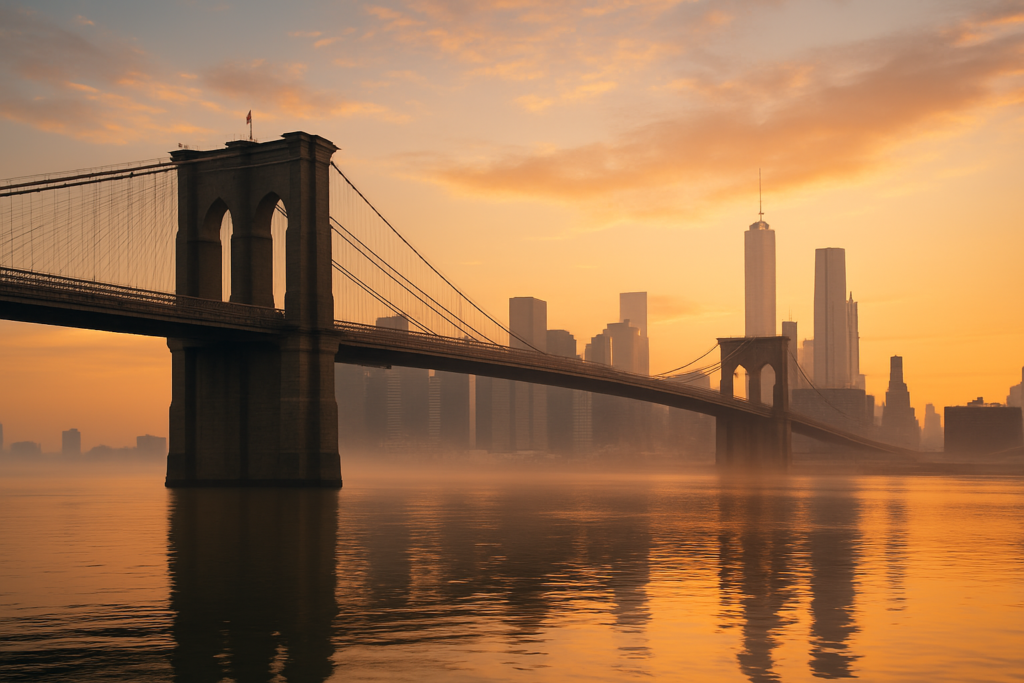
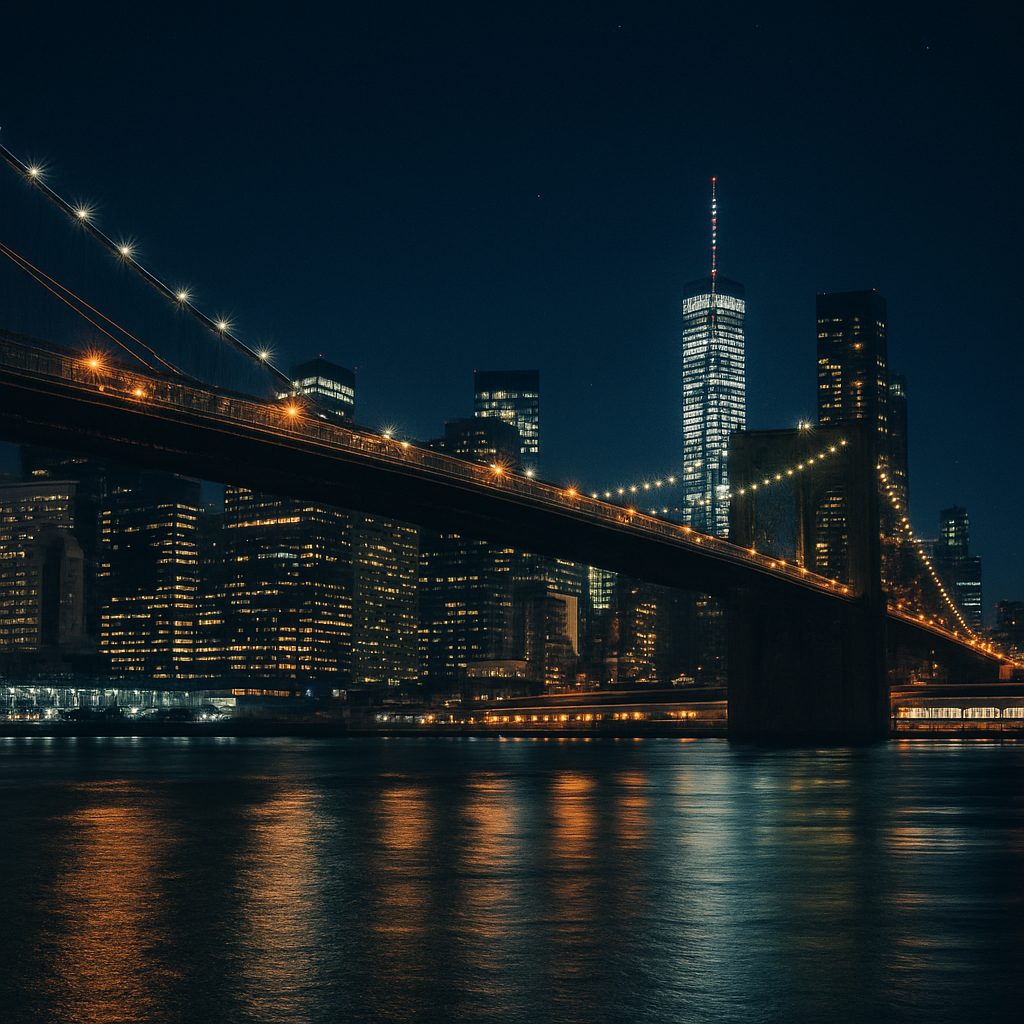
The Brooklyn Bridge is more than a structure—it’s a symbol of dreams made real in steel and stone. Spanning the East River between Manhattan and Brooklyn, it has stood for nearly a century and a half as one of the most recognizable landmarks in the world. It embodies the ambition of a growing city, the courage of the people who built it, and the timeless beauty of great design. To walk across it is to walk through history—a story of innovation, perseverance, and connection.
From the moment it opened in 1883, the Brooklyn Bridge captured hearts and imaginations. It wasn’t just the longest suspension bridge of its time—it was proof that human ingenuity could overcome almost any obstacle. Today, millions of people cross it each year, taking in sweeping views of the New York City skyline, the East River below, and the enduring sense that this bridge isn’t just built between two boroughs—it’s built between the past and the future.
The Birth of an Idea
In the mid-1800s, Brooklyn and Manhattan were two separate cities, each buzzing with growth. Every day, ferries shuttled people and goods across the East River, but the currents were strong, the weather unpredictable, and the need for a more reliable connection was clear. That’s when a visionary engineer named John Augustus Roebling proposed an idea that seemed almost impossible: a bridge that would span the East River without obstructing its busy shipping lanes.
At that time, suspension bridges were still a new and risky form of engineering. But Roebling had already built smaller ones successfully and was convinced that with the right materials and design, a bridge linking Manhattan and Brooklyn could be built—and could stand the test of time.

His idea wasn’t just about transportation; it was about unity. The bridge would physically and symbolically bring the two cities together, reflecting a nation that was growing and redefining itself after the turmoil of the Civil War.
Roebling’s vision was bold. He wanted a bridge longer than any ever attempted, one that could withstand powerful tides, winds, and the weight of thousands of people and vehicles. It would require materials stronger than iron, new construction techniques, and years of dedication. It would also demand faith—from financiers, politicians, workers, and the public. In the end, the project would take 14 years, claim dozens of lives, and change the course of engineering forever.
Building the Impossible
The construction of the Brooklyn Bridge began in 1870, but it quickly became one of the most challenging engineering feats of the 19th century. The first step was to lay the foundations deep beneath the East River using enormous wooden boxes called caissons. These watertight chambers were sunk into the riverbed, and workers—known as “sandhogs”—dug out sediment from within them under high air pressure. It was dangerous work. Many workers suffered from what was then called “caisson disease,” now known as the bends, a painful and sometimes fatal condition caused by rapid decompression.
Tragedy struck early when John Roebling himself was injured in an accident during the initial stages of construction. He developed an infection and died soon after. The leadership of the project then passed to his son, Washington Roebling, who had worked alongside him and was equally brilliant.
Tragedy struck early when John Roebling himself was injured in an accident during the initial stages of construction. He developed an infection and died soon after. The leadership of the project then passed to his son, Washington Roebling, who had worked alongside him and was equally brilliant. But as fate would have it, Washington too became seriously ill from caisson disease. Confined to his home, he was left unable to oversee construction in person.
This could have been the end of the dream. Instead, something extraordinary happened. Washington’s wife, Emily Warren Roebling, stepped in. With remarkable intelligence and determination, she studied engineering, mathematics, and materials science so she could act as her husband’s eyes and ears on the project. Every day, she carried messages and instructions to the workers, monitored progress, and handled correspondence with engineers and city officials. Without her, the bridge might never have been completed. Her role became a defining example of quiet heroism—an often-overlooked contribution to one of the greatest engineering achievements in history.
Strength and Grace in Stone and Steel
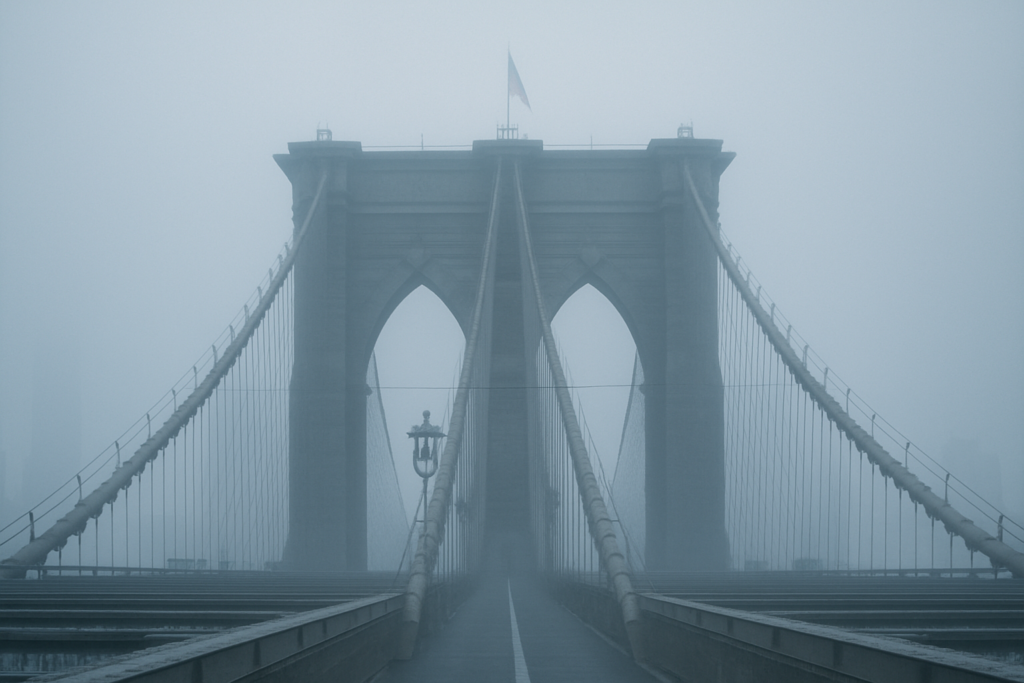
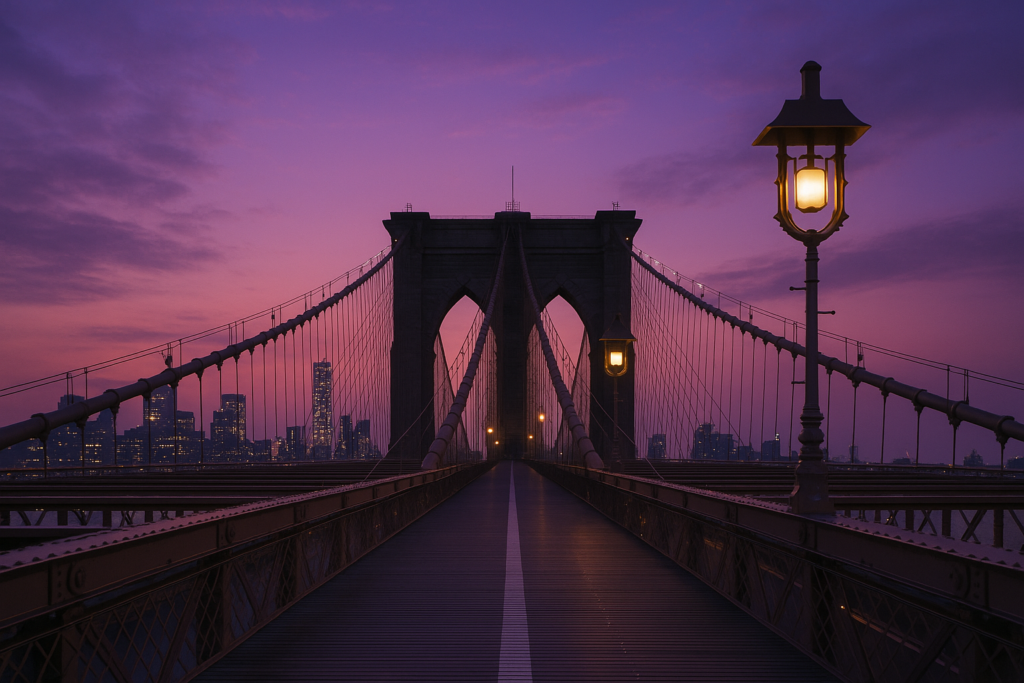
The Brooklyn Bridge wasn’t just a technical marvel; it was also a masterpiece of design. Rising from the river, its twin towers were built from granite, limestone, and cement, reaching nearly 280 feet into the sky. Their Gothic-style pointed arches gave the bridge its signature look—majestic, timeless, and instantly recognizable. The towers were not only structural pillars but also works of art, symbolizing strength and stability.
From these towers, four enormous cables—each made of more than 5,000 steel wires—were strung across the river. At the time, steel was a new material for bridge construction, stronger and more flexible than iron, and its use was revolutionary. These main cables supported a network of smaller vertical wires that held up the deck, creating a web-like pattern that still fascinates photographers and visitors today.
The result was a bridge that combined beauty and practicality like no other. The roadway was designed to carry carriages, trolleys, trains, and pedestrians, with an elevated promenade running down the center. That walkway, still open today, remains one of the most beloved features of the bridge. It gives walkers and cyclists an unobstructed view of the Manhattan skyline, the Statue of Liberty in the distance, and the powerful flow of the East River beneath their feet.
When it was completed in 1883, the Brooklyn Bridge stretched 1,595 feet between towers—making it the longest suspension bridge in the world. Its construction had cost more than $15 million and taken the lives of more than twenty men. But it stood as a triumph of engineering and an enduring symbol of what human beings can achieve when they dare to dream beyond the limits of their time.
The Grand Opening
On May 24, 1883, tens of thousands of people gathered to witness the opening of the Brooklyn Bridge. Cannon fire echoed, bands played, flags waved, and fireworks lit up the night sky. The President of the United States, Chester A. Arthur, crossed the bridge alongside the mayor of New York. Emily Roebling herself made the first official trip across, carrying a rooster as a symbol of victory. It was a moment of celebration and awe—the kind that defines an era.
That first day, over 150,000 people crossed the bridge on foot or by carriage, marveling at the views and the sheer scale of the structure. Many had doubted it would ever be completed, but there it stood—strong, silent, magnificent. The Brooklyn Bridge instantly became a source of pride for New Yorkers and an inspiration to the world.
Of course, not everyone trusted it at first. A week after opening, a rumor spread that the bridge was collapsing, causing a stampede that led to several deaths. To restore public confidence, a famous showman led a parade of 21 elephants across the bridge—a spectacle that convinced everyone it was truly safe. From then on, the Brooklyn Bridge wasn’t just a crossing; it was a legend.
The Bridge That Changed a City
The Brooklyn Bridge didn’t just connect two boroughs—it transformed them. Before the bridge, Brooklyn was its own city, independent from Manhattan. But the new link made it easier for people to travel, trade, and work across the river. It helped spark Brooklyn’s growth and laid the foundation for the two cities to merge into one New York City in 1898. It was both a physical and symbolic unification.
As the decades passed, the bridge adapted to new technologies and ways of life. Horse-drawn carriages gave way to automobiles. Electric trolleys once ran along its lanes before being replaced by cars and trucks. For a time, trains even crossed the bridge. Today, six lanes carry vehicles between Manhattan and Brooklyn, while the upper promenade remains reserved for pedestrians and cyclists. Despite constant use, the bridge continues to serve its city with remarkable endurance.
The bridge’s design also influenced countless others around the world. It proved that suspension bridges could be both strong and elegant, paving the way for giants like the Golden Gate Bridge and the Verrazzano-Narrows Bridge. Its combination of engineering precision and architectural grace set a new standard that many would follow but few could equal.
A Symbol in Stone and Imagination
Over time, the Brooklyn Bridge has become more than infrastructure—it’s a cultural icon. It appears in paintings, poems, films, and songs. Artists like Joseph Stella captured its sweeping geometry; writers like Walt Whitman and Hart Crane saw it as a metaphor for hope and transcendence. To photographers, it’s a dream subject: the perfect blend of symmetry, perspective, and light.
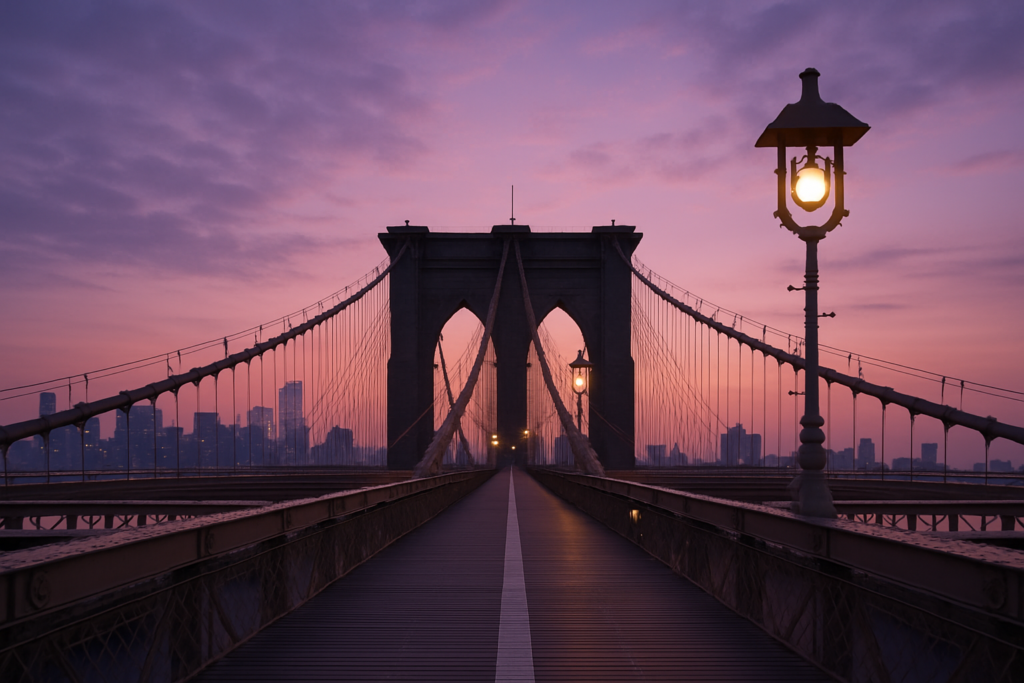
For New Yorkers, it’s something deeper—a daily reminder of resilience. Through wars, depressions, and blackouts, the bridge has endured. It’s watched the city grow from horse carts to skyscrapers, from gas lamps to neon lights, from the Industrial Age to the Digital one. And yet, when you stand in the middle of it and look out at the skyline, it feels timeless. The cables hum in the wind. The stone towers glow in the sunrise or shimmer at sunset. The noise of traffic below fades, and for a moment, you feel suspended between the old world and the new.
The phrase “selling the Brooklyn Bridge” even became part of American slang, referring to an impossible con or an unbelievable claim. That, too, is part of its mystique: the bridge has always represented big dreams and bigger promises.
The Bridge Today
Today, the Brooklyn Bridge carries over a hundred thousand vehicles each day, along with thousands of pedestrians and cyclists. Despite its age, it remains a vital artery in New York’s transportation network. Regular maintenance keeps it safe and strong, though ongoing restoration projects are often needed to combat weathering and the wear of time. The city continues to invest in upgrades—improving lighting, resurfacing the pedestrian walkway, reinforcing cables, and enhancing safety.
Beneath the bridge, new life has emerged as well. Once an industrial zone, the area now includes parks, cafes, and community spaces. The views from Brooklyn Bridge Park—especially at sunset—offer some of the best perspectives of Manhattan you’ll find anywhere in the city. The bridge itself has become a favorite location for movies, weddings, and photographs, drawing millions of tourists from around the world.
In recent years, the city has also made efforts to improve the pedestrian and cycling experience, separating lanes to reduce congestion and ensuring the bridge remains accessible to everyone. Crossing the Brooklyn Bridge on foot has become one of New York’s most beloved experiences—a journey through history and beauty rolled into one.
Walking the Bridge: An Experience Like No Other
If you visit New York, walking the Brooklyn Bridge is an absolute must. The best times are early morning, when the city is just waking up and the air is cool, or during sunset, when the sky turns gold and pink over the skyline. From Brooklyn, you’ll see Manhattan rise in front of you like a promise. From Manhattan, you’ll watch the towers of Brooklyn grow closer, framed by the evening light.
As you walk, you’ll notice the rhythm of the cables, the echoes of footsteps on wooden planks, and the distant hum of the city. Street performers, artists, and vendors line parts of the walkway, adding color and sound to the experience. You can pause at the center to take in panoramic views of the Statue of Liberty, the Empire State Building, and the shimmering river below.
Walking the bridge is free, open 24 hours a day, and always unforgettable. It’s not just sightseeing—it’s participation in a living piece of history. Every step is a reminder of those who dreamed it, built it, and preserved it for the generations who follow.
Preservation and the Future
Maintaining a 19th-century bridge in a 21st-century city is no small task. The Brooklyn Bridge faces constant stress from traffic, weather, and time. Engineers regularly inspect the structure, reinforcing where necessary and replacing worn materials while preserving its original appearance. Because of its landmark status, every modification must balance preservation with modernization.
Efforts are also underway to make the surrounding areas more vibrant. The space beneath the Manhattan side has been turned into a public area known as “The Arches,” featuring courts, seating, and cultural programming. In Brooklyn, the waterfront has been transformed into a scenic park. These projects not only beautify the area but also reconnect communities with the bridge as both a functional and cultural space.
The bridge has survived countless challenges—storms, accidents, and even ships striking its undercarriage. Yet it endures, stronger than ever, a reminder that great design can transcend generations. Future restoration plans aim to maintain that strength while making the bridge more sustainable and accessible.
The Meaning of the Brooklyn Bridge
More than anything, the Brooklyn Bridge stands for connection. It links boroughs, neighborhoods, and lives. It links art and engineering, history and modernity, dream and reality. It connects not just two shores, but the idea that when people come together with courage and vision, they can build something that lasts forever.
Every cable, every stone, every plank tells a story of persistence. The bridge was built by immigrants, laborers, engineers, and visionaries—by people who believed in progress even when it seemed impossible. It has seen generations come and go, yet it remains one of the world’s most beloved landmarks, a place where humanity’s creative spirit quite literally spans a river.
Walking across it today, you can feel that legacy. You can sense the hands that built it, the minds that designed it, and the millions who have crossed it since. It is both monument and metaphor—anchored in the past, stretching toward the future.
Conclusion
The Brooklyn Bridge is a masterpiece not only of engineering but of imagination. It began as a dream in the mind of one man, was carried forward by his family and thousands of workers, and has become an enduring symbol of what New York—and indeed humanity—can achieve. It represents hope, resilience, and connection.
When you stand on its wooden walkway, surrounded by the hum of the city, it’s easy to see why it has inspired so many for so long. The skyline stretches before you, the water glimmers below, and the bridge itself seems to breathe—a living reminder that beauty and strength can exist side by side.
The Brooklyn Bridge is not just part of New York’s story; it is part of the world’s story. It reminds us that even the most daring dreams can take shape when we build with vision, courage, and heart. And as long as it stands, the bridge will continue to carry not only people across the river but also the timeless human desire to connect—to reach out, to build, and to believe.