Your cart is currently empty!
Fiji Travel Guide: The Ultimate Guide to Planning Your Tropical Island Escape
Welcome to Fiji
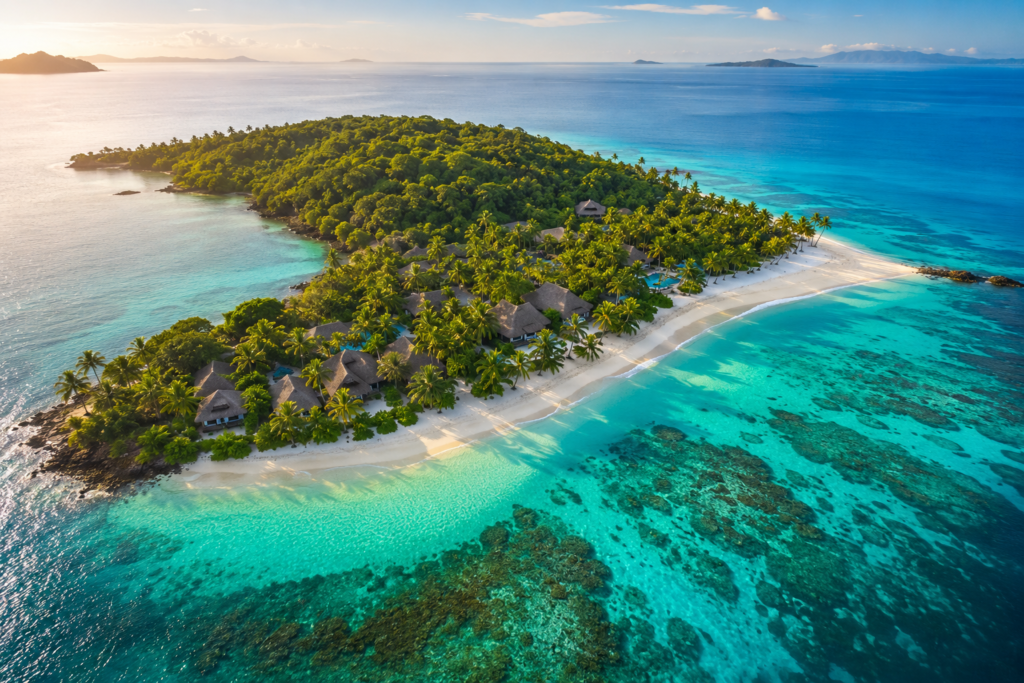
Scattered across the heart of the South Pacific, Fiji is a destination that effortlessly lives up to the tropical paradise imagined by travellers around the world. With more than 330 islands surrounded by crystal-clear lagoons, vibrant coral reefs and endless stretches of white sand, Fiji offers far more than beautiful beaches. It is a country where rich Indigenous culture, genuine hospitality and spectacular natural landscapes combine to create unforgettable travel experiences for every type of visitor. Whether you’re planning a luxury honeymoon, an adventurous island-hopping holiday, a family getaway or a relaxing escape from everyday life, Fiji provides an extraordinary balance of relaxation and adventure that keeps visitors returning year after year.
One of Fiji’s greatest attractions is its incredible diversity. While many people picture overwater bungalows and secluded beaches, the islands offer so much more. Dense tropical rainforests conceal hidden waterfalls, mountain ranges provide breathtaking hiking opportunities, colourful coral reefs teem with marine life, and traditional villages offer authentic cultural experiences that allow visitors to learn about the country’s fascinating history and customs. One day you may find yourself snorkelling alongside tropical fish in warm turquoise waters, while the next could be spent exploring lush national parks, sailing between remote islands or enjoying a sunset dinner overlooking the Pacific Ocean.
Despite being famous as a luxury destination, Fiji is surprisingly accessible for a wide range of budgets. Backpackers can find affordable beachfront hostels and island resorts, couples can enjoy boutique adults-only retreats, while families have access to world-class resorts featuring children’s clubs, water parks and activities suitable for all ages. Luxury travellers are equally spoiled with private island resorts, exclusive villas and premium experiences that rank among the finest in the South Pacific. Regardless of your budget or travel style, Fiji welcomes visitors with genuine warmth that has become one of the country’s defining characteristics.
Perhaps nothing leaves a greater impression than the friendliness of the Fijian people. The phrase “Bula” is heard everywhere, serving as both a greeting and an expression of goodwill that perfectly captures the country’s relaxed atmosphere. Hospitality is deeply embedded within Fijian culture, and visitors are often surprised by the sincerity of the smiles, conversations and welcoming nature of locals they encounter throughout their journey. This genuine warmth, combined with breathtaking scenery and an easy-going island lifestyle, creates an environment where visitors quickly feel relaxed and connected to their surroundings.
Why Visit Fiji?
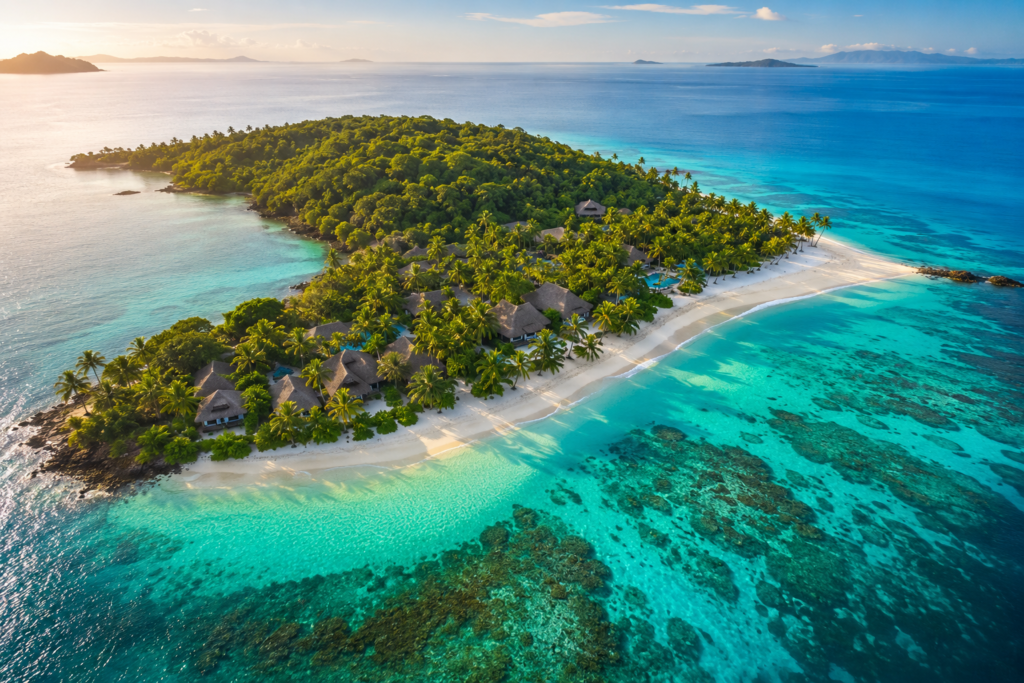
Fiji has earned its reputation as one of the world’s most desirable tropical destinations for good reason. While countless islands across the Pacific boast beautiful beaches, Fiji distinguishes itself through its remarkable combination of accessibility, diversity and authentic cultural experiences. Travellers can enjoy luxurious accommodation, exceptional diving, adventurous outdoor activities and immersive village visits, all within a relatively compact island nation that is easy to navigate. Whether you’re visiting for five days or several weeks, there is always another island, reef or hidden beach waiting to be discovered.
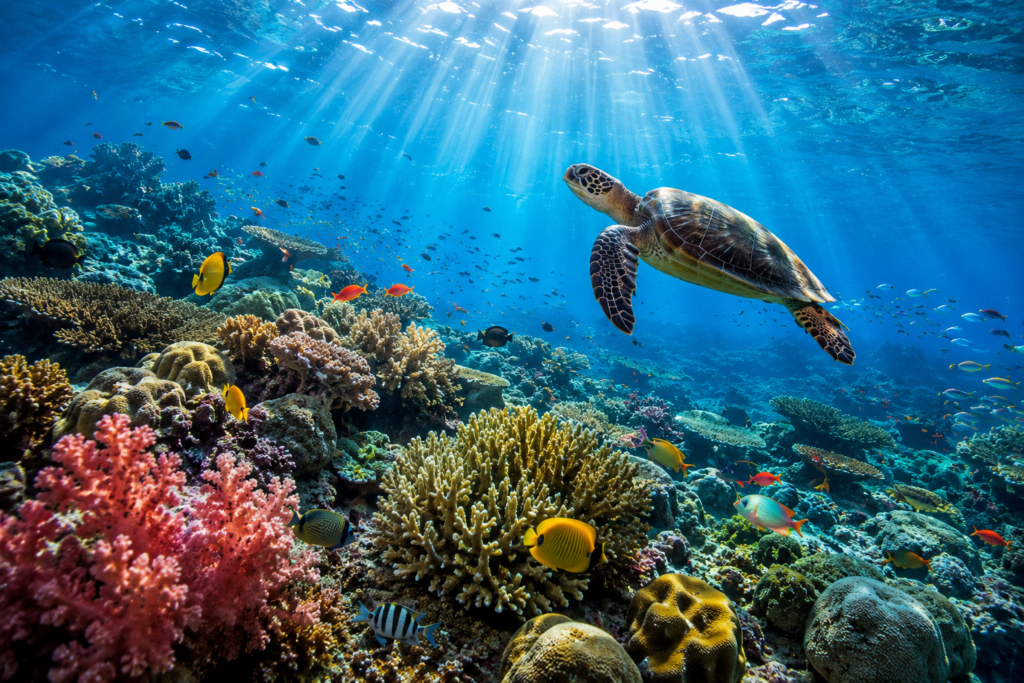
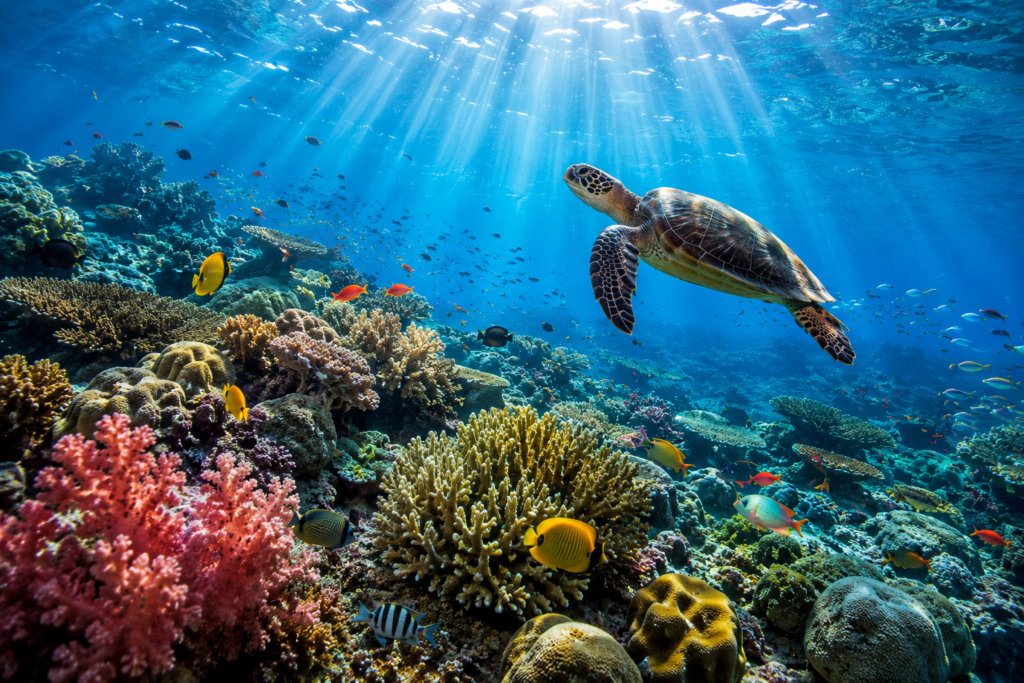
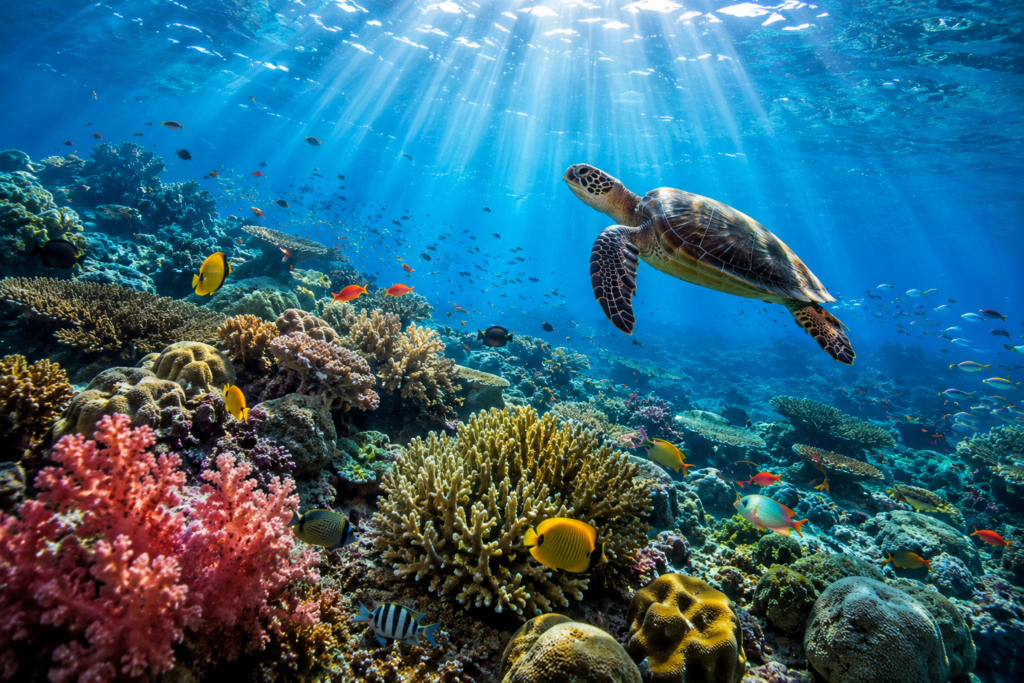
For many visitors, Fiji’s marine environment is the highlight of their holiday. The country sits within one of the most biologically diverse regions of the Pacific Ocean, making it a paradise for snorkellers and scuba divers. Colourful coral gardens provide habitat for thousands of tropical fish, sea turtles, reef sharks, manta rays and countless other marine species. Protected marine reserves ensure many reefs remain in exceptional condition, while warm water temperatures throughout much of the year make underwater exploration enjoyable regardless of the season. Even first-time snorkellers are often amazed by how much marine life can be seen just metres from the shoreline at many resorts.
Beyond the coastline lies an equally impressive interior. The larger islands of Viti Levu and Vanua Levu feature volcanic mountains, rainforest-covered valleys, rivers, waterfalls and traditional villages that showcase another side of Fiji often overlooked by visitors who remain exclusively on the beaches. Guided hiking tours lead through dense tropical forests where colourful birds, native plants and panoramic viewpoints reward adventurous travellers. River safaris, ziplining experiences and visits to natural hot springs provide additional opportunities to explore landscapes that contrast beautifully with the country’s famous coastline.
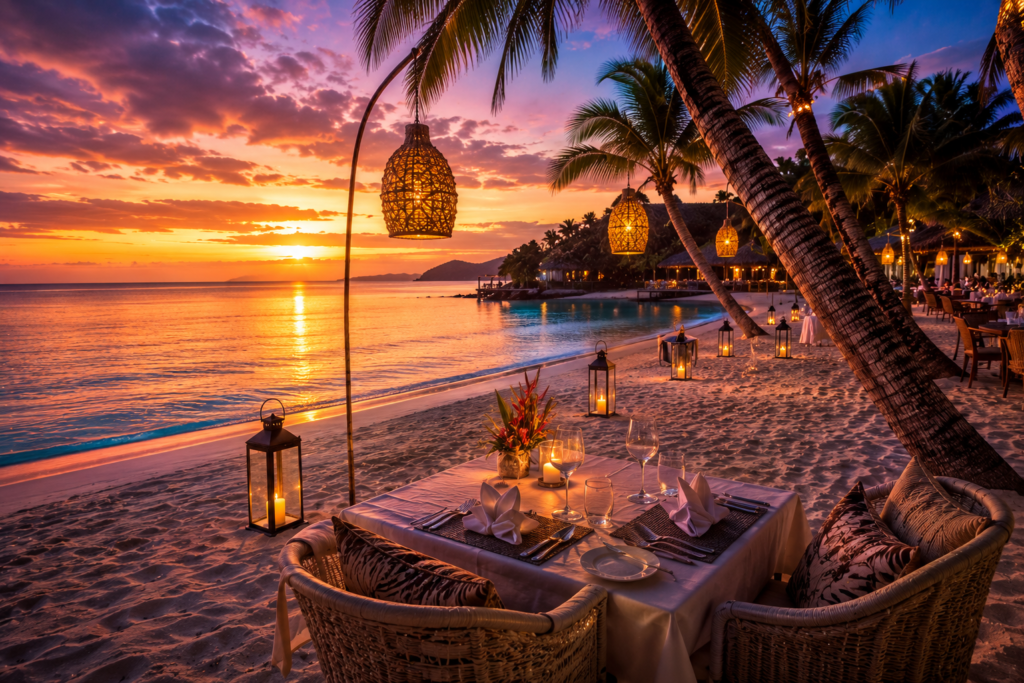
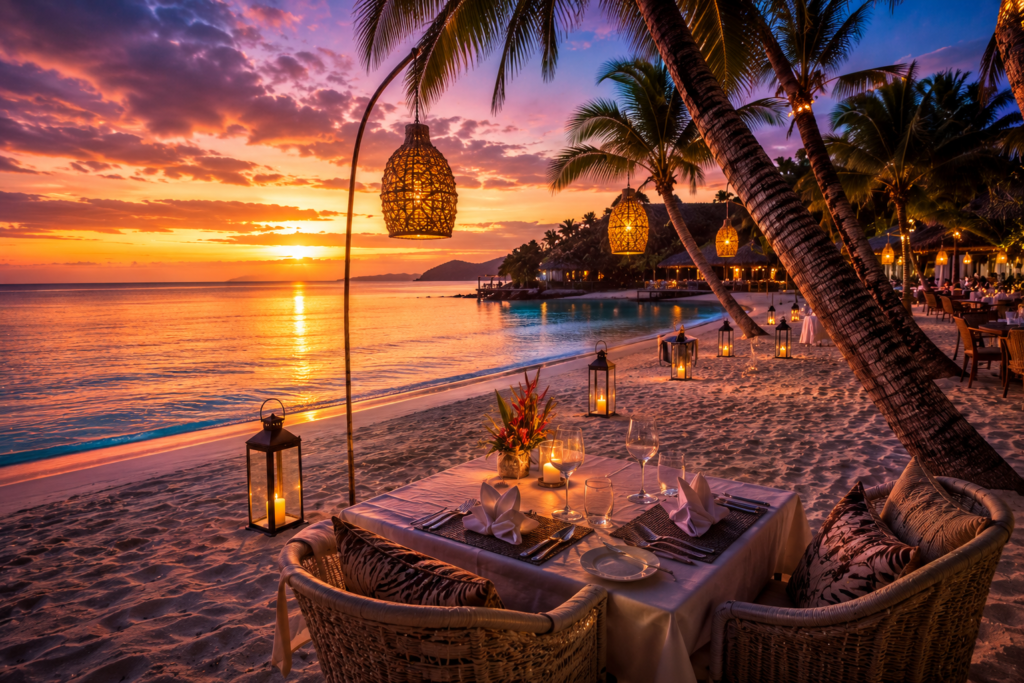
Fiji also serves as an outstanding destination for those seeking relaxation. Days can easily be spent lounging beneath swaying palm trees, enjoying spa treatments overlooking the ocean, reading beside infinity pools or watching spectacular sunsets from beachfront restaurants. Unlike busier international destinations, many parts of Fiji still retain a peaceful atmosphere where visitors can genuinely disconnect from the pressures of everyday life. The slower pace of island life encourages travellers to appreciate simple pleasures such as sunrise walks along empty beaches, fresh tropical fruit at breakfast and evenings spent listening to gentle waves beneath star-filled skies.
Where is Fiji?
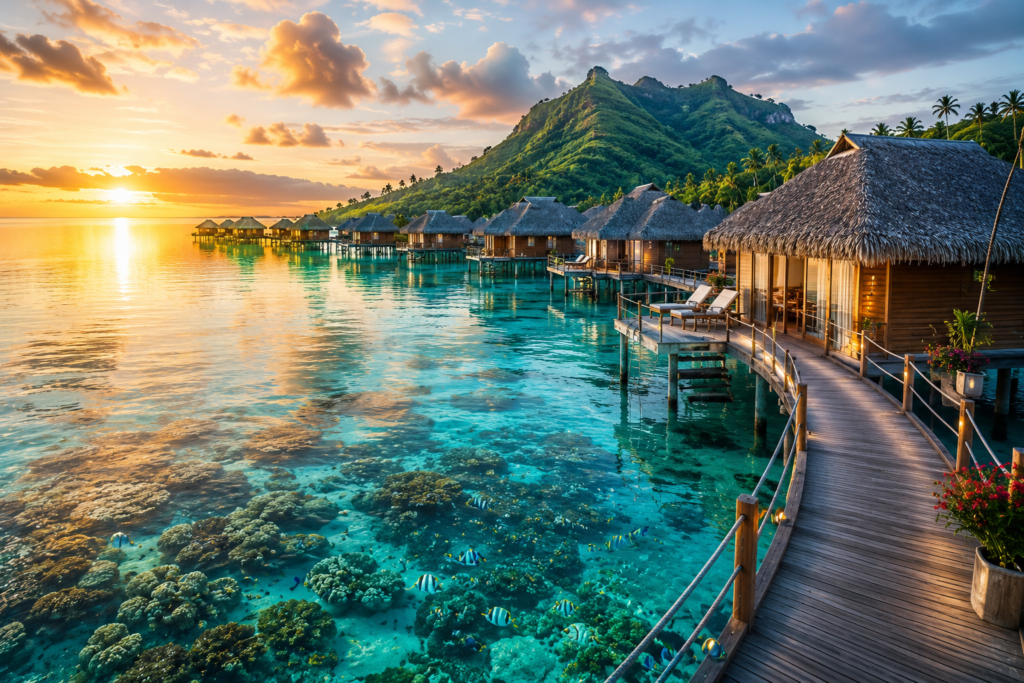
Fiji is located in the South Pacific Ocean approximately 2,000 kilometres northeast of New Zealand and around 2,700 kilometres east of Australia. Although the country consists of more than 330 islands, only around one-third are permanently inhabited. The two largest islands, Viti Levu and Vanua Levu, are home to the majority of Fiji’s population and contain most major towns, transport connections and visitor services. Numerous smaller island groups including the Mamanuca Islands, Yasawa Islands, Taveuni, Kadavu and the Lau Islands each offer unique experiences ranging from luxury resorts and exceptional diving to untouched natural beauty and authentic cultural encounters.
The country’s international gateway is Nadi on the western coast of Viti Levu. Most overseas visitors arrive through Nadi International Airport before continuing to other islands by ferry, domestic aircraft, helicopter or speedboat. Despite Fiji’s widespread geography, transportation between many popular islands is surprisingly efficient, allowing travellers to combine several destinations during a single holiday.
The Mamanuca Islands are among Fiji’s most popular destinations due to their close proximity to Nadi and abundance of luxury resorts, family-friendly accommodation and exceptional snorkelling. The Yasawa Islands, located further north, are renowned for their dramatic volcanic scenery, crystal-clear lagoons and more secluded atmosphere. Travellers seeking world-class diving often head towards Taveuni or Kadavu, while those interested in experiencing authentic Fijian culture may choose to explore lesser-visited regions where traditional village life remains largely unchanged.
How to Get to Fiji
Travelling to Fiji is relatively straightforward, particularly for visitors arriving from Australia, New Zealand and North America. Nadi International Airport serves as the country’s primary international hub and receives regular direct flights from Sydney, Melbourne, Brisbane, Adelaide, Auckland, Los Angeles, San Francisco, Vancouver, Singapore and several Pacific Island nations. For Australian travellers, flight times generally range between four and five hours depending on the departure city, making Fiji one of the most accessible tropical island destinations in the South Pacific.
Upon arriving in Nadi, visitors are immediately welcomed by Fiji’s famous hospitality. It is not uncommon for arriving passengers to be greeted with live Fijian music performed within the terminal, setting the tone for the relaxed and friendly atmosphere that continues throughout the holiday. Airport transfers are readily available, with shuttle buses, taxis and private transfers connecting visitors to hotels throughout Nadi, Denarau Island and the nearby Coral Coast.
Travellers planning to explore beyond the main island have several transport options available. High-speed catamarans operate regular services between Port Denarau and the Mamanuca and Yasawa Islands, providing scenic journeys across turquoise waters while stopping at numerous island resorts along the route. Domestic airlines connect larger islands such as Vanua Levu, Taveuni and Kadavu, significantly reducing travel times for those wishing to explore more remote regions. Helicopter transfers and seaplanes also operate between Nadi and several luxury island resorts, offering spectacular aerial views of coral reefs, sand cays and the surrounding Pacific Ocean.
Although many visitors choose to remain at a single resort throughout their holiday, island hopping has become increasingly popular and allows travellers to experience the remarkable diversity that Fiji offers. Spending several nights in different regions provides opportunities to discover contrasting landscapes, accommodation styles and activities while gaining a broader appreciation for the country’s unique island culture.
Best Time to Visit Fiji
Fiji is a year-round destination thanks to its tropical climate, warm ocean temperatures and consistently pleasant weather. However, each season offers slightly different conditions, making it worthwhile to consider your travel priorities when planning your holiday. Whether your goal is snorkelling in calm waters, escaping the Australian winter, surfing world-famous breaks or simply relaxing beneath palm trees, understanding Fiji’s seasons can help you make the most of your visit.
The dry season, typically running from May to October, is widely regarded as the best time to visit. During these months humidity is lower, rainfall is less frequent and daytime temperatures generally range between 24°C and 29°C. The comfortable climate creates ideal conditions for outdoor activities including snorkelling, diving, hiking, sailing and island hopping. Clear skies and calm seas also improve underwater visibility, making this period particularly popular among scuba divers and photographers. Because this coincides with school holidays in Australia and New Zealand, accommodation should be booked well in advance, particularly at popular island resorts.
The wet season extends from November through April and brings warmer temperatures, higher humidity and an increased likelihood of tropical showers. Rainfall often occurs as brief but heavy downpours followed by sunshine rather than continuous rain throughout the day. The landscape becomes especially lush during these months, waterfalls flow more strongly and visitor numbers decline, often resulting in more attractive accommodation prices. While there is a greater chance of tropical cyclones between January and March, major disruptions remain relatively uncommon, and many travellers continue to enjoy excellent weather throughout the season.
For honeymooners and couples seeking a balance of pleasant weather and fewer crowds, the shoulder months of May, June, September and October are often considered ideal. These periods combine comfortable temperatures, beautiful ocean conditions and slightly lower visitor numbers than peak holiday periods, creating an excellent environment for romantic island escapes.
Exploring Fiji’s Islands: Which Region is Right for You?
Although Fiji is often spoken about as though it were a single destination, the country is made up of hundreds of islands, each offering its own unique personality and travel experience. Choosing where to stay is one of the most important decisions you’ll make when planning your holiday, as every island group caters to different interests, budgets and styles of travel. Some are renowned for luxury resorts and romantic sunsets, while others are celebrated for untouched coral reefs, traditional villages, world-class diving or adventurous hiking trails. Understanding what each region offers will help you create an itinerary that perfectly matches your dream South Pacific escape.
Viti Levu – The Heart of Fiji
Viti Levu is Fiji’s largest island and home to around three-quarters of the country’s population. It is where you’ll find the international airport in Nadi, the capital city of Suva, and many of Fiji’s most popular resorts. While some travellers simply use Viti Levu as a gateway to the outer islands, spending a few days exploring the island reveals an impressive variety of landscapes, attractions and cultural experiences.
The western side of Viti Levu enjoys a drier climate and is home to the popular Denarau Island resort precinct. Connected to the mainland by a short causeway, Denarau offers luxury hotels, a marina, golf course, shopping village and a wide selection of restaurants, making it an excellent base for first-time visitors. Ferries departing from Port Denarau provide easy access to the Mamanuca and Yasawa Islands, making island hopping convenient for travellers with limited time.
Further south, the Coral Coast stretches for approximately 80 kilometres between Nadi and Suva. This beautiful coastline is famous for its palm-lined beaches, coral lagoons and family-friendly resorts. Visitors can spend their days snorkelling directly from the beach, exploring local villages, visiting waterfalls or enjoying cultural performances that showcase traditional Fijian dance and music. Inland, lush rainforest and mountainous terrain provide opportunities for hiking, river safaris and ziplining adventures that reveal a completely different side of Fiji.
Suva, Fiji’s capital, offers a more urban experience than the resort areas but is well worth visiting for those interested in history and culture. The city is home to museums, botanical gardens, bustling markets and colonial architecture that reflect Fiji’s multicultural heritage. Wandering through the Municipal Market provides an excellent opportunity to see colourful displays of tropical fruit, vegetables, spices and seafood while interacting with friendly local vendors.
⸻
The Mamanuca Islands
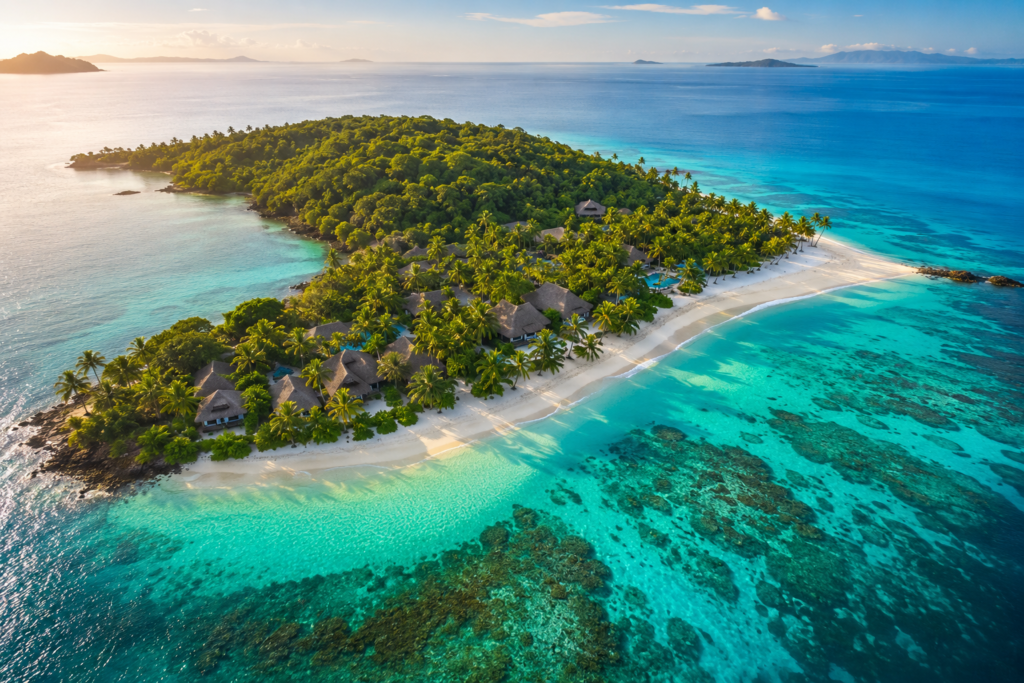
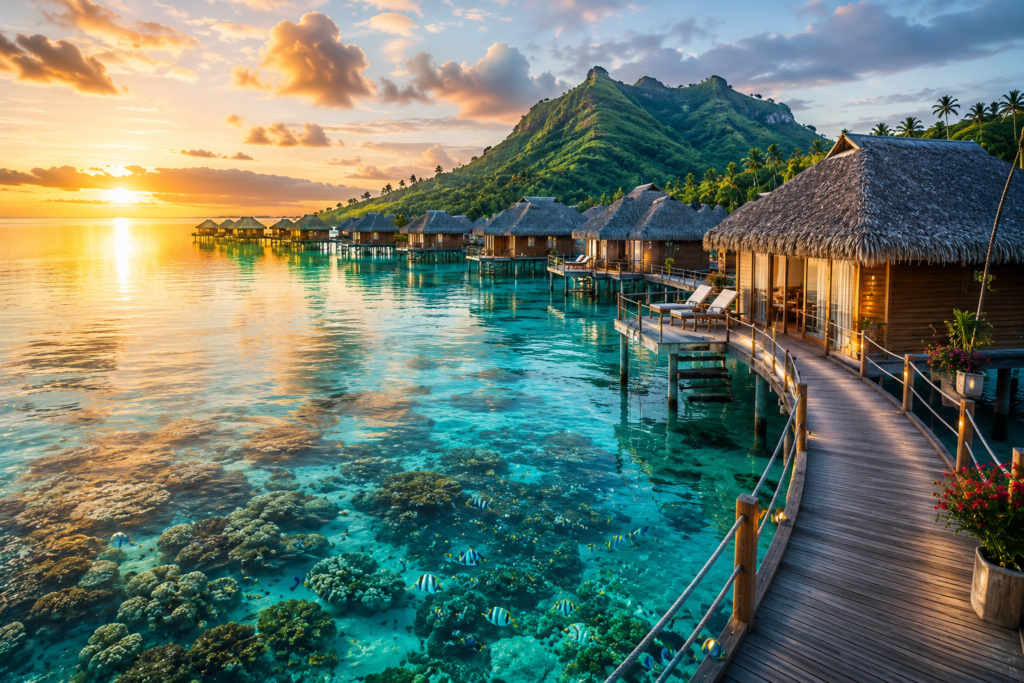
If you’ve ever imagined yourself relaxing beneath swaying coconut palms while gazing across impossibly blue water, chances are you’ve pictured something very similar to the Mamanuca Islands. Located just off the western coast of Viti Levu, this collection of around twenty idyllic islands is one of Fiji’s most visited destinations thanks to its easy accessibility, luxurious accommodation and spectacular beaches.
Many of the islands are home to just a single resort, creating an intimate atmosphere where guests can truly unwind. Crystal-clear lagoons make the Mamanucas one of Fiji’s best snorkelling destinations, with colourful coral reefs located only metres from the shoreline. Even beginner snorkellers can enjoy remarkable encounters with clownfish, butterflyfish, reef sharks and sea turtles in warm, calm waters.
The Mamanucas are also internationally recognised among surfers. During the right swell conditions, famous breaks such as Cloudbreak and Restaurants attract experienced surfers from around the world. Even if surfing isn’t on your itinerary, watching talented surfers tackle these legendary waves from a nearby boat tour is an unforgettable experience.
Accommodation options range from luxurious adults-only resorts perfect for honeymooners to family-friendly properties offering kids’ clubs, water sports and spacious beachfront villas. Because of their proximity to Nadi, the Mamanucas are ideal for shorter holidays or travellers wanting maximum relaxation without lengthy transfers.
⸻
The Yasawa Islands
Stretching north from the Mamanuca Islands, the Yasawa archipelago offers a more remote and adventurous island experience. Characterised by volcanic peaks, hidden coves and brilliant turquoise lagoons, the Yasawas remain one of Fiji’s most visually spectacular regions. Although increasingly popular, many islands still retain a peaceful atmosphere where life moves at a slower pace.
One of the Yasawas’ greatest appeals is the opportunity to island hop. Regular ferry services travel through the chain, allowing visitors to spend several nights on different islands while experiencing a variety of resorts and landscapes. Each island has its own unique character, ranging from lively backpacker-friendly accommodations to luxurious boutique resorts designed for complete tranquillity.
The Yasawas are famous for their exceptional snorkelling and diving. Coral reefs remain remarkably healthy, supporting abundant marine life including reef sharks, manta rays and colourful tropical fish. Between May and October, visitors have the opportunity to snorkel alongside majestic manta rays in specific channels where these gentle giants gather to feed. Seeing these graceful creatures glide effortlessly through crystal-clear water is often considered one of Fiji’s most memorable wildlife experiences.
Several islands also feature limestone caves, secluded beaches and panoramic hiking trails leading to spectacular viewpoints overlooking the surrounding Pacific Ocean. These natural attractions provide excellent opportunities for travellers seeking experiences beyond simply relaxing on the beach.
⸻
Vanua Levu
Often overshadowed by Viti Levu, Fiji’s second-largest island rewards travellers seeking a quieter and more authentic experience. Vanua Levu offers lush rainforests, traditional villages, uncrowded beaches and outstanding diving opportunities without the larger crowds found in more popular regions.
The town of Savusavu is affectionately known as Fiji’s “hidden paradise.” This charming harbour town features boutique resorts, hot springs, sailing facilities and easy access to nearby coral reefs. Its relaxed atmosphere appeals particularly to couples, divers and travellers wanting to escape the busier resort areas.
Vanua Levu also serves as an excellent destination for eco-tourism. Dense forests provide habitat for native bird species, while nearby marine reserves protect vibrant coral ecosystems. Visitors interested in sustainable travel often appreciate the island’s smaller-scale tourism industry and strong connection to local communities.
⸻
Taveuni – Fiji’s Garden Island
Known as the “Garden Island of Fiji,” Taveuni is a paradise for nature lovers. Abundant rainfall supports dense tropical rainforest, spectacular waterfalls and extraordinary biodiversity, making it one of Fiji’s greenest islands. Unlike destinations focused primarily on beaches, Taveuni offers a balance of coastal beauty and inland adventure.
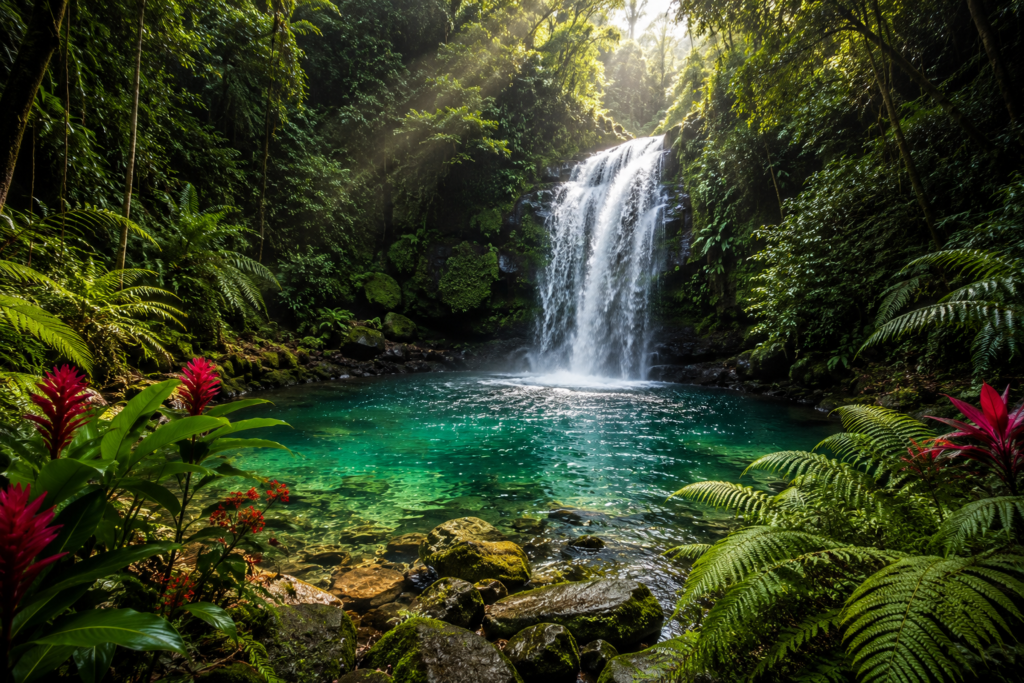
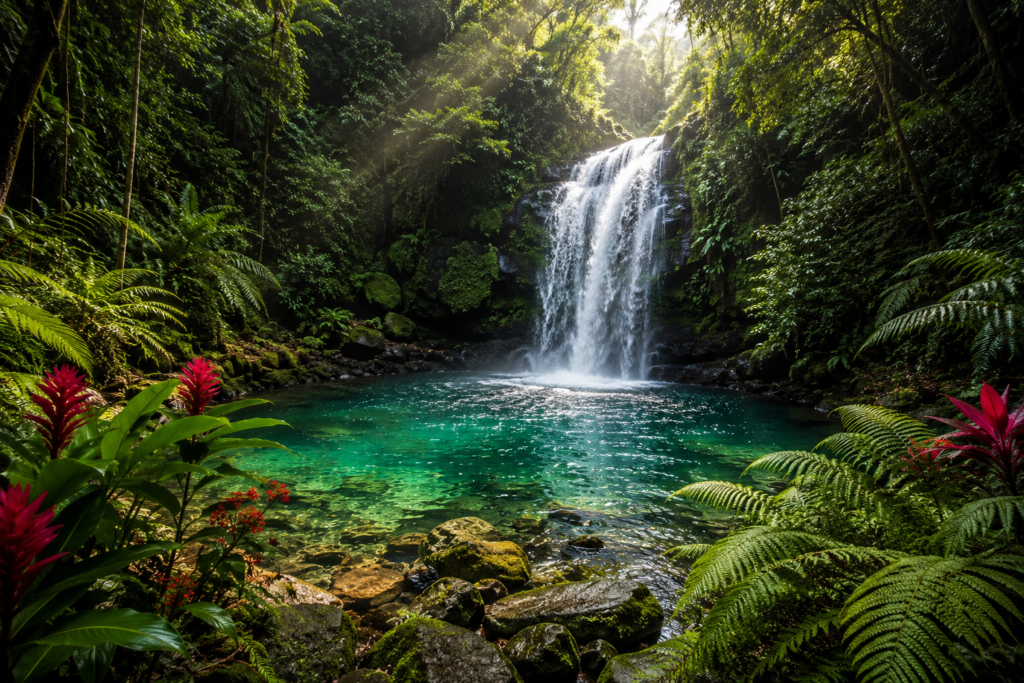
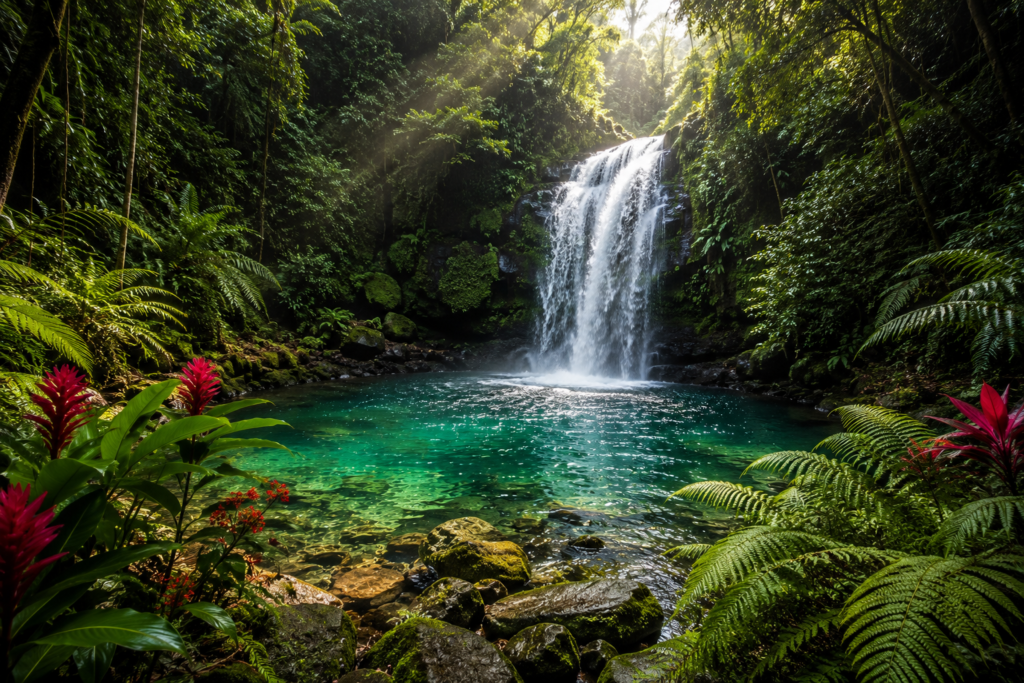
One of the island’s highlights is Bouma National Heritage Park, where well-maintained walking trails lead through rainforest to a series of breathtaking waterfalls. Swimming beneath these cascading falls surrounded by lush vegetation is an unforgettable experience that showcases Fiji’s remarkable natural beauty beyond its coastline.
Taveuni is equally famous among scuba divers thanks to the nearby Rainbow Reef. Regarded as one of the finest dive sites in the South Pacific, the reef features colourful soft corals, dramatic underwater formations and extraordinary marine biodiversity. Divers frequently encounter reef sharks, turtles, rays and countless tropical fish species in waters renowned for their exceptional visibility.
⸻
Where to Stay in Fiji
Accommodation in Fiji caters to every budget and travel style, ranging from affordable beachfront hostels to ultra-exclusive private island resorts. Choosing the right location is often just as important as selecting the resort itself, as different regions offer very different experiences.
Luxury travellers looking for exceptional service and world-class facilities should consider resorts such as Likuliku Lagoon Resort in the Mamanuca Islands, famous for its authentic overwater bures, Tokoriki Island Resort, which is consistently ranked among Fiji’s finest adults-only retreats, or Six Senses Fiji, where sustainability, wellness and luxury combine to create an unforgettable island escape. Guests can expect private plunge pools, gourmet dining, spa treatments, exceptional snorkelling and attentive service surrounded by spectacular natural scenery.
Couples seeking romance will also appreciate Lomani Island Resort, an intimate adults-only property offering beachfront accommodation, beautiful gardens and personalised service. Its peaceful atmosphere makes it particularly popular for honeymoons and anniversary celebrations.
Families travelling with children often choose larger integrated resorts offering extensive recreational facilities. Shangri-La Yanuca Island, located along the Coral Coast, provides multiple swimming pools, kids’ clubs, water sports and spacious family accommodation, while Plantation Island Resort in the Mamanuca Islands remains a favourite thanks to its relaxed atmosphere, safe swimming beaches and wide range of activities suitable for all ages.
Travellers on a more moderate budget will find excellent value at resorts such as Malolo Island Resort, Musket Cove Island Resort, The Naviti Resort and Outrigger Fiji Beach Resort, all of which combine comfortable accommodation with excellent locations and a broad range of recreational facilities.
Budget-conscious travellers are equally well catered for throughout Fiji. Many islands feature simple beachfront lodges and backpacker resorts where guests can enjoy spectacular surroundings without spending a fortune. Accommodation may be more basic, but the friendly atmosphere, communal dining experiences and easy access to beaches often create memorable experiences that rival those found at far more expensive resorts.
⸻
The Best Restaurants and Local Food to Try
Fiji’s culinary scene reflects the country’s diverse cultural influences, blending Indigenous Fijian traditions with Indian, Chinese and European flavours. Fresh seafood, tropical fruit, locally grown vegetables and aromatic spices feature prominently across menus, creating a vibrant food culture that surprises many first-time visitors.
In Denarau, Bonefish Seafood Restaurant is renowned for serving beautifully prepared local seafood while overlooking the marina, making it an excellent choice for a sunset dinner. Nearby, Cardo’s Steakhouse & Cocktail Bar offers generous portions, premium steaks and a lively atmosphere popular with both visitors and locals. Those craving authentic Indian cuisine should visit Indigo Indian Asian Restaurant, where traditional curries, tandoori dishes and freshly baked naan showcase the strong Indo-Fijian influence on the country’s cuisine.
Along the Coral Coast, The Wicked Walu Seafood Restaurant has become one of Fiji’s most celebrated dining destinations. Situated over the water with uninterrupted ocean views, the restaurant specialises in freshly caught seafood accompanied by local produce and tropical flavours. The romantic setting makes it particularly popular among honeymooners and couples celebrating special occasions.
Visitors should also make time to sample traditional Fijian dishes. Kokoda, often described as Fiji’s version of ceviche, combines raw fish marinated in citrus juice with coconut cream, tomatoes, onions and chilli to create a refreshing tropical dish perfect for warm weather. Lovo, a traditional feast cooked underground using heated stones, remains one of Fiji’s most iconic culinary experiences and is frequently served during cultural evenings at resorts. Other favourites include cassava, taro, freshly grilled reef fish, tropical fruit platters and sweet coconut-based desserts that showcase the abundance of fresh local ingredients available throughout the islands.
The Best Beaches in Fiji
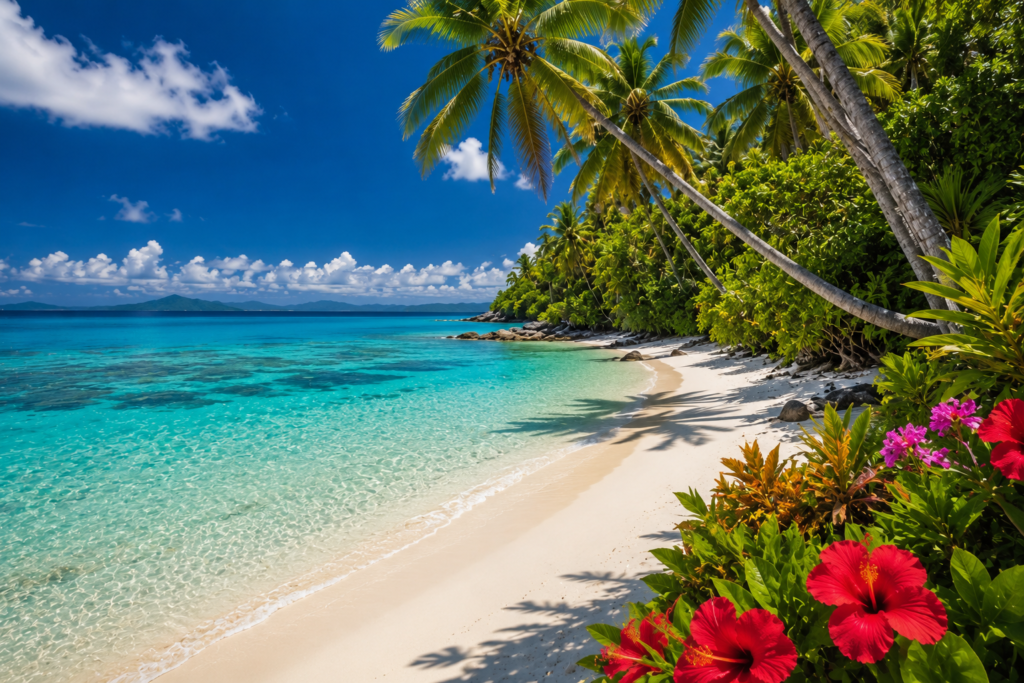
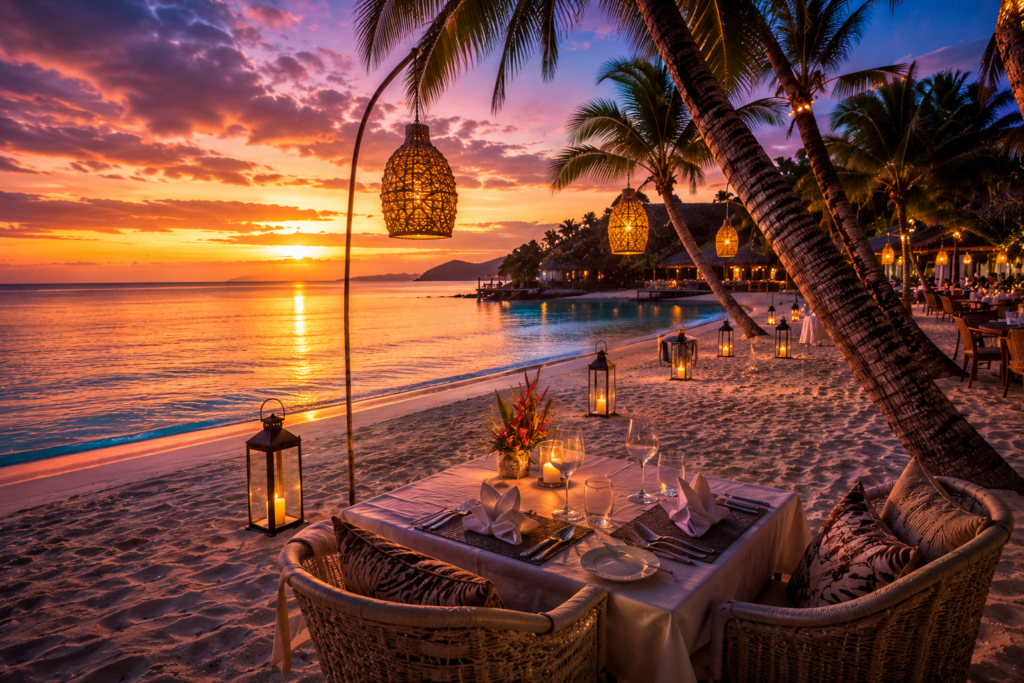
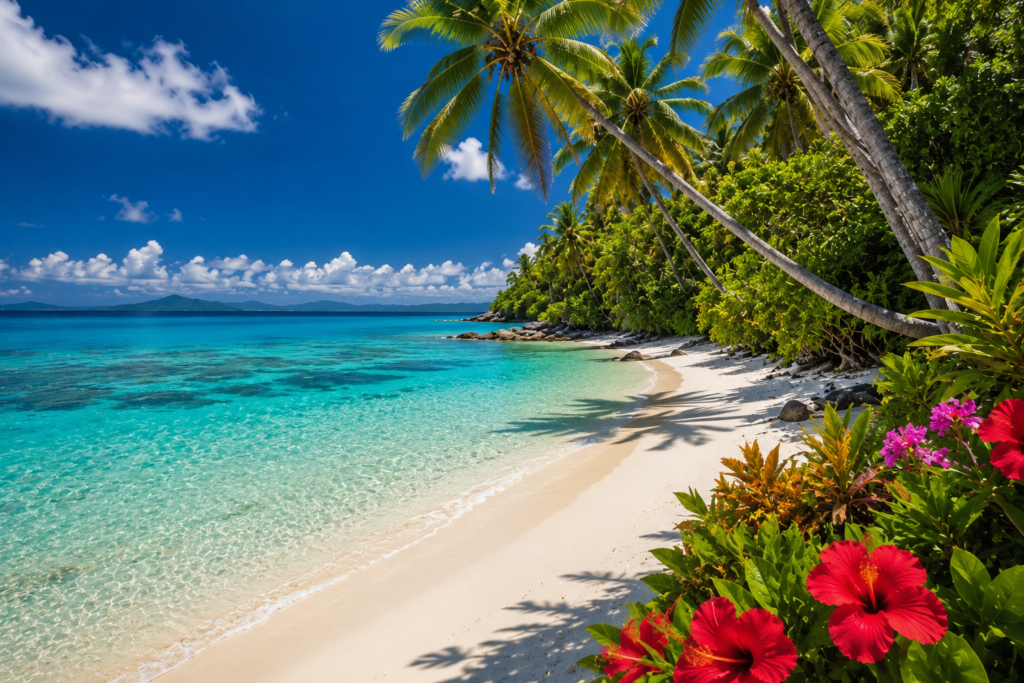
One of Fiji’s greatest attractions is its extraordinary coastline. With hundreds of islands scattered across the South Pacific, visitors are spoiled for choice when it comes to finding the perfect beach. Some stretches of sand are lined with luxurious resorts offering every imaginable comfort, while others remain almost untouched, providing a peaceful escape where the only sounds are gently lapping waves and rustling palm trees. Regardless of where you travel throughout Fiji, you’ll quickly discover that every island offers its own unique interpretation of paradise.
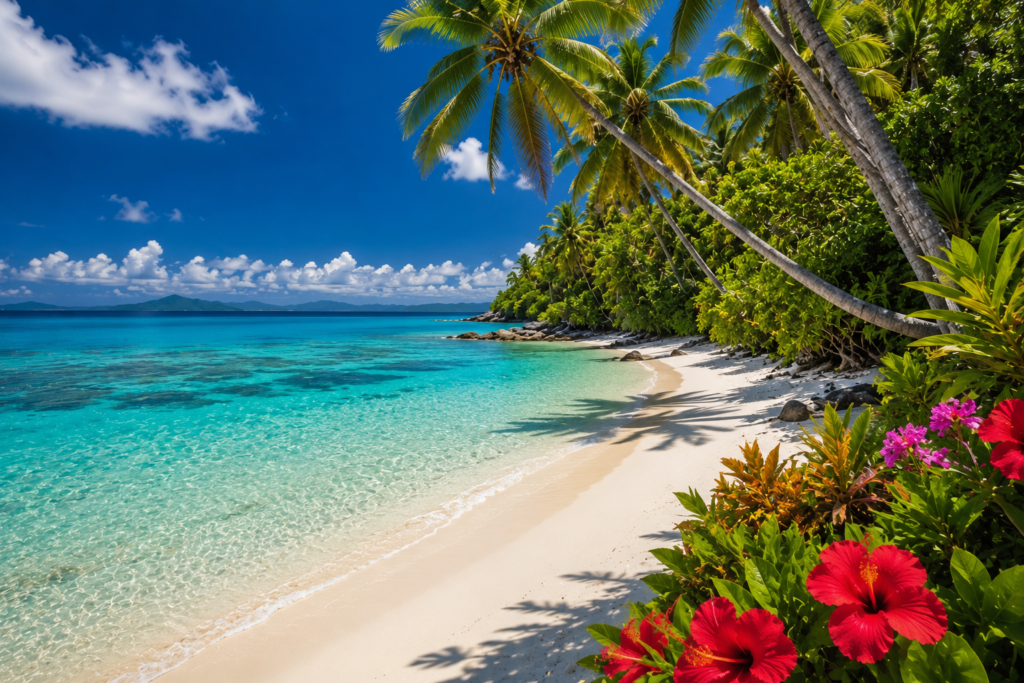
The beaches of the Mamanuca Islands are among the country’s most photographed. Powder-soft white sand meets shallow turquoise lagoons that remain calm throughout much of the year, creating ideal conditions for swimming, paddleboarding and snorkelling. Many visitors spend entire days moving between the beach, the ocean and a hammock suspended beneath coconut palms, embracing the relaxed island lifestyle that Fiji is famous for. Resorts throughout the Mamanucas often provide complimentary kayaks and paddleboards, allowing guests to explore nearby reefs and small uninhabited islands at their own pace.
Further north, the Yasawa Islands offer a more rugged and secluded coastal experience. Dramatic volcanic peaks rise behind pristine beaches where visitors may find themselves sharing the shoreline with only a handful of other people. The water is exceptionally clear, often providing visibility of more than twenty metres on calm days, making these islands particularly appealing for snorkelling and underwater photography. Hidden coves and quiet bays reward those willing to explore beyond the main resort beaches, with many accessible by kayak or short walking tracks.
The Coral Coast on Viti Levu presents another excellent option, particularly for families and travellers wanting convenient access from the mainland. Fringing coral reefs create sheltered lagoons ideal for children, while nearby beaches provide opportunities for snorkelling, paddleboarding and relaxed seaside dining. Inland rivers and waterfalls are also within easy reach, making the Coral Coast one of Fiji’s most diverse holiday destinations.
Snorkelling and Scuba Diving
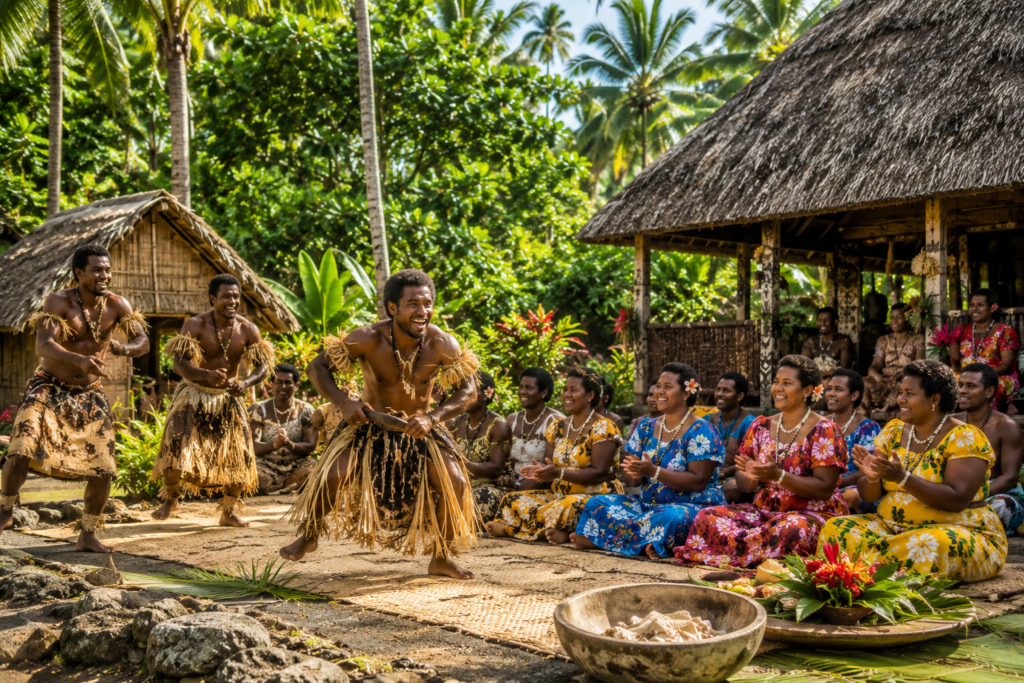
Fiji has earned an international reputation as one of the world’s premier diving destinations, and it is easy to understand why once you enter its warm tropical waters. Positioned within the South Pacific’s rich marine ecosystems, Fiji offers extraordinary biodiversity that attracts recreational snorkellers, beginner divers and experienced underwater photographers alike. Colourful coral gardens, dramatic reef walls, underwater caves and thriving marine reserves create unforgettable underwater experiences throughout the country.
Even travellers with no previous snorkelling experience can enjoy remarkable marine encounters. Many island resorts feature coral reefs directly offshore, allowing visitors to simply walk from the beach into crystal-clear water teeming with clownfish, butterflyfish, angelfish, parrotfish and vibrant coral formations. Sea turtles are frequently encountered throughout the islands, while harmless reef sharks can often be observed gracefully patrolling deeper sections of the reef. Morning conditions generally provide the calmest water and clearest visibility, making early snorkelling excursions particularly rewarding.
Scuba divers have an almost endless variety of sites to explore. Rainbow Reef near Taveuni is internationally renowned for its colourful soft corals that create spectacular underwater landscapes unlike almost anywhere else in the world. Nearby, the Great White Wall dive site is famous for its dense covering of white soft coral that transforms the reef into an almost otherworldly scene. Divers exploring the Beqa Lagoon can encounter bull sharks through carefully managed shark diving experiences, while Kadavu’s Great Astrolabe Reef, one of the world’s largest barrier reefs, offers exceptional biodiversity and relatively uncrowded dive sites.
Marine conservation plays an increasingly important role throughout Fiji, with numerous community-managed marine protected areas helping preserve coral ecosystems for future generations. Many resorts actively support reef restoration programs and encourage environmentally responsible tourism practices, ensuring visitors can enjoy these remarkable underwater environments while contributing to their long-term protection.
Waterfalls, Rainforests and Outdoor Adventures
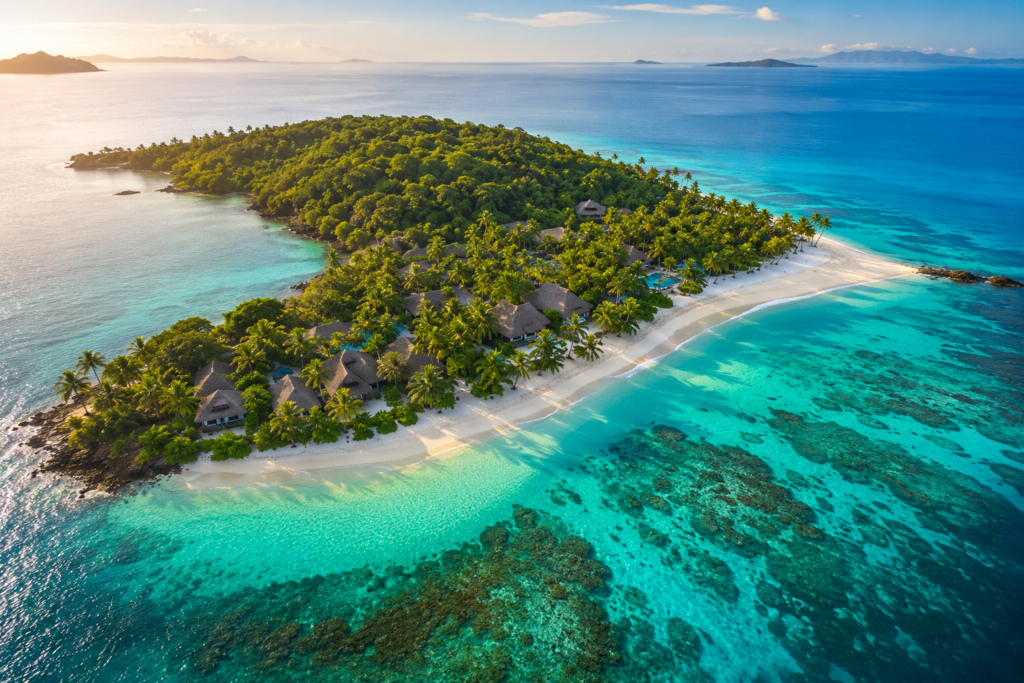
While Fiji’s beaches often receive the greatest attention, the country’s interior landscapes offer equally impressive natural beauty. Volcanic mountains, dense tropical rainforests, winding rivers and spectacular waterfalls provide endless opportunities for exploration beyond the coastline. Travellers willing to venture inland frequently discover a side of Fiji that many visitors overlook.
Bouma National Heritage Park on Taveuni is one of Fiji’s most celebrated natural attractions. Well-maintained walking trails lead visitors through lush rainforest alive with birdsong before arriving at a series of magnificent waterfalls cascading into clear freshwater pools. Swimming beneath these falls surrounded by towering tropical vegetation is one of Fiji’s most memorable experiences and provides welcome relief from the tropical heat.
Adventure seekers can also enjoy ziplining through rainforest canopies, river tubing along gentle jungle waterways, kayaking through mangrove forests and hiking to panoramic mountain viewpoints that overlook the surrounding islands. On Viti Levu, the Sigatoka River Safari offers visitors the opportunity to travel deep into the island’s interior while visiting traditional villages inaccessible by road. Along the way, knowledgeable local guides share fascinating insights into Fijian history, customs and everyday village life, providing an authentic cultural experience alongside spectacular scenery.
Nature lovers will also appreciate Fiji’s remarkable birdlife. Native species inhabit many rainforest areas, while colourful butterflies, tropical flowers and ancient tree ferns contribute to the islands’ incredible biodiversity. Photographers often find early morning the most rewarding time to explore these environments, when soft light filters through the rainforest canopy and wildlife is particularly active.
Experiencing Fijian Culture
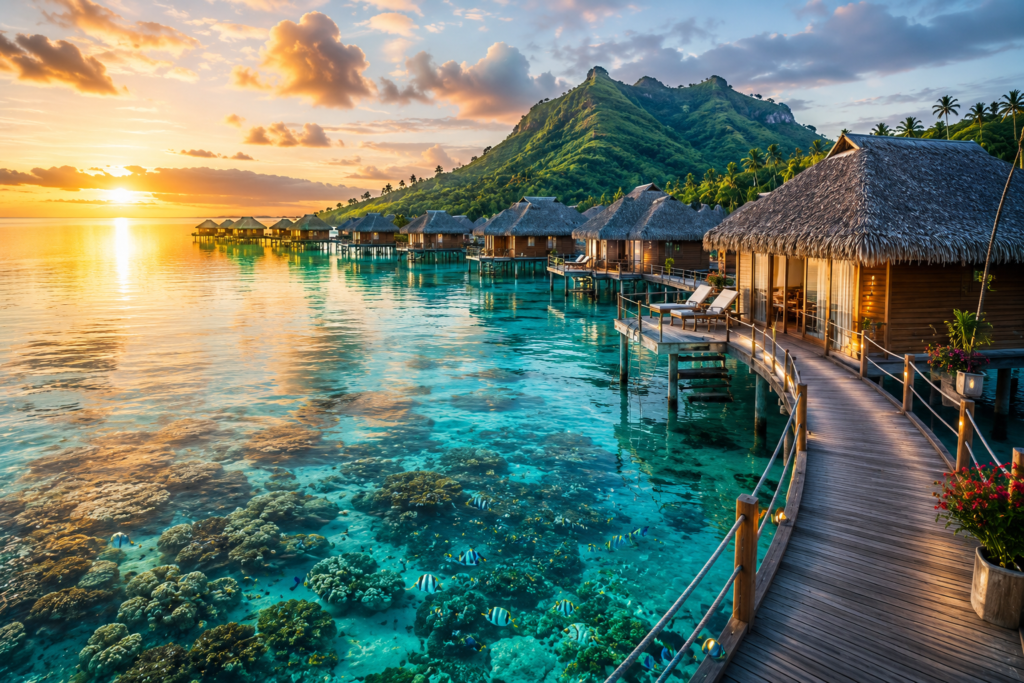
One of the most rewarding aspects of travelling through Fiji is the opportunity to experience its rich and welcoming culture. The warmth and generosity of the Fijian people consistently leave lasting impressions on visitors, and many travellers describe their interactions with local communities as one of the highlights of their holiday.
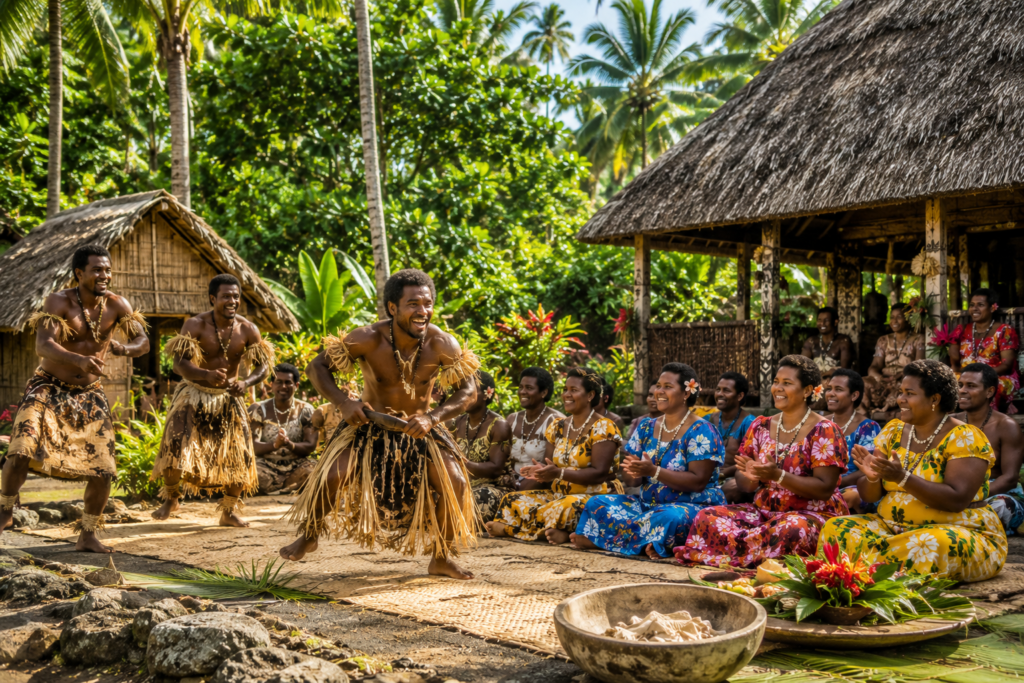
Many resorts organise visits to nearby villages where guests can gain insight into traditional Fijian life. These experiences often include guided walks through the village, demonstrations of local crafts, traditional dance performances and opportunities to learn about customs that have been passed down through generations. Respectful attire is generally expected during village visits, with shoulders and knees covered as a sign of courtesy.
Participating in a traditional kava ceremony provides another meaningful cultural experience. Kava, made from the root of the yaqona plant, has played an important role in Fijian society for centuries and remains central to many ceremonies and community gatherings. Visitors are often welcomed to participate, learning about the customs and etiquette associated with preparing and sharing the drink.
Music and dance are also deeply woven into Fijian culture. Traditional performances featuring harmonious singing, energetic dances and storytelling through movement are frequently held at resorts and community events. These performances celebrate local history, family, community and the strong connection Fijians maintain with both land and sea.
A Suggested Seven-Day Fiji Itinerary
A week provides enough time to experience several different sides of Fiji while maintaining a relaxed pace. Begin by spending your first two nights on Denarau Island or the Coral Coast, allowing time to recover from your flight while enjoying beachfront relaxation, local restaurants and cultural attractions. A sunset cruise across the Pacific provides the perfect introduction to Fiji’s spectacular scenery.
For the following three nights, travel to either the Mamanuca or Yasawa Islands. Spend your days snorkelling colourful reefs, kayaking across turquoise lagoons, relaxing on white-sand beaches and watching unforgettable sunsets from the shoreline. If visiting during the appropriate season, consider joining a manta ray snorkelling excursion or a guided diving trip to explore Fiji’s famous coral reefs.
Return to Viti Levu for your final two nights and use this time to experience Fiji’s inland attractions. Explore rainforest waterfalls, visit a traditional village, enjoy a river safari or simply relax with a spa treatment before your departure. Ending your holiday on the mainland also provides convenient access to Nadi International Airport while allowing you to appreciate another dimension of Fiji beyond its beaches.
Budgeting for Your Fiji Holiday
Fiji accommodates an impressively wide range of budgets, making it accessible to both luxury travellers and those seeking affordable island adventures. Backpackers can find dormitory accommodation and budget beachfront lodges from around AUD $60–120 per night, while comfortable mid-range resorts typically range between AUD $250–500 depending on location and season.
Luxury resorts, particularly those located on private islands, generally begin around AUD $700 per night and can exceed AUD $2,000 for premium villas featuring private pools, personal butlers and exclusive beachfront locations. Although these resorts represent a significant investment, many include meals, non-motorised water sports and additional activities that help offset overall holiday costs.
Dining expenses vary considerably depending on location. Resort restaurants naturally command higher prices, while local cafés and family-run eateries offer excellent value and authentic cuisine. Travellers planning extensive island hopping should also budget for ferry or domestic flight transfers, as transportation between islands can represent a meaningful portion of overall holiday expenses.
Essential Travel Tips
Planning ahead helps ensure a smooth and enjoyable Fiji holiday. The local currency is the Fijian Dollar (FJD), although credit cards are widely accepted at larger hotels and restaurants. Carrying some cash is advisable when visiting smaller islands or local markets where card facilities may be limited.
English is one of Fiji’s official languages, making communication straightforward for most international visitors. Nevertheless, learning a few common Fijian words such as “Bula” (hello) and “Vinaka” (thank you) is greatly appreciated by locals and often leads to warm conversations throughout your journey.
Lightweight clothing, reef-safe sunscreen, insect repellent and reusable water bottles are all highly recommended. Tropical showers can occur at any time of year, so packing a lightweight waterproof jacket is also worthwhile, particularly if visiting during the wetter months.
Frequently Asked Questions
Many travellers wonder whether Fiji is suitable for families. The answer is an emphatic yes. Numerous resorts feature exceptional children’s facilities, family-friendly beaches, supervised activity programs and spacious accommodation designed specifically for parents travelling with young children. Couples and honeymooners are equally well catered for thanks to the wide range of adults-only boutique resorts available throughout the islands.
Another common question concerns safety. Fiji is widely regarded as one of the safest destinations in the South Pacific, with tourism forming a significant part of the national economy. As with any international destination, sensible precautions should be taken regarding personal belongings, but the vast majority of visitors experience welcoming communities and trouble-free holidays.
Visitors also frequently ask whether island hopping is worthwhile. For travellers staying longer than a week, the answer is almost certainly yes. Exploring several different islands provides a far richer understanding of Fiji’s diversity, allowing you to experience everything from lively resort precincts to remote volcanic islands, traditional villages and world-renowned coral reefs.
Final Thoughts
Fiji is far more than a beautiful collection of tropical islands—it is a destination where breathtaking natural scenery, vibrant marine life, rich cultural traditions and genuine hospitality combine to create unforgettable travel experiences. Whether your ideal holiday involves relaxing beneath coconut palms, exploring colourful coral reefs, hiking through rainforest to hidden waterfalls or immersing yourself in authentic Fijian culture, the islands offer something for every traveller.
The country’s remarkable diversity means no two visits are ever quite the same. You might spend one holiday discovering luxurious private islands and award-winning spas, then return to explore remote villages, volcanic landscapes and world-class dive sites that reveal entirely new perspectives on this extraordinary destination. It is this balance of adventure, relaxation and cultural authenticity that continues to place Fiji among the world’s most desirable tropical escapes.
As your holiday draws to a close and you hear one final cheerful “Bula” before boarding your flight home, you’ll likely understand why so many visitors leave already planning their return. Fiji has a unique ability to slow the pace of life, encourage meaningful connections and remind travellers of the simple joy found in warm sunshine, crystal-clear water and genuine human kindness. Whether it is your first visit or your fifth, Fiji promises memories that will remain long after your footprints have disappeared from its pristine white-sand beaches.
Leave a Reply